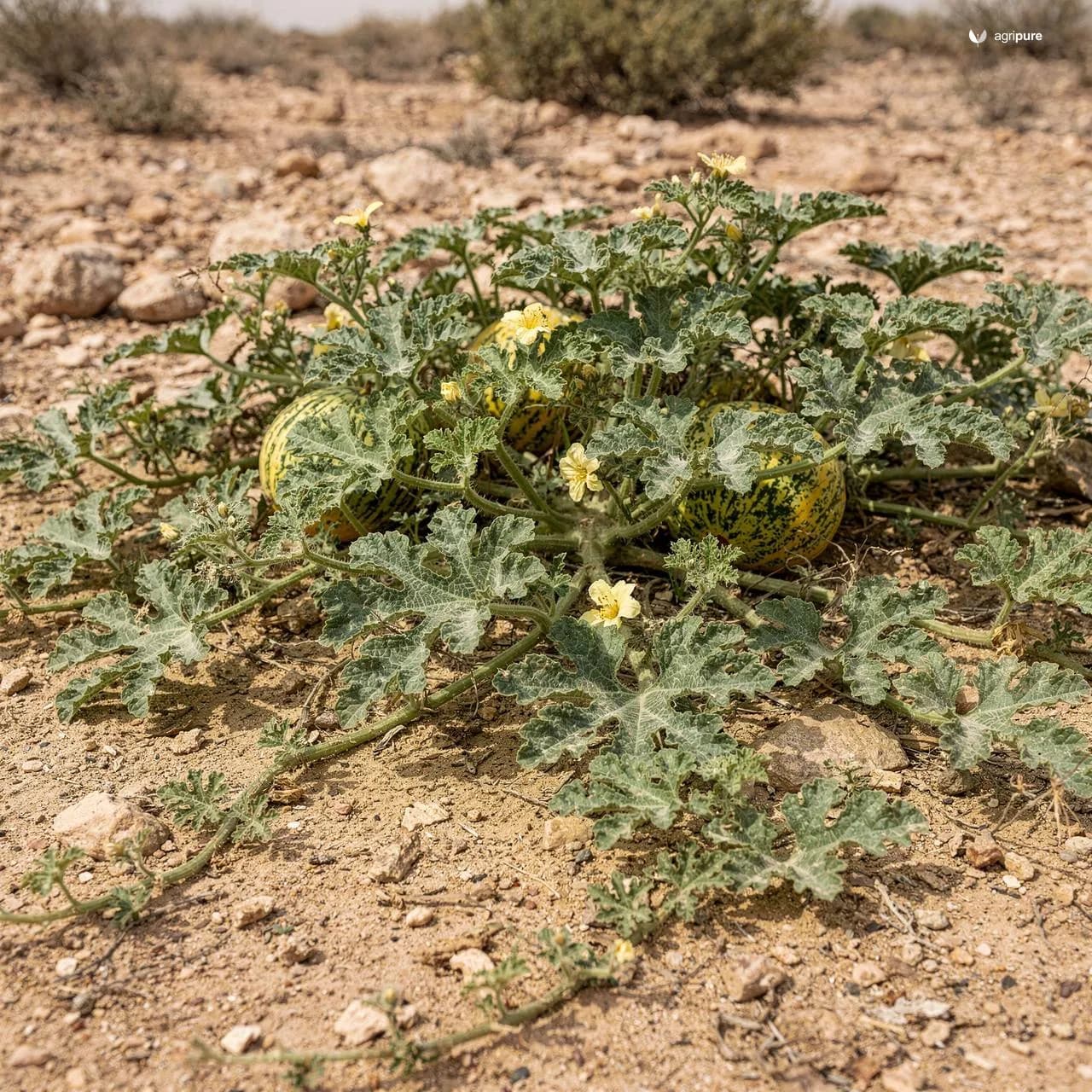
pioneer
Colocynth (Bitter Apple)
tumma / kortuma
Citrullus colocynthis
Also known as Tumma (Pakistan), Indrayan (India).
- sindh coast
- punjab plains
- balochistan highlands
International hardiness
- USDA 9-11
- RHS H2
- AU: Arid / semi-arid, Subtropical, Tropical
Where it grows — regional guide
| Zones / rating | Regional notes |
|---|---|
USDA 9-11 | No region-specific data yet |
| Zones / rating | Regional notes |
|---|---|
H2 (1 to 5C) | No region-specific data yet |
| Zones / rating | Regional notes |
|---|---|
Arid / semi-arid, Subtropical, Tropical | Found on arid sands as a drought pioneer; keep grazing animals and children away from the bitter fruit, as the pulp is dangerously toxic. |
| Zones / rating | Regional notes |
|---|---|
USDA 9-11 (USDA scale) Canada uses its own zone system; Canadian zones run roughly one lower than USDA. | No region-specific data yet |
| Zones / rating | Regional notes |
|---|---|
Sindh coast, Punjab plains, Balochistan highlands | Pakistan:Native desert vine of Thar and coastal sands; keep the bitter fruits away from grazing stock and children, as pulp is severely toxic. India:Volunteers on arid northwestern sands; do not consume the fruit pulp as it causes severe poisoning, and fence off from grazing animals. |
Colocynth (Citrullus colocynthis, the bitter apple, tumma or kortuma in the desert) is the trailing wild gourd that runs over the open sands of the Thar and Makran, recognised more as medicine than as food. It looks like a small watermelon vine but bears hard, intensely bitter fruits, and it is a pioneer of bare, hot, sandy ground across the Sindh coast, the Punjab plains, and the Balochistan highlands. It earns its place through the pharmacy chest and the oil press, not the cooking pot.
Where it thrives
This is a desert vine through and through. It grows in genuinely arid country, on sandy and ruderal ground, where mean annual temperatures sit around 23–27 °C and rainfall is only about 250–370 mm. A deep tuberous root system lets it ride out drought and resprout, and the trailing stems run out across loose sand from that central crown. It is one of the most widespread plants of the Saharo-Sindian deserts, so on a Thar or Makran farm it is less something you plant than something already there on the dunes.
Role in the system
As a pioneer it does a quiet job of covering hot bare sand: the trailing vine shades a little ground and its spent foliage adds the first scraps of organic matter where almost nothing grows. But its value to a grower is chemical, not structural. The fruit pulp is loaded with cucurbitacins, which is what makes the plant a famous medicine and, in the same breath, a poison. It is not a fodder or food species for the guild — think of it as a useful desert volunteer whose harvest is the fruit and seed, managed deliberately and kept away from stock.
Uses and medicine
Colocynth is one of the classic purgatives of the region. The dried pulp of the unripe fruit has a long record of use as a drastic purgative and cathartic, and the glucoside colocynthin carries that laxative action. The seed is the safer, more practical product: it holds roughly 20–29% oil, rich in linoleic acid, used for lamp oil, soap, and after proper processing for food and feed. Detoxified seed and seed-cake have been fed at modest inclusion rates in livestock rations, and roasted seed is eaten by some desert communities.
Cautions
Treat this plant with real respect. The cucurbitacins in the pulp are cytotoxic, and colocynth is unsafe as a casual home remedy: human poisonings cause severe gut pain, vomiting, diarrhoea, and in serious cases liver and kidney damage and death, including documented child fatalities. It is toxic to livestock too — dried plant at 0.5–10 g per kg per day has killed goats — so the bitter fruit must be kept out of grazing, and any medicinal use belongs with a trained practitioner, not the field.
Sources
- Li, Q.-Y., et al. (2022). “Citrullus colocynthis (L.) Schrad (Bitter Apple Fruit): Promising Traditional Uses, Pharmacological Effects, Aspects, and Potential Applications.” Frontiers in Pharmacology / PMC.
- Heuzé, V., Tran, G., et al. (Feedipedia). “Colocynth (Citrullus colocynthis).” INRAE, CIRAD, AFZ & FAO.
Sourcing notes
Grows wild on Thar and Makran sands and the dried fruit (tumma) is sold in herbal (pansari) markets; handle the cucurbitacin-rich pulp with care and keep it away from stock.