Key takeaways
- High temperatures above 90°F directly harm pollen viability in many crops, reducing successful fertilization.
- Heat stress significantly reduces pollinator activity, impacting fruit set by up to 50% in some cases.
- Adequate soil moisture and proper nutrient balance are critical for plant resilience during heat waves.
- Shade cloth can reduce ambient temperatures by 10-15°F, protecting plants and their delicate flowers.
- Hand pollination or the use of plant hormones can help when natural pollination fails due to heat.
- Consistent monitoring of soil moisture and plant health is vital for timely intervention.
Quick answer: Tomato and cucurbit plants struggle to set fruit above 90°F primarily due to reduced pollen viability, decreased stigma receptivity, and significantly lower pollinator activity caused by heat stress. High temperatures directly impair plant fertility and discourage essential insect pollination.
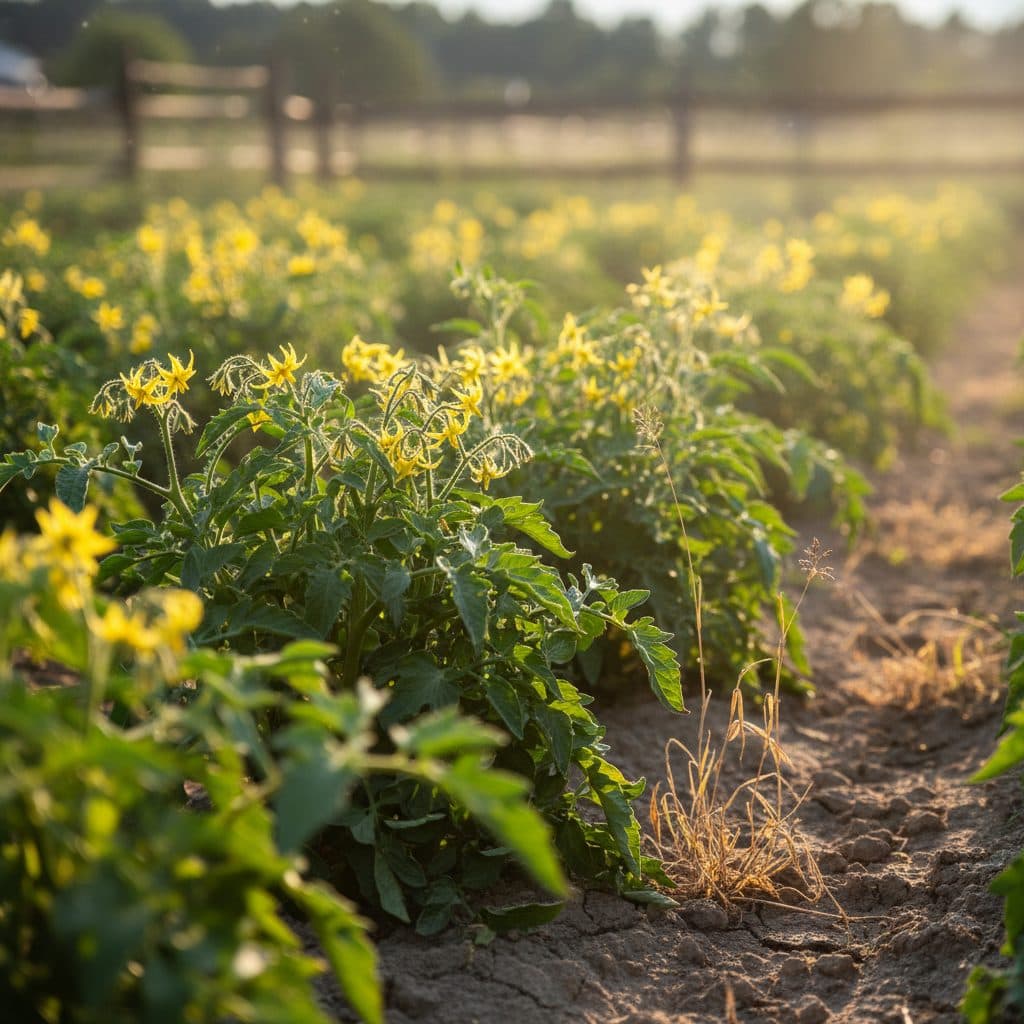
Across the southern US, from USDA zone 7 in Virginia to zone 9 in Florida, summer heat often brings a frustrating challenge for growers: plants that flower profusely but fail to set fruit. When temperatures consistently climb above 90°F, many common garden vegetables — like tomatoes, peppers, and squash — experience significant stress. This isn’t just an inconvenience; it can mean a substantial reduction in yield, sometimes cutting potential harvests by 30% or more, impacting both home gardens and commercial operations.
The core of the problem often lies in poor pollination, a complex process sensitive to environmental conditions. While we might blame a lack of bees, the reality is more nuanced. Extreme heat affects both the plants’ ability to produce viable pollen and the pollinators’ willingness to work, creating a double whammy for fruit development. Understanding these mechanisms is the first step toward implementing effective solutions that can help you achieve a more successful harvest, even when the thermometer hits triple digits.
The heat’s direct impact on plant fertility
When air temperatures consistently exceed 90°F, and especially when night temperatures remain above 75°F, many plants struggle to produce viable pollen. For example, tomato pollen can become sterile at sustained temperatures above 95°F, leading to a significant drop in fruit set. Research indicates that heat stress can reduce pollen germination rates by 20% to 60% in various crops, depending on the duration and intensity of the heat wave. This sterility means that even if a pollinator visits the flower, fertilization cannot occur, and the flower will simply drop off.
pollen viability and stigma receptivity
Beyond pollen, the female parts of the flower also suffer. The stigma, which receives the pollen, can become less receptive under high heat, drying out or losing its stickiness. In cucurbits, like zucchini and cucumbers, this can lead to a 40% reduction in successful fertilization even when pollen is present. The ovules within the flower, which develop into seeds after fertilization, can also be damaged by extreme temperatures, further hindering fruit development. Studies in 2019 highlighted that heat stress is a major factor in crop yield reduction across many US agricultural regions, particularly in the Southeast where summer temperatures frequently exceed 90°F for weeks.
- Pollen becomes sterile above 95°F for many plants.
- Stigma receptivity decreases, impacting fertilization.
- Ovule damage can occur, preventing seed development.
- Heat stress can reduce fruit set by 30% to 70%.
Pollinator activity and heat stress
While plant fertility is a major factor, the behavior of pollinators also changes dramatically under extreme heat. Honey bees, for instance, are most active when temperatures are between 60°F and 85°F. When temperatures rise above 90°F, their foraging activity can drop by as much as 75%, and above 100°F, they may cease foraging almost entirely to protect their hives from overheating. This reduction in activity directly translates to fewer flower visits and, consequently, less pollen transfer. Research from 2015 emphasizes the critical link between pollinator activity and fruit productivity.
protecting pollinators in hot climates
Other native pollinators, such as bumblebees and solitary bees, also exhibit reduced activity in high heat. Bumblebees, with their larger body size, can tolerate slightly higher temperatures, but even they slow down significantly above 95°F. Providing water sources, like shallow dishes with pebbles for landing, can help pollinators stay hydrated during heat waves, especially in arid regions like Arizona or parts of California where temperatures routinely exceed 100°F. Planting a diverse range of flowering plants that offer nectar and pollen throughout the season can also support a healthy pollinator population, even if their activity is intermittent during peak heat. A 2021 study on protective covers noted that environmental conditions significantly impact pollinator service delivery.
- Honey bee foraging drops by 75% above 90°F.
- Bumblebees reduce activity above 95°F.
- Lack of water stresses pollinators in temperatures over 100°F.
- Fewer pollinator visits mean less pollen transfer.
Cultural practices to mitigate heat stress
Proper cultural practices are your first line of defense against heat-induced fruit set failure. Ensuring consistent soil moisture is paramount. Plants under water stress are more susceptible to heat damage, with studies showing a 15% to 25% greater reduction in fruit set compared to well-watered plants. Using a soil moisture meter can help you maintain optimal levels, especially in sandy soils common in parts of Florida, which dry out quickly.
strategic watering and mulching
Deep watering in the early morning, before 8 AM, allows plants to absorb water before the day’s heat causes excessive evaporation. Aim for one to two inches of water per week, or more during extreme heat, to ensure moisture penetrates six to eight inches deep. Applying a three to four-inch layer of organic mulch, such as straw or wood chips, around plants can reduce soil temperature by 10°F to 15°F and conserve up to 50% of soil moisture. This also helps suppress weeds that compete for water and nutrients. Incorporating organic matter like fermented soybean meal can improve soil structure and water retention over time, benefiting plants in USDA zones 6-9 where summer heat is a consistent challenge.
- Water deeply in the morning, 1-2 inches per week.
- Use a soil moisture meter to ensure proper hydration.
- Apply 3-4 inches of organic mulch to cool soil.
- Mulch can reduce soil temperature by 10-15°F.
Active strategies for improving fruit set
When heat stress is severe and natural pollination is compromised, active intervention can significantly increase fruit set. Hand pollination is a straightforward method for many crops, especially tomatoes and squash. For tomatoes, gently tapping the flower clusters or using an electric toothbrush on the main stem can release pollen, which then falls onto the stigma. This can be done daily between 10 AM and 2 PM, when pollen is most viable, potentially increasing fruit set by 20% to 40% in hot conditions. For squash, use a small paintbrush to transfer pollen from male flowers to female flowers, ideally in the early morning.
shade and plant hormone application
Providing temporary shade during the hottest parts of the day can also make a substantial difference. A 30% to 50% shade cloth can reduce ambient temperatures around plants by 10°F to 15°F, protecting delicate flowers and pollen from direct sun. This is particularly effective for plants in containers or small beds. For larger areas, a reflective indoor grow tent can offer a controlled environment if you’re starting plants indoors. Some growers also use plant hormones, specifically growth regulators containing auxins, to induce fruit set without pollination. While this can result in seedless fruit, as seen in some ‘Koyama New Summer’ fruit production, it’s a viable option for ensuring a harvest when other methods fail, offering a 10% to 20% increase in fruit number in some trials.
- Hand pollinate tomatoes by tapping flowers between 10 AM and 2 PM.
- Use a paintbrush for squash flowers in the early morning.
- Install 30-50% shade cloth to reduce temperatures by 10-15°F.
- Consider plant hormones for seedless fruit set, increasing yield by 10-20%.
Common Plant Responses to High Heat
Plant Type | Heat Threshold for Poor Fruit Set | Common Symptoms |
|---|---|---|
Tomato (Solanum lycopersicum) | Night temps > 75°F, Day temps > 90°F | Flowers drop, small or no fruit, pollen sterility. |
Squash/Cucurbits | Day temps > 95°F | Female flowers abort, male flowers produce non-viable pollen, poor pollination. |
Beans (Phaseolus vulgaris) | Day temps > 90°F | Flower drop, pods fail to fill, reduced seed set. |
Peppers (Capsicum annuum) | Day temps > 90°F | Flower drop, small fruit, blossom end rot. |
Eggplant (Solanum melongena) | Day temps > 90°F | Flower drop, small or misshapen fruit. |
Pollen Viability Drop: Heat stress can reduce pollen germination rates by 20% to 60% in various crops, directly impacting fruit set.
Pollinator Activity: Honey bee foraging activity can drop by as much as 75% when temperatures rise above 90°F, severely limiting pollination services.
Frequently asked questions
What temperature causes fruit to stop setting?
For many common garden plants like tomatoes and peppers, fruit set significantly declines when daytime temperatures consistently exceed 90°F and nighttime temperatures remain above 75°F. This heat stress can reduce fruit production by 30% or more.
How does heat affect pollen?
High temperatures, typically above 95°F, can cause pollen to become sterile or reduce its viability. This means the pollen cannot successfully fertilize the flower, even if transferred, leading to flower drop and no fruit development in 20% to 60% of cases.
Do bees pollinate in extreme heat?
No, most bees drastically reduce their foraging activity in extreme heat. Honey bee activity can drop by 75% when temperatures exceed 90°F, and they may cease foraging entirely above 100°F to protect their hive from overheating. This directly impacts pollination rates.
Can I hand pollinate my plants to help fruit set?
Yes, hand pollination is an effective method to improve fruit set during heat waves. For tomatoes, gently tapping flowers or using an electric toothbrush can release pollen between 10 AM and 2 PM, potentially increasing fruit set by 20% to 40%.
What is the best way to cool plants in hot weather?
The best ways to cool plants include providing consistent deep watering, applying a three to four-inch layer of organic mulch to reduce soil temperature by 10°F to 15°F, and using 30% to 50% shade cloth during the hottest parts of the day.
Are there specific nutrients that help plants tolerate heat?
While no single nutrient is a magic bullet, balanced nutrition, particularly adequate potassium and calcium, can improve plant resilience to stress. Ensuring soil organic matter is sufficient, perhaps by adding <a href=”https://agripure.org/shop/fermented-soybean-meal-organic-fertilizer-plant-nutrient-booster-for-soil-enrichment-and-growth-promotion-slowrelease-fertilizer”>fermented soybean meal</a>, helps plants manage water and nutrient uptake more efficiently, especially in USDA zones 8 and 9.
References
- Immiserizing Growth (2019). Immiserizing Growth.
- Thousands are struck down by summer heat and most are poor (2008). Thousands are struck down by summer heat and most are poor.
- Pollination and Fruit Productivity (2015). Pollination and Fruit Productivity.
- Introduction (2019). Introduction.
- Possibility of Seedless ‘Koyama New Summer’ Fruit Production by Fruit Thinning under Natural Pollination Conditions (2021). Possibility of Seedless ‘Koyama New Summer’ Fruit Production by Fruit Thinning under Natural Pollination Conditions.
- The effect of protective covers on pollinator health and pollination service delivery (2021). The effect of protective covers on pollinator health and pollination service delivery.