pioneer
Parsley
aazmoda
Petroselinum crispum
- punjab plains
- pothohar
- kpk hills
International hardiness
- USDA 5-9
- RHS H5
- AU: Cool temperate, Warm temperate, Mediterranean, Subtropical
Where it grows — regional guide
| Zones / rating | Regional notes |
|---|---|
USDA 5-9 | A cool-season culinary herb across USDA zones 5 to 9; culinary use is safe, but avoid high medicinal doses or extracts during pregnancy. |
| Zones / rating | Regional notes |
|---|---|
H5 (-15 to -10C) | Hardy at RHS H5 and grown in full sun to light shade; it is safe for culinary use, but large medicinal doses should be avoided during pregnancy. |
| Zones / rating | Regional notes |
|---|---|
Cool temperate, Warm temperate, Mediterranean, Subtropical | Grown through autumn, winter, and spring in temperate and Mediterranean gardens; culinary picking is safe, but avoid concentrated extracts in pregnancy. |
| Zones / rating | Regional notes |
|---|---|
USDA 5-9 (USDA scale) Canada uses its own zone system; Canadian zones run roughly one lower than USDA. | Grown as a cool-season annual in moist, rich soil; it is safe for culinary use, but concentrated extracts and large medicinal doses should be avoided during pregnancy. |
| Zones / rating | Regional notes |
|---|---|
Punjab plains, Pothohar, KPK hills | Pakistan:Grown as a cool-season culinary herb across the Punjab plains and KPK hills; enjoy freely in food, but avoid large medicinal doses during pregnancy. |
Grows alongside
Species that appear with Parsley in 55 of our published guides — a starting list for a guild, not a planting plan.
Parsley (Petroselinum crispum) is a cool-season herb in the carrot family (Apiaceae), grown the world over for its leaves and, in some forms, its root. It is native to the central and eastern Mediterranean (Greece, the Balkans, parts of Italy and Iberia, and North African countries such as Algeria and Morocco) and has since become a kitchen-garden staple across temperate climates. For a homesteader it is one of the most forgiving herbs to slot into the cool end of the season: it tolerates light shade, tucks neatly along bed edges, and keeps producing leaves for cutting over a long window before it ever thinks about flowering.
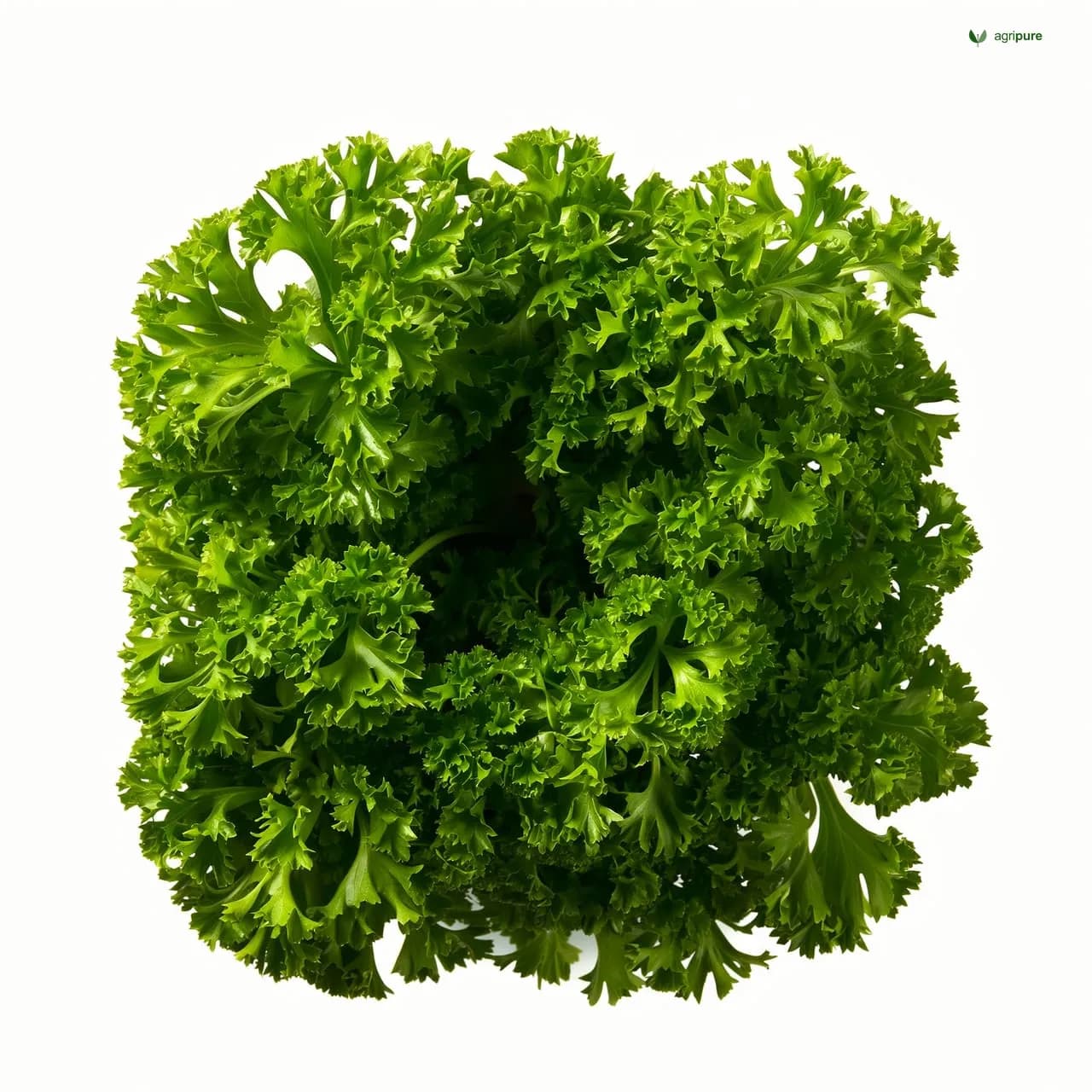
Botanically it is a biennial, though most growers treat it as an annual and harvest the leaves in the first year. In year one it forms a low basal rosette of bright to dark green compound leaves, standing about 30 cm (1 ft) tall; in year two it bolts, sending up a branching flower stalk that can reach roughly 0.8 m (2–3 ft). The petioles arise from a central crown. Two leaf types dominate the trade: the curly (“crispum”) form, with crinkled, tightly curled foliage (the epithet crispum means crinkled or closely curled), and the flat-leaf or Italian form, with flat, open, medium-green leaves.
Growing parsley
Parsley is grown primarily from seed. The seed is famously slow and erratic to germinate; the germination period is long, and soaking the seed for about 24 hours before sowing improves the strike rate. Sow about ¼ inch (≈6 mm) deep and cover with a thin layer of mulch until the seedlings break the surface. Under favourable conditions germination has been reported in roughly 7 to 12 days in Florida trials, while many garden sources cite 14 to 28 days — a fair reflection of how variable this seed can be.
Seedlings can be transplanted, but the plant grows from a delicate taproot that resents disturbance, so minimise root disruption when moving them; a common recommendation is simply to sow where the plants will grow. Start seed indoors before the last spring frost, or direct-sow outdoors once the danger of frost has passed; in warm climates seed can also go in around midsummer for a fall and winter harvest.
For site and soil, parsley performs best in full sun to light or partial shade and favours cool spring and fall temperatures, often doing better where afternoon heat is softened (morning sun, afternoon shade). Give it consistently moist, well-drained, rich soil with added organic matter. It responds to a complete fertiliser at planting, plus monthly nitrogen feeding on low-fertility ground, and the flat-leaf forms in particular are reported to do best in rich soils. It is not especially fussy about soil pH. Keep it watered and never let it dry out — sources describe it as wanting moist, well-watered soil throughout the growing season.
Climate and hardiness
Parsley is a hardy, cool-season herb that grows best in cool-summer areas and tends to wilt in hot, humid conditions. In Florida it is grown as a cool-season crop from September through May. Extension and horticultural sources commonly list garden parsley as hardy in roughly **USDA zones 4 to 9** when grown outdoors, with the curly “French” types typically recommended for that same range. It behaves as a true biennial in climates without severe summer heat and can overwinter where winters are not excessively cold; container plants are best brought indoors before temperatures drop into the 20s °F.
Harvest and uses
The everyday harvest is the leaves, cut for fresh culinary use, with the curly and flat-leaf forms both prized in the kitchen. Because the plant regrows from its crown, leaves can be taken repeatedly through the cool season rather than as a single cut. If a few plants are left to overwinter into their second year, they flower in umbels of greenish-yellow blooms typical of the carrot family and then set seed, often self-seeding in the bed. Those second-year umbels are a useful ecological bonus: like other Apiaceae flowers, they draw small beneficial insects to the garden, and leaving one or two plants to bolt lets a grower save seed for the next season.
Safety and cautions
Parsley is generally safe as a food in normal culinary amounts, but it is not entirely without caveats. Sources note that it contains compounds that can cause photosensitivity and can cause problems at high doses or in vulnerable people. The practical takeaway for a homesteader is the ordinary one: enjoy it freely as a kitchen herb, but treat concentrated forms, such as large medicinal doses, extracts, or essential oil, with caution rather than as scaled-up food. Anyone who is pregnant or managing a health condition should seek qualified advice before using parsley in any concentrated or therapeutic form. This profile makes no medical claims.
Sources
- Petroselinum crispum (Parsley) – NC State Extension Plant Toolbox
- Parsley – Wikipedia
- Petroselinum crispum (Mill.) Fuss – GBIF
- Petroselinum crispum classification – USDA PLANTS Database
- Parsley growing guide (PDF) – Growables
- Italian Parsley – The Growing Place plant database
- Petroselinum crispum – ScienceDirect Topics