pioneer
Cumin
zeera
Cuminum cyminum
Also known as Zeera (Pakistan), Jeera (India).
- punjab plains
- sindh coast
- balochistan highlands
International hardiness
- USDA 10-11
- RHS H2
- AU: Arid / semi-arid, Mediterranean, Warm temperate, Subtropical
Where it grows — regional guide
| Zones / rating | Regional notes |
|---|---|
USDA 10-11 | Grown in USDA zones 10 to 11 on sunny, free-draining soil; sow verified seed to avoid toxic wild umbellifers, and avoid oil supplements. |
| Zones / rating | Regional notes |
|---|---|
H2 (1 to 5C) | No region-specific data yet |
| Zones / rating | Regional notes |
|---|---|
Arid / semi-arid, Mediterranean, Warm temperate, Subtropical | Suits arid and mediterranean regions with long warm summers; plant labelled seed to avoid toxic look-alikes, and avoid self-dosing oils. |
| Zones / rating | Regional notes |
|---|---|
USDA 10-11 (USDA scale) Canada uses its own zone system; Canadian zones run roughly one lower than USDA. | No region-specific data yet |
| Zones / rating | Regional notes |
|---|---|
Punjab plains, Sindh coast, Balochistan highlands | Pakistan:Grown across sunny, arid plains for fragrant spice seeds; sow only certified seed to avoid toxic wild umbellifers, and avoid oil self-dosing. India:Cultivated in arid northwestern tracts as a cool-to-warm season spice; use verified seed to avoid toxic look-alikes, and avoid dosing oils. |
Grows alongside
Species that appear with Cumin in 3 of our published guides — a starting list for a guild, not a planting plan.
Cumin (Cuminum cyminum) is an annual herb in the carrot and parsley family (Apiaceae), grown for the small aromatic fruits we use whole or ground as a kitchen spice. It originated in the eastern Mediterranean and West Asia, where it has been cultivated since biblical times, and is now grown across arid to semi-arid warm regions worldwide. For a homesteader, cumin earns its place as a dry-land crop: it is genuinely drought-tolerant and asks for the kind of long, hot, sunny season in which many leafier herbs struggle, turning a baked, free-draining corner into a useful spice harvest.
How to identify it
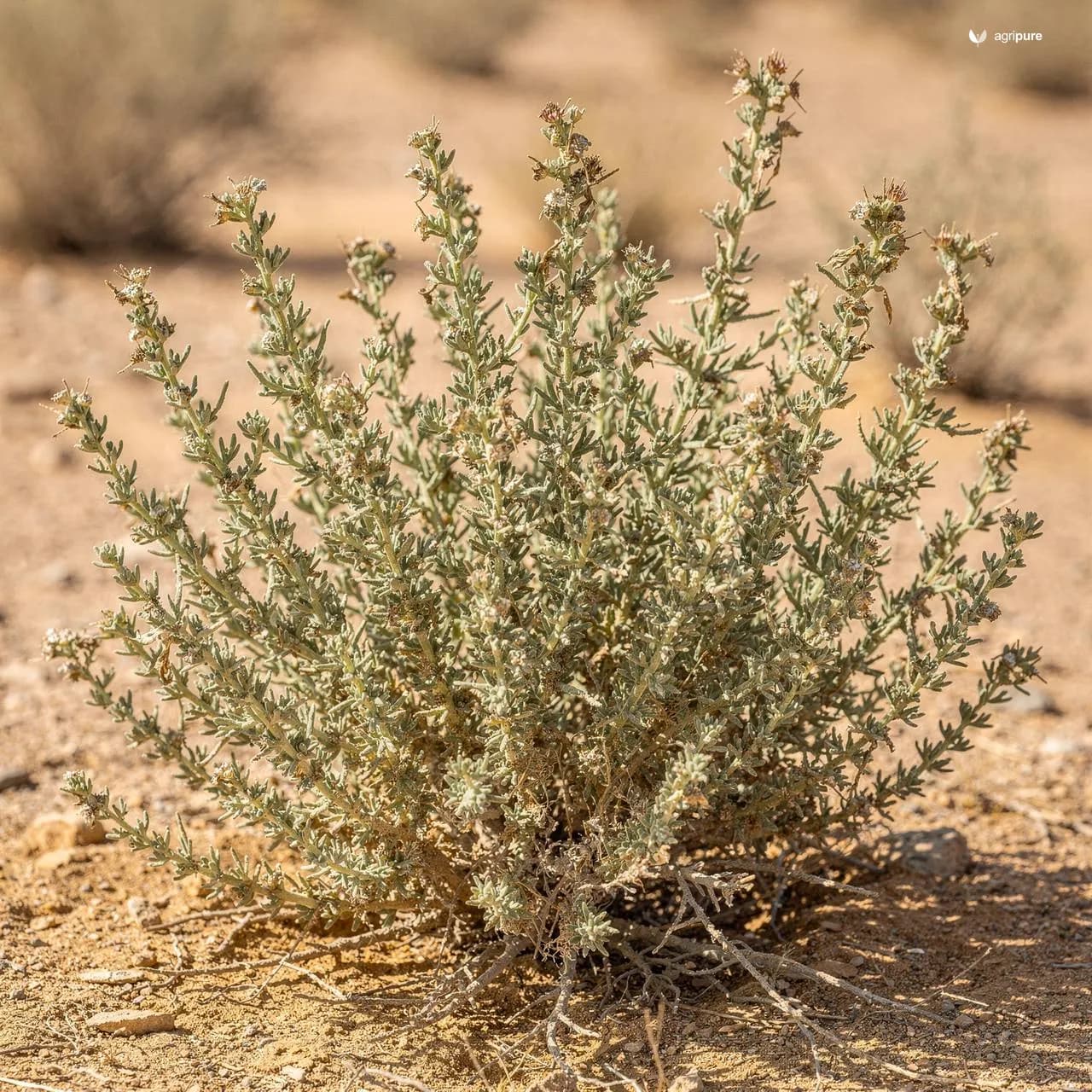
Cumin is a slender, delicate-looking plant that grows roughly 30 to 60 cm (1 to 2 ft) tall, with herbaceous, branched stems and a fine overall habit. Its leaves are finely divided and aromatic, often described as lace-like, giving the feathery look typical of the carrot family. The small flowers are white, sometimes faintly pink, and are carried in umbels — the umbrella-shaped clusters characteristic of the Apiaceae. What we call the cumin “seed” is botanically a dry fruit (a schizocarp that splits into two halves): it is yellowish-brown, long and oval, tapered at both ends, with a coarse texture from dense, rough hairs. In the spice tin those fruits read as slender, ridged, pale-brown seeds with a strong earthy scent and a slightly bitter, nutty taste. The aroma comes from a high essential-oil content of about 2.5 to 4%, rich in cuminaldehyde, with β-pinene, p-cymene and γ-terpinene rounding out its signature fragrance and flavour.
Growing cumin
Cumin is grown from seed; the cited sources describe no reliable vegetative method, so direct sowing of the fruit is the route to take. It is adapted to arid and semi-arid warm climates, the kind found around the South Mediterranean and West Asia, and is drought-tolerant in cultivation. While the sources do not spell out “full sun,” cumin’s home in sunny, dry regions and its low water demand mark it clearly as a sun-loving crop best given an open, hot position.
The single most important requirement is season length. Cumin needs a long, hot growing season of about 120 days and is reported to perform best in roughly **USDA zones 5 to 10; it is a cool-to-warm-season annual that needs sustained warmth to ripen seed. Frost tolerance is not documented in these sources, so it is safest treated as **frost-sensitive and timed to avoid freezing weather at either end of its run. Because it is drought-tolerant and at home in dry climates, the practical implication is a preference for well-drained ground that never stays waterlogged.
Some details that often appear in garden write-ups are simply not pinned down in reliable sources here: exact sowing depth, indoor-versus-outdoor starting, transplant tolerance, precise soil pH or fertility, and plant or row spacing. They are left out rather than invented. In practice, treat cumin like other warm-season dry-land annuals: sow into warm, free-draining soil in full sun, keep it on the lean and dry side once established, and lean on warmth and a long frost-free window rather than rich feeding or heavy watering.
Harvest and uses
Cumin reaches seed harvest about three to four months after sowing (roughly 100 to 120 days), once the plant has flowered and set fruit that dries down on the stem. The harvest cue is the drying and browning of the flower heads: when the seed heads have turned brown and the fruits are firm and elongated, the crop is ready to cut and dry down fully. Because each fruit is small and the plants are slender, a worthwhile harvest comes from growing them in numbers rather than from any single specimen.
The product is the dried fruit itself, used worldwide as a spice for its strong, earthy, slightly bitter and nutty flavour, whole or ground. Beyond the kitchen, cumin’s seeds have a long record of use in traditional medicine, and the essential oil they carry, dominated by cuminaldehyde, is the basis of both their culinary value and their study in food science and phytochemistry. For the homestead, it is best understood as a spice and aromatic-seed crop rather than a leafy vegetable or forage plant.
Safety and cautions
Cumin seed is an ordinary culinary spice used in normal cooking quantities and is not described as toxic in these sources. Its traditional medicinal use is real but historical, and this profile makes no claim that cumin treats, prevents or cures any condition; concentrated forms such as essential oils or supplements are a different matter from the kitchen spice and should not be self-administered. Cumin belongs to the carrot family (Apiaceae); as a general homestead safety principle, grow it from known, labelled seed rather than relying on field identification of unfamiliar umbel-flowered plants.
Sources
- Cumin (Cuminum cyminum) review — Food Quality and Safety, Oxford Academic
- Cumin — Wikipedia
- Cumin — McCormick Science Institute
- Cuminum cyminum fruit description — PMC (National Library of Medicine)
- Cuminum cyminum (Cumin / Jeera) — Gardenia
- Cumin (Cuminum cyminum) seed and plant description — Outsidepride