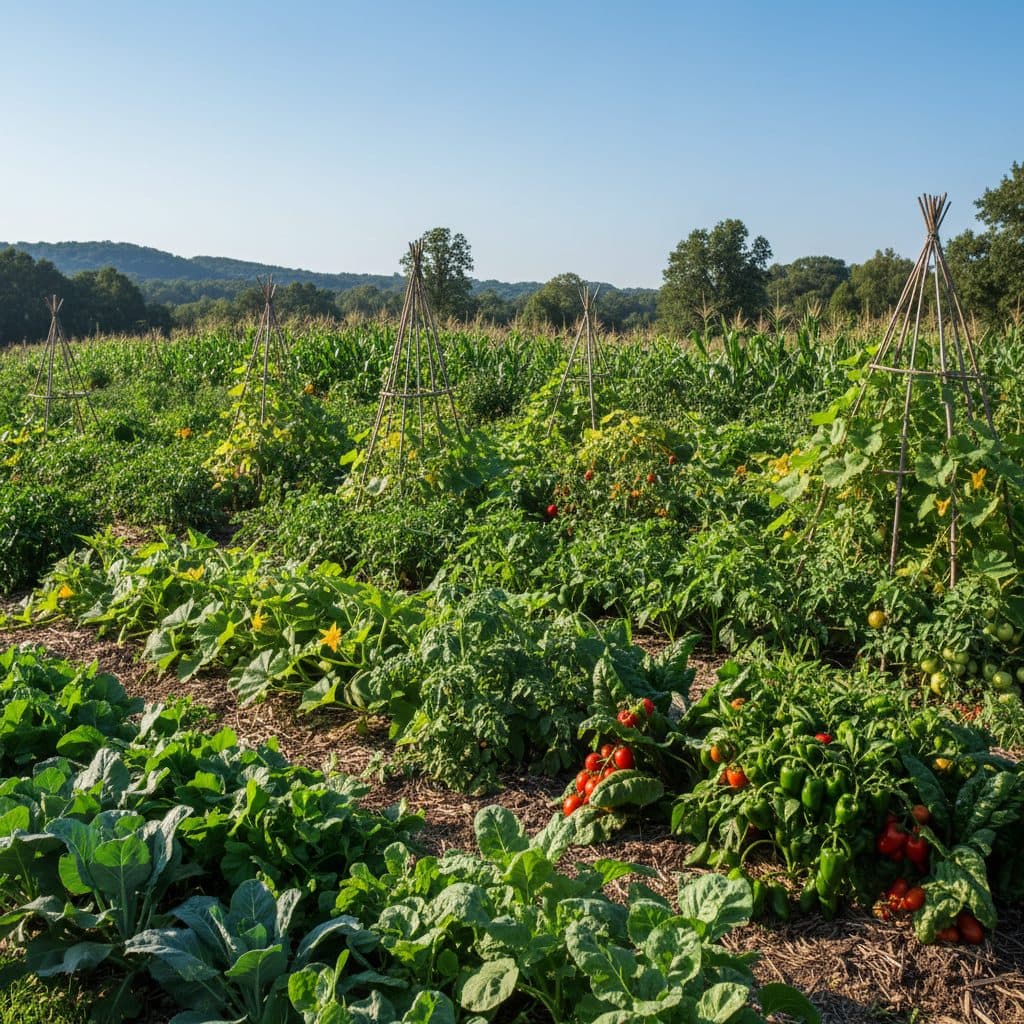
Key takeaways
- Plan your garden with a detailed planting calendar, mapping out successive plantings for continuous harvest cycles.
- Select heat-tolerant crop varieties and quick-maturing species to fill gaps after cool-season crops fade.
- Implement crop rotation to maintain soil health, manage pests, and optimize nutrient availability across seasons.
- Stagger plantings of the same crop every two to four weeks to ensure a steady supply rather than a single large harvest.
- Prioritize soil health through organic matter, mulching, and targeted irrigation to help plants withstand summer stress.
- Utilize cover crops or living mulches during fallow periods to enrich soil and suppress weeds for future plantings.
Quick answer: To keep a garden productive through US summers, implement succession planting and crop rotation with heat-tolerant varieties. Stagger plantings every 2-4 weeks and prioritize soil health to ensure continuous harvests.
In many parts of the US, from the humid Southeast to the arid Southwest, summer gardening can feel like a battle against the elements. Temperatures often soar above 90°F for weeks, and intense sun can halt production in many common garden vegetables. For instance, in USDA zone 7b, tomatoes might thrive, but lettuce bolts, and spinach wilts within days of sustained heat.
However, with careful planning and the right strategies, your garden doesn’t have to slow down. This article will guide you through succession planting and crop rotation techniques to ensure a steady harvest even when the mercury climbs. We’ll focus on practical approaches for US growers, grounded in real-world experience and numerical data, to keep your beds productive from June through September.
Understanding the summer slump and heat tolerance
The summer slump is a common challenge for US gardeners. As temperatures consistently exceed 85°F, many cool-season crops like lettuce, spinach, and broccoli will ‘bolt’ — that is, they prematurely flower and go to seed, often becoming bitter and inedible. This is a survival mechanism, but it means the end of their productive life for us. For example, a crisphead lettuce variety might tolerate 70°F but will quickly bolt in sustained 90°F heat common in USDA zone 6 and higher.
the physiology of heat stress on plants
High temperatures affect plants in several ways. Photosynthesis, the process by which plants convert sunlight into energy, becomes less efficient above optimal temperature ranges. A 2006 study found that while improving photosynthesis could significantly increase crop yields, heat stress can severely limit this potential, with some plants experiencing a 30% reduction in efficiency at extreme temperatures [6]. This reduction impacts growth and fruit development. Heat can also cause blossom drop in fruiting plants like peppers and tomatoes, where flowers fall off before setting fruit, leading to significantly reduced yields. In regions like the Central Valley of California, summer temperatures frequently reach 100°F, making heat tolerance a critical factor for crop selection. Selecting drought-tolerant species can also indirectly help, as these often have mechanisms to cope with heat and reduced water availability.
- Reduced photosynthesis: Efficiency can drop by 30% in extreme heat.
- Blossom drop: Flowers fail to set fruit due to stress.
- Bolting: Premature flowering in cool-season crops.
- Increased water demand: Plants transpire more to cool themselves.
- Nutrient uptake issues: High soil temperatures can hinder root function.
Planning for continuous harvests: crop rotation and timing
Effective succession planting starts with a detailed plan, often visualized on a garden calendar. For a typical USDA zone 5 garden, you might plant early spring crops like peas and radishes in April, followed by heat-tolerant beans and corn in late May, and then quick-maturing greens in late summer for a fall harvest. The goal is to avoid leaving beds empty for extended periods, maximizing the use of your garden space throughout the growing season. Crop rotation is a complementary strategy, involving planting different types of crops in the same bed in successive seasons. This practice helps manage soil-borne diseases and pests, and optimizes nutrient use. For instance, following a heavy-feeding crop like corn with a nitrogen-fixing legume can replenish soil nutrients, reducing the need for synthetic fertilizers by up to 25%.
developing a planting calendar for your zone
Start by identifying your last and first frost dates. For example, in USDA zone 8a, the last frost might be in mid-March, and the first in mid-November, providing a long growing season of over 240 days. Work backward from the first frost date for fall crops and forward from the last frost for spring and summer crops. Consider the ‘days to maturity’ for each variety you plant. If a bush bean takes 60 days to mature, and you want a continuous harvest, plant a new batch every two to three weeks. This staggered approach ensures that as one planting finishes producing, the next is ready to begin. For larger plots, consider incorporating cover crops during fallow periods to improve soil structure and nutrient cycling, which can increase subsequent crop yields by 10% to 20%.
- Identify frost dates: Essential for timing spring and fall plantings.
- Track ‘days to maturity’: Essential for staggered planting schedules.
- Rotate crop families: Prevents disease buildup and balances soil nutrients.
- Utilize vertical space: Maximizes yield in smaller garden footprints.
- Plan for fallow periods: Incorporate cover crops to build soil health.
Heat-tolerant varieties and staggered planting
When summer temperatures consistently hit 95°F, choosing the right varieties becomes paramount. Many heirlooms and specific hybrids are bred for heat tolerance. For example, ‘Cherokee Purple’ tomatoes are known to produce well in hot, humid conditions typical of USDA zone 7b, while ‘Black Beauty’ eggplant thrives where other varieties might struggle. Look for terms like ‘heat-set’ or ‘slow-bolt’ on seed packets. Quick-maturing crops are also key for succession. Radishes, many types of lettuce (especially those labeled ‘summer’ or ‘heat-tolerant’), and bush beans can go from seed to harvest in 30 to 60 days, allowing for multiple plantings within a single summer season.
staggering plantings for a steady supply
The core of succession planting is staggering. Instead of planting all 20 of your bush bean seeds at once, divide them into four groups of five and plant one group every two weeks. This ensures you’ll have a harvest of fresh beans over an eight-week period, rather than a single overwhelming flush. For crops like zucchini, which are notoriously prolific, planting just one or two plants every three to four weeks can prevent a glut. In a 10 ft by 10 ft raised bed, this approach can yield 15-20 lbs of produce per month during peak season, compared to a single, larger harvest. Consider planting a quick crop like radishes, which mature in 25-30 days, in between rows of slower-growing plants like corn, maximizing space utilization by 15-20%. Living mulches can also help keep soil temperatures down, benefiting heat-sensitive roots.
- Choose ‘heat-set’ varieties: For tomatoes and peppers in hot climates.
- Select ‘slow-bolt’ greens: Extends the harvest of lettuce and spinach.
- Plant quick-maturing crops: Radishes (25 days), bush beans (50-60 days).
- Divide seed packets: Plant small batches every 2-4 weeks.
- Utilize intercropping: Plant fast growers between slow growers.
Soil health and water management for summer production
Maintaining healthy soil is foundational to successful summer gardening. Rich, organic-matter-laden soil acts like a sponge, retaining moisture and nutrients that plants need under heat stress. Adding 2-3 inches of compost to your beds annually can increase water retention by 15-20% and improve soil structure. This is especially vital in regions like the desert Southwest (USDA zones 8-10), where sandy soils can dry out rapidly. Mulching is another critical practice; a 3-4 inch layer of straw, wood chips, or shredded leaves can reduce soil temperature by 10-15°F and cut water evaporation by up to 50%, significantly reducing irrigation needs.
efficient irrigation strategies
When it comes to watering, less frequent but deeper irrigation is generally more effective than shallow, daily sprinkles. Deep watering encourages roots to grow deeper into the soil, making them more resilient to surface drying and heat. Aim to deliver 1-2 inches of water per week, either through rainfall or irrigation, especially for fruiting plants. Drip irrigation or soaker hoses are highly efficient, delivering water directly to the root zone with up to 90% less waste compared to overhead sprinklers. In a 20 ft by 20 ft garden plot, switching to drip irrigation can save hundreds of gallons of water over a single summer season. Regularly checking soil moisture with your finger, 4-6 inches deep, will help you determine when to water, preventing both underwatering and overwatering.
- Incorporate compost: Adds organic matter, boosts water retention by 15-20%.
- Apply thick mulch: Reduces soil temperature by 10-15°F, cuts evaporation by 50%.
- Water deeply and infrequently: Encourages deep root growth.
- Use drip irrigation: Saves up to 90% of water compared to sprinklers.
- Monitor soil moisture: Check 4-6 inches deep before watering.
Extending the season with quick-maturing crops
Even as the hottest part of summer begins to wane, there’s still ample opportunity for another round of succession planting, especially for quick-maturing crops that can be harvested before the first fall frost. In USDA zone 6, where the first frost might arrive in mid-October, you have a window of 60-70 days from mid-August to plant and harvest crops like radishes, baby carrots, and many leafy greens. Varieties like ‘Black Seeded Simpson’ lettuce or ‘Parris Island Cos’ romaine can be planted in late summer for a fall harvest, often benefiting from cooler evening temperatures that improve flavor.
selecting varieties for late-season planting
When selecting crops for late-season succession, prioritize varieties with short ‘days to maturity’ and those that can tolerate light frosts. Arugula, for example, can mature in as little as 30 days and often tastes sweeter after a light frost. Spinach varieties like ‘Tyee’ or ‘Bloomsdale Long Standing’ are excellent choices, maturing in 40-50 days and capable of overwintering in milder climates (USDA zones 7 and up) with some protection. Bush beans, planted in early August, can still yield a substantial harvest before a mid-October frost. Even some determinate tomato varieties, if started early indoors and transplanted, can produce a final flush of fruit in early fall. Aim to plant these crops at least 6-8 weeks before your average first frost date to ensure a good harvest. This strategy can extend your garden’s productivity by 20% or more annually.
- Focus on short maturity times: Radishes (25-30 days), baby carrots (50-60 days).
- Choose cold-tolerant greens: Arugula, spinach, and some lettuces.
- Plant 6-8 weeks before frost: Ensures adequate growth time.
- Consider determinate tomatoes: For a final fall harvest.
- Utilize cold frames: Extends the harvest of tender greens into winter.
Cool-Season vs. Heat-Tolerant Summer Crops
Crop Type | Cool-Season Varieties (Bolts/Struggles in Heat) | Heat-Tolerant Summer Varieties (Thrives in Heat) |
|---|---|---|
Greens | Lettuce (Buttercrunch), Spinach (Bloomsdale), Arugula (standard) | Lettuce (Black Seeded Simpson, Jericho), Malabar Spinach, Swiss Chard (Fordhook Giant) |
Root Vegetables | Radishes (Cherry Belle), Carrots (Danvers 126), Beets (Detroit Dark Red) | Radishes (French Breakfast, Summer types), Sweet Potatoes (Beauregard), New Zealand Spinach |
Fruiting Vegetables | Peas (Sugar Snap), Broccoli (Waltham 29), Cabbage (Early Jersey) | Okra (Clemson Spineless), Eggplant (Black Beauty), Southern Peas (California Blackeye), Heat-set Tomatoes (Florida 91) |
Herbs | Cilantro, Dill | Basil (Genovese, Thai), Rosemary, Thyme, Mint |
Yield Increase: Strategic succession planting can increase overall garden yield by 30% to 50% over a typical single-season approach.
Water Savings: Using drip irrigation and 3-4 inches of mulch can reduce garden water consumption by up to 50% during hot summer months.
Soil Temperature: A 4-inch layer of organic mulch can lower soil surface temperatures by 10-15°F, protecting delicate roots.
Frequently asked questions
What is the primary benefit of succession planting in summer?
The primary benefit is a continuous harvest of fresh produce throughout the summer, preventing gluts and empty garden beds. This can increase overall garden productivity by 30% or more compared to planting everything at once.
How does crop rotation help with summer gardening challenges?
Crop rotation helps manage soil-borne diseases and pests, which can be more prevalent in warm, moist summer conditions. It also optimizes nutrient cycling, potentially reducing the need for external fertilizers by 20% to 25%.
Can I plant cool-season crops in summer using succession methods?
Some cool-season crops, particularly ‘slow-bolt’ varieties of lettuce or spinach, can be planted in late summer for a fall harvest as temperatures begin to drop. However, planting them in peak summer heat (above 85°F) is generally not recommended due to bolting.
What’s the ideal spacing for staggered plantings?
For most vegetables, planting a new batch every two to four weeks is ideal. This ensures that as one group finishes producing, the next is ready, providing a steady supply for 8-12 weeks from a single crop type.
How much water do succession crops need in summer?
Most summer succession crops require 1 to 2 inches of water per week, either from rain or irrigation. Deep, infrequent watering is best, encouraging roots to grow deeper, which can make plants 15% more drought-resilient.
Are there any quick-maturing crops that can be planted after a mid-summer harvest?
Yes, many quick-maturing crops like radishes (25-30 days), arugula (30-40 days), and some bush beans (50-60 days) can be planted in mid-to-late summer for a fall harvest, extending your productive season by several weeks.
References
- Succession Season Two: Episode Seven: Return (2023). Succession Season Two: Episode Seven: Return.
- Succession Season Two: Episode Nine: DC (2023). Succession Season Two: Episode Nine: DC.
- Succession Season Two: Episode Six: Argestes (2023). Succession Season Two: Episode Six: Argestes.
- Succession Season Two: Episode Three: Hunting (2023). Succession Season Two: Episode Three: Hunting.
- Succession Season Two: Episode Two: Vaulter (2023). Succession Season Two: Episode Two: Vaulter.
- Can improvement in photosynthesis increase crop yields? (2006). Can improvement in photosynthesis increase crop yields?.