support
Licorice
mulethi
Glycyrrhiza glabra
Also known as Liquorice (UK & Ireland, Australia, Middle East & North Africa), Mulethi (Pakistan).
- punjab plains
- pothohar
- balochistan highlands
International hardiness
- USDA 6-10
- RHS H4
- AU: Warm temperate, Mediterranean, Cool temperate, Arid / semi-arid
Where it grows — regional guide
| Zones / rating | Regional notes |
|---|---|
USDA 6-10 | Perennial grown for sweet roots; rhizomes spread aggressively without barriers, and high glycyrrhizin intake must be avoided in pregnancy. |
| Zones / rating | Regional notes |
|---|---|
H4 (-10 to -5C) | Perennial grown for sweet roots; rhizomes spread aggressively without barriers, and high glycyrrhizin intake must be avoided in pregnancy. |
| Zones / rating | Regional notes |
|---|---|
Warm temperate, Mediterranean, Cool temperate, Arid / semi-arid | Perennial grown for sweet roots; rhizomes spread aggressively without barriers, and high glycyrrhizin intake must be avoided in pregnancy. |
| Zones / rating | Regional notes |
|---|---|
USDA 6-10 (USDA scale) Canada uses its own zone system; Canadian zones run roughly one lower than USDA. | No region-specific data yet |
| Zones / rating | Regional notes |
|---|---|
Punjab plains, Pothohar, Balochistan highlands | Pakistan:Perennial grown for sweet roots; rhizomes spread aggressively without barriers, and high glycyrrhizin intake must be avoided in pregnancy. India:Perennial grown for sweet roots; rhizomes spread aggressively without barriers, and high glycyrrhizin intake must be avoided in pregnancy. |
Licorice (Glycyrrhiza glabra) is a rhizomatous, herbaceous perennial legume in the pea family (Fabaceae), grown chiefly for its sweet, medicinally active roots. It is native to the Mediterranean region and Western Asia — sources place its range across Europe and parts of Asia, including Italy, Spain, Turkey, the Caucasus, western China, and Central Asia. For a homesteader, its appeal is that it does two jobs at once: as a nitrogen-fixing legume it feeds the soil it grows in, while its thick roots store glycyrrhizin, a natural sweetener about 50 times sweeter than sucrose, giving a high-value root crop from the same ground.
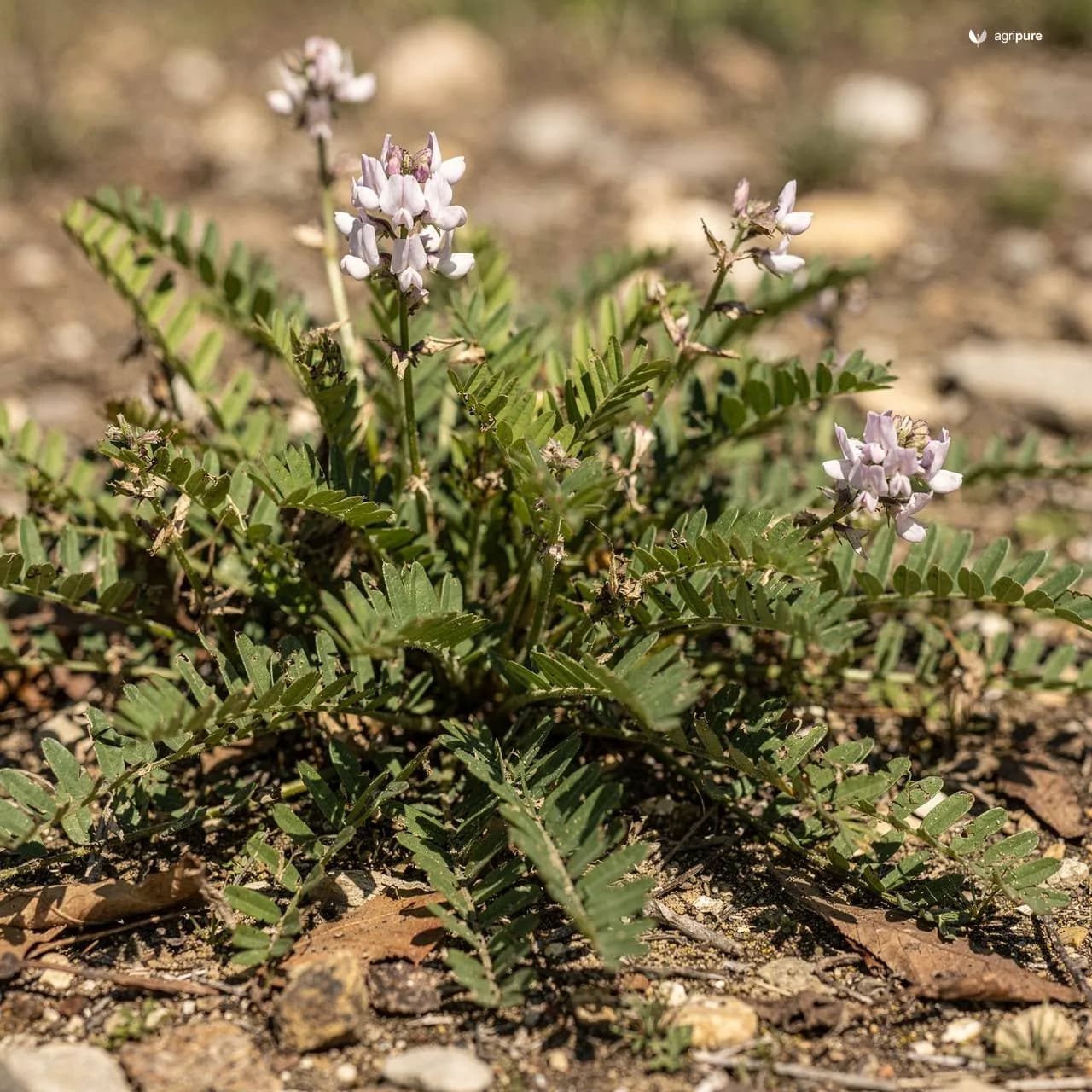
Above ground it is a deciduous, upright herb with branched stems arising from spreading, stoloniferous roots and rhizomes, forming clumps that widen over time. Plants commonly stand about 60 to 180 cm (2 to 6 ft) tall, reaching around 200 cm on favorable sites. The foliage is typical legume greenery — pinnate compound leaves — and the pea-like (papilionaceous) flowers mark it clearly as a bean-family plant. The real prize sits underground: thick, spreading roots and rhizomes that grow more extensive with age and hold the glycyrrhizin that gives the crop its name and value.
Growing licorice
Licorice is a warm-climate perennial. Cultivation and nursery sources describe it as hardy in roughly USDA zones 7 to 11, with one cultivation guide noting plants can endure temperatures down to about −17 °C (1 °F), which suggests it can reach the colder end of zone 6 with protection. Where winters are too harsh for reliable perennial production it is sometimes treated as an annual or grown in a deep container, and young plants benefit from winter mulching in cold climates.
- Sun: Give it full sun, ideally in a warm, sheltered position protected from strong wind.
- Soil: It prefers deep, loose, fertile, well-drained soil and does best on dry, alkaline ground. For field planting, growing on raised ridges improves drainage and makes the deep roots far easier to lift at harvest.
- Water: Thanks to its extensive root system, licorice generally fares well in dry conditions; the one exception is hot, dry spells, when watering every couple of days keeps it growing. Avoid waterlogging — a free-draining substrate is essential.
- Fertility: As a nitrogen-fixing legume it benefits from Rhizobium inoculation for the best growth and nitrogen fixation. In nutrient-rich soil it usually needs feeding only once a year in spring; note that many general herb fertilizers are too low in phosphorus, so a more balanced or phosphorus-sufficient feed is preferable.
- Spacing: Recommendations range from about 30 to 60 cm (1 to 2 ft) apart to roughly 50 × 50 cm per plant to accommodate the spreading roots.
One trait to plan around: the rhizomes spread, so where you do not want it traveling, installing a rhizome barrier keeps the clump contained. The plant is a long-lived perennial when winters are mild, and its root system grows steadily more extensive with age — which is exactly why the harvest improves the longer you wait.
Harvest and uses
The harvest is the root. Because the underground system bulks up over years, licorice rewards patience: the roots grow thicker and more extensive as the plant ages, so a stand left to mature yields a larger crop, and the raised-ridge field method is partly about making those deep roots easier to dig. The defining quality of the root is its sweetness — it is loaded with glycyrrhizin (glycyrrhizic acid), roughly 50 times sweeter than table sugar, which is why licorice root has long served as a natural sweetener and flavoring as well as a traditional herbal material. Detailed sowing dates and time-to-harvest figures are not consistently documented across these sources and vary by region, so they are left out rather than stated with false precision; in practice, treat licorice as a perennial root crop established over several seasons before lifting.
Safety and cautions
Licorice root is valued as a sweetener and as a traditional herbal material, but it is not a casual culinary herb, and its active compound carries real cautions. A few grounded points:
- The sweetness comes from glycyrrhizin, a potent compound; sources treat licorice as a medicinal and flavoring plant rather than an everyday vegetable, and its concentrated extracts are studied for their pharmacological effects.
- It has a long history of traditional use, and its constituents have been the subject of scientific study, but that is not the same as a proven treatment; this profile makes no claim that it treats or cures any condition.
- As a general principle with any concentrated herbal material, those who are pregnant or breastfeeding, and anyone taking prescription medication, should seek qualified medical advice before consuming licorice or its extracts in quantity.
Grown sensibly, licorice is a low-input, soil-building perennial that turns a sunny, well-drained corner into a long-term root crop.
Sources
- Glycyrrhiza glabra L. — GBIF (Global Biodiversity Information Facility)
- Glycyrrhiza glabra — North Carolina State Extension Plant Toolbox
- Glycyrrhiza glabra (Licorice) review — PMC (National Library of Medicine)
- Glycyrrhiza glabra root — ScienceDirect Topics
- Glycyrrhiza glabra cultivation and description — International Journal of Genetic Engineering (SAPub)
- Liquorice (Glycyrrhiza glabra) overview — Plantura
Sourcing notes
Propagate from root divisions or runners rather than seed for a reliable crop; plant in deep, well-drained, ideally slightly alkaline soil, as the root crop suffers on heavy waterlogged clay.