support
Leucaena
Leucaena leucocephala
Also known as White Leadtree (United States), Ipil Ipil (Pakistan), Subabul (India).
- punjab plains
- sindh coast
International hardiness
- USDA 9-11
- RHS H1c
- AU: Tropical, Subtropical, Arid / semi-arid
Where it grows — regional guide
| Zones / rating | Regional notes |
|---|---|
USDA 9-11 | Tender woody legume in frost-free southern zones; seeds contain toxic mimosine harmful to non-ruminants and trees naturalize aggressively, so check local weed laws. |
| Zones / rating | Regional notes |
|---|---|
H1c (5 to 10C) | No region-specific data yet |
| Zones / rating | Regional notes |
|---|---|
Tropical, Subtropical, Arid / semi-arid | Valued as cattle fodder in tropical and subtropical pastures; seeds contain mimosine toxic to non-ruminants and plants spread rapidly, so check weed restrictions. |
| Zones / rating | Regional notes |
|---|---|
USDA 9-11 (USDA scale) Canada uses its own zone system; Canadian zones run roughly one lower than USDA. | No region-specific data yet |
| Zones / rating | Regional notes |
|---|---|
Punjab plains, Sindh coast | Pakistan:Planted as fast-growing fodder and fuelwood in frost-free irrigated plains; foliage contains mimosine toxic to non-ruminants, and aggressive spread must be managed. India:Widely planted in agroforestry for cattle forage and fuel; seed contains mimosine which is toxic to non-ruminant livestock, and prolific seed spread requires containment. |
Grows alongside
Species that appear with Leucaena in 14 of our published guides — a starting list for a guild, not a planting plan.
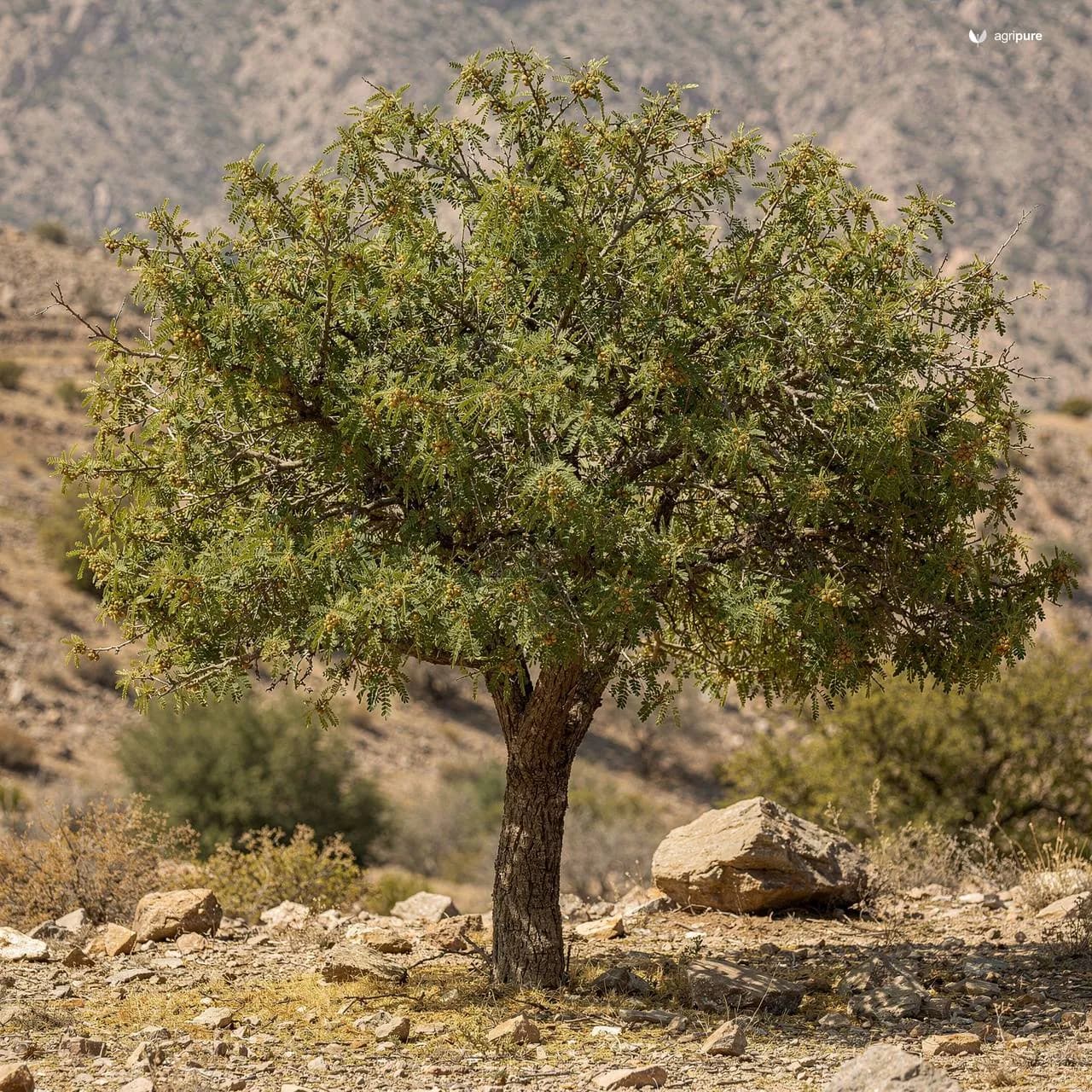
Leucaena (Leucaena leucocephala), often called the white lead tree, is a fast-growing shrub or small tree in the legume family (Fabaceae). It is native to Mexico and Central America and has since naturalized across much of the tropics and subtropics. For a homesteader it is a multipurpose workhorse: a quick-establishing nitrogen-fixing legume that doubles as forage, fuelwood, shade, and an erosion-control planting on ground where slower trees struggle.
Identifying leucaena
Leucaena grows as a shrub or small tree, typically reaching about 2 to 10 m tall, though it can be taller in favorable conditions. The foliage is bipinnate (feathery, twice-divided leaves), with leaves up to roughly 10 inches long. The flowers are small and white, clustered into dense, ball-like heads. These are followed by flat brown pods about 4 to 6 inches long, each holding around 20 seeds; the seeds themselves are glossy brown and oval. The combination of feathery bipinnate leaves, white pompom flower heads, and clusters of flat papery pods is a reliable field cue for the species.
Growing leucaena
Leucaena is a tropical, warm-climate tree with poor cold tolerance, so it suits frost-free or near-frost-free settings. One agroforestry reference notes that its best growth is generally limited to roughly 15 to 25 degrees of latitude from the equator; horticultural sources sometimes suggest a wider USDA zone range, but that figure is presented with uncertainty, so it is most accurate to treat it simply as a warm-climate species intolerant of hard frost.
- Propagation: Almost always grown from seed. The seeds have a hard coat and usually need scarification to germinate well — commonly done by pouring hot or boiling water over them and soaking until cool, or by nicking the seed coat.
- Sun: Plant it in full sun.
- Soil: It tolerates a range of soils, including acid soil down to about pH 4.1, but it grows better on less acidic ground and responds favorably to fertilizer and lime. It is less suited to cooler highland sites or strongly acid, aluminum-saturated soils.
- Water: Leucaena is notably drought tolerant and copes with a pronounced dry season, though irrigation can help when establishing young plants in cultivation. It also tolerates salt.
- Growth rate: It is fast-growing — so much so that some seedlings less than a year old can already produce viable seed.
Specific row and plant spacing were not given in the reliable sources reviewed, so no figure is invented here; in practice it is established as a shade tree, windbreak, erosion-control planting, or forage hedge depending on the goal. For forage seedings, the documented guidance is to sow at the onset of the wet season, placing seed about 2 to 5 inches deep.
Harvest and uses
Leucaena earns its place through services and products rather than a single saleable crop. Quantitative yield figures were not available in the reliable sources reviewed, so none are stated here.
- Animal feed: It is widely used as fodder and valued as a protein source for cattle; it can be browsed in place or harvested as green or dry feed.
- Soil and land: It is grown for soil improvement, green manure, and mulch, and for erosion control, land reclamation, and reforestation.
- Shelter and shade: It is a windbreak, firebreak, and shade tree in plantation crops such as coffee, rubber, cacao, and cinchona.
- Material: The wood is used for fuelwood, lumber, and fiber, and the seeds are made into necklaces.
- Culinary: The species is used as a vegetable in Mexico and Central America, where unripe seeds are eaten in some places, including being added to salsa; green seeds are also reported eaten raw in Thailand and Indonesia.
Safety and cautions
Edibility and toxicity cautions are important for this species. The seeds contain mimosine, a compound that is toxic to nonruminant vertebrates. Because of this, the culinary and forage uses above should not be generalized to all people, all livestock, or all preparation methods. In livestock systems, the plant’s fodder value is mainly for ruminants such as cattle, not for all animals. No medicinal use is claimed here: the reviewed sources did not support one, so none is asserted.
Leucaena’s vigor and prolific seeding are also why it has naturalized so widely and is treated as a weed in many regions; anyone planting it should be prepared to manage its spread.
Sources
- Leucaena leucocephala – University of Florida IFAS Plant Directory
- Leucaena leucocephala – Wikipedia
- Leucaena leucocephala (Lead Tree) – University of Florida Department of Biology
- [Leucaena leucocephala (Leucaena) – EAFRINET Weeds Key, Lucidcentral](https://keys.lucidcentral.org/keys/v3/eafrinet/weeds/key/weeds/Media/Html/Leucaena_leucocephala_\(Leucaena\).htm)
- Leucaena leucocephala – World Agroforestry (ICRAF) Tree Database