pioneer
Tall Reed
nar
Phragmites karka
- sindh coast
- punjab plains
International hardiness
- USDA 7-11
- RHS H4
- AU: Tropical, Subtropical, Warm temperate
Where it grows — regional guide
| Zones / rating | Regional notes |
|---|---|
USDA 7-11 | No region-specific data yet |
| Zones / rating | Regional notes |
|---|---|
H4 (-10 to -5C) | No region-specific data yet |
| Zones / rating | Regional notes |
|---|---|
Tropical, Subtropical, Warm temperate | A large perennial grass that occupies damp habitats; it forms dense colonies that hold banks, but spreads aggressively and has unverified edibility. |
| Zones / rating | Regional notes |
|---|---|
USDA 7-11 (USDA scale) Canada uses its own zone system; Canadian zones run roughly one lower than USDA. | No region-specific data yet |
| Zones / rating | Regional notes |
|---|---|
Sindh coast, Punjab plains | Pakistan:A native wetland reed of the Punjab plains and Sindh coast; it binds damp ground, but spreads by vigorous rhizomes and its edibility is unverified. India:A large perennial grass of damp ground; it is used for soil stabilization, but spreads aggressively by rhizomes and its edibility is unverified. |
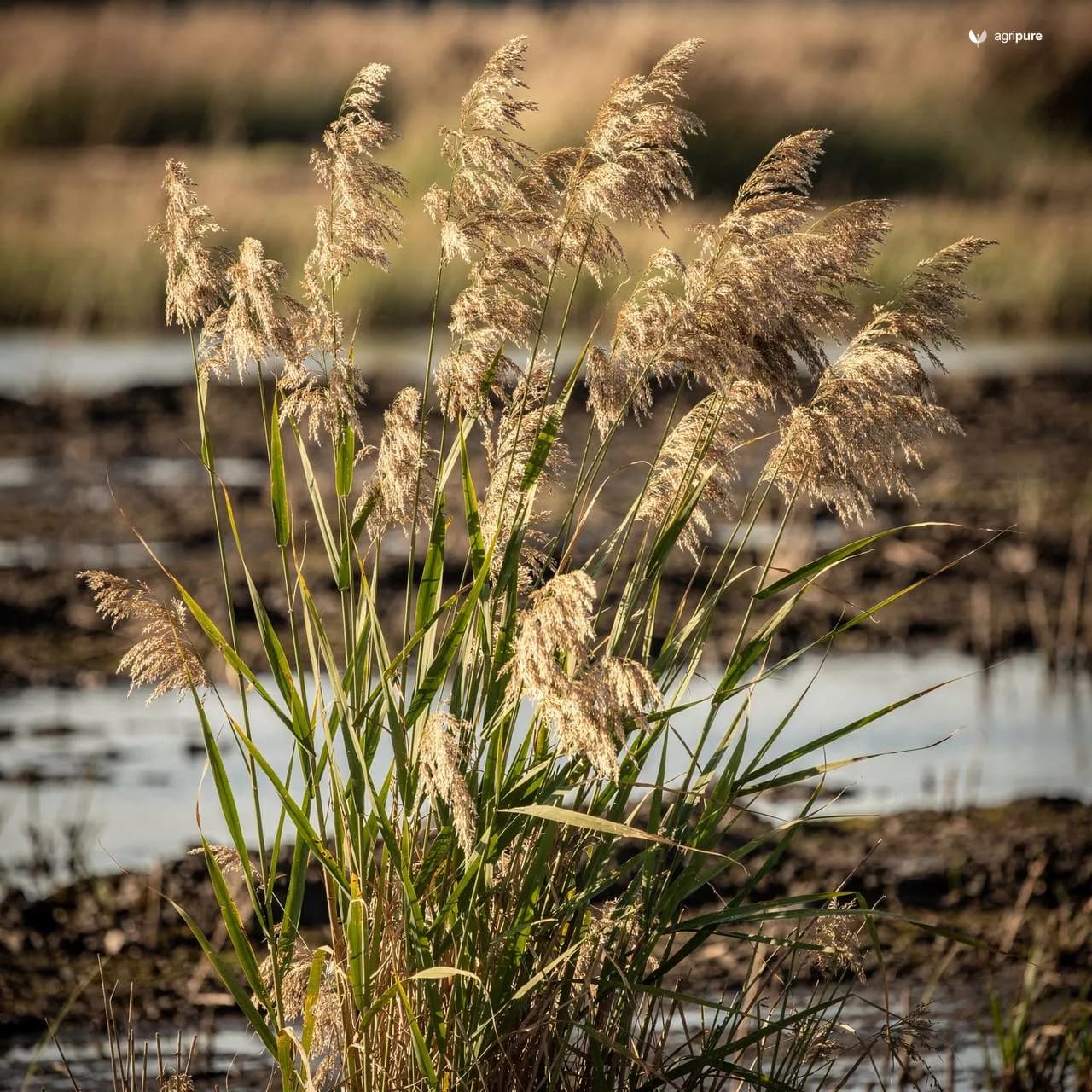
Tall reed (Phragmites karka) is a large perennial grass in the family Poaceae, a wetland reed that throws up hollow, erect stems and spreads into dense, self-renewing colonies. It is a plant of damp ground (riverbanks, marshes, wet meadows, and flood-prone sites), not a crop you sow in a bed. On a homestead its value is structural and material: a reed you let colonize a wet edge so it can hold the bank and hand you cutting material for thatch and woven goods. Note up front that verifiable, species-specific information on this reed is limited; what follows is restricted to what reliable sources document, and details often guessed at for big reeds (exact yields, planting dates, edibility, medicinal dosing) are left out where the sourcing does not support them.
Description and identification
As a member of the grass family, Phragmites karka has the classic tall-reed silhouette common to the genus: hollow, upright stems, long ribbon-like leaves, and feathery, plume-like flower clusters (panicles) at the top. One summary of the species describes stems reaching up to about 10 m tall, leaves roughly 30 to 80 cm long, and panicles around 30 to 50 cm long, giving a sense of the plant’s scale, though that figure comes from a secondary summary rather than a formal flora treatment, so treat it as indicative rather than exact. A more reliable identification cue is its growth habit: it forms dense colonies and reproduces mainly vegetatively, spreading by underground runners so that a stand becomes a continuous thicket of near-identical canes; flowering has been reported as infrequent, so you should not rely on seeing the plumes to recognize it.
Growing tall reed
This is a reed you site by habitat rather than cultivate by recipe. The available sources establish where it naturally grows but do not provide species-specific propagation, soil, sun, water, spacing, or time-to-maturity figures, so those are intentionally not stated here rather than guessed. What the sourcing does support is the kind of ground it belongs in:
- Habitat: It occupies damp habitats — riverbanks, marshes, wet meadows, and flood-prone sites — so plan to establish it on a permanently moist or seasonally inundated edge, not on dry ground.
- Elevation range: It is recorded across a wide elevational band, from near sea level up to about 3,000 m, which points to a broad tolerance of conditions provided the site stays wet.
- Spread: Because it reproduces mainly vegetatively from spreading rhizomes and forms dense colonies, an established stand will extend itself along a wet margin on its own.
The practical implication of that last point is containment. A reed that builds dense colonies by running rhizomes will hold a bank effectively, but in the wrong place it can dominate a wet margin, so site it where a spreading reed bed is what you want and where you can keep it out of working channels.
Harvest and uses
The documented uses of tall reed are material and agroecological rather than culinary. The stems are used for crafts, roofing, and woven materials, and the split stems can be used in place of bamboo for roofs and woven goods — a familiar role for big reeds, where the cut canes become thatch, screens, and matting. Beyond harvested material, the plant is widely planted for soil stabilization and erosion control, putting its dense, rhizome-bound colonies to work holding wet, erodible ground such as banks and margins. These are plausible roles for the species, though the supporting source is a secondary summary rather than a primary monograph, so the descriptions are kept general.
No reliable, species-specific harvest schedule or yield figure was found in the available sources, so none is given. Reeds of this kind are generally cut once the canes have hardened, after which the standing colony regrows from its rhizomes, but the exact timing and quantities for this species are not documented and are not invented here.
Safety and cautions
The honest position on edibility and medicine is that the sourcing does not support either. No reliable source in the available material documents edible use of Phragmites karka, so it should not be treated as a food plant, and culinary use cannot be confirmed. Likewise, no reliable source here supports medicinal use or provides safety guidance, interactions, or contraindications specific to this species, so this profile makes no medicinal claims. Equally, no source in this material identifies the plant as poisonous; the point is simply that edibility and toxicity are unverified for this species. The conservative rule follows directly: do not eat it, and do not use it medicinally, without independent species-specific verification. Treat tall reed as what the evidence supports — a wetland reed for stabilization, structure, and material.
Sources
- Phragmites karka — Tsammalex (ethnobotanical species database)
- Phragmites karka — Awahuri Forest / Kitchener Park (conservation reference, PDF)
- Phragmites Field Guide — Midwest Invasive Plant Network (genus-level reed identification, PDF)
Sourcing notes
Established from rhizome divisions or culm cuttings pushed into wet ground, where it takes readily; seed is rarely needed. Wild stands along canals and the Indus delta supply planting material, but site it only where its spread can be contained.