Leaf mold & mulch: turning fallen leaves into black gold
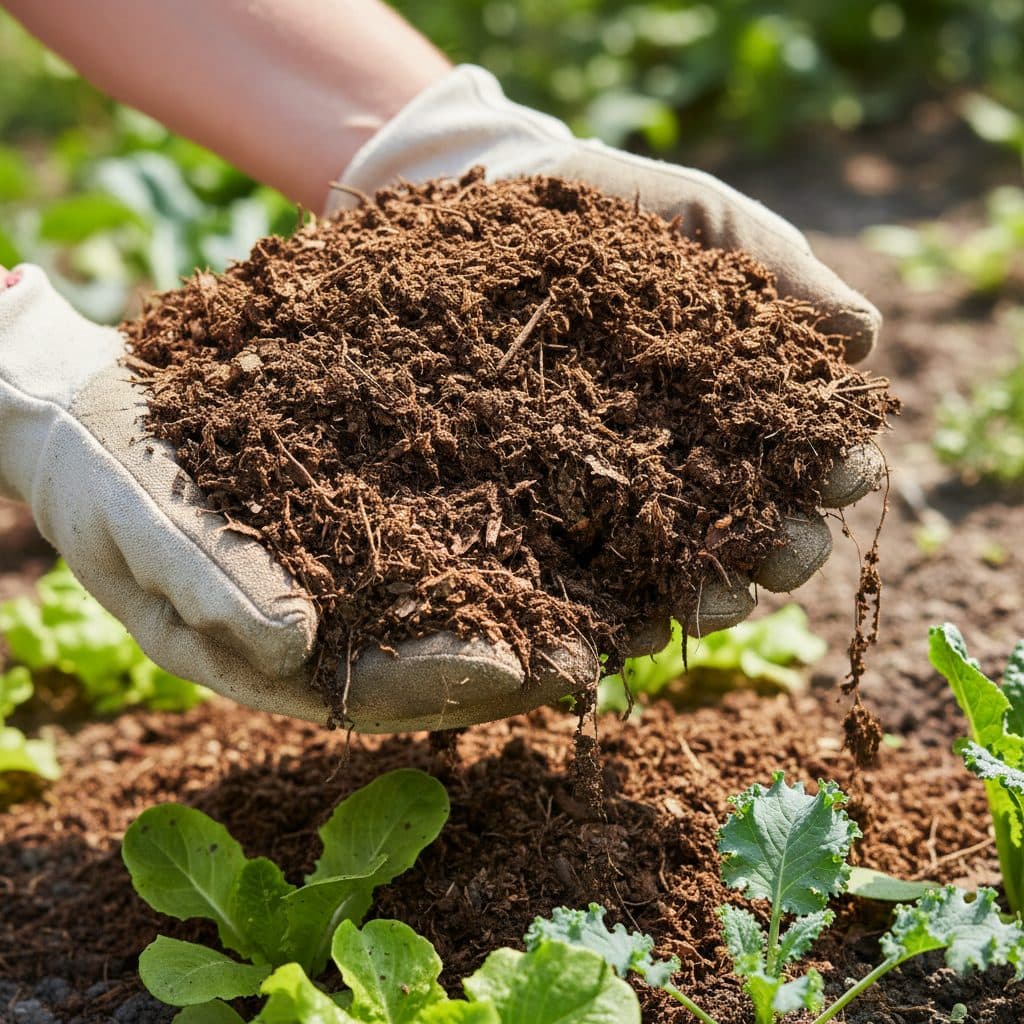
A close-up photograph of dark, crumbly leaf mold mulch being held in a gardener's hands over a vegetable bed.
Key Takeaways
- Water retention statistics: Retain between 300% and 500% of dry weight in water, creating a highly absorbent sponge for garden soils.
- Decomposition timeframe: Expect leaf mold to form in 12 to 24 months passively, or reduce to six to 12 months by shredding the leaves.
- Pile volume parameters: Build a wire enclosure measuring at least 3 feet wide by 3 feet tall (9 square feet at the base) to self-insulate.
- Biological process differences: Rely on slow, cold, fungal-driven decay rather than the hot, bacteria-driven process of standard piles.
- Shredding benefits: Shred leaves to increase surface area by 10 times, which accelerates fungal colonization.
- Soil improvement properties: Add finished leaf mold to clay soils to create 20% more air space, or to sandy soils to prevent moisture leaching.
Quick answer: Leaf mold is a crumbly, dark soil conditioner created by the cold, fungal decomposition of fallen leaves. It significantly improves soil fertility and water-holding capacity, and can be made by passively piling shredded leaves in an enclosure.
The Environmental Protection Agency (EPA) estimates that the average American generated 328 pounds of food waste in 2016, with households accounting for 40% to 50% of the nation’s 26.5 million tons of annual food waste. While food scraps are recycled using worm bins or active piles, homeowners must also manage large volumes of autumn leaves. Transforming these fallen leaves into leaf mold — a crumbly, dark soil conditioner produced entirely through cold fungal decomposition — provides a highly effective way to build soil fertility and water-holding capacity.
By building leaf mold enclosures in a shady corner, you can recycle up to 100% of your yard’s leaves. This process turns annual waste into a premium soil conditioner.
The biology of cold fungal decomposition
These slow-decaying leaf piles operate on entirely different biological pathways than traditional compost. Standard composting relies on active bacteria to consume nitrogen-rich and carbon-rich materials at temperatures above 130°F. Leaf mold, however, is a cold, passive process driven by wood-decaying fungi that slowly break down tough cellulose and lignin.
A microscopic view of white fungal mycelium spreading across a decaying autumn leaf.
Lignin breakdown by fungi
This fungal colonization occurs at ambient outdoor temperatures, typically under 80°F. Specialized fungi spread their microscopic threads (mycelium) throughout the pile, secreting enzymes that dissolve complex plant cell walls. Because this process lacks high heat, it takes up to 24 months to complete unless leaf tissues are broken.
Water holding capacity benefits
This decayed leaf structure acts as an exceptional water-holding sponge, absorbing 300% to 500% of its dry weight in moisture. When mixed into sandy soils, leaf mold prevents water and dissolved minerals from leaching into the subsoil. In heavy clay soils, it binds fine particles into larger aggregates, creating air pockets that improve drainage.
Sizing and constructing a leaf mold pile
This backyard leaf mold setup is highly flexible and requires no aeration or active turning. To ensure the leaves remain moist throughout the 365 days of the year, the pile must have a volume of at least 27 cubic feet.
Wire mesh enclosures
A wire bin measuring 3 feet wide and 3 feet tall (9 square feet at the base) is the ideal size for a residential backyard. This simple structure holds enough leaves to maintain moisture while allowing rain to penetrate the pile.
A chicken-wire mesh cylinder filled with brown leaves in a shaded garden corner.
- Chicken wire cylinders: Roll a 10-foot length of 4-foot tall chicken wire into a cylinder and secure the ends with zip ties.
- Trash bag method: If you lack backyard space, pack leaves into a 30-gallon black plastic trash bag, add 2 cups of water, poke 15 drainage holes in the bottom, and tie the bag shut.
Preparing the leaves and managing decay
Inside the enclosure, managing moisture and surface area determines how fast the leaves decompose. Whole deciduous leaves tend to mat together when wet, cutting off oxygen and stalling the decay process for up to 2 years.
Shredding for speed
- Gather dry leaves from 1 or more deciduous trees using a wide rake or leaf blower.
- Shred the leaves using a lawn mower with a mulching blade, reducing leaf volume by 80%.
- Fill the wire cylinder 100% full with the shredded leaf fragments.
- Spray the pile with 5 gallons of water until the leaves are damp like a wrung-out sponge.
- Cover the top with a plastic tarp or a 1-inch layer of cardboard to prevent drying.
Parameter | Traditional Compost Pile | Leaf Mold Pile |
|---|---|---|
C:N Ratio Target | 25:1 to 30:1 | 60:1 to 80:1 (leaves only) |
Microbial Drivers | Aerobic bacteria (hot) | Deciduous fungi (cold) |
Turning Cycle | Every 3 to 7 days | Zero turning required |
Timeframe to Finish | 14 to 28 days | 12 to 24 months (unshredded) |
Adding nitrogen starters
This decomposition process can be accelerated by sprinkling a nitrogen source between the leaf layers. Sprinkling a handful of slow-release organic nitrogen fertilizer with a 5-1-1 NPK analysis helps feed the fungi, reducing the decay timeline by 50%.
Nitrogen Boost: To reduce the decay timeframe of high-carbon oak leaves, mix in 1 cup of our Fermented Soybean Meal Organic Fertilizer (500 g) for every 10-inch layer of dry leaves. This additions drops the local C:N ratio, accelerating microbial colonization.
Applying leaf mold in your garden
These finished dark flakes are ready for use once the leaves crumble easily between your fingers. Unlike raw wood chips with a C:N ratio over 400:1, finished leaf mold does not tie up soil nutrients.
- Soil conditioning: Blend a 2-inch layer of leaf mold into the top 4 inches of garden soil before planting tomatoes (Tomato) and sweet basil (Basil).
- Strawberry mulching: Spread a 1-inch layer around strawberries (Strawberry) to retain 50% more moisture during dry summer weeks.
- Seed starting: Mix one part leaf mold with two parts coconut coir and one part vermiculite to create an organic, seed-starting blend.
- Checking moisture: Monitor soil moisture around mulched beds using a 3-in-1 Soil pH, Moisture & Light Meter.
- Tool preparation: Build 3-foot leaf piles and collect backyard inputs using our sturdy Garden Hand-Tool Set — Trowel, Rake, Cultivator & Weeder.
To reduce tannin-rich oak decay times, incorporate slow-release nitrogen boosters like our Fermented Soybean Meal Organic Fertilizer (500 g).
Troubleshooting leaf mold piles
These cold piles are low-maintenance, but they can occasionally go out of balance if moisture or leaf types are not managed, affecting up to 10% of backyard setups.
Pile dry and unchanged after 12 months
- Cause: The pile moisture fell below 40%, or leaves were not shredded, stunting fungal activity.
- Solution: Quench the pile with 10 gallons of water, pack the leaves down to reduce air gaps, and cover with a plastic tarp.
Sour, stagnant sewer odor
- Cause: Whole leaves matted together, creating anaerobic water pockets with 0% air circulation.
- Solution: Turn the matted leaves once to aerate, mix in dry cardboard strips, and drill extra drainage holes if using bags.
Slow decay of oak or pine needles
- Cause: High tannin levels in oak leaves or high acidity in pine needles (pH under 4.5) slow down fungi.
- Solution: Limit oak leaves to under 20% of the pile, shred them twice, and add 1 cup of agricultural lime.
Deciduous choice: Maples, birch, and willow leaves decompose rapidly within 12 months due to low lignin levels. Oak, beech, and sweetgum leaves contain heavy lignin and tannins, requiring up to 24 months to decay fully unless shredded.
Frequently asked questions
What is leaf mold, and how does it differ from compost?
Leaf mold is decomposed deciduous leaves produced through cold, fungal-driven decay. Traditional compost is produced through hot, bacteria-driven decomposition of a balanced nitrogen and carbon mixture.
Does leaf mold hold water well?
Yes. Leaf mold behaves like a natural sponge, absorbing between 300% and 500% of its dry weight in water, which significantly improves soil moisture retention in sandy and clay soils.
How long does it take to make leaf mold?
Left alone, whole leaves take 12 to 24 months to break down. You can accelerate this timeline to six to 12 months by shredding the leaves and maintaining 50% moisture.
Can I use pine needles to make leaf mold?
Pine needles take longer to decompose (up to 3 years) due to their waxy coating. They are also highly acidic (pH under 4.5) and are best used as a mulch for acid-loving plants rather than a general soil conditioner.
References
- Iowa State University Extension. (2021). Leaf Composting and Leaf Mold. Iowa State Extension.
- Cornell Cooperative Extension. (2023). Composting Yard Waste. Cornell Extension.
- Texas A&M AgriLife Extension. (2022). Improving Soil Water Capacity. Texas A&M Extension.
- University of Illinois Extension. (2020). Organic Matter Benefits for Clay and Sand. Illinois Extension.
- UGA Extension. (2021). Leaf Mold and Backyard Forestry. UGA Extension.