pioneer
Blond Psyllium
isabgol
Plantago ovata
Also known as Ispaghol (Pakistan), Isabgol (India).
- punjab plains
- sindh coast
- balochistan highlands
International hardiness
- USDA 9-11
- RHS H2
- AU: Arid / semi-arid, Mediterranean, Subtropical
Where it grows — regional guide
| Zones / rating | Regional notes |
|---|---|
USDA 9-11 | Grown as a cool-season annual in arid and semi-arid areas; take the fibrous, swelling seed husk with copious water. |
| Zones / rating | Regional notes |
|---|---|
H2 (1 to 5C) | No region-specific data yet |
| Zones / rating | Regional notes |
|---|---|
Arid / semi-arid, Mediterranean, Subtropical | No region-specific data yet |
| Zones / rating | Regional notes |
|---|---|
USDA 9-11 (USDA scale) Canada uses its own zone system; Canadian zones run roughly one lower than USDA. | No region-specific data yet |
| Zones / rating | Regional notes |
|---|---|
Punjab plains, Sindh coast, Balochistan highlands | Pakistan:A winter crop of the Punjab and Sindh plains; harvested for mucilaginous seed husk, which must be taken with ample water. India:The primary commercial source of psyllium husk, grown extensively in India; always consume the swelling seed husk with ample liquid. |
Blond psyllium (Plantago ovata) is a small annual herb in the plantain family (Plantaginaceae), native to the Mediterranean region and now widely cultivated across India, Iran, the Mediterranean basin, and the Middle East. It is also naturalized in parts of central, eastern, and southern Asia and in North America. For a homesteader, the draw is its seed: the seed coat, or husk, is the soluble, mucilaginous fiber sold worldwide as “psyllium,” making this an unassuming field herb that yields a genuinely valuable harvest in a single short season.
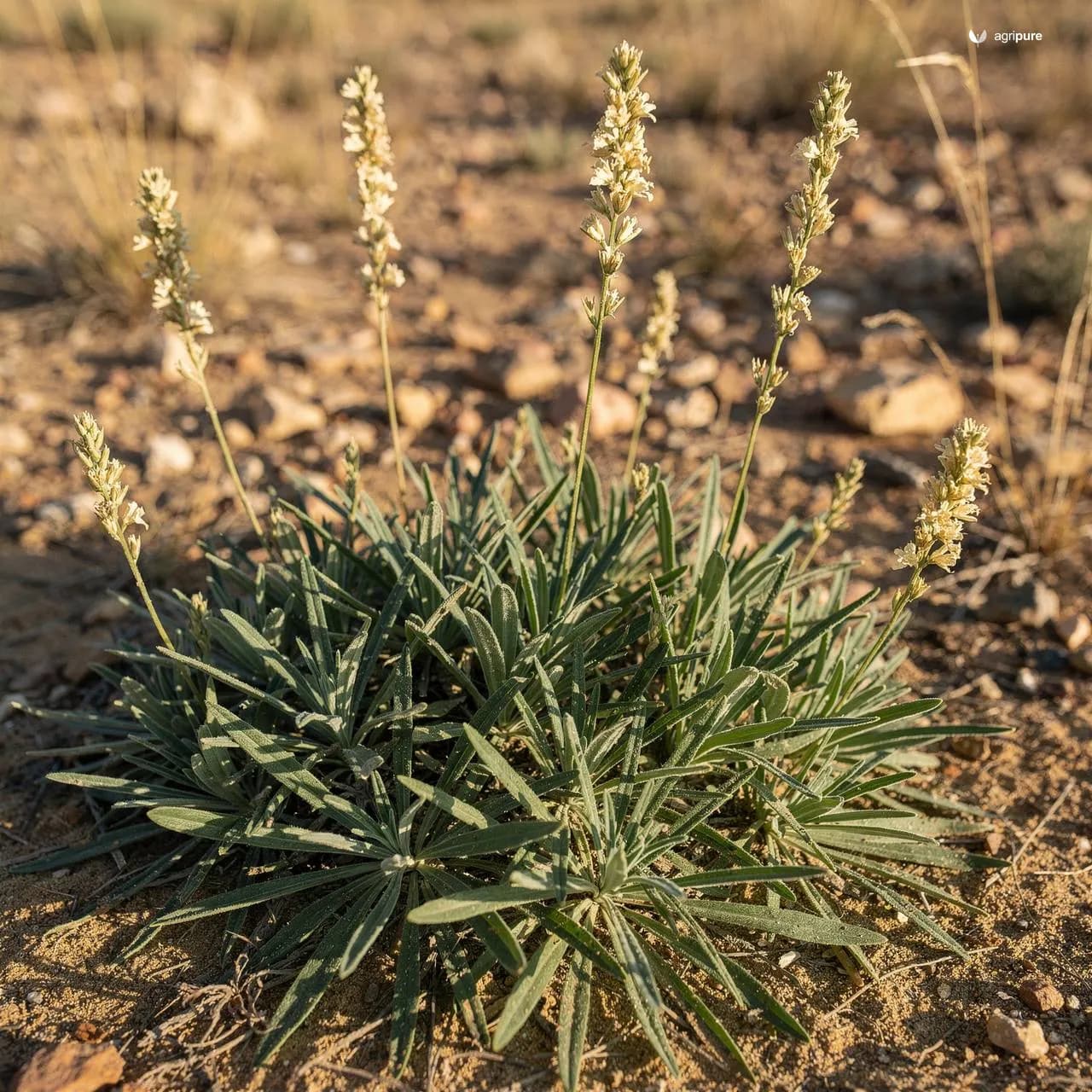
Blond psyllium goes by several common names, including blond plantain, desert Indianwheat, and ispaghula or isabghol. It is a compact, low-growing plant with leaves held in a basal rosette at ground level — narrow, linear to lance-shaped, and somewhat grasslike, as is typical of the plantains. From the rosette it sends up leafless stalks topped with many slender flowering spikes, each carrying numerous tiny, inconspicuous flowers. The seeds that follow are small and boat-shaped, only up to about 2 mm long. It is those seeds, and especially their mucilage-rich husks that swell strongly in water, from which nearly all commercial psyllium products are derived.
Growing blond psyllium
Blond psyllium is an annual and is grown from seed; saved seed from mature plants is viable and used to start the next crop. It is a true field crop rather than a forest or wetland plant, cultivated on ordinary arable soils in its main growing regions of India, Iran, and the Mediterranean. Those production centers — warm-temperate to semi-arid areas with cool, dry seasons — point to a plant adapted to moderate water and well-drained ground rather than waterlogged soil.
As a field crop grown openly across India, Iran, and the Mediterranean, it is cultivated in full sun; nothing in the sources describes it as shade-adapted. Its association with dryland and irrigated arable fields, rather than swampy or boggy sites, indicates a clear intolerance of standing water, so free-draining ground is important.
Beyond that, much of the fine agronomic detail is genuinely not documented in accessible, citable sources specific to P. ovata. Germination temperature, pre-soaking, direct-sowing versus transplanting, row and in-row spacing, seeding rates, fertilizer programs, irrigation schedules, and time to maturity all live mainly in paywalled or technical agronomy reports. Rather than state false precision, those numbers are left out here. In practice, treat blond psyllium as a cool-season, dryland field herb: sow into open, well-drained ground in full sun, keep it on the drier side, and avoid heavy, wet soils.
Harvest and uses
The crop is grown for its seeds and seed husks, so the harvest comes when the seed matures and the value sits in keeping that seed and husk clean and dry. The husk is the prize: a bulk-forming, soluble fiber that swells into a gel in water and is the basis of the bulk laxatives and fiber supplements sold under the psyllium and ispaghula names. Psyllium is also used as a food ingredient, valued for that same swelling, gel-forming property.
Specific yield figures — seed weight per plant or per area — are not reported in the accessible sources for P. ovata, so no number is given here rather than invent one. What the sources do establish is the nature of the product: a small annual herb whose seed and husk meet a steady, well-established global demand for soluble fiber.
How to identify it
Blond psyllium can be recognized by a consistent combination of features drawn from botanical descriptions of the species:13
- Habit: a small, compact annual herb in the plantain family, low to the ground.
- Leaves: held in a basal rosette at ground level; narrow and linear to lance-shaped, grasslike in appearance.
- Flower stalks: leafless stems bearing many slender spikes, each crowded with tiny, inconspicuous flowers typical of Plantago.
- Seeds: small, boat-shaped or ovular, up to about 2 mm long, with a mucilaginous husk that swells markedly when wetted.
Safety and cautions
Psyllium husk is widely used as a fiber supplement and bulk-forming laxative, and the same swelling property that makes it useful is also where the care lies. Because the husk absorbs water and expands into a gel, the consistent guidance in the supplement literature is that it must be taken with plenty of fluid; a bulking fiber is meant to be consumed with adequate water. This profile describes that traditional and commercial use without making any medical claim, and it offers no dosage. Anyone who is pregnant or breastfeeding, or who takes prescription medication, should seek qualified medical advice before using psyllium products, given the potential for interactions and the importance of taking such fiber correctly.
Sources
- Plantago ovata — Wikipedia
- Plantago ovata (blond plantain) — iNaturalist
- Plantago ovata seed — Global Substance Registration System (NIH/NCATS)
- Blond Psyllium — RxList
- Blond Psyllium — WebMD
- Blond Psyllium (Plantago ovata) — Miloa Plant Glossary
Sourcing notes
Certified isabgol seed is available through the established growing belt in Sindh and Punjab; buy clean, named seed for a husk crop rather than saving your own, since husk yield and quality depend on the line.