pioneer
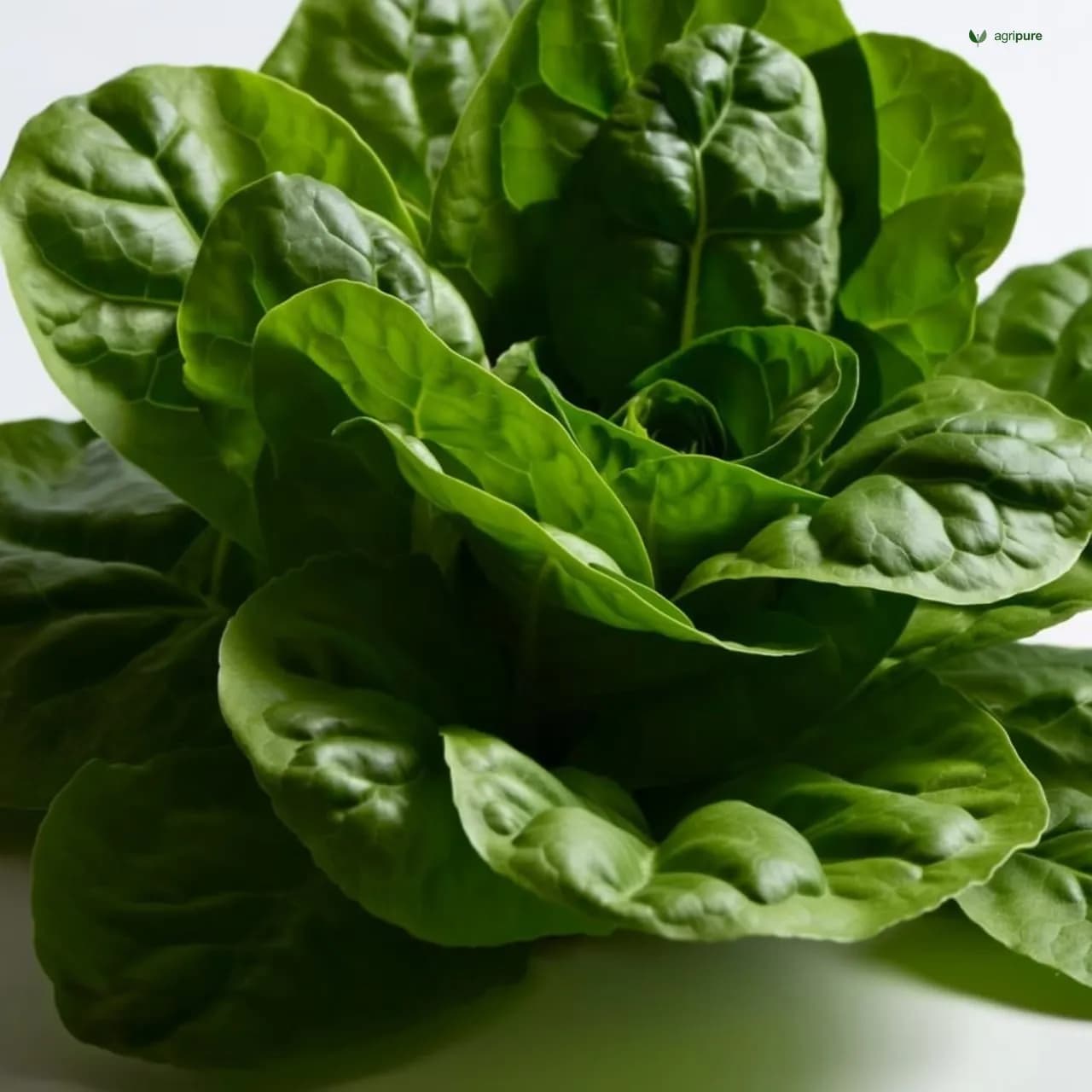
Spinach
palak
Spinacia oleracea
Also known as Palak (Pakistan, India).
- punjab plains
- pothohar
- kpk hills
International hardiness
- USDA 6-10
- RHS H5
- AU: Cool temperate, Warm temperate, Mediterranean
Where it grows — regional guide
| Zones / rating | Regional notes |
|---|---|
USDA 6-10 | An exceptionally cold-hardy annual sown in early spring or late autumn, often overwintering under snow cover for early greens. |
| Zones / rating | Regional notes |
|---|---|
H5 (-15 to -10C) | A fully hardy allotment staple sown in spring and again in late summer; the later sowing can stand through winter, often under cloches or fleece, for early pickings in spring. |
| Zones / rating | Regional notes |
|---|---|
Cool temperate, Warm temperate, Mediterranean | Cultivated during the cooler autumn and winter months across temperate regions, running quickly to seed as spring warms. |
| Zones / rating | Regional notes |
|---|---|
USDA 6-10 (USDA scale) Canada uses its own zone system; Canadian zones run roughly one lower than USDA. | Well suited to the cool short season: sown as soon as the ground is workable, it tolerates light frost and is usually sown again in late summer for an autumn crop, since summer heat and long days make it bolt. |
| Zones / rating | Regional notes |
|---|---|
Punjab plains, Pothohar, KPK hills | Pakistan:A staple winter leafy vegetable across irrigated plains, sown from autumn onwards for repeated cuttings before spring heat. India:A classic rabi vegetable sown in succession during the cool months, producing tender green leaves until warm weather arrives. |
Grows alongside
Species that appear with Spinach in 207 of our published guides — a starting list for a guild, not a planting plan.
Spinach (Spinacia oleracea) is a cool-season annual leafy vegetable in the amaranth family (Amaranthaceae), the same family as beets, chard, and amaranth. It is native to central and southwestern Asia and was first cultivated in Persia (modern Iran) over two thousand years ago, from where it spread across the temperate world as one of the most reliable leafy greens. For a homesteader its appeal is timing: it grows fast and thrives in the cool, shoulder-season weather of spring and fall, filling beds and producing nutritious greens during the very months when warm-season crops cannot.
Spinach forms a low basal rosette of dark green leaves, usually reaching only about 12 inches (30 cm) tall and roughly half a foot to a foot wide. The leaves are simple, alternate, and dark green, rising on petioles from a short central stem. Gardeners distinguish two main horticultural types: smooth-leaf spinach and savoy spinach, whose leaves are crinkled and puckered; the smoother types are often preferred for canning and freezing. Under warm temperatures and long days the plant “bolts,” sending up an inconspicuous greenish-yellow flower spike of no ornamental value, after which leaf quality declines. The small, dry fruits of wild and cultivated forms often carry spines on their surface, a trait that helps separate true spinach from the related “spinach beet.”
Growing spinach
Spinach is almost always grown from seed, and seed should be bought fresh each year: it does not stay viable for very long, so use packets dated for the current season. On most homesteads it is direct-sown outdoors as soon as the soil is workable and conditions are cool, but for a spring crop seed can also be started indoors about 8 weeks before the last spring frost and transplanted out roughly 3 weeks before the last frost, since the seedlings tolerate some frost.
It grows best in moist, well-drained, fertile soil that is rich in organic matter; poor, dry soil only encourages it to bolt and run to seed prematurely. For light, spinach does well in full sun to light shade and will tolerate partial shade, which makes it a useful crop for cooler, less-than-fully-exposed corners of a garden. Temperature is the master control: spinach is a true cool-season crop, with ideal growing temperatures of about 10 to 16 °C (50 to 60 °F), and it does poorly in summer heat, when plants bolt rather than make leaf.
Spinach is a heavy feeder. Wisconsin Extension recommends fertilizing both before planting and again at midseason to drive growth and yield; one example given is sidedressing with about a quarter pound of 5-10-5 fertilizer per 10 feet of row once the plants are roughly 2 inches tall, and supplying extra nitrogen if the leaves begin to yellow. As an annual vegetable spinach is grown across a very wide range of climates — the Missouri Botanical Garden lists culture in **USDA zones 2 through 11** — and in colder regions a fall or winter crop can survive under cover or mulch. The given sources do not specify an exact soil pH or precise spacing, so those are left out here rather than stated with false precision.
Harvest and uses
Spinach is grown for its edible leaves, which are harvested while the plant is still in its leafy rosette stage, before heat and long days trigger bolting and the leaves turn bitter. Because the window between sowing and bolting is what limits the crop, succession sowing through the cool season keeps a steady supply coming. The leaves are eaten cooked or raw and are valued as a nutritious green; they are generally safe to eat when cooked or consumed in normal food amounts. The flowers and fruit are not eaten and are useful mainly for identification.
Safety and cautions
Spinach is a food plant and is generally safe to eat when cooked or eaten in normal food amounts. The one grounded caution from the sources is that it carries notable oxalate and vitamin K content, which creates specific considerations for some people. Its naturally high vitamin K is relevant to anyone whose diet needs to stay consistent for that nutrient, and its oxalate content is the reason spinach is often flagged for people prone to certain kidney stones. This profile makes no medical claims; anyone with a specific dietary restriction should follow qualified guidance. Cooking and eating spinach in ordinary culinary quantities is the normal, safe use.
Sources
- Spinacia oleracea: composition and food science – ACS Food Science & Technology
- Spinacia oleracea taxonomy – PubChem (NCBI)
- Spinach, Spinacia oleracea – University of Wisconsin-Madison Division of Extension
- Spinacia oleracea – Missouri Botanical Garden Plant Finder
- Spinacia oleracea – eFlora of India
- Spinach (Spinacia oleracea) research notes – Hamilton College