climax
Sapota (chiku)
chiku (چیکو)
Manilkara zapota
Also known as Sapodilla (United States, Australia).
- sindh coast
International hardiness
- USDA 10-12
- RHS H1b
- AU: Tropical, Subtropical
Where it grows — regional guide
| Zones / rating | Regional notes |
|---|---|
USDA 10-12 | Strictly frost-tender across USDA zones 10 to 12 in full sun; let mature fruit soften to lose gummy astringency, and be aware that injured plant parts bleed sticky latex. |
| Zones / rating | Regional notes |
|---|---|
H1b (10 to 15C) | No region-specific data yet |
| Zones / rating | Regional notes |
|---|---|
Tropical, Subtropical | Grown in frost-free tropical and subtropical coastal orchards in full sun; harvest and soften mature fruit to avoid gummy astringency, and beware sticky latex from injured parts. |
| Zones / rating | Regional notes |
|---|---|
USDA 10-12 (USDA scale) Canada uses its own zone system; Canadian zones run roughly one lower than USDA. | No region-specific data yet |
| Zones / rating | Regional notes |
|---|---|
Sindh coast | Pakistan:Planted in frost-free orchards along the Sindh coast for sweet dessert fruit; let unripe gummy fruit soften fully, and beware sticky white latex from injured plant parts. India:Widely cultivated across frost-free tropical lowlands for sweet brown fruit; wait until gummy fruit softens to eat, and note that injured plant parts bleed sticky white latex. |
Sapota (Manilkara zapota), also called chiku, sapodilla, naseberry or níspero, is a long-lived evergreen fruit tree native to the Yucatán and nearby southern Mexico, northern Belize and northeastern Guatemala, and more broadly Mexico, Central America and the West Indies. It is grown across tropical and subtropical lowlands worldwide — India, Thailand, the Philippines, Malaysia, Sri Lanka, Indonesia and the Caribbean among them — for its very sweet brown fruit and for the milky latex, or “chicle,” that was the original base of chewing gum. For the homesteader in a frost-free climate, sapota is a patient long-term planting: a slow-growing, dense-canopied shade tree that returns sweet fruit year after year.
Sapota is an upright to spreading, slow-growing evergreen, somewhat irregular in shape, with a round, dense crown. It usually reaches about 5–20 m tall in cultivation and can grow to 40 m in forest with a trunk up to 1.5 m across; other horticultural accounts report heights of roughly 18–30 m in favorable conditions. When the bark or branches are injured they bleed a white gummy latex, and in fact all parts of the tree are rich in this chicle. The leaves are evergreen, glossy, firm and clustered at the twig tips; they are elliptic and pointed at both ends, about 7.5–11.25 cm long and 2.5–4 cm wide, dark green and quite ornamental. The flowers are small and bell-like, cream to pale green, borne singly on slender stalks in the leaf axils, and in suitable climates can appear throughout the year.
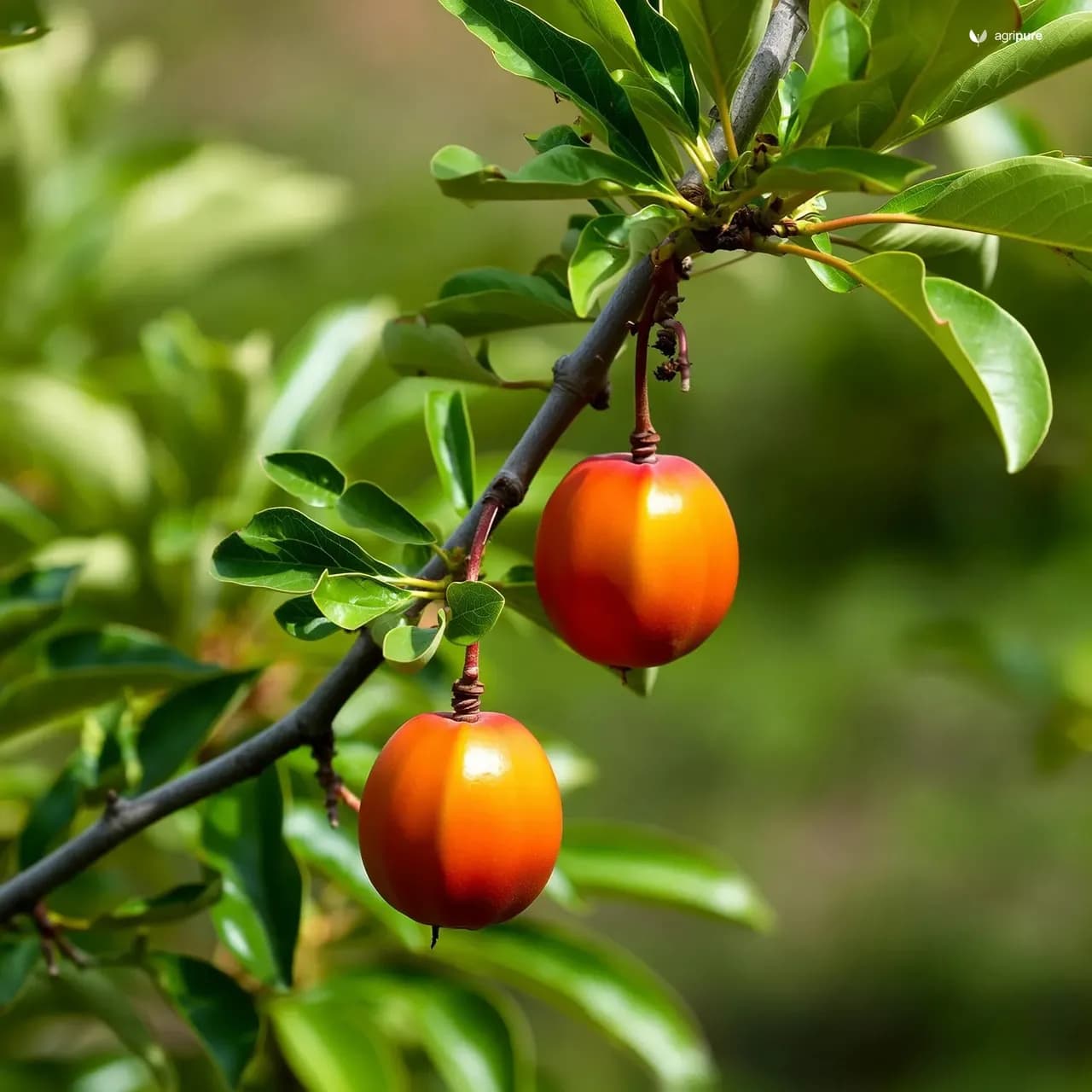
The fruit itself is variable in shape (nearly round, oblate, oval, ellipsoidal or conical) and typically 5–10 cm wide. Its skin is smooth but covered with a sandy-brown “scurf” until fully ripe, turning overall brown at maturity. The flesh is yellowish to light- or dark-brown, sometimes reddish-brown, soft, very juicy and sweet, with a flavor often compared to pear or malty brown sugar. Unripe fruit, by contrast, is hard, gummy and very astringent, so it must reach full maturity before eating. Inside are usually 3–12 hard, glossy, brown or black seeds, long-oval and about 2 cm long, each with one white margin and often a distinct curved hook along one edge, a handy identification cue.
Growing sapota
Sapota is propagated both by seed and by vegetative methods. Seed-grown trees are slow to come into bearing: sapodillas take a number of years from germination before they fruit, so most growers prefer vegetatively propagated stock to shorten the wait, though the general botanical sources here confirm only that seed and vegetative propagation are used without specifying a single best technique. Once mature, flowering can continue all year in suitable climates and trees may set fruit twice a year.
This is a tree of warm climates. It is grown in tropical and subtropical lowlands and needs very warm temperatures; trees die rapidly if conditions drop to freezing (0 °C), which is why it is used as a shade, street and fruit tree only in frost-free climates. No primary source consulted here assigns it a USDA hardiness zone, but its intolerance of freezing and its lowland tropical preference point to frost-free ground only — broadly the warm parts of USDA zones 10–11, an inference from the documented freezing sensitivity rather than a figure from the primary literature. The practical rule is to treat sapota as non-hardy anywhere frost occurs. For light, it is grown both as a broad-canopied shade and street tree and as a fruit tree in open lowland orchards and plantations, which is consistent with full sun. Detailed soil, spacing and irrigation figures are not consistently documented in the general botanical sources available here, so they are left out rather than stated with false precision.
Harvest and uses
Because unripe sapota is hard, gummy and astringent, fruit should be picked only when mature and allowed to ripen to its characteristic soft, sweet, brown-sugar flesh. The primary appeal is culinary: the ripe flesh is eaten fresh, prized for its juicy, very sweet, pear-like to malty flavor. Beyond the fruit, the tree’s milky latex (chicle) is its other historic product — the original base for chewing gum — and all parts of the tree carry this gum. Reliable yield figures are not given in the general botanical sources available here, so no production numbers are claimed.
Safety and cautions
The main eating caution with sapota concerns ripeness rather than toxicity. Unripe fruit is hard, gummy and very astringent, so it should never be eaten until it has reached full maturity and softened to its sweet, brown-sugar flesh; pick only mature fruit and let it finish ripening before eating. When handling the tree, be aware that injured bark, branches and fruit bleed a sticky white latex (chicle), which is present in all parts of the plant.
How to identify it
Sapota can be recognized by a consistent combination of features:125
- Habit: Slow-growing evergreen with a round, dense crown, upright to spreading and somewhat irregular in shape.
- Latex: Injured bark, branches and fruit bleed a white, gummy latex (chicle).
- Leaves: Glossy, firm, dark-green, elliptic, about 7.5–11.25 cm long, clustered at the twig tips.
- Fruit: Round to oval or conical, 5–10 cm wide, scurfy skin ripening brown, soft sweet flesh.
- Seeds: Usually 3–12, hard, glossy, ~2 cm long, with one white margin and often a curved hook on one edge.
Sources
- Manilkara zapota (sapodilla) — CABI Compendium
- Chikoo (Manilkara zapota) — Flowers of India
- Sapodilla (Manilkara zapota) — ECHO Community
- Sapodilla, Manilkara zapota — Growables
- Manilkara zapota — ScienceDirect Topics