secondary
Stevia
meethi tulsi
Stevia rebaudiana
Also known as Meethi Tulsi (Pakistan, India).
- punjab plains
- pothohar
International hardiness
- USDA 9-11
- RHS H2
- AU: Tropical, Subtropical, Warm temperate
Where it grows — regional guide
| Zones / rating | Regional notes |
|---|---|
USDA 9-11 | Perennial only in frost-free regions; widely grown as a summer annual or potted herb harvested before autumn blooms open. |
| Zones / rating | Regional notes |
|---|---|
H2 (1 to 5C) | Frost-tender: grown in summer pots on sunny patios or under glass, with foliage harvested for drying before autumn chills. |
| Zones / rating | Regional notes |
|---|---|
Tropical, Subtropical, Warm temperate | A warm-season herb in temperate and subtropical zones, requiring moist rich soil and pinching to keep leaves sweet. |
| Zones / rating | Regional notes |
|---|---|
USDA 9-11 (USDA scale) Canada uses its own zone system; Canadian zones run roughly one lower than USDA. | No region-specific data yet |
| Zones / rating | Regional notes |
|---|---|
Punjab plains, Pothohar | Pakistan:Cultivated as an irrigated warm-season container herb in sunny spots, sensitive to severe dry spells and winter frost. India:Grown in home containers and commercial plots for sweet leaves, thriving in warm humid weather and pruned to delay flowering. |
Grows alongside
Species that appear with Stevia in 2 of our published guides — a starting list for a guild, not a planting plan.
Stevia (Stevia rebaudiana) is a small, tender perennial herb in the daisy family (Asteraceae), grown for its intensely sweet leaves. The leaves contain steviol glycosides, the compounds used worldwide as a high-intensity, zero-calorie sweetener. It is native to Paraguay and the adjacent parts of Brazil, where it grows in warm, humid country. For a homesteader, the appeal is direct: a compact, container-friendly herb that lets you grow and dry your own sweetener leaf by leaf, rather than buying a refined product.
What it looks like
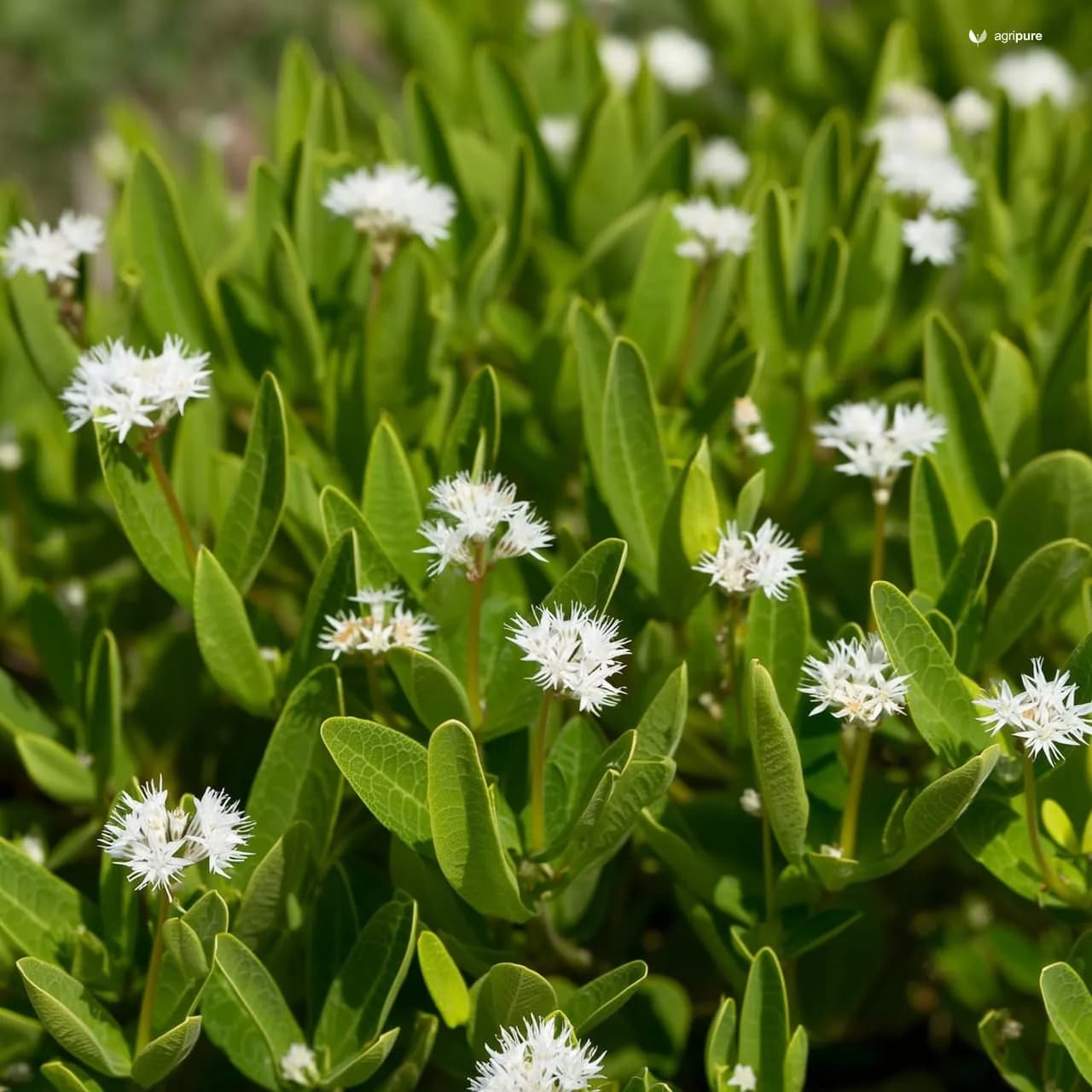
Stevia is a multi-stemmed, branching, herbaceous plant — not woody — that typically reaches about 30 to 60 cm (1 to 2 ft) tall and roughly as wide. Its leaves are opposite, oval to lance-shaped, with a serrated (toothed) margin, and grow up to about 5 cm long. Those leaves are the harvested part; they carry more than thirty steviol glycosides, chiefly stevioside and rebaudioside A, which give the plant its sweetness. In summer it produces small white flowers in the composite heads typical of the daisy family, followed by a small, dry, single-seeded fruit (an achene). It goes by several common names, including sweetleaf, sugarleaf, candyleaf, honey leaf, and the sweet herb of Paraguay.
Growing stevia
Stevia comes from warm, humid, subtropical-to-tropical conditions and prefers moderate temperatures with some humidity. NC State Extension lists it as winter hardy only in USDA zones 10 to 11; in colder zones it is generally grown as an annual or brought indoors for the winter. To grow it well at homestead scale:
- Propagation: Plants can be raised from the seed held in the dry fruit. Stevia is also commonly propagated by cuttings, and tissue culture is widely used for clonal propagation in commercial systems to produce uniform, high-glycoside plants.
- Sun: Give it full sun; it will also tolerate partial shade.
- Soil: It prefers moist, well-drained, loamy or sandy soil that is organically rich and slightly acidic. Research notes the plant can still thrive on poor, acidic soils with low to moderate fertility, which makes it forgiving on marginal ground.
- Water: Coming from humid, wet country, it likes moist soil, but the practical rule in cultivation is to keep that soil well-drained so the roots never sit waterlogged.
- Feeding: NC State recommends fertilizing every 4 to 6 weeks through the growing season.
Because the plant grows to roughly 1 to 2 ft in both height and spread, you can space and pot it accordingly. Exact sowing temperatures, in-row spacing, and time-to-harvest figures are not consistently given in these sources, so they are left out here rather than stated with false precision. In practice, treat stevia like a tender warm-season herb: start it in a warm, free-draining bed or container, keep it moist but never soggy, and protect it from frost.
Harvest and uses
The leaves are the entire reason to grow the plant. They are the organ harvested for sweetness, dense with steviol glycosides, and can be used fresh or dried to sweeten food and drink. Steviol glycosides are valued precisely because they deliver intense sweetness with essentially no calories, which is why they are produced commercially from this single herb. Stevia-derived sweeteners are used as a sugar substitute in foods and beverages around the world. For the household grower, the return is a clean, home-dried sweetener from a compact plant you can keep in a pot on a sunny step — a genuinely useful crop for anyone trying to cut refined sugar.
How to identify it
Stevia is recognizable by this combination of features:134
- Habit: A small, multi-stemmed, branching herbaceous plant about 30 to 60 cm tall and as wide.
- Leaves: Opposite, oval to lance-shaped, with toothed (serrated) edges, up to about 5 cm long — and noticeably sweet to the taste.
- Flowers: Small and white, in the composite heads of the daisy family, appearing in summer.
- Fruit: A small, dry, single-seeded achene.
Safety and cautions
Stevia’s sweetness comes from steviol glycosides extracted and consumed as a sweetener, and high-purity stevia sweeteners are widely used in the food supply as a sugar substitute. This profile describes the plant’s traditional and culinary use as a sweetener and makes no medical claims about treating or preventing any condition. As with any home-grown herb used in food, use the leaves in moderation, and anyone who is pregnant or breastfeeding, or who manages a medical condition, should seek qualified advice before relying on it.
Sources
- Stevia rebaudiana — NC State Extension Plant Toolbox
- Stevia rebaudiana — Wikipedia
- Stevia rebaudiana overview — ScienceDirect Topics
- Steviol glycosides of Stevia rebaudiana — PMC (National Library of Medicine)
- Tissue-culture propagation of Stevia rebaudiana — PMC (National Library of Medicine)
- Everything You Need to Know About Stevia Sweeteners — International Food Information Council