support
Soft Sophora
kandiari
Sophora mollis
Also known as Kandiari (Pakistan).
- pothohar
- kpk hills
- balochistan highlands
International hardiness
- USDA 7-9
- RHS H4
- AU: Cool temperate, Warm temperate
Where it grows — regional guide
| Zones / rating | Regional notes |
|---|---|
USDA 7-9 | No region-specific data yet |
| Zones / rating | Regional notes |
|---|---|
H4 (-10 to -5C) | No region-specific data yet |
| Zones / rating | Regional notes |
|---|---|
Cool temperate, Warm temperate | No region-specific data yet |
| Zones / rating | Regional notes |
|---|---|
USDA 7-9 (USDA scale) Canada uses its own zone system; Canadian zones run roughly one lower than USDA. | No region-specific data yet |
| Zones / rating | Regional notes |
|---|---|
Pothohar, KPK hills, Balochistan highlands | Pakistan:A nitrogen-fixing deciduous shrub of the Pothohar, KPK hills, and Balochistan; do not graze it, as its cytisine alkaloid is toxic to livestock and children. India:A dry-hill nitrogen-fixing legume native to the western Himalaya; never use as livestock fodder, as all plant parts and seeds carry poisonous cytisine. |
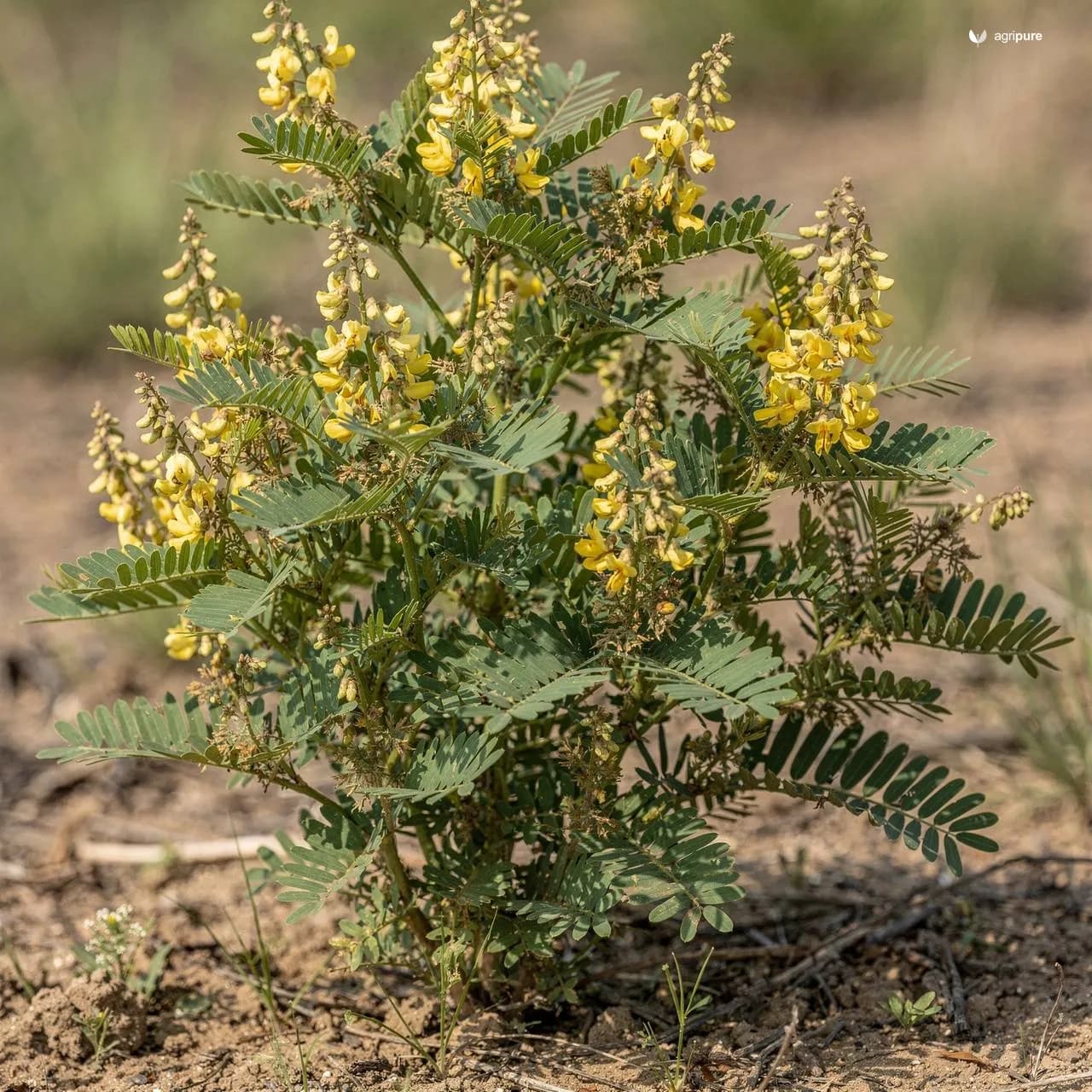
Soft sophora, Sophora mollis, locally kandiari, is a nitrogen-fixing legume shrub of the Pothohar plateau and the dry hill slopes of northern and western Pakistan. It is a workhorse, not a showpiece. On degraded, low-fertility ground it does the unglamorous job of a support species: it pulls nitrogen out of the air, drops leaf and prunings as chop-and-drop biomass, and flowers yellow for the bees. For a syntropic row on tired hill soil, it is one of the fertility plants you grow to feed the others.
Where it thrives
Kandiari is a deciduous shrub to about 2 m, native from Iran through Central Asia to the western Himalaya, and present across Pakistan including Pothohar and the dry sub-mountain hills.2 It tolerates light sandy, medium loamy, and heavy clay soils, prefers well-drained, moderately fertile dry ground, and accepts a wide pH band from mildly acid to alkaline. That hardiness across poor, dry soils is exactly why it suits the the Pothohar plateau, the KPK hills, and the Balochistan highlands zones — warm, dry, marginal country where richer plants struggle. It does not need fertile soil to establish, which is the whole point of a fertility-building support shrub.
Role in the system
This is a support and nitrogen-fixing species, the role it is listed under and the role it does best. Like other legumes it forms root nodules in symbiosis with soil bacteria that fix atmospheric nitrogen, some used by the plant and some made available to neighbours. Planted between slower productive trees, it rebuilds fertility on degraded ground while they establish. It coppices and supplies chop-and-drop prunings for mulch and green manure, and its yellow flowers are useful bee-forage. As the system matures and the canopy closes, a support shrub like this is one of the plants you cut back hard or phase out, returning its biomass to the soil. It tolerates the full spread of soils (sandy, loamy, or clay, acid through to alkaline) and asks only for decent drainage, so it establishes on the kind of dry, worn-out hill ground where a fertility plant is most needed.
What you get
The returns are services, not a marketable crop. The first is fertility: free nitrogen and a steady supply of leafy biomass for mulch. The second is fuel — the wood is hard and is used mainly as firewood, a real benefit in fuel-short hill villages. The flowers feed pollinators. One caution worth stating plainly: the plant contains cytisine, an alkaloid that resembles nicotine and is similarly toxic, so it is not a fodder plant and the seed should be kept away from children and livestock. Grown for what it does well, it is a low-cost engine for rebuilding worn-out hill soil.
Sourcing notes
Collect seed from wild stands on Pothohar or dry hill slopes; scarify before sowing to break the hard legume seed coat. Do not plant it as browse — the cytisine content makes it unsuitable for fodder.
Sources
- Plants of the World Online. “Sophora mollis (Royle) Graham ex Baker.” Royal Botanic Gardens, Kew (distribution).
- Plants For A Future. “Sophora mollis.” (nitrogen fixation, soil, fuel use, and cytisine toxicity).
Sourcing notes
Collect seed from wild stands on Pothohar or dry hill slopes and scarify before sowing; do not plant it as browse, as the cytisine content makes it unsuitable for fodder.