secondary
Indian Gooseberry
amla
Phyllanthus emblica
Also known as Amla (Pakistan, India).
- punjab plains
- pothohar
- sindh coast
International hardiness
- USDA 9-11
- RHS H2
- AU: Tropical, Subtropical, Warm temperate
Where it grows — regional guide
| Zones / rating | Regional notes |
|---|---|
USDA 9-11 | Realistic outdoors only in the frost-free USDA 9 to 11 range, chiefly Florida and the mildest Gulf Coast and southern California; it wants warmth and steady moisture, and elsewhere is a container plant brought in before frost. |
| Zones / rating | Regional notes |
|---|---|
H2 (1 to 5C) | No region-specific data yet |
| Zones / rating | Regional notes |
|---|---|
Tropical, Subtropical, Warm temperate | A collector's fruit tree for frost-free tropical and subtropical gardens that wants warmth and steady moisture; the tart, vitamin-rich fruit is eaten fresh, pickled or candied. |
| Zones / rating | Regional notes |
|---|---|
USDA 9-11 (USDA scale) Canada uses its own zone system; Canadian zones run roughly one lower than USDA. | No region-specific data yet |
| Zones / rating | Regional notes |
|---|---|
Punjab plains, Pothohar, Sindh coast | Pakistan:A tough small tree of the irrigated plains, briefly leafless in winter and grown for its sour, vitamin-rich fruit, which is pickled, candied or eaten fresh. India:A revered orchard and home garden tree across the plains, producing sour medicinal fruits harvested through the cool dry season. |
Indian gooseberry (Phyllanthus emblica), widely known as amla, is a small to medium tree grown for its round, tart, vitamin-rich fruit. It is native across a broad sweep of South and Southeast Asia — including India, Sri Lanka, Pakistan, Bangladesh, Myanmar, Thailand, Laos, Cambodia, Vietnam, Malaysia, Indonesia, Borneo, and Hainan — where it grows in wet tropical environments. The U.S. Department of Agriculture lists Phyllanthus emblica as the accepted name, with amla and Indian gooseberry among its common names. For a homesteader in a warm, humid climate, the appeal is a hardy, multipurpose fruit tree whose crop spans the kitchen, the herbal shelf, and the bathroom cabinet.
Identifying Indian gooseberry
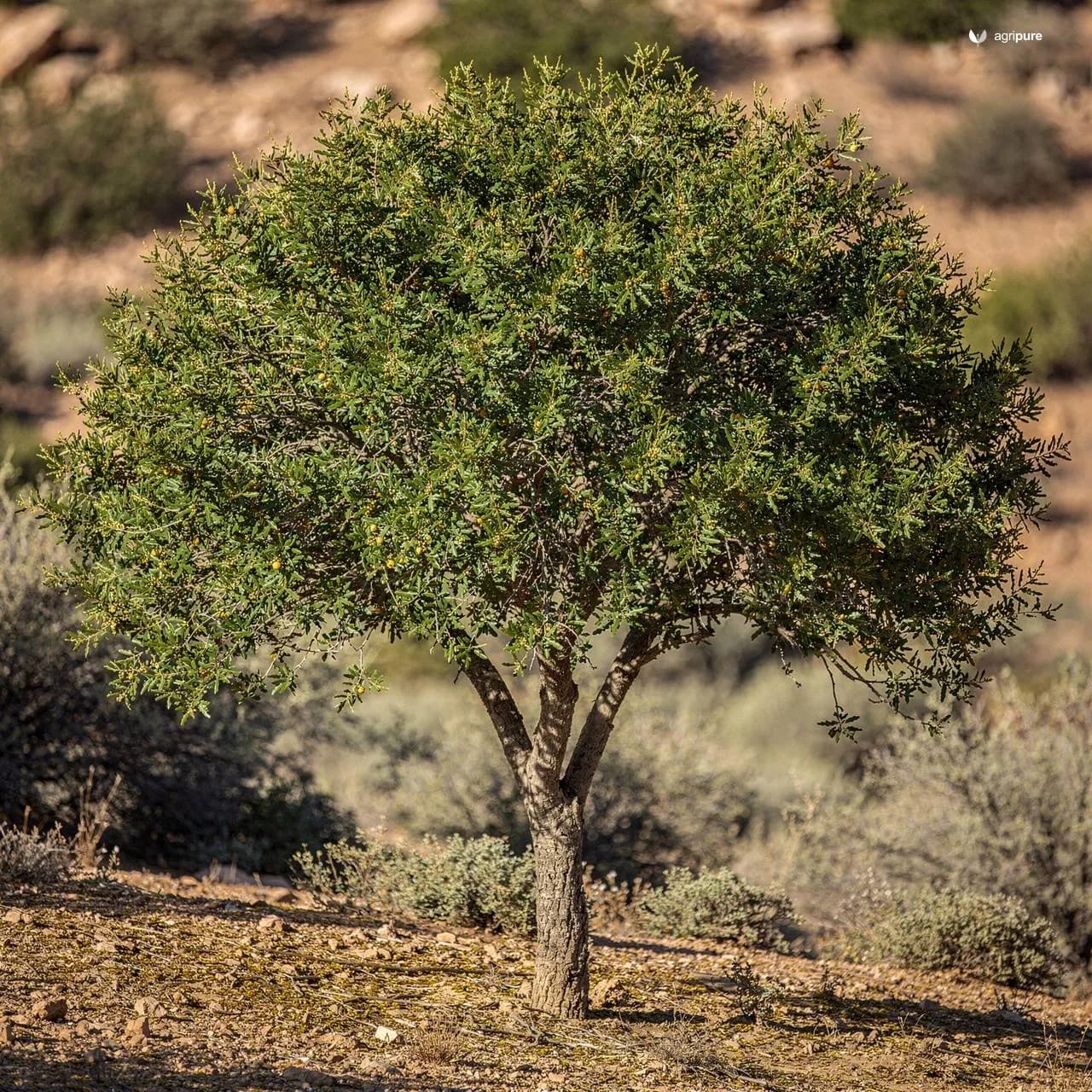
According to the Royal Botanic Gardens, Kew, the tree grows roughly 1 to 8 m tall with a wide, low-hanging canopy. Its leaves are narrow, light green, and set close together along long, slender branchlets, giving the foliage a fine, feathery appearance. The flowers are greenish-yellow with six petals. The fruit is the most distinctive feature: a round, green-yellow, smooth berry about 2 cm in diameter, marked by six lighter vertical stripes or furrows running down its surface. That ribbed, six-striped fruit is the most reliable field cue for telling amla apart from other small tropical fruit trees.
Growing Indian gooseberry
The clearest environmental signal in the reliable sources is climate rather than a step-by-step planting recipe. Kew characterises the habitat of Phyllanthus emblica as wet tropical environments, and its native range spans the warm, humid lowlands of tropical Asia. A homesteader working within that climate band — frost-free, warm, and reliably moist — is matching the conditions the species evolved in.
The supplied sources do not provide verified figures for propagation method, soil type, sun exposure, watering, spacing, or time to maturity. Rather than invent precise numbers, those specifics are deliberately left out here. Treat the climate match above as the dependable starting point: site the tree where it gets the warmth and moisture of a tropical or subtropical setting, and look to a local extension service or nursery for region-specific spacing and cropping schedules.
Harvest and uses
The fruit is the principal harvest, and it is genuinely versatile. In the kitchen, Kew records that amla is used in Indian cuisine in several forms: as a pickle (amla achaar), as candied fruit soaked in syrup, and as a juice mixed with lemon, water, and honey. CAB International similarly notes that the fruit is eaten raw and put to a range of culinary uses.
Beyond food, the fruit has a long-standing role in personal care. Kew notes that extracts of the plant are used in hair and skin products, and CAB International records the fruit’s use in shampoos and hair oils — a traditional ingredient that remains common in cosmetic formulations today.
The reliable sources do not give harvest timing, mature-tree yield, or crop quantities for this species, so no yield figures are stated here. If you grow amla, plan to learn its cropping behaviour from your own trees and local growers rather than from headline numbers.
Traditional medicinal use
Indian gooseberry carries one of the deepest medicinal records of any Asian fruit tree. CAB International reports that the fresh or dried fruit, along with the seeds, leaves, roots, and bark, are all used in herbal medicine, and a PubMed-indexed review describes the fruit as the most important medicinal part in Ayurveda. Traditional applications recorded in the literature include use for the common cold, fever, and digestive complaints, as well as laxative, diuretic, and liver-tonic purposes, among others. These are traditional uses, not proven clinical treatments, and this profile makes no claim that amla treats or cures any condition.
Safety and cautions
The provided sources do not describe any part of Phyllanthus emblica as poisonous; on the contrary, they describe the fruit as edible and used in everyday cooking. The honest caution is a different one. Because the plant is used medicinally across many parts and many preparations, it should not be assumed automatically safe in concentrated supplement or extract form simply because the fresh fruit is a food.
The supplied evidence does not include specific interaction warnings, contraindications, or pregnancy and lactation cautions for this species, so none are listed here rather than guessing at them. As a sensible general principle, anyone who is pregnant or breastfeeding, or who takes prescription medication, should seek qualified medical advice before using concentrated amla products. Enjoy the fruit as food with confidence; treat the supplements with the same care you would give any potent herbal preparation.
Sources
- Phyllanthus emblica (emblic) – CAB International (CABI Compendium)
- Indian gooseberry (Phyllanthus emblica) – Royal Botanic Gardens, Kew
- Phyllanthus emblica taxon record – USDA APHIS
- Phyllanthus emblica in Ayurvedic medicine: a review – PubMed (National Library of Medicine)