secondary
Ginger
adrak
Zingiber officinale
Also known as Adrak (Pakistan, India).
- punjab plains
- sindh coast
International hardiness
- USDA 9-12
- RHS H1b
- AU: Tropical, Subtropical
Where it grows — regional guide
| Zones / rating | Regional notes |
|---|---|
USDA 9-12 | Overwinters outdoors only in frost-free regions; elsewhere it is grown in containers started in spring and harvested in autumn. |
| Zones / rating | Regional notes |
|---|---|
H1b (10 to 15C) | Tender rhizome requiring greenhouse culture or a warm windowsill, started with bottom heat and lifted before cold weather arrives. |
| Zones / rating | Regional notes |
|---|---|
Tropical, Subtropical | Grows vigorously in warm, sheltered understory positions in tropical and subtropical zones, harvested during the cool dry season. |
| Zones / rating | Regional notes |
|---|---|
USDA 9-12 (USDA scale) Canada uses its own zone system; Canadian zones run roughly one lower than USDA. | No region-specific data yet |
| Zones / rating | Regional notes |
|---|---|
Punjab plains, Sindh coast | Pakistan:Cultivated in fertile, well-drained soil under filtered shade and regular summer watering, harvested as foliage yellows in winter. India:A major commercial and kitchen spice planted with early monsoon rains in partial shade, lifted after tops collapse in dry weather. |
Grows alongside
Species that appear with Ginger in 55 of our published guides — a starting list for a guild, not a planting plan.
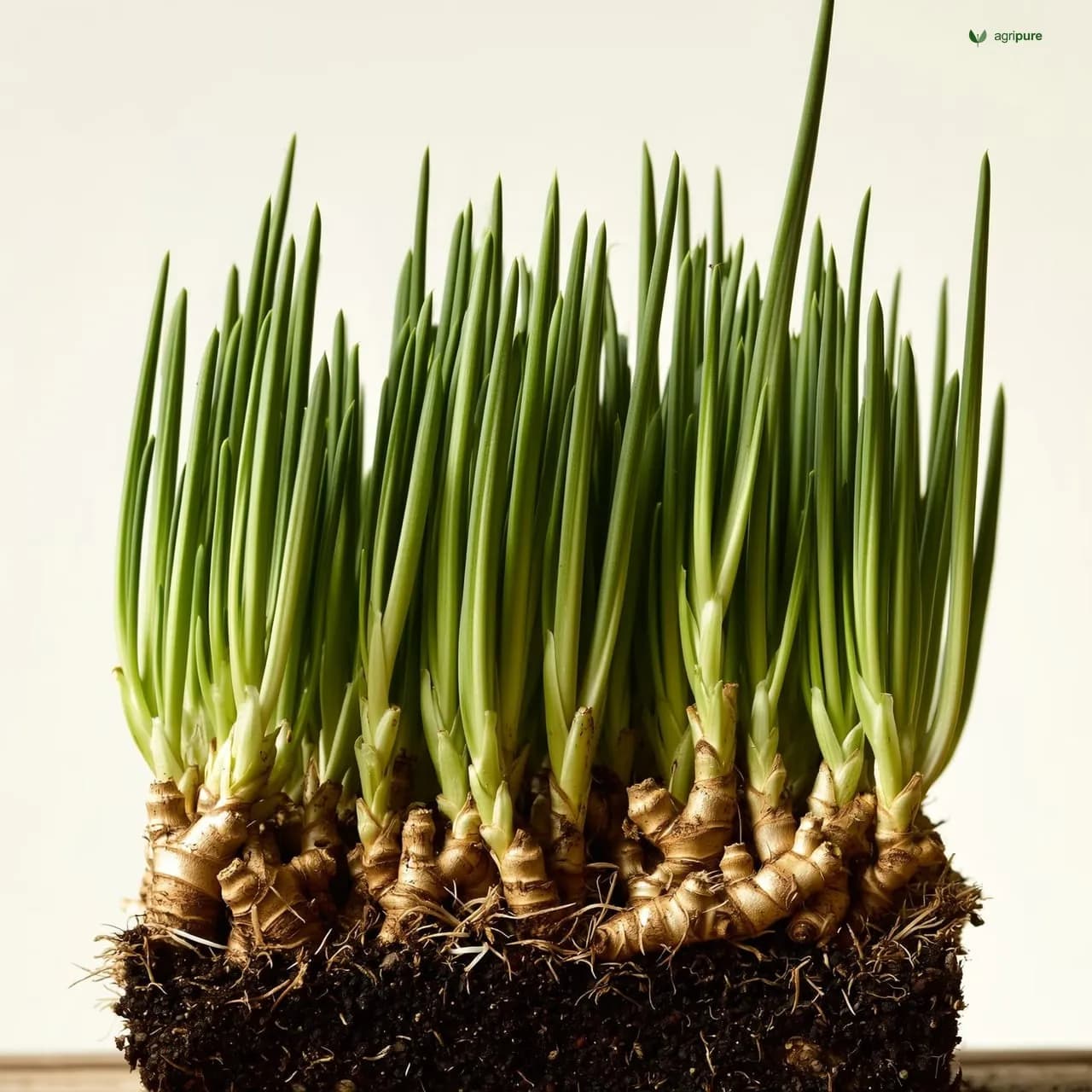
Ginger (Zingiber officinale) is a tender, herbaceous, rhizomatous perennial grown around the world for its aromatic, edible rhizomes and its long record of culinary and medicinal use. Thought to be native to Southeast Asia, or tropical Asia more broadly, it is now cultivated throughout the tropics. For a homesteader, ginger is the rare high-value crop that actually prefers the warm, partly shaded, humid conditions that defeat many vegetables, which makes it a natural candidate for a sheltered bed, a greenhouse corner, or a large container that can be moved indoors when the season turns.
The part most people call “ginger root” is botanically an underground stem, or rhizome, fed by fibrous roots. Above ground, the plant throws up annual pseudostems, false stems formed from rolled leaf bases, reaching roughly 1 m tall and bearing narrow green leaf blades; in garden culture a clump commonly fills out to about 4 ft high and 3 ft wide. The rhizomes themselves are brown to golden on the outside with a corky skin, pale yellow and aromatic within, carrying a spicy, lemony scent. Young rhizomes are juicy, fleshy and mild; mature ones are drier, more fibrous and noticeably more “zingy.” Where it does flower, it produces yellowish blooms and, eventually, red three-parted capsules holding small black seeds, though temperate growers rarely see it flower.
Growing ginger
Ginger is propagated vegetatively from the rhizome rather than from seed. Start with fresh rhizomes carrying several swollen buds, or “eyes”; you can plant them whole or divide them into pieces, keeping at least two eyes per section. After cutting, let the pieces dry and callus for a day or two in a warm, dry spot to reduce rot, and soaking them overnight in warm water before planting helps rehydrate the tissue and stimulate growth.
This is a warmth-driven plant. Ginger only grows when the soil is above 68°F (20°C) and does best around 77°F (25°C). It is hardy outdoors only in roughly **USDA zones 8 to 12, depending on the source, and cannot tolerate frost; container plants should come indoors once night temperatures fall below about **50°F (10°C). Outside the deep South it is usually grown with protection or as a container crop.
Give it rich, organic, well-drained soil; ginger tolerates a range of soil types but rewards beds amended with compost, rotted manure, or other rich organic matter. Drainage matters because cold, wet soil readily causes root rot. For light, the plant is native to partly shaded tropical habitats, so in cooler climates it grows well in full sun, while in warmer southern locations some partial shade is beneficial; too much direct sun there produces brown-tipped foliage and poor growth. Water sparingly at first, until shoots appear, to avoid rotting the rhizome, then keep the soil evenly moist but never soggy through the growing season. For container culture, allow space for that 4 ft by 3 ft mature size in the ground, or use a generous pot; a 14-inch (about 35 cm) pot will hold roughly three rhizomes, and ginger tolerates being somewhat crowded. Container plants should not be watered while leafless and dormant; resume only when new shoots emerge.
Harvest and uses
The rhizome is the harvest. Younger, milder rhizomes can be lifted earlier in the season for fresh use, while leaving the clump longer yields the drier, more fibrous, stronger-flavored mature ginger. Because the plant multiplies underground, a single planting supplies both the kitchen and next season’s planting stock: simply hold back plump, healthy pieces with good eyes to replant. Beyond its central role as a culinary spice, ginger carries a long and well-documented history of medicinal use, which is one of the reasons it has been carried and cultivated across the tropics for so long.
Common problems
The main pitfall for ginger is moisture and cold rather than pests. Cold, wet locations and overwatering, especially before shoots are established, predispose the rhizomes to root rot. The practical defenses are the same growing conditions the plant prefers: free-draining soil rich in organic matter, restrained watering until growth starts, and warmth, with frost and chilling avoided entirely by lifting container plants indoors before nights drop below about 50°F (10°C).
Sources
- Ginger (Zingiber officinale): aromatic spice and medicinal herb — University of Reading, Tropical Biodiversity
- Ginger, Zingiber officinale — University of Wisconsin-Madison Division of Extension
- Zingiber officinale — North Carolina State Extension, Plant Toolbox
- Zingiber officinale Roscoe — GBIF
- Ginger — Wikipedia
- Zingiber officinale — Missouri Botanical Garden Plant Finder