Composting manure safely: chicken, rabbit, cow and horse
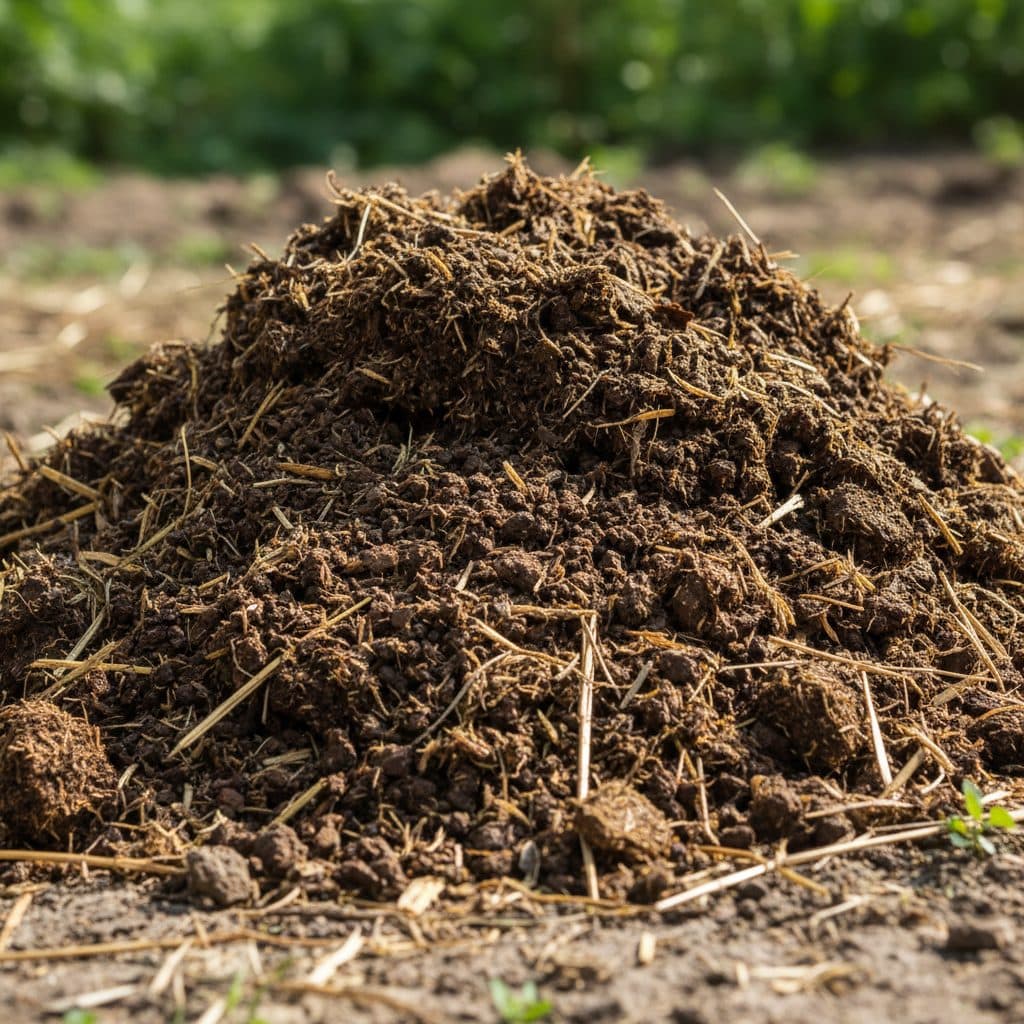
A close-up photograph of rich, dark composted horse manure mixed with straw bedding, ready for the garden.
Key Takeaways
- Pathogen destruction parameter: Maintain pile temperatures between 131°F and 160°F for at least 15 consecutive days to kill Salmonella and E. coli.
- Chicken manure properties: Handle nitrogen-heavy chicken manure (C:N ratio of 8:1 to 10:1) carefully, adding carbon to prevent ammonia volatilization.
- Rabbit manure exception: Utilize rabbit manure (C:N ratio of 10:1) as a cold fertilizer; it is less likely to burn roots than hot manures.
- Horse manure weed risk: Compost horse manure (C:N ratio of 17:1 to 30:1) thoroughly, as horses digest only 30% to 40% of weed seeds.
- Bulking material additions: Blend carbon-rich bedding like straw (127:1 ratio) or sawdust (442:1 ratio) to achieve a target C:N ratio of 25:1.
- Buffer zone safety: Site manure compost piles at least 50 feet away from wells, streams, and residential property boundaries.
Quick answer: To safely compost manure, balance high-nitrogen inputs with carbon bedding to achieve a C:N ratio of 25:1, and maintain pile temperatures between 131°F and 160°F for at least 15 consecutive days to kill pathogens and weed seeds.
The Environmental Protection Agency (EPA) estimates that the average American generated 328 pounds of food waste in 2016, with households accounting for 40% to 50% of the nation’s 26.5 million tons of annual food waste. While kitchen organic waste recycling is essential, rural and suburban growers often have access to livestock manure from chickens, rabbits, horses, and cows. Composting animal manures safely — by balancing high-nitrogen inputs with carbon bedding and monitoring thermophilic temperatures — provides a highly effective way to create a pathogen-free, nutrient-rich soil builder.
By heating and stabilizing these livestock wastes, you can convert raw manure into a dark soil conditioner that lasts for up to 5 seasons. This composting process ensures that human pathogens and weed seeds are 100% neutralized.
The pathogen risks of raw manure
These organic livestock materials contain high concentrations of nitrogen, phosphorus, and potassium, but handling them raw carries public health hazards. Fresh manure from warm-blooded animals can host millions of human pathogens, including Escherichia coli O157:H7, Salmonella enterica, and Listeria monocytogenes.
A diagram showing pathogen survival curves in soil and the temperature kill zones.
Microbial contamination pathways
To prevent pathogen transfer, you must never apply raw manure to active vegetable gardens close to harvest. Pathogens can survive in cold garden soil for up to 300 days, contaminating root crops or low-growing leafy greens through water splashing. Composting manure at high temperatures is the primary barrier against these pathogens.
Weed seed survival rates
This sanitation process is also necessary to kill weed seeds, which are particularly common in horse manure. Horses have a simple digestive tract that processes food quickly, leaving up to 60% of consumed weed seeds viable. Cows, which have a four-compartment stomach, digest seeds more thoroughly, but their manure still requires composting to prevent weed infestations.
Sizing and balancing C:N ratios for livestock manure
This carbon-to-nitrogen (C:N) balancing determines whether your manure pile will reach thermophilic temperatures or rot anaerobically. Raw manures are highly concentrated nitrogen sources, requiring bulking materials to raise the pile’s overall C:N ratio to between 15:1 and 40:1.
Manure C:N ratio values
Different livestock produce manures with distinct C:N profiles, which affects how much carbon you must add to stabilize the 100% organic mix:
- Chicken manure (8:1 to 10:1 C:N): Highly concentrated and hot; requires three parts carbon bedding for every one part manure to prevent ammonia odors.
- Rabbit manure (10:1 C:N): A dry manure that contains high nitrogen but is less likely to burn roots; it can be composted easily with a 1:2 carbon ratio.
- Cow manure (13:1 to 20:1 C:N): Standard dairy or beef waste; composts steadily with a 1:1 carbon ratio.
- Horse manure (17:1 to 30:1 C:N): Often pre-mixed with wood shavings or straw bedding, giving it an ideal starting ratio between 25:1 and 35:1.
Selecting carbon bulking agents
To balance these nitrogen-heavy manures, you must mix in carbon-rich “browns” with C:N ratios over 100:1:
- Straw (127:1 C:N): Excellent for structural support, creating air pockets that supply oxygen to aerobic bacteria.
- Sawdust or wood shavings (442:1 C:N): Highly absorbent, but degrades slowly; requires regular turning to prevent compaction.
Building and managing a manure compost pile
Inside the compost pile, maintaining active aerobic decomposition requires managing pile size, moisture levels, and oxygenation to keep microbes active 24 hours a day.
Pile dimensions and site selection
A manure compost pile must measure at least 3 feet wide, 3 feet deep, and 3 feet tall (a total volume of 27 cubic feet) to retain metabolic heat. Build the pile on level ground, at least 50 feet away from wells and surface water, to prevent nutrient-rich runoff from contaminating water tables.
Building a manure compost pile with distinct layers of manure and straw.
Squeezing for moisture balance
Manure piles require a moisture level between 50% and 60% to support microbes. You can test this using the squeeze test:
- Grab one handful of the manure mixture from the center of the pile.
- Squeeze it firmly for three seconds.
- If water runs out in a stream, the pile is too wet (above 70% moisture); add dry straw.
- If the material crumbles without dampness (under 40% moisture), spray with water.
- If it leaves a thin sheen of moisture on your hand without dripping, it is correct (around 55% moisture).
Parameter | Chicken Manure (Hot) | Rabbit Manure (Cold) | Horse Manure (Weedy) |
|---|---|---|---|
Raw C:N Ratio | 8:1 to 10:1 | 10:1 | 17:1 to 30:1 |
Pathogen Risk | Very High (Salmonella) | Low | Medium |
Bulking Ratio | 3 parts carbon to 1 part manure | 2 parts carbon to 1 part manure | 1 part carbon to 1 part manure |
Compost Time | 60 to 90 days | 30 to 45 days | 45 to 60 days |
Monitoring the thermophilic phase
To kill pathogens, the pile must maintain internal temperatures between 131°F and 160°F for at least 15 days, during which you must turn the pile five times. Use a long-stemmed compost thermometer to check the core temperature daily.
Watering large manure piles is simple with our Delixi Electric Garden Sprayer (3 / 5 / 8 L).
Applying composted manure in your garden
These finished manures are safe for soil application once they cure for 30 to 60 days after the hot phase. Cured manure smells like sweet forest soil and has a stable pH around 7.0.
- Tomato fertilizing: Mix 2 cups of composted manure into the planting hole when planting tomatoes (Tomato) to boost fruit yields by 20%.
- Basil feeding: Apply a 1/2-inch layer of cured composted manure around sweet basil (Basil) every 30 days during the growing season.
- Soil testing: Verify that your soil pH and moisture balance remain within the optimal 6.0 to 7.0 range using a 3-in-1 Soil pH, Moisture & Light Meter.
- Shredding bedding: Process straw and woody bedding into small chips to feed the pile using our Branch Wood Chipper (6.5 / 13 / 15 HP).
Troubleshooting manure compost issues
These biological piles require careful management to prevent odors and insect breeding, which can cause complaints from neighbors up to 100 feet away.
Heavy ammonia (urine-like) smell
- Cause: The C:N ratio is too low (under 15:1), causing nitrogen to escape as ammonia gas.
- Solution: Mix in two parts dry straw or sawdust, and turn the pile to add oxygen.
Pile failing to heat up
- Cause: The pile is too small (under 27 cubic feet), too dry (under 40% moisture), or lacks nitrogen.
- Solution: Rebuild the pile to at least 3 feet tall, add water, and mix in fresh chicken manure.
Heavy fly breeding in pile
- Cause: Raw manure was left exposed on the pile surface, attracting flies within 24 hours.
- Solution: Always cover fresh manure additions with a 3-inch layer of straw or dry leaves.
Safety Rule: Always wear heavy rubber gloves and a dust mask when turning active manure piles. Pathogenic aerosols can be inhaled, causing respiratory irritation or bacterial infections.
Frequently asked questions
Why must livestock manure be composted before use?
Raw manure contains human pathogens such as E. coli and Salmonella, as well as viable weed seeds. Composting manure at high temperatures (131°F to 160°F) kills these pathogens and seeds, stabilizing nutrients for plants.
Can I use fresh rabbit manure directly on my plants?
Rabbit manure is a “cold” manure with a C:N ratio around 10:1. While it is less likely to burn roots than fresh chicken or horse manure, composting is still recommended to reduce any pathogen risk before food crop application.
What carbon-to-nitrogen ratio should I target for manure composting?
You should target an overall C:N ratio between 15:1 and 40:1. Because raw manures are highly concentrated (often under 10:1), you must mix in carbon-rich bedding materials like straw or sawdust to balance the pile.
How far away should I site my manure compost pile?
Site your compost pile on level ground at least 50 feet away from wells, streams, surface water, and residential property boundaries to prevent runoff contamination and manage odors.
References
- Teagasc Research Center. (2022). Composting Organic Wastes and Manure. Teagasc.
- Utah State University Extension. (2021). C:N Ratios of Livestock Manures. USU Extension.
- Michigan State University Extension. (2022). Composting Livestock Waste. MSU Extension.
- North Dakota State University Extension. (2021). Manure Management Guidelines. NDSU Extension.
- University of New Hampshire Cooperative Extension. (2023). Safe Manure Use in Gardens. UNH Extension.