support
Rosary Pea
ratti
Abrus precatorius
Also known as Ratti (Pakistan).
- punjab plains
- sindh coast
International hardiness
- USDA 10-12
- RHS H1b
- AU: Tropical, Subtropical
Where it grows — regional guide
| Zones / rating | Regional notes |
|---|---|
USDA 10-12 | Naturalised in Florida but regulated as an invasive weed; the scarlet seeds are lethally toxic if chewed, ingested or handled. |
| Zones / rating | Regional notes |
|---|---|
H1b (10 to 15C) | No region-specific data yet |
| Zones / rating | Regional notes |
|---|---|
Tropical, Subtropical | Native to tropical northern woodlands; the attractive red-and-black seeds are fatally toxic to children, and it requires strict containment to prevent weediness. |
| Zones / rating | Regional notes |
|---|---|
USDA 10-12 (USDA scale) Canada uses its own zone system; Canadian zones run roughly one lower than USDA. | No region-specific data yet |
| Zones / rating | Regional notes |
|---|---|
Punjab plains, Sindh coast | Pakistan:Grown in frost-free plains as a support climber; its seeds contain deadly toxic abrin that can kill, requiring strict containment. India:Native across tropical plains; its seeds are lethally toxic to children and livestock, and the plant requires strict containment to prevent weediness. |
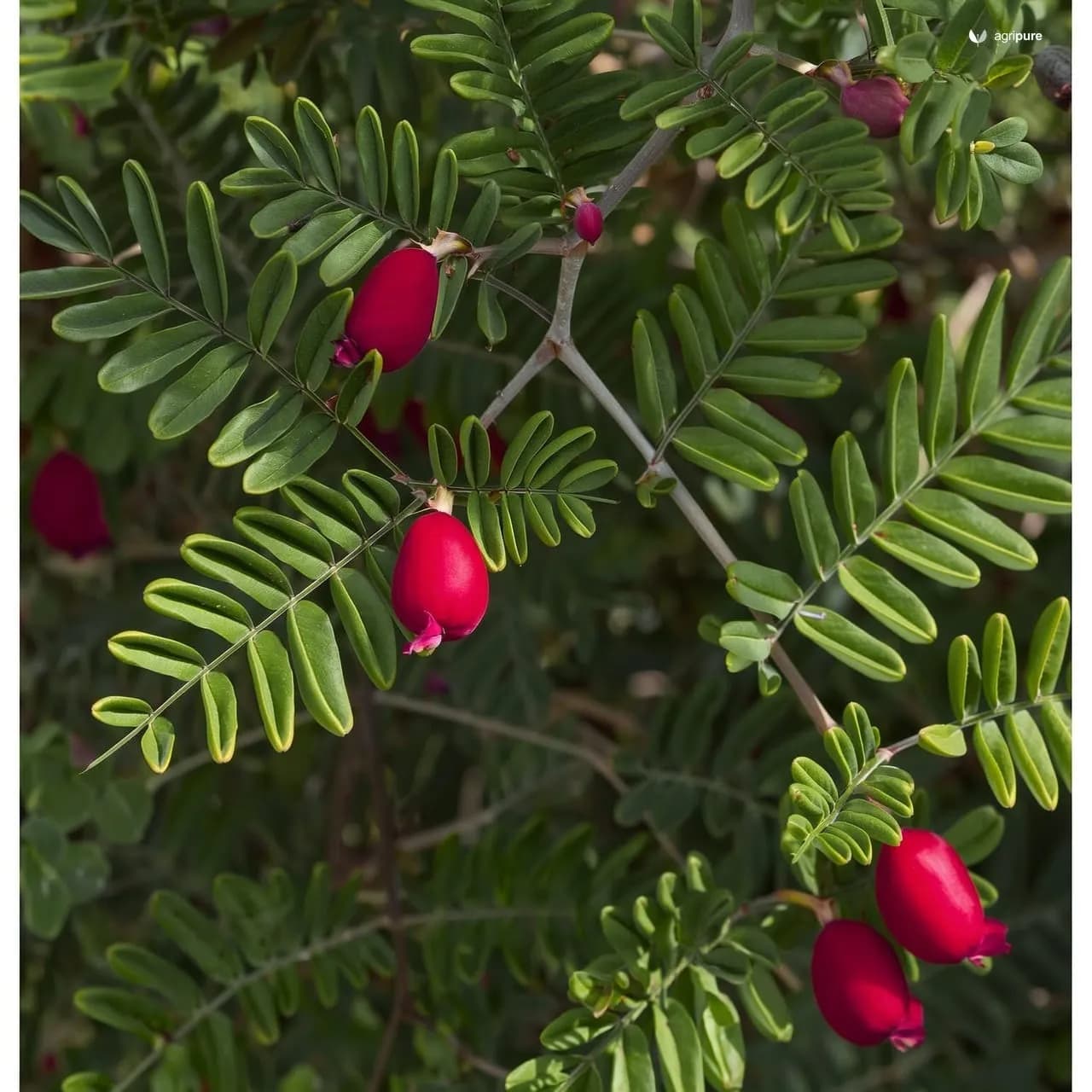
Rosary pea (Abrus precatorius), ratti in Pakistan, is a slender twining legume best known for its glossy red-and-black seeds. Be clear from the start: those seeds are deadly. They contain abrin, one of the most toxic plant proteins known, and a single chewed seed can kill a child. The honest reason to consider it is narrow and conditional: as a nitrogen-fixing vine in the Fabaceae it can feed a system, but only for a grower who will never let those seeds reach a child or animal.
Where it thrives
The native range covers the tropical and subtropical Old World through to northern and eastern Australia, and the plant grows in the seasonally dry tropical biome, which fits the Punjab plains and the Sindh coast. It is a climbing shrub, a woody perennial twiner that scrambles over whatever it reaches; it takes heat and a dry season well and is undemanding on soil.3 That same toughness makes it weedy and invasive outside its range, so it needs containment.
Role in the system
In syntropic terms rosary pea is a support-strata climber and a legume, so its design value is fertility: like other Fabaceae it forms root nodules that fix atmospheric nitrogen, feeding the guild around it while its twining stems ride a sturdy host or frame as canopy support rather than taking ground space. As a vigorous twiner it also throws off abundant leafy biomass for chop-and-drop, returning nitrogen-rich mulch to the soil surface. But the safety problem dominates the design. The seeds set in pods at harvestable height, exactly where hands and livestock reach, and the plant self-seeds freely. For most growers that rules it out as a deliberate planting near homes, paths, or grazing. Where it is used at all, it belongs only in a fenced, managed fertility block, cut back before pods mature so seeds never form, treated strictly as a chop-and-drop nitrogen source and never a seed crop.
Growing it
It establishes easily from scarified seed and twines up any support without help. The real management is the opposite of most crops: prevent seed. Cut the vine back hard at or before flowering so pods do not ripen, and remove any pods that do form, bagging and destroying them rather than dropping them where they can be picked up. Handle seeds only with gloves, and keep the planting well away from children, poultry and stock.
What you get
Used carefully, the return is soil fertility and mulch from a hardy nitrogen fixer, plus a long traditional medicinal record: leaves, roots and processed material appear across South Asian folk medicine, and the plant shows documented anti-inflammatory, antimicrobial and other activity in the lab. None of that is a home remedy worth attempting, given the toxin; the practical yield for a grower is nitrogen and biomass, not produce.
Sourcing notes
Honestly, most growers should choose a safer nitrogen fixer instead. If you do plant it, take seed or cuttings from a known source, site it in a fenced fertility block far from living areas, and commit to cutting it before pods set. Never gather or store the seeds, and never let it naturalise into the wider system.
Sources
- Patil, M. M., Patil, S. V., Akki, A. S. et al. (2016). “An Arrow Poison (Abrus Precatorius) Causing Fatal Poisoning in a Child.” Journal of Clinical and Diagnostic Research.
- Royal Botanic Gardens, Kew (2024). “Abrus precatorius L.” Plants of the World Online.
- Garaniya, N. & Bapodra, A. (2014). “Ethno botanical and Phytopharmacological potential of Abrus precatorius L.: A review.” Asian Pacific Journal of Tropical Biomedicine.