Bokashi & apartment composting: fermenting scraps in small US spaces
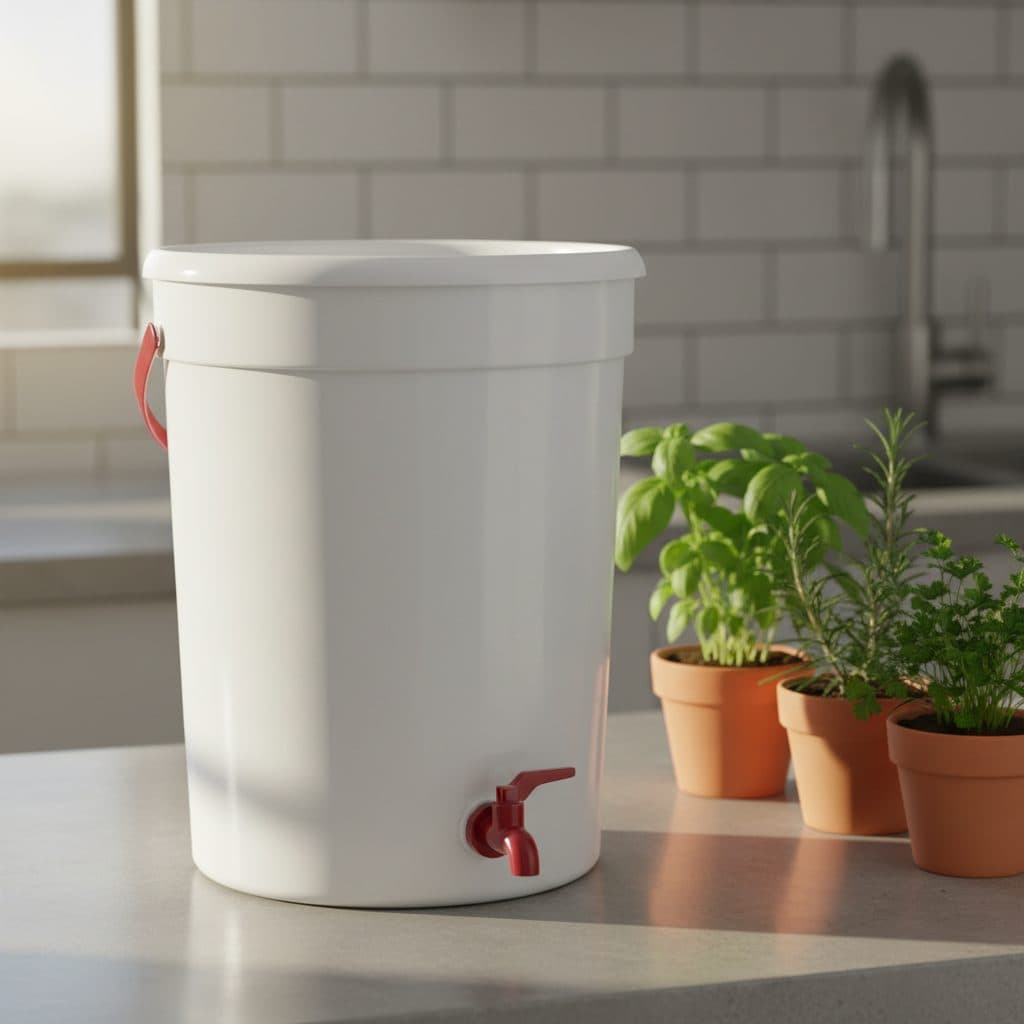
A small white airtight composting bucket with a spigot sitting on a clean kitchen counter next to small indoor herb planters.
Key Takeaways
- Anaerobic fermentation process: Use inoculated Bokashi bran containing effective microorganisms to ferment food scraps in an airtight, sealed bucket.
- Versatile input sorting: Process meat, dairy, bones, and citrus peels safely, unlike traditional worm bins or backyard compost piles.
- Space-friendly design: Operate a compact 2-bucket or 5-gallon system directly on a kitchen counter or inside a pantry closet.
- Dilution requirements: Dilute the liquid Bokashi tea byproduct at a 1:100 ratio with water before feeding it to houseplants.
- Pre-compost burial: Bury the acidic fermented solids under 8 inches of soil in outdoor garden beds or patio planters to finish decomposition.
- Decomposition speed: Allow the buried pre-compost 14 days to fully integrate into rich, planting-ready organic topsoil.
Quick answer: Bokashi composting is an indoor-friendly, anaerobic fermentation method that uses beneficial microbes to pickle food scraps in airtight containers, allowing apartment dwellers to process all kitchen waste without odors or pests.
The Environmental Protection Agency (EPA) estimates that the average American generated 328 pounds of food waste in 2016, with households accounting for 40% to 50% of the nation’s 26.5 million tons of annual food waste. While standard composting methods require outdoor spaces and active aeration, apartment dwellers living in high-density urban areas like New York or Chicago need a compact alternative. Bokashi fermentation, an indoor-friendly method that uses beneficial microbes to pickle organic waste, offers a highly efficient system that operates entirely in airtight containers.
By setting up a 5-gallon Bokashi bucket in a kitchen cabinet, you can recycle 100% of your kitchen scraps without foul odors or pests. This anaerobic method works well for indoor gardeners feeding their plants.
Choosing Bokashi over traditional composting
These indoor fermentation systems operate on entirely different principles than standard aerobic piles. Traditional composting methods rely on oxygen-loving microbes to decompose organic matter, requiring active turning and specific pile dimensions of at least 3 feet by 3 feet by 3 feet to reach high temperatures between 131°F and 160°F. Bokashi, however, is a cold, anaerobic process that uses a mixture of specialized bacteria and yeasts to ferment food waste.
Airless pickling vs. active rotting
To build this anaerobic environment, press food scraps into a sealed bucket and seal it shut. The inoculated bran contains active strains of lactobacillus and other microbes that produce lactic acid, dropping the bin’s pH below 4.0. This low pH pickles the food scraps, preserving nutrients and preventing the rot that attracts pests.
Processing meat and dairy safely
Because this fermented environment is highly acidic, you can process items that would ruin a standard backyard compost pile or worm bin. You can add meat, cheese, small bones, citrus peels, and onion scraps safely because the pickling process neutralizes odors. This means a typical household can divert up to 95% of its kitchen organic waste from landfills.
Sizing and setting up your Bokashi system
For urban apartments, this kitchen composting setup is highly modular and takes up less than 2 square feet of floor space. To run a continuous cycle, most households utilize a 2-bucket rotation system.
Sizing the bins
A standard 5-gallon bucket with an airtight lid is the ideal size for a household of 2 to 4 people. Each bucket typically lasts 3 to 4 weeks before filling up, allowing the second bucket to be filled while the first completes its fermentation.
- Double-bucket design: Many DIY builders nest a 5-gallon bucket with drainage holes inside a second 5-gallon bucket equipped with a spigot. This allows liquid to drain into the bottom container, preventing the fermenting scraps from becoming waterlogged.
- Commercial kits: Pre-made Bokashi buckets (often sold in 5-gallon sizes) feature built-in drainage grates and threaded spigots for easy liquid harvesting.
Preparing the bin and adding food layers
Inside the bucket, this fermentation process requires layering fresh food waste with a C:N ratio around 15:1 with a sprinkle of inoculated bran. Compacting is key — unlike aerobic piles, Bokashi requires 100% anaerobic conditions with maximum compaction.
Layering step-by-step
- Add a 1-inch layer of dry bedding or a handful of bran to the bottom of the clean 5-gallon bucket.
- Dump in 2 to 3 inches of chopped food scraps.
- Sprinkle 1 to 2 tablespoons of inoculated Bokashi bran over the scraps, ensuring even coverage.
- Press the mixture down firmly using a flat trowel or potato masher to squeeze out at least 95% of the air.
- Seal the airtight lid tightly to maintain a 100% oxygen-free container.
Composting Parameter | Vermicomposting (Worms) | Bokashi Fermentation |
|---|---|---|
Oxygen Needs | Aerobic (requires ventilation holes) | Anaerobic (requires airtight seal) |
Banned Items | Meat, dairy, oils, citrus, onions, bones | None (all food waste accepted) |
Acidity (pH) | Neutral (6.0 to 7.0 pH target) | Acidic (under 4.0 pH target) |
Managing the liquid byproduct
Draining this liquid byproduct (known as Bokashi tea) every 2 to 3 days using the spigot is essential to prevent the bin from smelling sour.
Dilution Formula: Bokashi tea is highly acidic and concentrated. To use it as a liquid fertilizer, dilute 1 teaspoon of tea in 2 cups of water (a 1:100 ratio). Apply this mixture directly to the soil of houseplants once every 14 days.
Harvesting and burying the pre-compost
Once fermented, these solids do not look like finished compost; they retain 100% of their original shape but turn a pale, pickled color. To transform this pre-compost into rich organic garden soil, you must bury it under 8 inches of soil.
Burying Bokashi pre-compost in a garden bed trench.
Trench burial method
Outdoor trench burial requires burying the fermented scraps directly in the garden:
- Dig a trench 8 to 12 inches deep in a garden bed or large planter.
- Pour 1 bucket of the fermented Bokashi solids into the trench.
- Mix the scraps with 1 shovel-full of native soil.
- Cover the trench with at least 8 inches of clean soil to deter pests.
- Wait 14 days before planting seeds or transplanting seedlings into the area.
Soil factory method for apartments
Indoor soil factories are built using plastic totes on balconies:
- Fill a 15-gallon plastic tote half-full with cheap potting soil.
- Dump in 1 batch of the fermented Bokashi pre-compost.
- Mix the contents thoroughly for 2 minutes using a sturdy hand trowel.
- Cover the mixture with a 2-inch cap of dry soil to lock in odors.
- Let it sit for 14 to 21 days until the scraps decompose completely.
Digging trenches or mixing soil in containers? Make the job easier with our sturdy Garden Hand-Tool Set — Trowel, Rake, Cultivator & Weeder.
Applying Bokashi soil in your garden
Because these fermented nutrients are highly bioavailable once the soil microbes complete the breakdown process, a single 5-gallon bucket of Bokashi can enrich up to 10 square feet of garden space.
- Planting vegetables: Use the soil factory mix when planting heavy feeders like tomatoes (Tomato) in large 5-gallon containers.
- Planter preparation: Mix fermented soil into container pots 14 days before growing strawberries (Strawberry) to boost early root establishment.
- Organic feeding: Complement the fermented nutrients with a slow-release nitrogen booster like our Fermented Soybean Meal Organic Fertilizer (500 g).
- Checking conditions: Monitor the soil’s moisture and pH balance after burial using a 3-in-1 Soil pH, Moisture & Light Meter.
Troubleshooting common Bokashi problems
While this fermentation process is highly reliable, keeping the anaerobic microbes happy requires maintaining a strict pH below 4.0 and moisture under 70%.
Sour, putrid smell
- Cause: The bin is not 100% airtight, or excess liquid has accumulated, causing the scraps to rot rather than ferment.
- Solution: Ensure the lid is sealed 100% airtight, drain the tea using the spigot, and add 2 extra tablespoons of Bokashi bran.
Black or green mold
- Cause: Pathogenic fungi have entered the bin due to oxygen exposure during the 14-day cycle.
- Solution: White, fuzzy mold is healthy and normal. However, if black or green mold covers more than 10% of the surface, discard the contents in the trash and sanitize the bucket.
Fruit flies entering the bin
- Cause: The lid was left open for more than 5 minutes, or the food scraps were not pressed down.
- Solution: Keep the bin lid closed tightly 100% of the time. Keep a heavy plate inside the bucket on top of the food scraps to act as a physical barrier.
Microbial health: Store your Bokashi bran in a cool, dry, dark closet. Exposure to direct sunlight or temperatures above 100°F will kill the beneficial microbes, rendering the bran ineffective.
Frequently asked questions
What is Bokashi composting?
Bokashi is an anaerobic fermentation process that uses a sealed bin and inoculated bran containing beneficial microbes to pickle kitchen waste, including meat, dairy, and citrus.
Can I use Bokashi pre-compost directly on plants?
No. The fermented output is highly acidic (pH below 4.0) and will burn plant roots. You must bury the pre-compost under at least 8 inches of soil and wait 14 days before planting.
How often should I drain Bokashi tea?
You should drain the accumulated liquid from the spigot every 2 to 3 days. Leaving the liquid inside can saturate the scraps, which causes anaerobic rotting and putrid odors.
What does a healthy Bokashi bin look like?
A healthy Bokashi bucket should smell sweet, vinegary, or cider-like. It is normal to see white, fuzzy mold growth on the food surface; however, black or green mold indicates rotting.
References
- WSU Extension Kitsap County. (2024). Bokashi Composting. WSU Extension.
- University of Vermont Extension. (2023). Indoor Composting Options. UVM Extension.
- South Dakota State University Extension. (2022). Composting at Home. SDSU Extension.
- Cornell Cooperative Extension. (2023). Waste Management Factsheets. Cornell Extension.
- NC State Extension. (2021). Compost Learning Resources. NC State Extension.