secondary
Bird’s Eye Chili
dandicut mirch
Capsicum frutescens
Also known as Dandicut Mirch (Pakistan), Bird Pepper (United States).
- punjab plains
- sindh coast
International hardiness
- USDA 10-11
- RHS H1b
- AU: Tropical, Subtropical
Where it grows — regional guide
| Zones / rating | Regional notes |
|---|---|
USDA 10-11 | Perennial in USDA zones 10 to 11 or grown as a summer annual; wear gloves because sap blisters skin, and avoid eating foliage. |
| Zones / rating | Regional notes |
|---|---|
H1b (10 to 15C) | Tender under RHS H1b: it requires heated glass through summer; handle with gloves because sap blisters skin, and avoid foliage. |
| Zones / rating | Regional notes |
|---|---|
Tropical, Subtropical | Grown in tropical and subtropical gardens as a small shrub; wear gloves during picking as sap can blister skin, and avoid leaves. |
| Zones / rating | Regional notes |
|---|---|
USDA 10-11 (USDA scale) Canada uses its own zone system; Canadian zones run roughly one lower than USDA. | No region-specific data yet |
| Zones / rating | Regional notes |
|---|---|
Punjab plains, Sindh coast | Pakistan:Grown as a warm-season perennial shrub in southern plains; sap can blister skin on contact, and non-fruit foliage is poisonous. India:Grown in warm tropical zones for fiery pods; wear gloves when harvesting because sap blisters skin, and never eat the leaves. |
Grows alongside
Species that appear with Bird’s Eye Chili in 1 of our published guides — a starting list for a guild, not a planting plan.
Bird’s eye chili (Capsicum frutescens) is a small, very pungent chili pepper in the nightshade family (Solanaceae), sometimes also called bird pepper, capsicum, or simply hot pepper. Its documented native range is Bolivia and west-central Brazil, and as a cultivated plant it turns up in abandoned cultivated areas, forest edges, thickets, and along roadsides. For a homesteader, the appeal is compact firepower: a shrubby, multi-branched plant that earns its space by producing a steady supply of intensely hot fruit for fresh use, drying, and pickling.
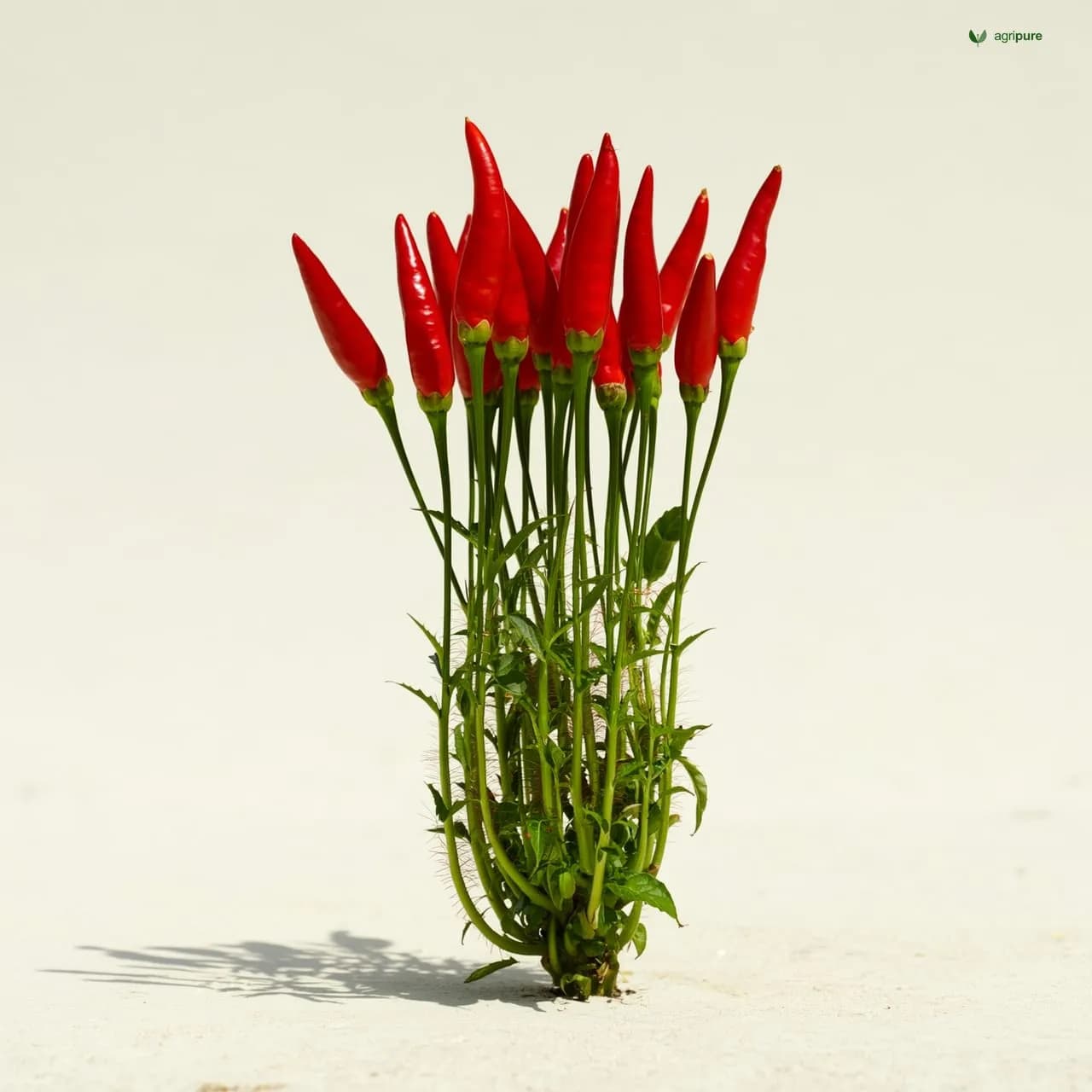
The plant is a multi-branched, erect annual or perennial shrub in cultivation. Descriptions commonly put it at roughly 4 to 6 feet tall and about 1.5 to 2 feet wide. It carries small greenish-white flowers and erect fruits that mature to a bright red; the fruit is the part that gives the plant its name and its reputation, used as a condiment or flavoring. As a true nightshade, it sits alongside tomato, potato, and chili relatives in the same botanical family.
Growing bird’s eye chili
Bird’s eye chili prefers a warm, sunny location and grows best in humus-rich, well-drained loam or light, sandy soil. Its natural occurrence on forest edges, thickets, abandoned fields, and roadsides points to a plant that wants warmth, open exposure, and free-draining ground rather than heavy, wet soil. It is grown as an erect, multi-branched shrub, treated as an annual in cooler conditions and as a short-lived perennial where the climate allows it to overwinter.
Reliable, source-backed figures for plant spacing, a step-by-step propagation protocol, and a precise days-to-harvest window are not available in the research used for this page, so they are deliberately left out rather than stated with false precision. In practice, treat it like other warm-season peppers: start it in warmth, give it full sun, plant into rich, well-drained soil, and keep moisture steady. The research does not give a dependable USDA hardiness zone for this species, so no zone claim is made here.
Harvest and uses
The fruit is the harvest. Bird’s eye fruits stand erect on the plant and turn bright red when mature, at which point they are picked for use as a condiment or flavoring. The peppers are noted as a good source of vitamins A and C. The research does not contain a verifiable per-plant yield figure, so none is given here.
Culinary use is the main story. The ripe fruits can be used raw or cooked, dried, or ground into a powder, and even the seeds may be ground and used much like pepper. The flavor is described as very hot, and as dry and smoky when the chili is used as a condiment. The plant has historically been cultivated both as a condiment and for some medicinal uses. Beyond its appearance in disturbed and edge habitats, the research does not document specific ecological or material uses, so none are claimed.
Safety and cautions
Bird’s eye chili calls for sensible handling. The sources warn that the sap can blister the skin, so it is important to wear gloves when handling the plant and its fruit. Because most plants in the nightshade family contain poisonous alkaloids, only the fruits should be ingested; the non-fruit parts of the plant should not be eaten. Skin contact may also irritate sensitive users.
On the medicinal side, the dried fruit has traditionally been used as a local stimulant, to stimulate circulation, and as a local anesthetic, because capsaicin can numb nerve endings when applied topically; capsaicin is the main active ingredient in many pain-relief ointments and creams. This is described as topical and traditional use, and this profile makes no medical claims and gives no dosages. The research provides no source-backed interaction warnings, contraindications, or high-risk-group guidance, so none are invented here; anyone considering medicinal use should seek qualified advice and, at minimum, handle the plant with care given the skin-blistering and alkaloid cautions above.
Sources
- Capsicum frutescens (Bird Pepper, Tabasco Pepper) – NC State Extension Gardener Plant Toolbox
- Bird’s Eye Chili – Chili-Plants.com Chilli Varieties
- Bird’s eye chili – Wikipedia