pioneer
Pioneer Caralluma
pamanki
Caralluma edulis
Also known as Pamanki (Pakistan).
- sindh coast
- balochistan highlands
- punjab plains
International hardiness
- USDA 9-11
- RHS H2
- AU: Arid / semi-arid, Subtropical
Where it grows — regional guide
| Zones / rating | Regional notes |
|---|---|
USDA 9-11 | No region-specific data yet |
| Zones / rating | Regional notes |
|---|---|
H2 (1 to 5C) | No region-specific data yet |
| Zones / rating | Regional notes |
|---|---|
Arid / semi-arid, Subtropical | No region-specific data yet |
| Zones / rating | Regional notes |
|---|---|
USDA 9-11 (USDA scale) Canada uses its own zone system; Canadian zones run roughly one lower than USDA. | No region-specific data yet |
| Zones / rating | Regional notes |
|---|---|
Sindh coast, Balochistan highlands, Punjab plains | Pakistan:Gathered from arid rocky ground across the plains; confirm plant identity before tasting, and avoid over-collecting wild stands. India:Found on dry stony ground in arid northwestern tracts; verify botanical identity before eating, and avoid depleting wild colonies. |
Pioneer caralluma (Caralluma edulis) is a small, semi-succulent perennial herb in the dogbane family (Apocynaceae), in the milkweed subfamily Asclepiadoideae that also holds the carrion-flower stapeliads. It is documented as native to northwest India and Pakistan, where it grows in dry, open, often rocky country and has long been gathered both as a wild vegetable and as a folk medicinal plant. For a homesteader working hot, sun-baked, free-draining ground, the appeal is that this is a true desert succulent: it occupies the kind of lean, arid corner where thirstier crops simply fail, and asks for almost nothing in return.
Recent taxonomic treatments often move this species into the genus Caudanthera, so you may see it listed as Caudanthera edulis; the accepted botanical name remains Caralluma edulis (Edgew.) Benth. ex Hook.f. Honest sourcing matters here, because reliable cultivation data for this exact species is sparse — most published work covers its botany and chemistry rather than how to farm it.
How to identify it
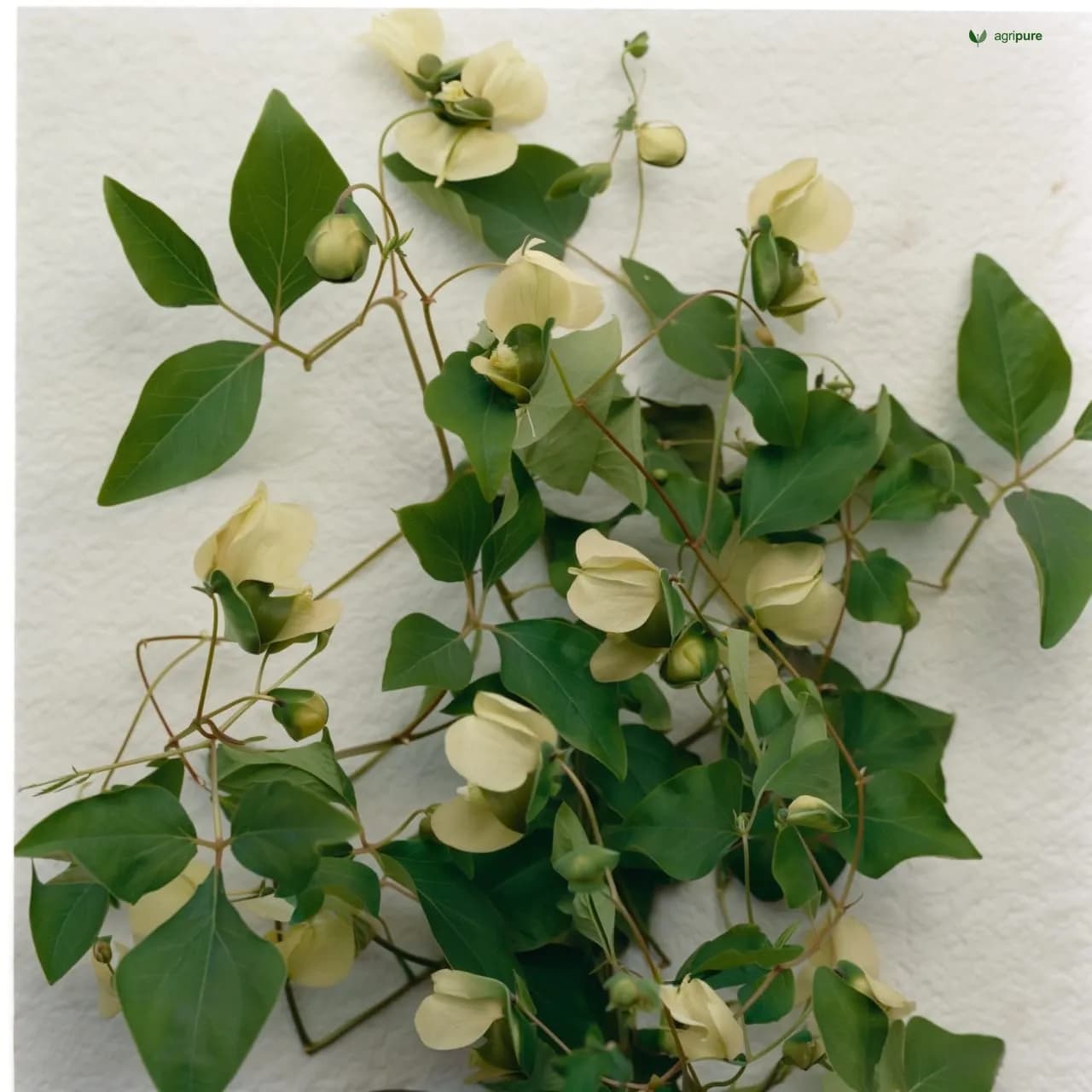
Pioneer caralluma is an erect, slightly succulent perennial herb, roughly 15–45 cm tall, with slender, much-branched stems that taper to a pointed tip. The stems are subterete and four-grooved (four-angled), a useful field cue shared with its stapeliad relatives. Like many desert succulents it carries little foliage: the leaves are small and short-lived (fugacious), often absent on mature stems, and where present are tiny, about 6–13 mm long, linear and acute, sometimes described as wedge-shaped or elliptical. The flowers are borne in pairs from the axils of scale-like leaves or leaf axils. Taken together, short, erect, four-angled succulent stems with tiny perishable leaves and paired axillary flowers, these characters are the reliable way to tell it apart in the field.
Growing Caralluma edulis
This is a plant of arid to semi-arid country with hot summers and low to moderate rainfall, occurring across the dry provinces of its native range; as a slightly succulent perennial it can reasonably be expected to handle high heat and seasonal drought. No authoritative source assigns it a USDA hardiness zone, so any specific zone number here would be a guess — it is left out deliberately rather than stated with false precision.
- Sun: Give it full sun. It is native to open, arid habitats where full exposure is the norm; no quantitative light figure or shade tolerance is reported for the species.
- Soil and drainage: Grow it on well-drained ground. In the wild it grows on the well-drained, often rocky soils of arid regions, and the one firm inference for a small desert succulent is that waterlogged or poorly drained soil is unsuitable and will rot it.
- Water: Treat it as a dryland succulent — it is adapted to seasonal drought, not standing moisture, so keep it lean and dry rather than irrigated.
- Propagation: The genus is commonly raised from stem cuttings and seed in horticulture, but accessible primary sources do not spell out a propagation protocol for C. edulis specifically; cutting treatment, seed handling and rooting times are therefore not stated here, because they cannot be backed by a source for this species.
Likewise, species-specific spacing, sowing dates and time-to-maturity figures are not consistently documented in the botanical literature for this plant, so they are intentionally omitted. In practice, manage it as you would other small desert succulents: sharp drainage, full sun, sparing water, and patience.
Harvest and uses
Pioneer caralluma has two traditional uses recorded in the sources. It is harvested as a wild vegetable, the succulent stems being the edible part, and it is also used as a folk medicinal plant in the arid parts of India and Pakistan where it grows. Because the plant is small and slow, with no published yield data, it is best understood as a niche desert forage and edible succulent rather than a bulk crop — a species you keep for its ability to produce something useful from ground that grows almost nothing else.
Safety and cautions
The reliable sources describe this plant’s edible and medicinal use in tradition, but they do not provide tested preparations, doses, or proof of any health effect — so this profile makes no medical claims and gives no dosages. A few grounded cautions:
- It is a member of the milkweed subfamily (Asclepiadoideae), a group whose stems often carry milky latex; treat any wild succulent in this group with care and be confident of your identification before tasting, since several look-alike relatives are not food plants.
- Traditional use as a vegetable or folk remedy is not the same as a proven, safe treatment. Anyone who is pregnant or breastfeeding, or taking medication, should seek qualified medical advice before using it medicinally.
- Wild Caralluma populations can be depleted by over-collection; harvest responsibly and propagate your own stock rather than stripping wild stands.
Sources
- Caralluma edulis — Flora of Pakistan (eFloras)
- Caralluma edulis (Edgew.) Benth. ex Hook.f. — Plants of the World Online, Royal Botanic Gardens, Kew
- Caralluma edulis — Useful Tropical Plants
- Caralluma edulis — Wikipedia
- Caralluma edulis study record — PubMed (National Library of Medicine)
- Caralluma edulis taxonomy — GRIN-Global (Nordic Baltic Genebanks)
- Caralluma edulis — India Flora, Centre for Ecological Sciences, IISc