Key takeaways
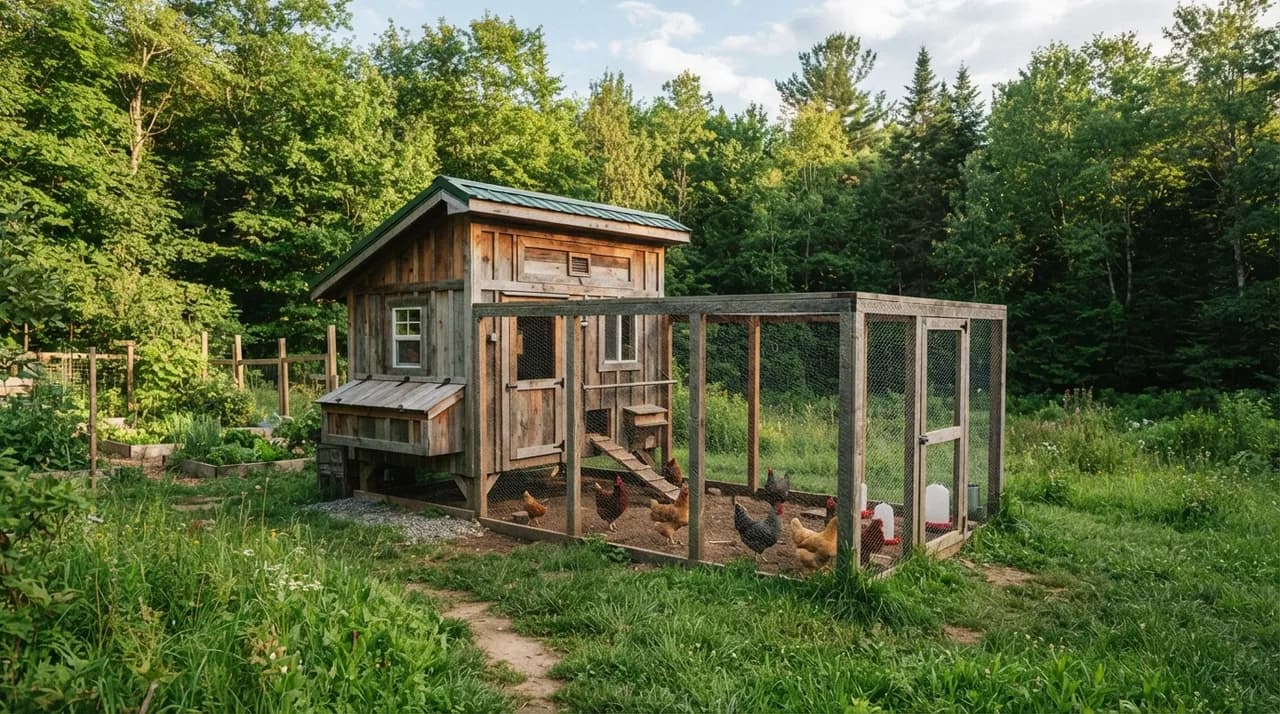
A beautiful wooden chicken coop in a green grassy backyard garden with nesting boxes.
An optimized homestead chicken coop design prioritizing ventilation and protection from predators.
- Size a coop by floor area, not the seller’s bird count: plan 3 to 4 square feet of indoor space per hen and 10 square feet of outdoor run, so 10 hens need about a 30 to 40 sq ft coop and a 100 sq ft run.
- Give each hen 6 inches of roost bar set 18 to 24 inches off the floor, and provide a 12 by 12 inch nest box for every 4 to 5 hens – so 10 hens want roughly 60 inches of roost and 2 to 3 nests.
- Wood is cheaper and warmer but porous – red mites hide in the grain and it needs annual treating; plastic costs more up front but pressure-washes clean, sheds mites, and some carry a 25-year guarantee.
- Ventilation prevents the real winter killer, damp ammonia air: put vents high above the roost so moisture escapes without drafting the birds, roughly 1 square foot of vent per 10 square feet of floor.
- Rats are kept out by the build, not by poison: enclose the run in half-inch hardware cloth (never chicken wire), bury it 2 ft down or skirt it 2 ft out, and elevate the coop off the ground.
- Store feed in sealed metal bins and feed inside the run – an open feed bag is what draws rats to a coop in the first place.
A coop is the one piece of poultry kit you cannot easily fix after the fact, and 2 numbers decide whether it works: square feet per bird and the mesh size that keeps rats out. Sellers list a coop as holding 8, 10, or 12 birds, but those counts assume the chickens never go inside in bad weather – the honest way to size chicken coops for 10 chickens is by floor area. This guide does that math, then covers what to build the coop from (wood, plastic, or metal), how to ventilate and lay out nests and roosts, and how to rat- and predator-proof the run so the flock survives its first fox or rat invasion. It is the housing companion to the flock-care basics in our guide to keeping backyard chickens; for the birds themselves, see raising chickens for eggs.
Sizing a coop for 10 hens
Space is the first thing to get right, because a crowded coop drives feather-picking, disease, and stress that no amount of management fixes later. The rule is simple: size by the square foot per bird, indoors and out, and a 10-hen flock makes the arithmetic easy.
For laying hens, poultry extension guidance recommends “a minimum of 3-4 square feet/hen indoor” and “10 square feet/hen outdoor.” Run the numbers for 10 birds and the coop lands at about 30 to 40 square feet of floor (roughly a 6 by 6 ft house) with a run of about 100 square feet, say 10 by 10 ft. That outdoor figure matters most: chickens spend their days foraging, and a tight run is where boredom-driven pecking starts. If the birds will free-range, you can shave the run, but the coop floor is the hard minimum for the hours they are shut in.
Space type | Per hen | For 10 hens |
|---|---|---|
Indoor coop floor | 3 to 4 sq ft | 30 to 40 sq ft (about 6×6) |
Outdoor run | 10 sq ft | About 100 sq ft (10×10) |
Roost bar | 6 inches | About 60 inches total |
Nest boxes | 1 per 4 to 5 hens | 2 to 3 boxes, 12×12 in each |
Ignore the bird count on the box. A coop advertised “for 10 hens” is often a 12 sq ft box that truly suits 3 or 4. Measure the floor, divide by 4, and rely on the square footage instead of manufacturer marketing.
Wood, plastic, or metal: what to build it from
With the size set, the next choice is material, and it is a real trade between cost and upkeep. The 3 options a backyard keeper meets are wood, plastic, and powder-coated metal, and they differ most on cleaning and parasites.
A wood-framed chicken coop raised on legs beside a molded plastic coop, showing the contrast in materials, with nesting box doors and a roost visible, no people
Wood is the traditional and cheapest build, warm and easy to modify, but it is porous: droppings soak in, and red mites “work their way into every tiny crevice,” which makes an infestation “almost impossible to eliminate” without treating the wood after every clean. Plastic flips that: a molded coop can be pressure-washed and disinfected in minutes, mites “can’t work their way into the plastic itself,” and some recycled-plastic models carry a 25-year guarantee with no rot or repainting. The catch is a higher sticker price and less insulation. Metal coops (usually powder-coated steel) are the most durable and predator-resistant, but conduct heat and cold and are the priciest of the 3.
Material | Cleaning & mites | Cost & upkeep |
|---|---|---|
Wood | Porous; mites hide, needs treating each clean | Cheapest; paint/repair yearly |
Plastic | Pressure-washes clean; sheds mites | Higher up front; near-zero upkeep |
Metal (powder-coated) | Wipes clean; very tough | Priciest; conducts heat/cold |
The honest pick: for most keepers a wooden coop is fine if you commit to a mite treatment at each deep clean. If you have battled red mite before, the pressure-wash simplicity of plastic is worth the extra money: 1 bad infestation costs more in hens than the coop did.
Ventilation, roosts, and nesting boxes
Those material choices wrap around an interior that has to do 3 jobs: breathe, give the birds a place to perch, and give them somewhere private to lay. Get the ventilation, roosts, and nests right and the coop runs itself.
Ventilation: managing damp air in winter
Winter flocks are harmed primarily by moist, ammonia-laden air from droppings and breath, which causes frostbite and respiratory disease. The fix is high ventilation: place vents well above the roost so warm, humid air rises and escapes while the birds stay out of the draft, a rule of thumb of about 1 square foot of vent per 10 square feet of floor. Keep those upper vents open year-round, under a cover so snow stays out.
Roosts and nest boxes
Chickens sleep on a roost, not the floor. Provide 6 inches of roost per bird, set the bar 18 to 24 inches above the floor and about 1 foot out from the wall, so 10 hens need roughly 60 inches of perch. For laying, give a 12 by 12 inch nest box for every 4 to 5 hens; PSU Extension’s rule is “two nests for the first four hens” and one more per four after, which puts a 10-hen flock at 2 to 3 boxes. Add 3 inches of feeder space per bird and 1 water nipple per 6 to 8 birds, and the fittings are complete.
Keeping rats and predators out
A coop that houses hens also advertises a free meal (eggs, feed, and the birds themselves) to rats, raccoons, foxes, and weasels. Rodent- and predator-proofing is built into the structure, and it comes down to the right mesh, a dig barrier, and clean feed.
A chicken run wall covered in half-inch galvanized hardware-cloth mesh stapled to a wooden frame, with a buried mesh apron skirting out along the ground, no people
The single most important choice is the mesh. Chicken wire keeps chickens in but does not keep predators out: raccoons tear through it and rats and weasels squeeze through the gaps. Enclose the run in half-inch hardware cloth instead, which excludes rats, weasels, and snakes. To stop diggers, “bury hardware cloth 2 feet down, and/or place a skirt of hardware cloth 2 feet out” along the ground. Elevate the coop off the ground so rats cannot nest beneath a rotting floor, and screen every window and vent with the same half-inch cloth.
Cut off the food
Rats come for feed first. Store it in tightly covered metal barrels, never an open bag a rat can chew, and feed the birds inside the secured run instead of leaving a feeder out overnight. A coop that is sealed in half-inch cloth and holds no loose feed gives rodents nothing to come for, which is more effective than poison and avoids risking the flock. Pastured birds moved daily, as in pastured poultry on a chicken tractor, sidestep some rodent pressure simply by never sitting in one spot.
Building it to last
A good coop is 4 decisions made in order. Size it by the square foot: 3 to 4 indoors and 10 in the run per hen, so a 10-hen flock gets about a 30 to 40 sq ft coop and a 100 sq ft run. Choose a material: wood for cost, plastic for mite-proof cleaning, metal for toughness. Fit the inside for the birds: high ventilation above the roost, 6 inches of perch each, and a 12-inch nest box per 4 to 5 hens. Then seal it in half-inch hardware cloth with a buried skirt and keep the feed in metal, preventing rats or foxes from emptying the coop in a night. Build those 4 right and the coop is the last poultry problem you will have to solve. With the birds housed, the day-to-day of the flock is covered in our backyard chickens guide.
Frequently asked questions
How big should a chicken coop be for 10 chickens?
Size it by floor area, not the bird count on the box. Plan 3 to 4 square feet of indoor coop space per hen and 10 square feet of outdoor run per hen, so 10 chickens need roughly a 30 to 40 square foot coop (about 6 by 6 feet) and a 100 square foot run (about 10 by 10 feet). Give them more if they will be shut in often; you can shave the run only if the birds free-range during the day.
How many nesting boxes and how much roost space do 10 hens need?
Provide one 12-by-12-inch nest box for every 4 to 5 hens, which puts a 10-hen flock at 2 to 3 boxes; hens share and tend to crowd into a favorite anyway. For roosting, allow 6 inches of roost bar per bird (about 60 inches for 10 hens), set 18 to 24 inches above the floor and a foot out from the wall. Add 3 inches of feeder space per bird and one water nipple per 6 to 8 birds.
Is a wood or plastic chicken coop better?
Wood is cheaper, warmer, and easy to modify, but it is porous: red mites burrow into the grain and droppings soak in, so it needs treating and scrubbing after each clean. Plastic costs more up front but pressure-washes clean in minutes, sheds mites because they cannot enter the material, and some recycled-plastic models carry a 25-year guarantee with no rot or repainting. Choose plastic if you have fought red mite before; wood is fine if you treat it each deep clean.
How do I keep rats out of my chicken coop?
Rats are excluded by the build, not by poison. Enclose the run and screen every window and vent in half-inch hardware cloth (never chicken wire, which rats and weasels get through) and stop diggers by burying the cloth 2 feet down or extending a 2-foot skirt along the ground. Elevate the coop off the ground so rats cannot nest beneath it, store feed in sealed metal bins, and never leave a feeder out overnight.
How much ventilation does a chicken coop need?
Enough to clear moisture without drafting the birds: damp, ammonia-laden air is the primary winter risk. A useful rule of thumb is about 1 square foot of vent for every 10 square feet of floor, placed high above the roost so warm, humid air rises and exits while the birds stay out of the draft. Keep the upper vents open year-round under a cover so rain and snow cannot get in.
Should a chicken coop be raised off the ground?
Usually yes. Elevating the coop a foot or so off the ground removes the dark, sheltered space where rats and mice would otherwise nest, keeps a wooden floor from sitting on damp earth and rotting, and gives the birds shaded ground to use underneath in summer. If you build a ground-level coop, pair it with a buried hardware-cloth skirt so digging predators and rodents still cannot get under the walls.
References
- Poultry Extension. “Space Allowances in Housing for Small and Backyard Poultry Flocks.” poultry.extension.org
- Penn State Extension. “Small Scale Poultry Housing” (roost, nest, feeder, and ventilation specs). extension.psu.edu
- One Acre Farm. “Predator Proofing Your Chicken Coop and Run” (hardware cloth and dig barriers). ouroneacrefarm.com
- Pipinchick. “Plastic vs. Wooden Chicken Coops: Which is Best?” (cleaning, mites, durability). pipinchicksilkies.com
- University of Minnesota Extension. “Raising chickens for eggs.” extension.umn.edu