Key takeaways
- The stale seedbed technique prepares a planting bed, allows weeds to germinate, then eliminates them before planting your desired crop.
- Optimal timing for stale seedbed preparation is typically 2-4 weeks before your target crop’s planting date, often in early spring in USDA zones 5-7.
- Effective weed elimination methods include shallow cultivation (1-2 inches deep), flaming, or occultation with tarps for 3-4 weeks.
- Integrating stale seedbeds with crop rotation and cover cropping can reduce weed seed banks by 30% or more over several seasons.
- Soil temperature is a critical factor; many common weed seeds germinate best between 50-75°F, signaling the right time to trigger them.
- This method can significantly cut down on herbicide use and manual weeding labor, improving profitability for many US operations.
Quick answer: The stale seedbed technique involves preparing a planting bed, allowing weeds to germinate, then eliminating them before planting your desired crop. This method reduces weed competition and herbicide use by leveraging natural weed germination cycles.
In the fertile agricultural regions of the US Midwest, where corn and soybean fields stretch for miles, managing weeds effectively is a constant challenge. For many growers, whether on a 5-acre market garden in upstate New York or a 500-acre farm in Iowa, reducing weed pressure without excessive herbicide use or back-breaking labor is a top priority. The stale seedbed technique offers a practical solution, leveraging the natural germination cycle of weeds to your advantage before your main crop even goes into the ground. This method has been studied for decades, with early research in the 1970s showing its potential for weed control in direct-sown fields [1].
This approach focuses on getting a significant head start against weeds, since avoiding them entirely is an unrealistic goal for most operations. By understanding the timing of weed germination and employing strategic elimination methods, you can create a cleaner slate for your crops. For instance, a well-executed stale seedbed can reduce early-season weed competition by 50% or more, giving crops like corn a critical advantage during their first 4-6 weeks of growth [2]. This article will walk through the steps, timing considerations, and how to integrate this technique into a productive growing system across various USDA zones.
Understanding the stale seedbed technique
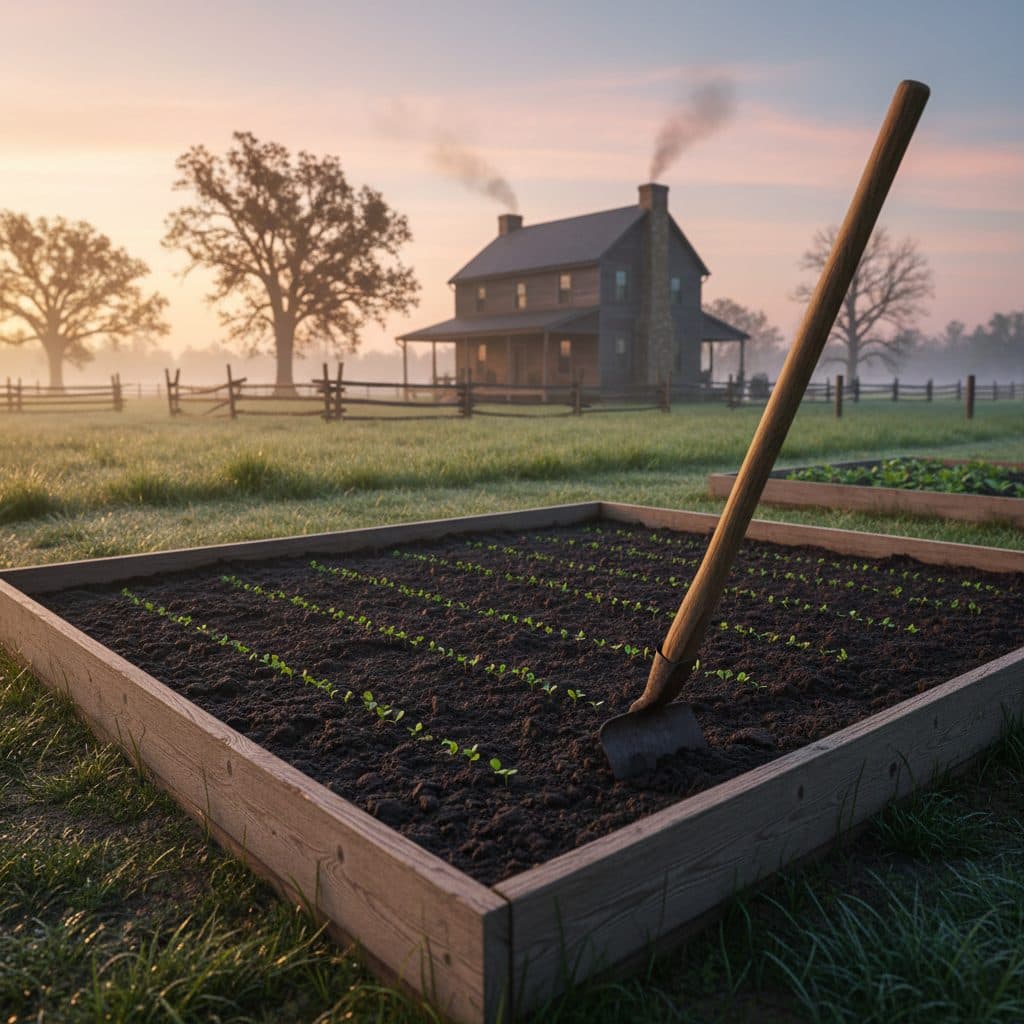
The stale seedbed technique is a straightforward, non-chemical method for reducing weed pressure in your fields or garden beds. The core idea is to prepare your planting area as if you were about to sow your crop, then wait for weed seeds near the soil surface to germinate. Once a flush of weeds emerges, you eliminate them with minimal soil disturbance, and only then do you plant your desired crop. This process effectively depletes a portion of the weed seed bank in the top 1-2 inches of soil, giving your crop a head start against later weed flushes.
the biology behind the method
Weed seeds, especially annuals, often germinate more quickly and at lower soil temperatures than many cultivated crops. For example, common agricultural weeds like lamb’s quarters or pigweed can sprout within 3-7 days when soil temperatures reach 50-60°F, while many vegetable crops might take 7-14 days at those same temperatures. By preparing the bed and waiting, you’re essentially baiting the weeds to show themselves. Once they emerge as tiny seedlings, they are much easier to control than established plants. This method reduces the need for later, more intensive weeding efforts, potentially saving 20-40 hours of labor per acre in some systems.
- Prepare the soil to a fine tilth, mimicking planting conditions.
- Allow 1-3 weeks for weed seeds to germinate.
- Eliminate emerged weeds with minimal soil disturbance.
- Plant your main crop into the now relatively weed-free bed.
- Monitor for subsequent weed flushes and address them promptly.
Timing is everything: When to prepare
The success of the stale seedbed technique hinges on precise timing. You want to encourage a significant flush of weeds to germinate and then eliminate them just before your main crop is ready to go in. For many annual crops in USDA zones 5-7, this means preparing beds in early spring, often 2-4 weeks before your target planting date. For example, if you plan to plant tomatoes in mid-May in USDA zone 6, you might prepare your beds in late April. This allows the soil to warm sufficiently for weed germination, typically when soil temperatures consistently reach 50-60°F at a 2-inch depth.
seasonal considerations and crop rotation
Consider your region’s climate and your crop rotation schedule. In areas like the Pacific Northwest with mild, wet springs, you might get multiple weed flushes in a stale seedbed. In contrast, arid regions like Arizona might require irrigation to trigger germination. For crops like cotton, studies show that early sowing dates combined with effective weed management significantly increase yields and profitability, sometimes by 15-20% [3]. Integrating stale seedbeds into your crop rotation can further improve weed control over several seasons. For example, following a cover crop of winter rye with a stale seedbed for summer vegetables can provide a double punch against weeds, as the rye suppresses early growth and adds organic matter.
- Early spring for warm-season crops (e.g., corn, beans, tomatoes).
- Late summer for fall-planted crops (e.g., garlic, overwintering greens).
- Monitor soil temperature; 50-75°F is ideal for many weed seeds.
- Allow 10-21 days between bed preparation and planting.
- Consider a second flush if time allows, especially in longer seasons.
Methods for weed elimination
Once your weed seedlings have emerged in the stale seedbed, the next critical step is to eliminate them without bringing new weed seeds to the surface. The goal is to disturb the soil as little as possible, ideally only in the top 1-2 inches. There are several effective methods, each with its own advantages and suitable for different scales of operation. For example, in a 1-acre market garden, manual cultivation might be feasible, while a 10-acre field might require mechanical solutions.
choosing your weapon: cultivation, flaming, or occultation
Shallow cultivation is a common method, using tools like a collinear hoe, stirrup hoe, or a shallow-set rototiller. The key is to cut the young weed roots just below the soil surface without inverting the soil. This prevents dormant seeds from being brought up to germinate. For instance, a well-adjusted stirrup hoe can clear a 30-inch bed in just a few minutes. Flaming uses a propane torch to quickly wilt and kill young weed seedlings. This is particularly effective for broadleaf weeds and grasses when they are very small, typically less than 2 inches tall. On a 100-foot bed, flaming can take 5-10 minutes. Occultation involves covering the prepared bed with an opaque tarp for 3-4 weeks. The lack of light and increased temperature under the tarp kills germinating weeds and can even suppress some perennial weeds. This method is excellent for larger areas or when you have a longer lead time, and it also conserves soil moisture. For more on soil health, consider living mulch and cover crops.
- Shallow cultivation with hand tools or specialized equipment.
- Flaming with a propane torch for small, young weeds.
- Occultation using opaque tarps for 3-4 weeks.
- Avoid deep tillage, which brings new weed seeds to the surface.
- Choose a method that fits your scale and available equipment.
Integrating with other weed management practices
The stale seedbed technique is most powerful when it’s not a standalone practice but rather a component of a broader, integrated weed management strategy. Combining it with other methods like crop rotation, cover cropping, and mulching creates a multi-layered defense against weeds, reducing overall pressure and reliance on single solutions. For instance, in a typical corn-soybean rotation in the US Midwest, incorporating stale seedbeds could reduce early-season weed biomass by 30-40% compared to conventional tillage without this step.
crop rotation and cover cropping benefits
Crop rotation breaks up weed cycles by varying planting times, cultivation methods, and competitive crops. For example, rotating a spring-planted vegetable with a fall-sown grain can prevent specific weed species from dominating. The stale seedbed fits perfectly by cleaning the bed before each new crop. Cover crops, especially those that produce significant biomass or allelopathic compounds, can further suppress weeds. A dense stand of winter rye, for example, can reduce weed emergence by 50-70% in the following spring crop. When combined with a stale seedbed, the effect is synergistic. After terminating a cover crop, preparing a stale seedbed can catch any weeds that managed to emerge through the cover. For more on cover crops, see Best Living-Mulch and Cover-Crop Legumes by USDA Zone. This integrated approach can reduce the viable weed seed bank in the soil by 10-20% each year, leading to measurable long-term benefits.
- Combine with diverse crop rotations to break weed cycles.
- Utilize cover crops to suppress weeds and build soil health.
- Implement mulching after planting to further reduce weed emergence.
- Consider no-till or reduced-till systems to minimize seed bank disturbance.
- Regularly scout for weeds and address new flushes promptly.
Regional considerations and challenges
While the stale seedbed technique is broadly applicable, its implementation needs to be adapted to specific regional climates and weed pressures across the United States. A grower in humid Florida will face different challenges than one in arid New Mexico. Understanding these nuances helps growers get the most from the technique and avoid common pitfalls. For example, in the Southeast, high humidity and frequent rainfall can lead to rapid weed regrowth, requiring quicker follow-up.
adapting to climate and persistent weeds
In regions with heavy rainfall, such as the Pacific Northwest or the Southeast, repeated irrigation to trigger weed germination might not be necessary, but managing subsequent weed flushes quickly matters. In contrast, growers in the Southwest (e.g., Arizona, California) will likely need to irrigate their beds to ensure sufficient moisture for weed seeds to sprout. Soil type also plays a role; sandy soils warm faster, while heavy clay soils retain moisture longer. Persistent perennial weeds, like bindweed or quackgrass, present a greater challenge than annuals. While a stale seedbed will kill their seedlings, it won’t eliminate established root systems. For these, deeper cultivation, tarping for extended periods (6-8 weeks), or targeted spot treatment might be necessary. Some studies, like those on greengram in rainfed conditions, show that specific sowing dates combined with weed control can boost yields by 25-35% even in challenging environments [4]. Consider drought-tolerant species for your region, which can be found at Drought-Tolerant Trees and Shrubs by USDA Zone.
- Adjust irrigation based on local rainfall patterns and soil moisture.
- Account for regional weed species; some may require specific control.
- Be prepared for faster weed regrowth in humid, warm climates.
- Consider longer occultation periods for persistent perennial weeds.
- Monitor soil temperatures closely for optimal germination triggers.
Comparison of Stale Seedbed vs. Conventional Tillage
Feature | Stale Seedbed | Conventional Tillage |
|---|---|---|
Initial Weed Pressure | Significantly reduced (50-70% less early-season weeds) | High (new weed seeds brought to surface) |
Herbicide Use | Reduced or eliminated (up to 80% reduction in some cases) | Often necessary for broad-spectrum control |
Labor for Weeding | Reduced early-season hand weeding (20-40 hours/acre saved) | High initial hand weeding or mechanical passes |
Soil Health Impact | Minimal disturbance, preserves soil structure and microbes | Interrupts soil structure, can lead to erosion |
Timing Flexibility | Requires 2-4 week lead time before planting | Can plant immediately after tillage |
Weed Seed Bank: A single acre of agricultural soil can contain millions of viable weed seeds, with some species having seed banks of 100 million seeds per acre.
Yield Increase: Effective weed management through techniques like stale seedbeds can increase crop yields by 15-35% compared to uncontrolled weed competition [4].
Frequently asked questions
How long should I wait for weeds to germinate in a stale seedbed?
Typically, you should wait 1-3 weeks after preparing and irrigating your bed for a significant flush of weeds to emerge. This timeframe allows most annual weed seeds in the top 1-2 inches of soil to sprout, especially when soil temperatures are consistently above 50°F. In some warmer regions like USDA zone 9, germination might be quicker, around 5-7 days.
Can I use the stale seedbed technique in a no-till system?
Yes, the stale seedbed technique can be adapted for no-till systems. Instead of tilling, you would prepare the surface by raking or lightly disturbing only the top half-inch of soil to create a good seed-to-soil contact for weeds. Then, use methods like flaming or occultation to eliminate the germinated weeds, maintaining the no-till principle. This approach can reduce weed pressure by 40% or more in early season.
What is the best way to eliminate weeds in a stale seedbed?
The best way depends on your scale and resources. Shallow cultivation with tools like a collinear hoe is effective for small areas, cutting weeds at 1-2 inches deep. Flaming works well for very young weeds (under 2 inches tall) and can clear a 100-foot bed in minutes. Occultation with opaque tarps for 3-4 weeks is suitable for larger areas and conserves soil moisture while suppressing weeds.
Does the stale seedbed technique work for perennial weeds?
The stale seedbed technique is primarily effective against annual weeds, as it targets germinating seedlings. While it will kill perennial weed sprouts, it won’t eliminate their established root systems. For persistent perennials like quackgrass or Canada thistle, you might need to combine the stale seedbed with longer-term strategies like extended occultation (6-8 weeks) or targeted mechanical removal to deplete root reserves, potentially reducing their density by 60%.
How does stale seedbed affect soil moisture?
Initially, irrigating the bed to encourage weed germination uses some soil moisture. However, by eliminating weeds before planting your crop, you prevent them from competing with your crop for water later on. Using occultation (tarps) for weed elimination can also help conserve soil moisture by reducing evaporation over the 3-4 week period, which is beneficial in drier climates like USDA zone 7 and above.
Can I combine stale seedbeds with organic growing practices?
Absolutely. The stale seedbed technique is a cornerstone of organic weed management, as it reduces or eliminates the need for synthetic herbicides. It aligns perfectly with organic principles by relying on mechanical or thermal control methods and promoting healthier soil through reduced disturbance. Many organic growers across the US report a 70% decrease in early-season weeding time using this method.
References
- Studies on the Dryland Direct Sowing in the Paddy Field -Weed Injury and Weed Control on the Direct Sowing- (1970). Studies on the Dryland Direct Sowing in the Paddy Field -Weed Injury and Weed Control on the Direct Sowing-.
- Weed–Corn Competition Parameters in Late-Winter Sowing in Northern Italy (2009). Weed–Corn Competition Parameters in Late-Winter Sowing in Northern Italy.
- Effect of time of sowing and weed management on weed incidence, productivity and profitability of <i>Bt</i> cotton (2018). Effect of time of sowing and weed management on weed incidence, productivity and profitability of <i>Bt</i> cotton.
- Effect of sowing dates and weed control treatments on weed management and grain yield of greengram under rainfed condition (2021). Effect of sowing dates and weed control treatments on weed management and grain yield of greengram under rainfed condition.
- The effect of sowing time, sowing technique and post-sowing weed competition on tall fescue (
<i>Festuca arundinacea</i>
(1991). [The effect of sowing time, sowing technique and post-sowing weed competition on tall fescue (
<i>Festuca arundinacea</i>
](https://doi.org/10.1071/ar9911251).