secondary
Assyrian Plum
lasura
Cordia myxa
Also known as Lasura (Pakistan), Lasora (India).
- punjab plains
- sindh coast
- pothohar
International hardiness
- USDA 9-11
- RHS H2
- AU: Tropical, Subtropical
Where it grows — regional guide
| Zones / rating | Regional notes |
|---|---|
USDA 9-11 | No region-specific data yet |
| Zones / rating | Regional notes |
|---|---|
H2 (1 to 5C) | No region-specific data yet |
| Zones / rating | Regional notes |
|---|---|
Tropical, Subtropical | No region-specific data yet |
| Zones / rating | Regional notes |
|---|---|
USDA 9-11 (USDA scale) Canada uses its own zone system; Canadian zones run roughly one lower than USDA. | No region-specific data yet |
| Zones / rating | Regional notes |
|---|---|
Punjab plains, Sindh coast, Pothohar | Pakistan:Grown across sunny plains as a fast-growing shade and fruit tree; pick the sticky fruit for pickling before it softens completely. India:Planted across dry plains for lumber and edible drupes; harvest bunches of sticky fruit young for pickling and household use. |
The Assyrian plum (Cordia myxa) is a medium-sized, fast-growing deciduous tree in the borage family, Boraginaceae, grown for its edible fruit, its useful timber, and a long history of traditional medicinal use. It is an Asian tree: the University of Arizona Campus Arboretum records its geographic origin as East Asia within the Palearctic ecozone, and biodiversity databases confirm it occurring widely across Asia, including parts of the Middle East and South Asia. For a homesteader on hot, dry ground, the appeal is that it is adapted to arid and semi-arid conditions and earns its place several times over, yielding food, lumber, and a sticky fruit pulp that has even served as a natural glue.
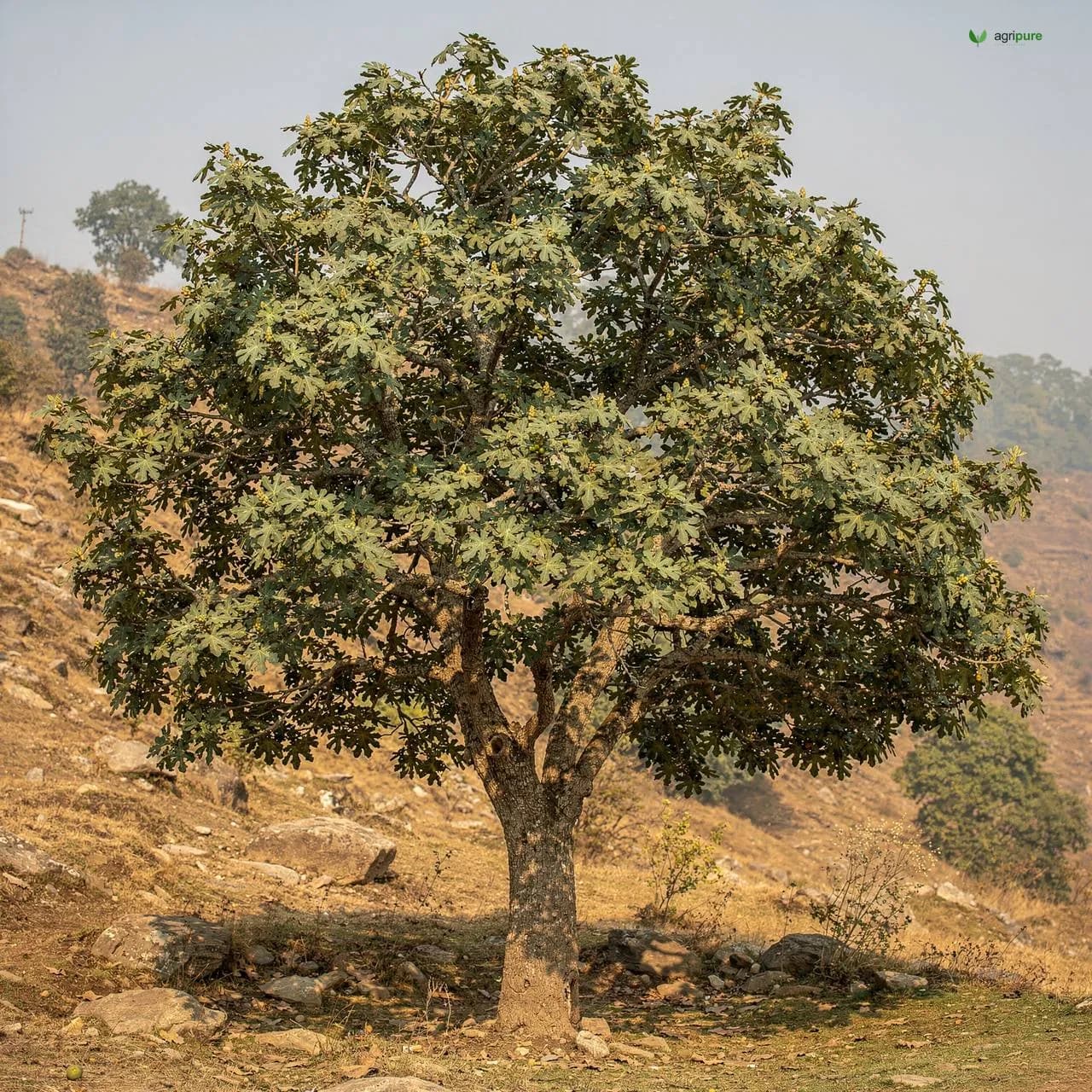
It is described in botanical references as a medium-sized, broad-leaved deciduous tree. Under the desert landscape conditions of the University of Arizona arboretum it reaches roughly 16 to 20 feet (about 5 to 6 m) tall, with a comparable spread. The tree carries chains of small white flowers, which give way to the fruit it is grown for. The botanical name is Cordia myxa L., a species sometimes listed in older literature under the synonym Cordia obliqua.
Growing Assyrian plum
The Assyrian plum is a tree of warm, dry climates. The University of Arizona arboretum grows it in hot, dry desert conditions with irrigation, which points to an adaptation to arid and semi-arid country rather than humid ground, and Feedipedia notes it being grown as a fodder and fruit tree in subtropical and tropical climates. Despite that dry-climate toughness, it is not an extreme desert plant: the arboretum classifies its water needs as moderate water use, so it sits between a true xerophyte and a thirsty orchard tree, neither bone-dry nor heavily watered.
The most consistent horticultural note across the sources is its vigour. The arboretum describes it as “very fast growing under the right conditions,” and explicitly pairs that vigour with a need for pruning to keep the tree shapely rather than rangy. Plan for structural pruning as part of its routine care, and give it room to fill out the 16-to-20-foot spread it can reach.
Beyond climate, water, and pruning, the reputable sources here do not give firm figures for propagation method, soil texture or pH, sunlight, spacing, or years to first fruiting, so this profile leaves them out rather than invent them. In practice, treat it as a fast-growing, dry-climate tree: site it in an open spot, water it moderately while it establishes, and prune it to a sound framework as it races upward.
Harvest and uses
The fruit is a drupe borne in bunches, globular to ovoid in shape and roughly 2 to 3.5 cm long. Colour shifts as it matures: Feedipedia describes ripe fruit as yellow, apricot, or blackish, while the University of Arizona arboretum describes it ripening from light pale through to brown or even pink, the colour deepening as the fruit ripens. A defining feature is the mucilaginous, sticky pulp of the half-ripe fruit, which is traditionally used as a glue substitute, a trait that gives the tree several of its regional names.
The Assyrian plum is grown as much for what comes off it as for the fruit itself. The fruit is generally edible, and the species is described in the literature as non-toxic. The tree also yields moderately hard, reasonably strong lumber that is highly favoured for ornamental woodwork, making it a genuine small-timber tree as well as a fruit tree. Alongside food and wood, it has a long record of traditional medicinal use across its range. Because the sources provided do not state a clear age to first fruiting, harvest timing is best judged on the ground by fruit colour and softening rather than by a fixed calendar.
Identifying it
Use this combination of features to recognise an Assyrian plum:156
- Habit: a medium-sized, broad-leaved deciduous tree, around 16 to 20 feet (5 to 6 m) tall with a similar spread in cultivation.
- Flowers: chains of small white flowers.
- Fruit: drupes carried in bunches, globular to ovoid and about 2 to 3.5 cm long, ripening through pale, pink, apricot, yellow, or blackish tones.
- Telltale pulp: the half-ripe fruit has a distinctive sticky, mucilaginous pulp, the classic field cue for this tree.
Safety and cautions
The fruit of the Assyrian plum is generally edible, and the available literature describes the plant as non-toxic. It is the traditional medicinal use, rather than eating the fruit, that calls for restraint. The plant has a long history of ethnomedicinal use, and its compounds have been the subject of scientific study, but the sources are explicit that medicinal use should be approached cautiously because human clinical data are limited. A history of traditional use is not the same as a proven treatment; this profile makes no claim that the plant treats any condition and lists no doses. Enjoy the fruit as food, and treat any medicinal use conservatively and with qualified guidance.
Sources
- Cordia myxa (Assyrian Plum) – University of Arizona Campus Arboretum
- Assyrian Plum (Cordia myxa): A Valuable Ethnomedicinal Plant – Remedy Publications
- Cordia myxa L. – Global Biodiversity Information Facility (GBIF)
- Cordia myxa: phytochemistry and pharmacology review – PMC (National Library of Medicine)
- Cordia myxa – iNaturalist
- Assyrian plum (Cordia myxa) – Feedipedia (INRAE/CIRAD/AFZ/FAO)