secondary
Marjoram
marzanjosh
Origanum majorana
Also known as Marzanjosh (Pakistan).
- pothohar
- kpk hills
- balochistan highlands
International hardiness
- USDA 9-11
- RHS H2
- AU: Mediterranean, Warm temperate, Subtropical
Where it grows — regional guide
| Zones / rating | Regional notes |
|---|---|
USDA 9-11 | Tender perennial in warm zones 9 to 11 and grown as a summer annual elsewhere; avoid concentrated therapeutic doses during pregnancy or breastfeeding. |
| Zones / rating | Regional notes |
|---|---|
H2 (1 to 5C) | RHS rating H2: frost-tender perennial grown as a summer annual herb or container plant; concentrated medicinal doses should be avoided during pregnancy. |
| Zones / rating | Regional notes |
|---|---|
Mediterranean, Warm temperate, Subtropical | Grown as a culinary herb in mediterranean and subtropical gardens; leaves are safe for food seasoning, but avoid large medicinal doses while pregnant. |
| Zones / rating | Regional notes |
|---|---|
USDA 9-11 (USDA scale) Canada uses its own zone system; Canadian zones run roughly one lower than USDA. | No region-specific data yet |
| Zones / rating | Regional notes |
|---|---|
Pothohar, KPK hills, Balochistan highlands | Pakistan:Cultivated in Pothohar, KPK and Balochistan herb beds as a fragrant culinary seasoning; concentrated herbal extracts should be avoided during pregnancy. |
Grows alongside
Species that appear with Marjoram in 5 of our published guides — a starting list for a guild, not a planting plan.
Sweet marjoram (Origanum majorana) is a small, aromatic herb in the mint family, Lamiaceae, native to the Mediterranean region and Turkey and grown the world over for its sweet, fragrant leaves. It carries the synonym Majorana hortensis and is botanically a perennial, but because it is cold-sensitive it is often grown as an annual in cooler regions. For a homesteader it earns its place twice over: it is a heat- and drought-tolerant kitchen herb, and its dense, knot-like flower clusters pull in pollinators along the edge of a vegetable bed.
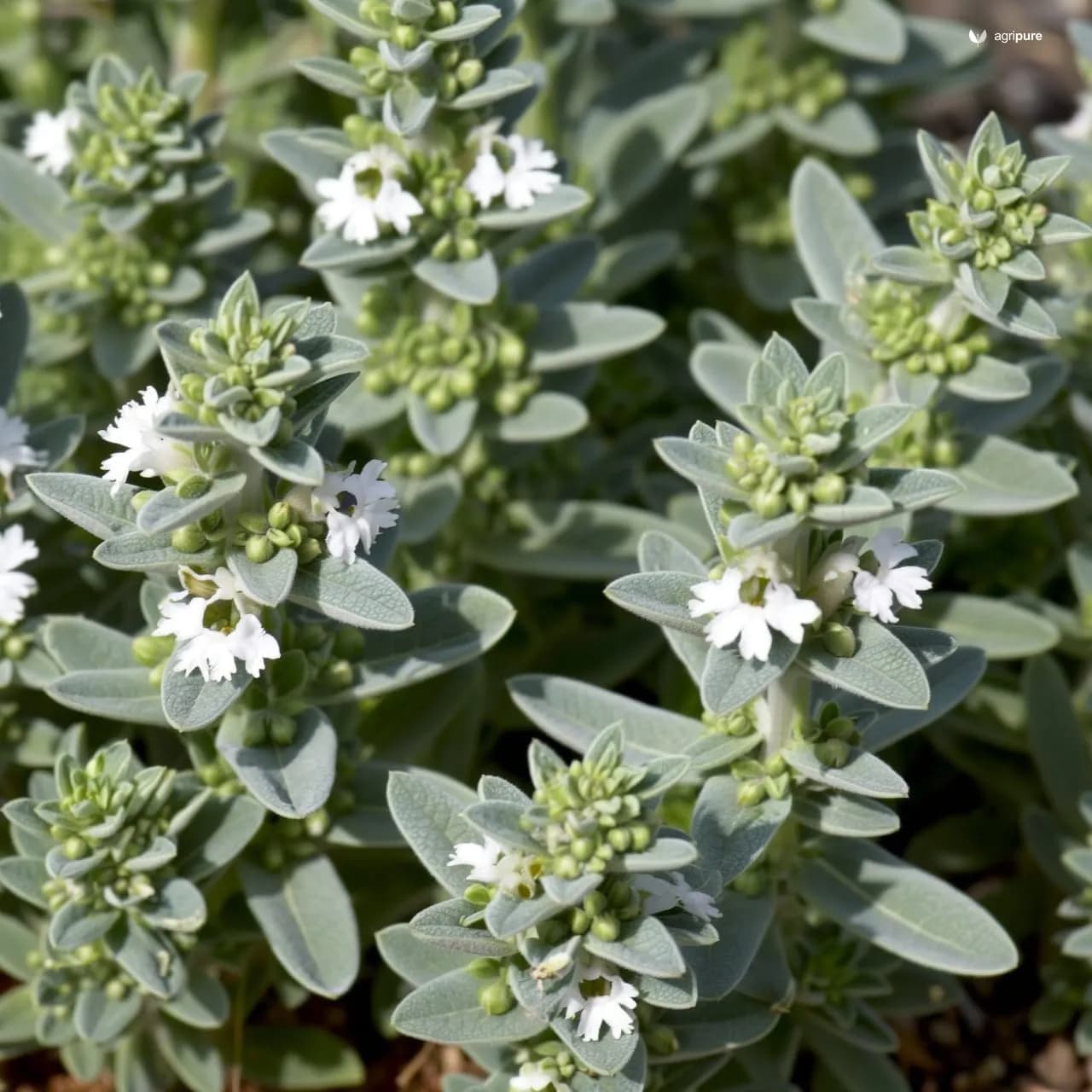
Marjoram forms a bushy, upright, sub-shrubby mound, typically 20 to 60 cm (8 to 24 in) tall and about 30 to 60 cm wide. Like other mints it carries square stems and a clumping habit. The leaves are small, oval, opposite, and slightly hairy or furry to the touch, and the aromatic foliage is described as having sweet pine and citrus notes. Its flowers are tiny, tubular, and two-lipped, usually white, pale pink, or soft purple, borne in dense, knot-like clusters at the tips of the stems; in temperate climates flowering runs from June to September, with seed ripening in late summer.
Growing Marjoram
Marjoram is propagated several ways. Seed is the standard and recommended method, and because the plant flowers from June to September with seed ripening in late summer, you can save your own seed once established. Vegetative methods work too: NC State Extension lists division and leaf cuttings as further options for multiplying plants.
Give it full sun for best results, though it tolerates semi-shade or light woodland conditions. The key to keeping marjoram happy is drainage. It prefers well-drained soil, especially sandy or gritty loams, and will grow in light (sandy), medium (loamy), or heavy (clay) soils so long as the drainage is good. It is unfussy about pH, growing in acid, neutral, and basic (alkaline) soils, with several sources noting a preference for the neutral to alkaline end of the range.
On watering, the plant needs good drainage above all: root rot is the main risk in poorly drained, saturated soils. Once established, marjoram shows good drought tolerance and handles dry soil well, which makes it a strong choice for hot southern summers and lean, sun-baked corners of a property. For homestead plantings, set plants roughly 30 to 45 cm (12 to 18 in) apart, in keeping with their mature width of one to two feet.
Because it is cold-tender, marjoram needs winter care in cooler climates. NC State Extension recommends growing it in containers so plants can be brought indoors to overwinter, and the Balkan Ecology Project notes that it “likes protection in the winter.” Reported hardiness varies: NC State lists it in **USDA zones 9a to 10b, while the Balkan Ecology Project reports survival down to **zone 6 with protection. All sources agree it is cold-sensitive, so colder than about zone 8 to 9 it is usually grown as an annual.
Harvest and uses
Marjoram is grown chiefly for its aromatic leaves, which carry a sweet, mild flavour with pine and citrus notes that is gentler than its relative oregano. Harvest the leafy stems through the growing season; the foliage is used fresh or dried as a culinary herb. Its main homestead roles are as a kitchen herb and as pollinator support: the dense summer flower clusters draw beneficial insects, making it a useful insectary plant on the margins of food beds. It also has a long history of traditional medicinal use.
Exact figures for sowing temperature, transplant dates, and days-to-harvest are not consistently documented in the general botanical sources here, so they are left out rather than stated with false precision. In practice, treat marjoram like other Mediterranean dryland herbs: start it from seed in a warm, well-drained bed, keep it on the lean and dry side, and dry surplus leaf for storage.
How to identify it
Marjoram can be recognised by this combination of features:1234
- Habit: A bushy, upright, sub-shrubby clumping mound, roughly 20 to 60 cm tall and 30 to 60 cm wide.
- Stems: Square in cross-section, as is typical of the mint family.
- Leaves: Small, oval, opposite, and slightly hairy or furry, with a sweet, pine-and-citrus aroma when handled.
- Flowers: Tiny, tubular, two-lipped, white to pale pink or soft purple, gathered into dense, knot-like clusters at the stem tips from June to September.
Safety and cautions
Marjoram is a long-established culinary herb whose leaves are eaten as food, fresh or dried, and it is a familiar, widely eaten flavouring in normal cooking quantities. It also has a history of traditional medicinal use, but that is not the same as a proven treatment, and this profile makes no claim that marjoram treats or cures any condition. As a sensible general principle with any herb used medicinally, anyone who is pregnant or breastfeeding, and anyone taking prescription medication, should seek qualified advice before using it in concentrated or medicinal amounts rather than as an ordinary kitchen seasoning.
Sources
- Origanum majorana (Sweet Marjoram) – North Carolina Extension Gardener Plant Toolbox
- Marjoram – Wikipedia
- Origanum majorana (Sweet Marjoram) – Balkan Ecology Project
- Origanum majorana taxonomy – PubChem (National Library of Medicine)