secondary
Himalayan Raspberry (Yellow Himalayan)
garacha / aakhe
Rubus niveus
Also known as Garacha (Pakistan).
- kpk hills
- pothohar
International hardiness
- USDA 8-10
- RHS H4
- AU: Cool temperate, Warm temperate, Mediterranean
Where it grows — regional guide
| Zones / rating | Regional notes |
|---|---|
USDA 8-10 | No region-specific data yet |
| Zones / rating | Regional notes |
|---|---|
H4 (-10 to -5C) | No region-specific data yet |
| Zones / rating | Regional notes |
|---|---|
Cool temperate, Warm temperate, Mediterranean | Suited to warm-temperate and subtropical slopes for sweet berries; check local weed restrictions and prune hard, as running canes form dense, invasive thorny thickets. |
| Zones / rating | Regional notes |
|---|---|
USDA 8-10 (USDA scale) Canada uses its own zone system; Canadian zones run roughly one lower than USDA. | No region-specific data yet |
| Zones / rating | Regional notes |
|---|---|
KPK hills, Pothohar | Pakistan:A native thicket-forming hill bramble of KPK and the Pothohar; sweet dark berries are gathered fresh, but check local weed restrictions as it colonizes aggressively. India:Native to the western Himalayan hill slopes; yields dark purple-black berries on thorny canes, but can form dense invasive thickets that smother neighbouring vegetation. |
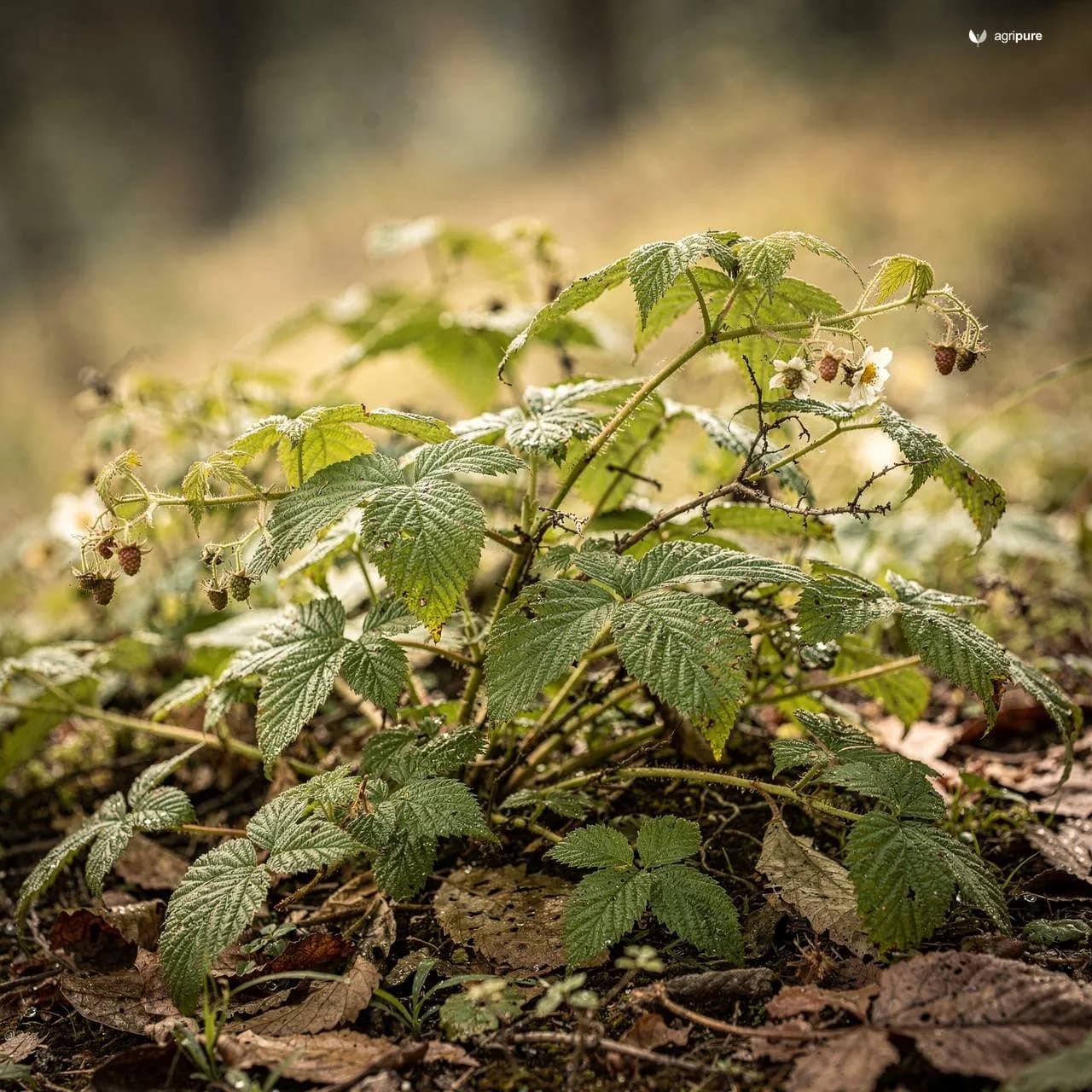
Himalayan raspberry (Rubus niveus, garacha or aakhe) is the thicket-forming hill raspberry of the the KPK hills and the the Pothohar plateau, a bramble with whitish, hairy young stems and clusters of fruit that ripen from red to near-black. Growers gather the sweet fruit, and the brambles themselves protect regenerating soil on broken slopes. On a syntropic site it sits as a secondary-stage thicket: it carries an early crop and covers disturbed ground while slower trees fill in, then steps back as the canopy closes.
Where it thrives
It is native across southern Asia, including the western Himalaya and Pakistan, and grows at roughly 450 to 3,000 m in its Asian range. That altitude band places it through the KPK hills and the higher Pothohar. It is a shrub of 1 to 2.5 m, preferring well-drained soil and growing in full or partial sun rather than deep shade. In the Himalaya it comes up on forest edges and clearings, associated with birch and oak on cooler aspects, so it is a plant of broken, semi-open hill ground.
Role in the system
In a young guild, garacha works as a thicket layer. Its dense, prickly canes cover bare and eroding ground fast, shade the soil, and fence out browsing animals while tree seedlings establish in the shelter of the thicket. It carries an early fruit yield, so it pays something back in the first seasons rather than only providing cover, and the canes cut back through the year drop as mulch that feeds the soil it is holding. The design point is restraint: it is a vigorous coloniser that suckers and tip-roots, so let it stabilise and crop on rough edges and cut banks, then cut it back hard as taller layers take over, because left alone it will hold the ground rather than hand it on to the trees you are nursing. Used as a managed thicket on the edges and slopes of a planting, it gives cover, fruit, and fodder while the system fills in.
What you get
The main return is fruit — clusters of sweet berries eaten fresh and made into jam, rich in vitamin C and antioxidants. Alongside that, the thicket gives service value as soil cover, a living thorn fence, and browse and prunings for stock. One caution belongs here: like its relative the golden Himalayan raspberry, Rubus niveus is a strong coloniser and is listed as an invasive weed where it has been carried outside its range, forming dense thickets that crowd out other plants. Within its native KPK and Pothohar range it is part of the local flora, but the same vigour means it will take ground you did not intend, so place it where that cover is wanted and manage it.
Sources
- Useful Tropical Plants. “Rubus niveus.” (native range, elevation, size, habitat).
- Wikipedia contributors. “Rubus niveus — fruit and uses.”
- IUCN Invasive Species Specialist Group. “Rubus niveus.” Global Invasive Species Database.
Sourcing notes
Easiest from a few suckers or tip-layered canes lifted from an existing hill thicket; cut it back hard once the canopy closes so it does not hold the ground rather than hand it on.