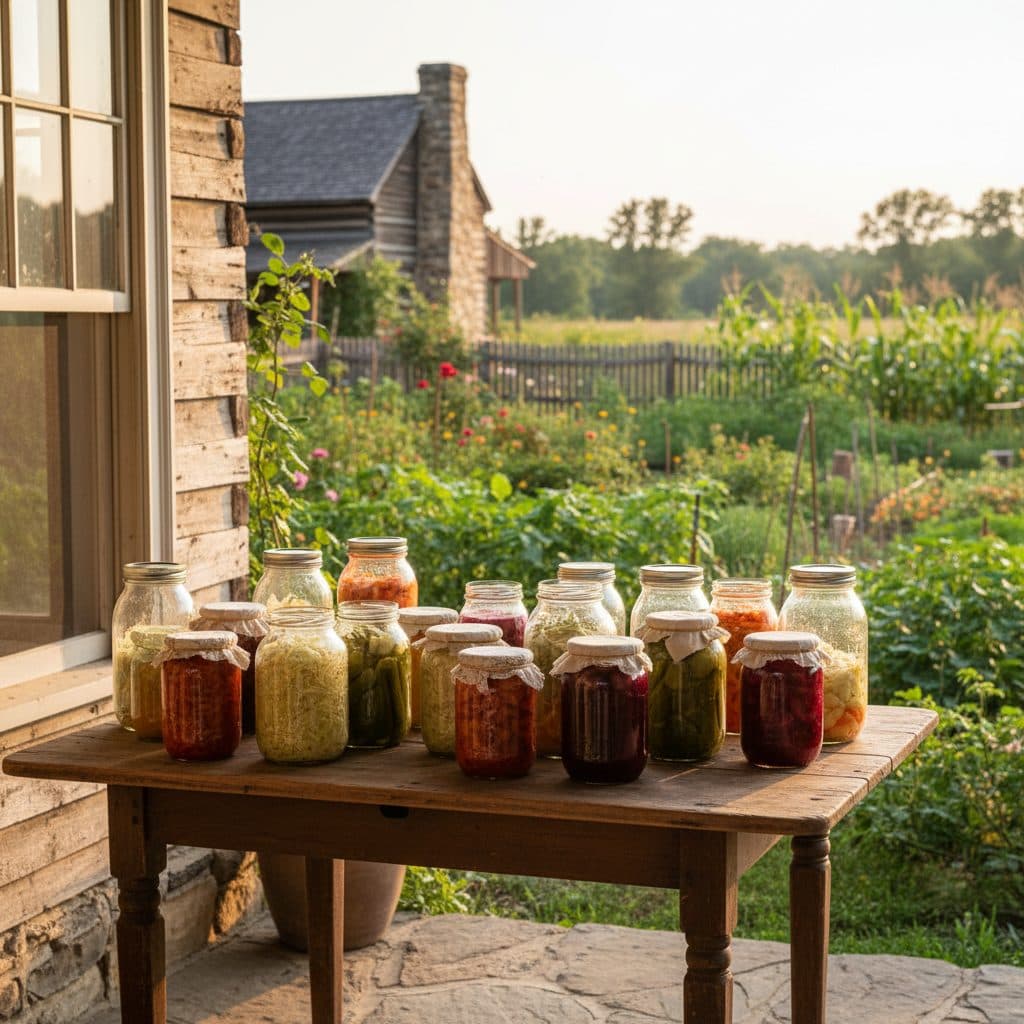
Lacto-Fermentation: Preserve Harvest, Crisp Veggies for 8 Months
Key takeaways
- Lacto-fermentation uses salt and anaerobic conditions to create lactic acid, preserving food and enhancing flavor.
- Essential equipment includes glass jars, airlocks, and fermentation weights to maintain an oxygen-free environment.
- A salt concentration of two to three percent by vegetable weight is typical for safe and effective fermentation.
- Fermented vegetables can be stored in a cool, dark place or refrigerator for six to eight months, sometimes longer.
- Troubleshooting common issues like Kahm yeast or off-flavors is straightforward with proper observation and technique.
- Beyond pickles and kraut, lacto-fermentation is a versatile method for creating flavorful hot sauces and other condiments.
In the fertile valleys of central Pennsylvania, where summer gardens yield an abundance of cucumbers, cabbage, and peppers, many growers face the pleasant challenge of preserving their harvest. While canning and freezing are common, lacto-fermentation offers a distinct path, transforming fresh produce into tangy, crunchy, and shelf-stable foods. This ancient method, practiced for thousands of years across various cultures, leverages beneficial bacteria to create lactic acid, which acts as a natural preservative.
For beginners, the process might seem complex, but it boils down to a few simple principles: salt, water, and time. With minimal equipment and a basic understanding of microbial activity, you can convert a 5-pound head of cabbage into sauerkraut or a bushel of cucumbers into crisp pickles. This guide will walk you through the fundamentals, ensuring your first ventures into lacto-fermentation are successful, yielding delicious results that last for many months.
The science of salt and time for preservation
Lacto-fermentation relies on a specific group of microorganisms — lactic acid bacteria (LAB) — to convert sugars in vegetables into lactic acid. This acid lowers the pH of the fermenting environment, creating conditions unsuitable for spoilage organisms. A typical salt concentration for vegetable fermentation ranges from two to five percent by total weight, which is crucial for inhibiting undesirable bacteria while allowing LAB to thrive. For instance, a 2.5% salt brine means 25 grams of salt per 1,000 grams (one liter) of water, or roughly 2 tablespoons per quart.
the role of anaerobic conditions
To ensure beneficial bacteria dominate, an anaerobic environment is essential. This means excluding oxygen from the fermenting vegetables. Using jars with airlocks or tightly sealed lids helps prevent mold growth, which requires oxygen to flourish. Studies evaluating postharvest lacto-fermentation on vegetables like radishes have shown significant textural and chemical changes, confirming the efficacy of this method in extending shelf life and altering food properties [4]. The process can extend the viability of many vegetables for up to eight months when stored correctly.
- Salt inhibits spoilage bacteria and molds.
- Lactic acid bacteria convert sugars to lactic acid.
- Lowered pH preserves food and creates tangy flavors.
- Anaerobic conditions prevent undesirable microbial growth.
- Temperature influences fermentation speed; 65-75°F is ideal for most ferments.
Essential equipment for successful fermentation
These science of salt points carry into this section, too.
Getting started with lacto-fermentation doesn’t require a large investment. The most critical piece of equipment is a clean, food-grade container, typically a glass jar. Wide-mouth quart (32 oz) or half-gallon (64 oz) jars are excellent for beginners, allowing easy packing and cleaning. You’ll also need a way to keep your vegetables submerged under the brine, preventing exposure to oxygen. This is where fermentation weights come in — small glass or ceramic discs designed to fit inside jar openings, holding the food down.
maintaining an anaerobic environment
To truly maintain an anaerobic environment and allow gases to escape without letting oxygen in, an airlock system is highly recommended. These can be simple one-way valves attached to jar lids, or more elaborate crocks with water seals. For a 1-gallon batch of sauerkraut, a 1-gallon glass jar with a spring-loaded follower and an airlock cap might cost around 25 dollars. A good kitchen scale is also invaluable for accurately measuring salt, ensuring you hit that crucial 2-3% ratio by weight. You can find more details on general food preservation tools at agripure.org/articles/fermenting-and-pickling-vegetables.
- Glass jars (quart or half-gallon are common sizes).
- Fermentation weights (glass or ceramic).
- Airlocks and specialized lids.
- Kitchen scale for precise salt measurements.
- Large mixing bowl and a clean cutting board.
Crafting your first kraut or pickles
That work on equipment sets up what follows here.
Making sauerkraut or pickles is a fantastic entry point into lacto-fermentation. For sauerkraut, you’ll need a fresh head of cabbage, ideally weighing 3-5 pounds. Remove the outer leaves, core the cabbage, and shred it thinly — about 1/8 inch thick. Weigh your shredded cabbage, then calculate 2% of that weight for your salt. For example, a 4-pound (1814-gram) head of cabbage would require approximately 36 grams of salt. Massage the salt into the cabbage in a large bowl for 10-15 minutes until it releases enough liquid to create its own brine.
packing and fermenting
Once the cabbage is limp and juicy, pack it tightly into a clean glass jar, pressing down firmly to eliminate air pockets. Ensure the cabbage is completely submerged under its liquid. Place a fermentation weight on top to keep it submerged, and then seal the jar with an airlock lid. Ferment at a consistent room temperature, ideally between 65-72°F, for two to four weeks. In warmer climates like USDA zone 8, fermentation might proceed faster, completing in as little as 10 days. Taste periodically after two weeks; when it reaches your preferred tanginess, move it to cold storage. This method is similar to what’s detailed in agripure.org/articles/fermenting-and-pickling-vegetables.
- Select fresh, firm vegetables, such as a 3-pound head of cabbage.
- Shred or slice vegetables uniformly, about 1/8 inch thick.
- Use a precise 2-3% salt by vegetable weight.
- Massage salt into vegetables to draw out liquid.
- Pack tightly into a jar, ensuring full submersion under brine.
Fermenting hot sauce for a spicy kick
This builds directly on crafting first kraut.
Lacto-fermentation is an excellent method for creating complex, flavorful hot sauces from your pepper harvest. Whether you’re growing mild bell peppers or fiery Carolina Reapers, the process is largely the same. Start by washing and roughly chopping your peppers; for a 2-pound batch of peppers, you might use 3-4 medium bell peppers and 10-15 hot peppers like jalapeños or serranos. You can include garlic, onions, or other aromatics for depth. A slightly higher salt concentration, typically 3-5% by total weight of peppers and any added ingredients, is often preferred for hot sauces to ensure a robust fermentation and prevent spoilage, especially if using softer peppers.
blending and bottling
Pack the chopped peppers and aromatics into a clean jar, then cover them with a brine made from filtered water and your calculated salt. Use a fermentation weight to keep everything submerged, and seal with an airlock. Ferment for one to three weeks, depending on your desired tanginess and the ambient temperature — a warmer 70-75°F can accelerate the process. Once fermented, blend the contents of the jar, including the brine, until smooth. You can strain the pulp for a thinner sauce or leave it for a thicker consistency. Bottle your finished hot sauce in small, clean bottles and store it in the refrigerator, where it will last for six months or more. For more on growing peppers, see agripure.org/articles/how-to-grow-peppers.
- Select fresh peppers, such as 2 pounds of jalapeños.
- Chop peppers and any aromatics (e.g., 2 cloves of garlic).
- Prepare a 3-5% salt brine by weight for the peppers.
- Submerge peppers in brine using a fermentation weight.
- Ferment for 1-3 weeks, then blend to desired consistency.
Troubleshooting common fermentation issues
Those fermenting hot sauce habits matter here as well.
Even experienced fermenters occasionally encounter issues, but most are easily resolved. One common concern is the appearance of a white film on the surface of the brine. This is usually Kahm yeast, a harmless aerobic yeast that forms when there’s slight oxygen exposure. It’s not mold and can be skimmed off. If you see fuzzy, colored growth (green, black, pink), that’s mold, and unfortunately, the batch should be discarded. Ensuring your vegetables remain submerged under the brine, typically by at least 1 inch, is the best defense against mold.
off-flavors and textures
Sometimes, ferments can develop off-flavors or textures. A slimy texture can indicate too low a salt concentration or too warm a fermentation temperature, often above 75°F. A rotten smell means spoilage has occurred, and the batch should be discarded. A metallic taste can result from using non-food-grade containers or utensils. The key is to maintain proper salt ratios, consistent temperatures, and strict cleanliness. The USDA Natural Resources Conservation Service provides resources for sustainable food practices, including methods that complement food preservation techniques like fermentation [5].
- White film is usually Kahm yeast, which is harmless and can be skimmed.
- Fuzzy, colored growth indicates mold; discard the batch.
- Slimy texture suggests too little salt or too high a temperature.
- Rotten smells mean spoilage; discard immediately.
- Ensure vegetables stay submerged under the brine by at least 1 inch.
Storing your fermented foods
Once your lacto-fermented vegetables have reached their desired flavor and texture, it’s time for storage. Moving them to a cooler environment, typically below 50°F, significantly slows down the fermentation process, preserving their quality. For most home fermenters, this means transferring the finished product to the refrigerator. In a standard refrigerator set to 35-40°F, fermented vegetables like sauerkraut or pickles can last for six to eight months, sometimes even longer. Ensure the vegetables remain submerged in their brine during storage to prevent spoilage.
long-term storage options
For those with larger harvests or an interest in off-grid preservation, a root cellar can provide an ideal environment. A well-designed root cellar maintains a consistent temperature of 35-50°F and high humidity, perfect for storing ferments in sealed jars or crocks. While not all fermented foods are suitable for long-term root cellar storage (some might continue to ferment slowly), many, especially those in tightly sealed jars, will do well for several months. For more information on this method, visit agripure.org/articles/root-cellaring. Properly stored, a 1-gallon jar of sauerkraut can provide many meals throughout the winter months in a USDA zone 6 climate.
- Refrigeration at 35-40°F extends shelf life to 6-8 months.
- Ensure vegetables remain submerged in brine during storage.
- Root cellars offer cool, consistent temperatures (35-50°F) for longer storage.
- Use airtight containers for root cellar storage to prevent drying.
- Fermented hot sauces can last for over six months in the refrigerator.
| Vessel Type | Pros | Cons | Typical Capacity |
|---|---|---|---|
| Glass Jar with Airlock | Affordable, easy to clean, visible process | Can break, requires weights | 1 quart to 1 gallon |
| Ceramic Fermentation Crock | Traditional, excellent temperature stability, water seal | Heavy, opaque (cannot see ferment), more expensive | 2 gallons to 10 gallons |
| Plastic Bucket (Food-Grade) | Lightweight, inexpensive, durable for large batches | Can scratch, potential for off-flavors if not food-grade | 3 gallons to 5 gallons |
Grow Your Own, Preserve Your Harvest
From seed to jar, learn how to cultivate and preserve your favorite vegetables for year-round enjoyment.
Frequently asked questions
What is the ideal salt percentage for lacto-fermentation?
For most vegetables, a salt concentration of two to three percent by the total weight of the vegetables is ideal. This range effectively inhibits spoilage bacteria while allowing beneficial lactic acid bacteria to thrive, ensuring a safe and flavorful ferment.
How do I know if my ferment is safe to eat?
A safe ferment will typically smell pleasantly sour or tangy, not rotten or sulfuric. The vegetables should remain firm, and the brine should be clear or slightly cloudy. Any signs of fuzzy mold (not Kahm yeast) or a truly foul odor indicate spoilage, and the batch should be discarded.
Can I use tap water for fermentation?
It’s best to avoid tap water directly if it contains chlorine or chloramines, as these can inhibit beneficial bacteria. Filtered water or spring water is preferred. If using tap water, let it sit out for 24 hours to allow chlorine to dissipate, or boil it for 10 minutes and then cool.
What is Kahm yeast and is it harmful?
Kahm yeast is a common white film that can appear on the surface of ferments. It’s a harmless aerobic yeast that forms when there’s slight oxygen exposure. While not harmful, it can impart off-flavors, so it’s best to skim it off if it appears, usually within the first week or two.
How long does lacto-fermentation take?
The fermentation time varies depending on the vegetable, temperature, and desired flavor. Sauerkraut typically ferments for two to four weeks at 65-72°F, while hot sauces might be ready in one to three weeks. Taste your ferment periodically after the first week to determine when it’s ready.
References
- The Nutritional and Safety Challenges Associated with Lupin Lacto-Fermentation (2016). The Nutritional and Safety Challenges Associated with Lupin Lacto-Fermentation.
- The effect of Piper betle leaves on lacto-fermentation of idli batter, characterization and applicability of potent isolates in soymilk fermentation (2015). The effect of Piper betle leaves on lacto-fermentation of idli batter, characterization and applicability of potent isolates in soymilk fermentation.
- Syneresis Understanding by Modeling the Lacto-Fermentation of Sodium Caseinate (2022). Syneresis Understanding by Modeling the Lacto-Fermentation of Sodium Caseinate.
- Chemical synthesis of the branched human milk oligosaccharides Lacto-N-hexaose and Lacto-N-neohexaose via Lacto-N-tetraose and Lacto-N-neotetraose core sequence (2026). Chemical synthesis of the branched human milk oligosaccharides Lacto-N-hexaose and Lacto-N-neohexaose via Lacto-N-tetraose and Lacto-N-neotetraose core sequence.
- Evaluation of the Effect of Postharvest Lacto-Fermentation on Radish Using Effective Discriminative Models Based on Textures of Images (2022). Evaluation of the Effect of Postharvest Lacto-Fermentation on Radish Using Effective Discriminative Models Based on Textures of Images.
- USDA Natural Resources Conservation Service (2024). USDA Natural Resources Conservation Service.