pioneer
Vegetable Hummingbird
agasti
Sesbania grandiflora
Also known as Agasti (Pakistan), Agathi (India).
- punjab plains
- sindh coast
International hardiness
- USDA 10-12
- RHS H1b
- AU: Tropical, Subtropical
Where it grows — regional guide
| Zones / rating | Regional notes |
|---|---|
USDA 10-12 | A frost-tender tropical tree suited only to frost-free USDA zones 10 to 12; harvest young pods and flowers for food, but never eat the mature seeds. |
| Zones / rating | Regional notes |
|---|---|
H1b (10 to 15C) | No region-specific data yet |
| Zones / rating | Regional notes |
|---|---|
Tropical, Subtropical | Grown in humid tropical and subtropical northern zones for quick green manure and edible blooms; avoid eating mature seeds, which are toxic to fish. |
| Zones / rating | Regional notes |
|---|---|
USDA 10-12 (USDA scale) Canada uses its own zone system; Canadian zones run roughly one lower than USDA. | No region-specific data yet |
| Zones / rating | Regional notes |
|---|---|
Punjab plains, Sindh coast | Pakistan:A fast-growing, frost-sensitive tropical tree suited to the Sindh coast and frost-free Punjab plains; eat only the flowers and young pods, as mature seeds are toxic. India:Cultivated in warm, frost-free regions for edible flowers and tender pods; do not consume mature seeds, which are not edible and are toxic to fish. |
Grows alongside
Species that appear with Vegetable Hummingbird in 6 of our published guides — a starting list for a guild, not a planting plan.
Vegetable hummingbird (Sesbania grandiflora) is a short-lived, soft-wooded legume tree grown across the lowland humid tropics for its large edible flowers, tender young pods, protein-rich foliage, and remarkably fast growth. Its exact wild origin is uncertain, but it is usually considered native to Southeast Asia, probably Malaysia and/or Indonesia, possibly India, and it is now widely cultivated throughout the tropics, from southern Mexico and South America to southern Florida, Hawaii, West and East Africa, and much of tropical Asia. For a homesteader in a frost-free climate, the appeal is speed and versatility: a single seed becomes a flowering, food-and-fodder-producing tree within a year, making it a fast nurse tree and a kitchen crop at the same time.
It is widely known by a string of common names: Vegetable Hummingbird, West Indian pea, scarlet wisteria tree, August flower, Australian corkwood tree, flamingo bill, parrot flower, and white dragon, and across South Asia as agati, agasti, or bakphul. It is a soft-wooded tree with a loose, open crown, usually 8 to 15 m tall, on a straight bole about 25 to 30 cm in diameter, with thick, furrowed bark. The wood is soft and is used locally for fuelwood, charcoal, pulp, and light construction.
How to identify Sesbania grandiflora
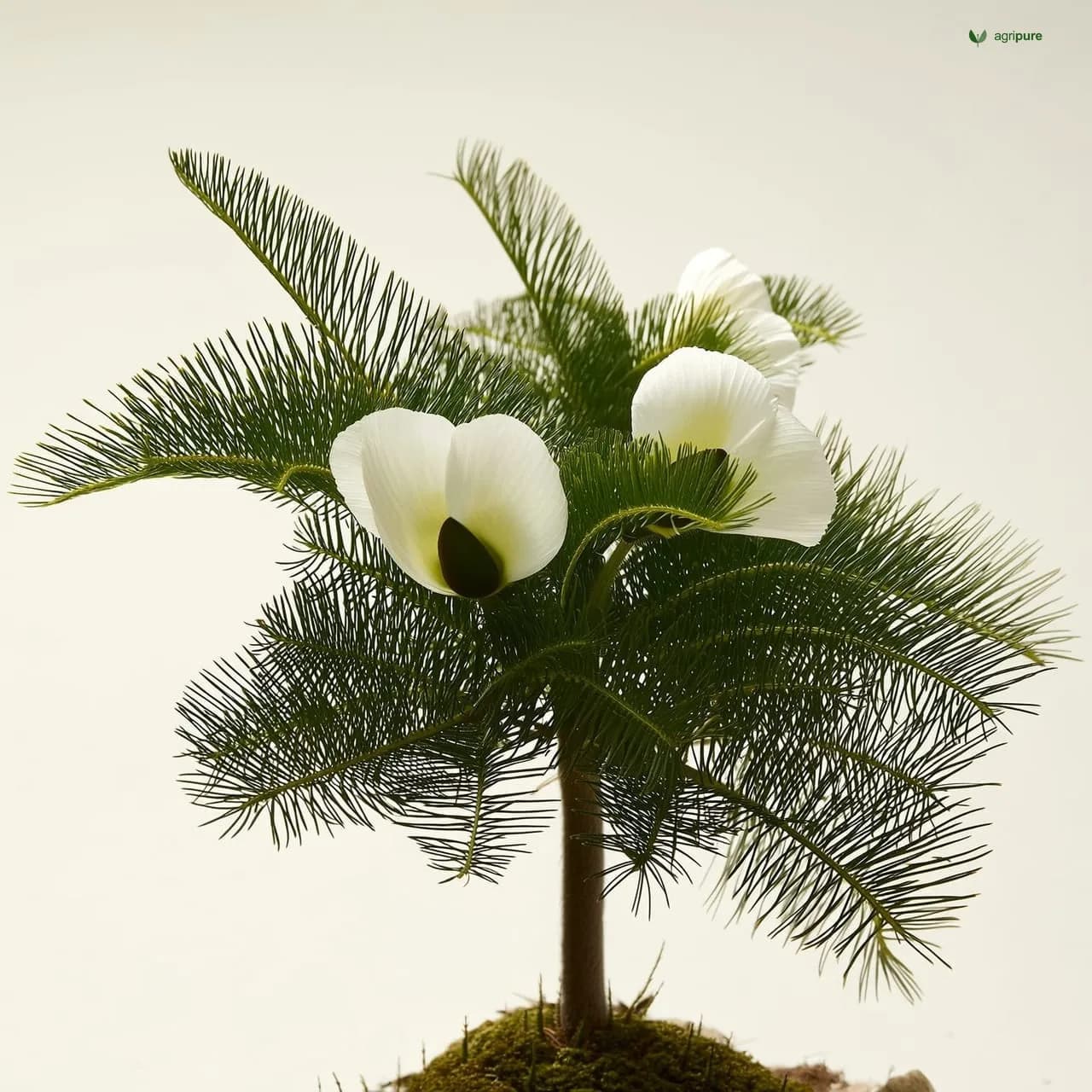
The tree is recognizable by the combination of feathery foliage, oversized pea flowers, and very long slender pods:34
- Leaves: Pinnate (feather-like), about 15 to 30 cm long, made up of 20 to 60 oblong leaflets, each roughly 2.5 cm long; the foliage is rich in protein, reported at around 25 to 36 percent.
- Flowers: Large and strongly pea-shaped (papilionaceous), about 10 cm long, typically white but also occurring in rose or maroon forms; the red/maroon cultivar is noted as a rarer variety in India.
- Pods: Long and narrow, about 1.3 cm wide and up to 60 cm long, containing numerous small seeds.
The flowers are bird-pollinated, which suits the “hummingbird” common name and makes the tree a useful nectar source where it is grown.
Growing vegetable hummingbird
This is strictly a warm-climate tree. It is described as suitable only for the lowland tropics, up to about 800 m elevation, because it is extremely frost-sensitive and cannot tolerate cool temperatures for any extended period. It grows in regions receiving 800 to 4,000 mm of annual rainfall but is best adapted to high rainfall in the 2,000 to 4,000 mm range, thriving in hot, humid conditions such as those of south Florida. It needs full sun for best growth.
The primary references do not assign a formal USDA hardiness zone. Given that the tree is strictly lowland-tropical, extremely frost-sensitive, and grown outdoors year-round only in very warm climates (for example southern Florida) while being killed by typical subtropical frosts, its practical year-round outdoor range corresponds roughly to USDA zones 11 to 12. This mapping is a horticultural inference from its tropical distribution and stated frost sensitivity, not a figure stated in the source literature.
Propagation is straightforward: the tree is grown easily from seed, and seedlings develop extremely fast. Reported early growth is striking — about 2 m in 12 weeks, 4 to 5 m in the first year, and roughly 8 m by three years. In tropical climates the common practice is to sow at the beginning of the rainy season, taking advantage of the warmth and moisture for rapid establishment. The available sources do not give specific seed pretreatment, plant spacing, or precise time-to-harvest figures for this species, so those details are left out here rather than stated with false precision.
Harvest and uses
Vegetable hummingbird earns its name in the kitchen: the large flowers and the young, tender pods are eaten as vegetables. The young leaves are also used, and the foliage’s high protein content (about 25 to 36 percent) makes it valuable as fodder. Because the tree flowers and fruits quickly, an edible harvest follows soon after the rapid early growth, which is part of why it is so widely planted in home gardens, mixed orchards, and smallholder agroforestry systems. Beyond food and fodder, the soft wood supplies fuelwood, charcoal, pulp, and light construction timber, and the fast-growing, soil-improving habit of this legume makes it a useful nurse tree in the warm tropics.
Safety and cautions
While the flowers, young pods, and young leaves are eaten, not every part of the plant is food. The mature seeds are not eaten by people, and the seeds are reported to be toxic to fish. Eat only the parts traditionally used as vegetables (flowers, tender young pods, and young leaves), and do not consume the mature seeds. As with any plant used both as food and as fodder, identify the tree confidently and use only the parts and life-stages described as edible in the references rather than experimenting with untested parts.
Sources
- Sesbania grandiflora – PROSEA (Plant Resources of South-East Asia)
- Sesbania grandiflora – Useful Tropical Plants Database
- Sesbania grandiflora – eFlora of India
- Sesbania grandiflora – Eat The Weeds
- Sesbania grandiflora Assessment – University of Florida IFAS
- Sesbania grandiflora – USDA APHIS