
Key takeaways
- Capillary action draws water upward through a 12-inch soil matrix, reducing watering frequency by up to 50% compared to traditional top-watering systems.
- A 6-inch deep water reservoir filled with gravel or coarse media provides stable moisture for 7 to 14 days without over-saturating the root zone.
- Installing a 2-inch PVC fill pipe and a 0.5-inch overflow drain prevents waterlogging and ensures proper aeration of the plant roots.
- Vegetables with shallow-to-medium root depths, such as tomatoes and leafy greens, are best suited for 10-day sub-irrigation cycles.
- Adding 500 grams of organic nutrients like Fermented Soybean Meal Organic Fertilizer ensures consistent slow-release feeding throughout the growing season.
Quick answer: Wicking beds are self-watering raised garden beds that use capillary action to draw water upwards from a bottom reservoir through the soil, significantly reducing watering frequency. This system maintains consistent moisture for plants, promoting healthier growth with less effort.
Understanding the wicking bed mechanism in 3 layers
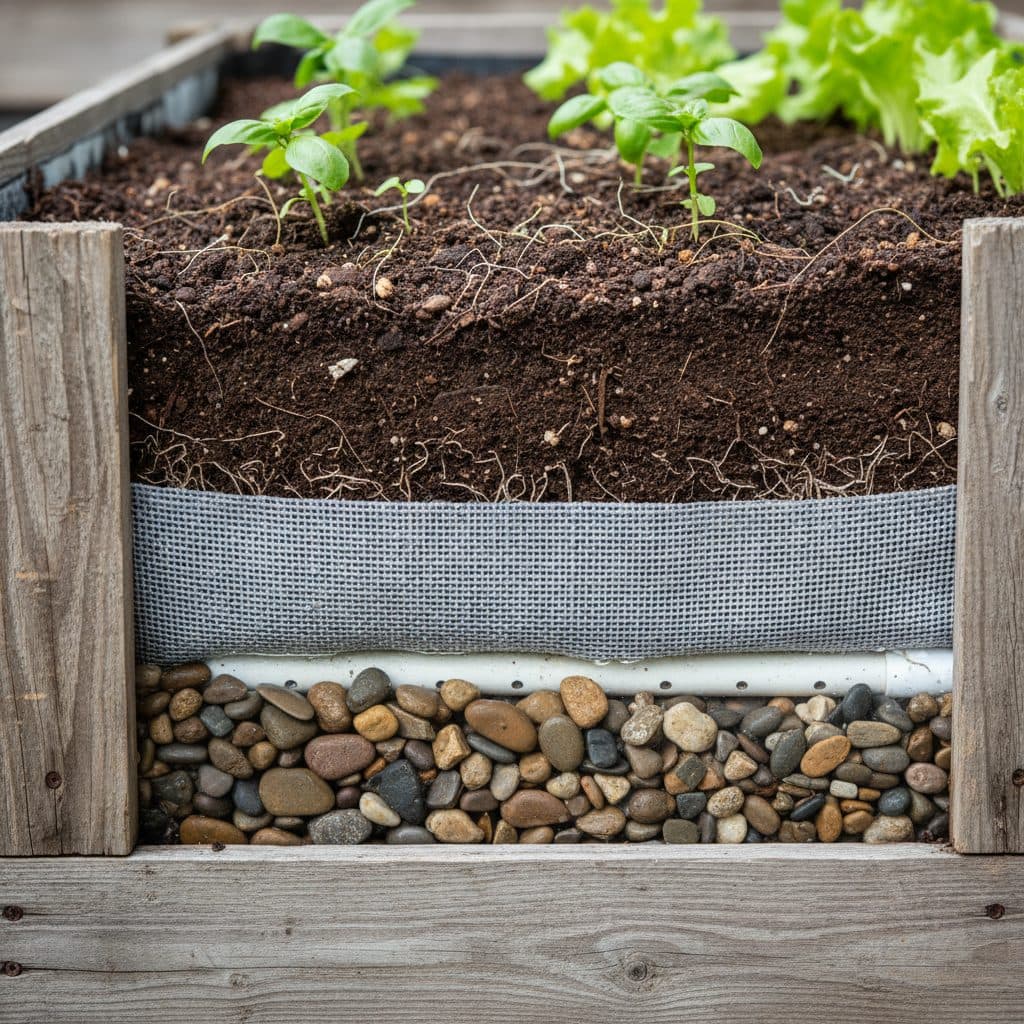
This wicking system operates on the principle of capillary action, where water moves upward against gravity through small soil pores. The wicking bed is constructed in 3 layers: a bottom water reservoir, a geotextile fabric barrier, and a 12-inch topsoil layer where plants grow. As moisture evaporates from the surface or is absorbed by plant roots, the soil matrix automatically draws water from the bottom reservoir to maintain a uniform moisture level.
This capillary rise is driven by two physical forces: adhesion, which causes water to stick to soil particles, and cohesion, which binds water molecules together. Together, these forces allow water to climb upward through a vertical height of up to 12 inches. In typical North American soils, capillary rise is most efficient in silty clay loam soils, which contain over 30% small pore spaces. This makes wicking beds an excellent addition to permaculture gardening designs.

Calculating the water reservoir capacity using 4 factors
To calculate the water capacity, consider 4 factors: the bed’s length, width, reservoir depth, and the porosity of the reservoir media. For example, a 4×8 foot raised bed with a 6-inch deep reservoir has a total volume of 16 cubic feet.
If the reservoir is filled with gravel, which typically has a porosity of 40%, the actual water storage capacity is 6.4 cubic feet, or approximately 48 gallons. When refilled once a week, this reservoir provides 48 gallons of water, which is more than enough to sustain a typical vegetable crop in USDA hardiness zones 5 through 8 during mid-summer. Gardeners can use a 3-in-1 Soil pH, Moisture & Light Meter to verify soil moisture before refilling.
Selecting the right media for the 6-inch wicking reservoir
A 6-inch layer of washed pea gravel, coarse sand, or expanded clay pebbles is ideal for creating a stable reservoir. Pea gravel has a porosity of approximately 40%, while expanded clay pebbles can reach up to 50% porosity, allowing for a larger reservoir volume.
This gravel or clay media must be separated from the soil above by a layer of permeable geotextile fabric. This fabric acts as a physical barrier, allowing water to wick upward while keeping soil particles out of the reservoir. A high-quality 4-ounce non-woven geotextile fabric is recommended, as it allows excellent capillary action while maintaining structural integrity for over 10 years.
Constructing a wood-framed wicking bed in 7 steps
To begin, build a wooden raised bed frame that is 18 to 24 inches deep using 2×6 or 2×12 cedar lumber. Line the bottom and interior sides of the bed with a 20-mil food-safe EPDM pond liner to create a watertight seal. This wood-frame design is a durable alternative to metal raised garden beds.
Those EPDM liners must be handled carefully to prevent punctures during assembly. Next, follow these 7 steps to complete the wicking bed:
- Install a 2-inch PVC fill tube vertically in one corner of the bed, reaching from the top edge down to the bottom.
- Lay a perforated 4-inch drainage pipe horizontally across the bottom of the bed, connected to the fill pipe.
- Drill a 1-inch hole in the side of the wood frame exactly 6 inches from the bottom to install the overflow pipe.
- Fill the bottom 6 inches of the bed with pea gravel or coarse sand.
- Lay the geotextile fabric over the gravel layer, wrapping it up the sides by 2 inches.
- Fill the remaining 12 inches of the bed with a rich soil mixture of compost and topsoil.
- Plant your crops and water them thoroughly from the top to initiate the wicking action.
Choosing plants that thrive in 10-day watering cycles
Tomatoes, cucumbers, and peppers require up to 1 to 2 inches of water per week and perform exceptionally well in sub-irrigated beds. Leafy greens, such as lettuce, spinach, and kale, also grow rapidly when their root zones are continuously hydrated. This system is particularly beneficial if you want to grow strawberries which require stable soil moisture to prevent fruit splitting.
Those sub-irrigated conditions are not suitable for all plant types, however. Deep-rooted perennials like asparagus or woody herbs like rosemary prefer drier soil conditions and can suffer from root rot if grown in a wicking bed. Root crops like carrots or potatoes can become deformed or split if the soil moisture remains too high.
Managing the wicking bed over 4 seasons
In the spring, prepare the bed by adding 500 grams of Fermented Soybean Meal Organic Fertilizer to the topsoil layer to provide slow-release nitrogen. During the hot summer months, monitor the reservoir water level every 7 days and refill it before it empties. This slow-release approach is also ideal for nourishing cover crops in no-dig beds.
As autumn arrives, clean out dead plant material and add a 2-inch layer of organic compost to protect the soil. In the winter, drain the water reservoir completely in USDA zones 1 through 7 to prevent the water from freezing and cracking the PVC pipes. Protecting the bed with a layer of mulch during these cold months preserves the soil structure.

Avoiding the 3 most common wicking bed mistakes
One of the 3 most common mistakes is omitting the overflow drain, which can cause the planting bed to become waterlogged during heavy rains. Always ensure the overflow drain is positioned exactly 6 inches from the bottom, which is the height of the reservoir layer.
This placement prevents water from rising into the soil root zone and drowning the plants. Another mistake is using the wrong soil mix in the planting layer. Avoid using heavy garden soil, which can compact and prevent wicking; instead, use a 50/50 mix of organic compost and high-quality potting mix. Lastly, gardeners often forget to check for root penetration through the geotextile barrier, which can clog the reservoir pipes over a period of 2 to 3 years.
Evaluating wicking beds against 2 traditional raised bed styles
While traditional raised beds suffer from rapid evaporation and require watering 2 to 3 times a week in hot weather, wicking beds cut watering to once a week. This results in up to 50% water savings and ensures consistent moisture for vegetables.
Wicking beds require a higher initial construction cost but pay for themselves within 3 to 4 years through water savings and increased crop yields. Traditional raised beds are cheaper to build but have higher water costs and require daily manual labor during summer.
Feature | Raised Wicking Bed | Traditional Raised Bed |
|---|---|---|
Watering Frequency | Once every 7 to 14 days | 2 to 3 times per week |
Water Use Efficiency | High (up to 50% water savings) | Low (high evaporation loss) |
Initial Material Cost | $150 to $250 per bed | $50 to $100 per bed |
Risk of Root Rot | Low (soil remains aerated) | Moderate (if overwatered) |

Frequently asked questions
Can you grow deep-rooted plants in a wicking bed?
This raised bed system is optimized for shallow-to-medium rooted vegetables such as tomatoes and leafy greens. Deep-rooted perennials like asparagus or fruit trees are not recommended, as their root systems can penetrate the geotextile barrier and clog the water reservoir below.
How often do you need to refill a wicking bed reservoir?
These wicking beds typically require refilling once every 7 to 14 days during the active summer growing season. The exact frequency depends on local temperatures, plant sizes, and reservoir capacities, which can be monitored using a water level indicator.
Do wicking beds breed mosquitoes?
This design prevents mosquito breeding by keeping the water reservoir completely enclosed. Because the reservoir is capped with soil and the inlet pipe has a secure cover, adult mosquitoes cannot access the standing water to lay eggs.
Can you use organic fertilizer in wicking beds?
Organic fertilizers applied to the topsoil layer work well in wicking beds. Slow-release nutrients, such as Fermented Soybean Meal Organic Fertilizer, are drawn down by root action rather than washed away, providing consistent plant nutrition.
What is the lifespan of a wicking bed liner?
Liners made from 20-mil food-safe polyethylene or EPDM pond liner typically last 10 to 15 years. Protecting the liner from direct UV rays and sharp tools ensures the reservoir remains watertight for over a decade.
References
- Higgins, S. (2021). Raised Wicking Bed. University of Kentucky Cooperative Extension Service (BAE Publication AEN-158). University of Kentucky Extension
- Oklahoma State University Extension. (2021). Leon Sloan Wicking Container Gardening Method. Oklahoma State University Extension
- University of Illinois Extension. (2020). Creating and Managing Self-Watering Containers. University of Illinois Extension
- University of Arizona Cooperative Extension. (2022). Sub-Irrigation Systems for Water Conservation in Arid Climates. University of Arizona Cooperative Extension
- Mississippi State University Extension. (2023). Urban Agriculture and Sub-Irrigated Raised Bed Systems. Mississippi State University Extension