
Key takeaways
- Mulch can reduce soil moisture evaporation by 35% to 70% in dry climates, significantly cutting irrigation needs.
- Organic mulches, such as wood chips and straw, regulate soil temperature, keeping roots cooler in summer and warmer in winter.
- Applying a 4 to 6 inch layer of mulch effectively suppresses weed growth, reducing competition for precious water and nutrients.
- Inorganic mulches like gravel offer durability and are effective for heat retention in specific applications such as desert xeriscaping.
- Proper mulch application, including a 2-inch gap from plant stems, prevents issues like stem rot and pest infestations.
- Regular monitoring of soil moisture levels beneath mulch helps optimize irrigation schedules and ensures plant health.
Quick answer: Mulching in the arid US Southwest conserves soil moisture by reducing evaporation, moderating soil temperatures, and suppressing weeds. Organic mulches like wood chips and straw, applied 4-6 inches deep, are effective, along with inorganic options like gravel for xeriscaping.
In regions like the American Southwest, where summer temperatures regularly exceed 100 degrees Fahrenheit and annual rainfall can be as low as 8 to 15 inches, conserving every drop of water is paramount for successful gardening. Across Arizona, Nevada, and parts of California, growers face the dual challenge of intense sun and persistent drought, making traditional gardening methods unsustainable without significant intervention. Mulching isn’t just a gardening chore; it’s a critical strategy for resilience, directly impacting soil health and water retention.
By covering the soil surface, mulch acts as a protective barrier, drastically reducing evaporation and moderating soil temperatures. This practice allows plants to thrive even under stressful conditions, making it an essential tool for any grower looking to adapt to a changing climate. From backyard vegetable patches in USDA zone 9b to established orchards in central California, understanding and implementing effective mulching techniques can mean the difference between a struggling garden and a flourishing one.
The fundamental role of mulch in water conservation
For growers in arid and semi-arid regions, the battle against water loss begins at the soil surface. In places like the Central Valley of California, where summer temperatures can reach 110 degrees Fahrenheit, exposed soil loses moisture rapidly through evaporation. Mulch creates a physical barrier that significantly slows this process. Research indicates that mulching can reduce soil moisture evaporation by 35% to 70% compared to bare soil, a substantial saving for any garden [6]. This isn’t just about saving water; it’s about providing a more stable environment for plant roots, which can lead to a 15% increase in plant vigor during drought conditions in USDA zone 9a.
beyond evaporation: temperature and weed control
Beyond its primary role in moisture retention, mulch also acts as a natural insulator. In USDA zone 8b, a 4-inch layer of organic mulch can keep soil temperatures up to 10 degrees cooler on a hot summer day, preventing root stress and improving nutrient uptake. Conversely, in cooler months, it helps maintain a more consistent soil temperature, protecting roots from sudden freezes below 32 degrees Fahrenheit. A thick layer of mulch also effectively suppresses weeds, which compete directly with your desired plants for precious water and nutrients. For example, a 6-inch layer of wood chips can reduce weed germination by 80% or more, minimizing the need for weeding and chemical herbicides, as discussed in our article on natural weed killers [1].
- Reduces evaporation: A 4-inch layer of organic mulch can cut water loss by over 50% in dry conditions.
- Moderates soil temperature: Keeps soil cooler in summer and warmer in winter, protecting plant roots.
- Suppresses weeds: Reduces competition for water and nutrients, saving labor by up to 75%.
- Improves soil structure: Organic mulches break down, adding organic matter over 1-3 years.
- Prevents soil erosion: Protects the soil surface from wind and heavy rain, especially on slopes up to 20 degrees.
Organic mulches: nature’s blanket
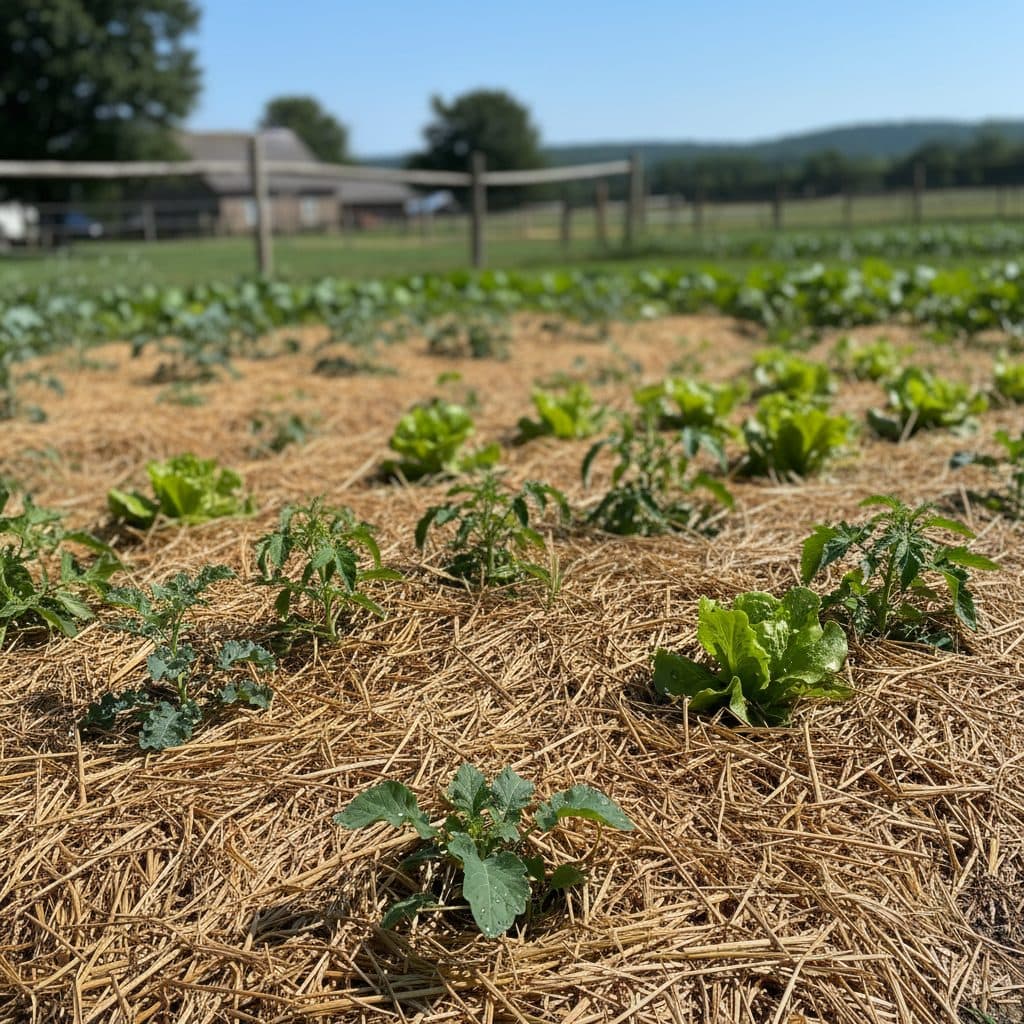
Organic mulches are derived from plant materials and offer a dual benefit: they conserve moisture and enrich the soil as they decompose. Common choices include straw, wood chips, shredded bark, and compost. In areas like the high desert of New Mexico, where sandy soils struggle to hold water, a 3-inch layer of alfalfa straw can significantly improve moisture retention, especially for vegetable beds. Straw is lightweight and decomposes relatively quickly, adding nitrogen and other nutrients to the soil over a single growing season. For longer-lasting applications, such as around fruit trees in USDA zone 7a, wood chips or shredded bark are excellent, often lasting for two to three years before needing replenishment.
choosing and applying organic materials
When selecting organic mulch, consider its decomposition rate and nutrient content. For instance, in a citrus orchard in Florida, a 6-inch layer of pine bark mulch was found to reduce soil moisture depletion effectively, a practice dating back to studies in the 1960s [3]. Compost, while breaking down faster, provides a rich nutrient boost and improves soil structure, making it ideal for annual beds. Apply organic mulches in a layer of 3 to 6 inches, ensuring a 2-inch gap around plant stems to prevent rot and pest issues. This practice is particularly important for young plants in regions like the Pacific Northwest, where humidity can be high. Regularly checking soil moisture under the mulch with a soil moisture meter can help refine irrigation schedules, potentially reducing watering frequency by 30%.
- Straw: Ideal for vegetable gardens, decomposes quickly, adds nitrogen, typically applied 4-6 inches deep.
- Wood chips/shredded bark: Long-lasting, good for trees and shrubs, can last 2-3 years, applied 3-5 inches deep.
- Compost: Enriches soil, improves structure, best for annuals, applied 1-3 inches deep.
- Pine needles: Acidifies soil slightly, good for blueberries and evergreens in USDA zones 4-8.
- Leaves: Free and abundant, best when shredded to prevent matting, applied 3-4 inches deep.
Inorganic mulches: durability and specific uses
While organic mulches offer soil enrichment, inorganic options provide durability and are particularly suited for specific landscaping needs in harsh climates. Gravel, crushed stone, and landscape fabric are common examples. In xeriscaped gardens across Arizona and southern Nevada, a 2 to 4 inch layer of decorative gravel can effectively suppress weeds and reduce evaporation, especially around drought-tolerant plants like agaves and cacti. Unlike organic mulches, these materials do not break down, meaning they require less frequent replenishment, often lasting for ten years or more. However, they do not contribute to soil fertility and can increase soil temperatures by 5-10 degrees Fahrenheit in direct sun.
film mulches and microcatchments
Plastic film mulches, both black and clear, are another inorganic option, primarily used in commercial agriculture but also by home growers for specific crops. In tobacco cultivation, for example, film mulching has been shown to significantly increase soil temperature and conserve moisture, particularly beneficial in cooler springs [4]. Black plastic suppresses weeds and warms the soil by 5-15 degrees, while clear plastic provides even greater soil warming, useful for early season planting in cooler USDA zones like 6a. For extreme water conservation, techniques like Negarim microcatchments, which involve small earthen berms to collect rainwater, can be combined with mulching to maximize water infiltration and retention in areas receiving less than 12 inches of annual rainfall [2]. This combined approach can direct 80% of rainfall directly to plant roots, drastically improving water availability for crops like wheat.
- Gravel/crushed stone: Excellent for xeriscaping, very long-lasting (10+ years), no decomposition, applied 2-4 inches deep.
- Landscape fabric: Suppresses weeds for 5-7 years, allows water penetration, but can inhibit soil aeration over time.
- Black plastic film: Warms soil by 5-15 degrees Fahrenheit, suppresses weeds, good for heat-loving crops like tomatoes.
- Clear plastic film: Maximizes soil warming for early planting, can be used for solarization to sterilize soil.
- Rubber mulch: Made from recycled tires, very durable (15+ years), but does not decompose or add nutrients.
Best practices for mulching success
Effective mulching goes beyond simply spreading material; it involves strategic application and ongoing management. Before applying any mulch, ensure the soil is thoroughly watered to a depth of at least 6 inches. This initial saturation provides a reservoir of moisture that the mulch will then help preserve. For new garden beds in USDA zone 10a, where summer heat is intense, incorporating 2 to 3 inches of compost into the topsoil before mulching can significantly improve its water-holding capacity by up to 20%. This foundational step ensures your plants have access to adequate moisture from the start.
monitoring and maintenance
Once mulch is applied, regular monitoring is key. While mulch dramatically reduces the need for frequent watering, it doesn’t eliminate it entirely. Use a 3-in-1 soil meter to check moisture levels beneath the mulch, especially during prolonged dry spells or when plants show signs of stress. In regions like the Texas panhandle, where strong winds are common, consider using heavier mulches or anchoring lighter materials to prevent them from blowing away by up to 50%. Replenish organic mulches as they decompose, typically every one to three years, to maintain the desired 3 to 6 inch depth. This consistent approach ensures the long-term benefits of moisture conservation, temperature regulation, and weed suppression for your garden, potentially saving hundreds of gallons of water annually.
- Water deeply first: Ensure soil is moist to 6 inches before mulching to establish a moisture reservoir.
- Maintain depth: Keep organic mulch at 3-6 inches, inorganic at 2-4 inches, to ensure effectiveness.
- Leave stem gap: A 2-inch clear zone around plant stems prevents rot, fungal issues, and pest harborage.
- Monitor moisture: Check soil moisture regularly with a meter, aiming for consistent dampness, not saturation.
- Replenish as needed: Organic mulches decompose and require periodic top-ups every 1-3 years to maintain benefits.
Comparing common mulch types for US gardens
Mulch Type | Pros | Cons | Ideal Use |
|---|---|---|---|
Wood Chips | Long-lasting (2-3 years), good temperature regulation, adds organic matter slowly. | Can tie up nitrogen initially, may attract termites if not applied correctly. | Trees, shrubs, perennial beds in USDA zones 5-9. |
Straw | Inexpensive, improves soil structure, decomposes quickly, adds nitrogen. | Can blow away easily, may introduce weed seeds if not clean, less aesthetic. | Vegetable gardens, annual beds in USDA zones 4-8. |
Compost | Excellent soil amendment, adds nutrients, improves water retention by 10-20%. | Decomposes quickly, needs frequent replenishment, can be costly for large areas. | Annuals, raised beds, improving poor soils in all zones. |
Gravel/Stone | Very durable (10+ years), no decomposition, good for heat retention. | Does not add organic matter, can overheat roots in full sun, difficult to remove. | Xeriscaping, pathways, rock gardens in USDA zones 7-10. |
Plastic Film | Excellent weed suppression, warms soil by 5-15 degrees, conserves moisture. | Non-biodegradable (unless specific type), can overheat soil, poor aesthetics. | Vegetable rows, early season crops in USDA zones 4-9. |
Water Savings: Mulch can reduce soil moisture evaporation by 35% to 70% compared to bare soil, a significant saving for gardens in arid regions [6].
Temperature Buffer: A 4-inch layer of organic mulch can keep soil temperatures up to 10 degrees Fahrenheit cooler on a 100-degree summer day in USDA zone 8b.
Browse our shop for moisture tools
Frequently asked questions
How deep should mulch be applied for moisture conservation?
For optimal moisture conservation and weed suppression, organic mulches like wood chips or straw should be applied to a depth of 3 to 6 inches. Inorganic mulches such as gravel are typically applied in a 2 to 4 inch layer, ensuring good coverage without excessive weight on the soil, and can last for over 10 years.
Can mulch attract pests or diseases?
While mulch itself doesn’t inherently attract pests, improper application can create conditions favorable for them. Maintaining a 2-inch gap around plant stems prevents moisture buildup that can lead to rot or fungal diseases. Rodents might nest in very thick, undisturbed organic mulch, so periodic turning can deter them, reducing incidence by 40%.
How often do I need to reapply mulch?
The reapplication frequency depends on the type of mulch. Organic mulches, like compost or straw, decompose and may need to be topped up annually or every two years to maintain a 3-inch minimum depth. Inorganic mulches, such as gravel or landscape fabric, can last for 5 to 10 years or more with minimal maintenance.
Does mulch affect soil pH?
Some organic mulches can slightly alter soil pH over time. Pine needles, for example, are often used around acid-loving plants like blueberries to help maintain a lower pH, typically by 0.5 to 1.0 pH unit. Most wood-based mulches have a negligible effect on pH once decomposed, but fresh wood chips can temporarily deplete nitrogen near the surface as microbes break them down.
Is it okay to mulch right up to the plant stem?
No, leave a 2-inch clear space around the base of plant stems and tree trunks. Mulch piled against stems can trap moisture, leading to stem rot, fungal diseases, and create hiding places for pests like voles that can girdle young trees. This “mulch volcano” effect is detrimental to plant health, potentially reducing plant vigor by 25%.
Can I use mulch in containers?
Yes, mulching containers is an excellent way to conserve moisture, especially for plants in pots exposed to full sun in hot climates like USDA zone 9. A 1 to 2 inch layer of small wood chips, shredded bark, or even pebbles can significantly reduce evaporation from the soil surface in container gardens, meaning you water 20% less frequently and plants stay hydrated for 1-2 days longer.
References
- Comparing the Effects of Different Organic Mulching Materials on Weed Control, Soil Moisture Conservation, and Wheat (Triticum Aestivum) Productivity in the Moi (2022). Comparing the Effects of Different Organic Mulching Materials on Weed Control, Soil Moisture Conservation, and Wheat (Triticum Aestivum) Productivity in the Moi.
- Evaluating Negarim Microcatchment efficiency to Conserve Soil Moisture based on Soil Depth (2024). Evaluating Negarim Microcatchment efficiency to Conserve Soil Moisture based on Soil Depth.
- EFFECTS OF MULCHING ON SOIL-MOISTURE DEPLETION IN CITRUS ORCHARDS (1961). EFFECTS OF MULCHING ON SOIL-MOISTURE DEPLETION IN CITRUS ORCHARDS.
- Soil Moisture and Soil Temperature beneath Film Mulching in Tobacco Culture (1970). Soil Moisture and Soil Temperature beneath Film Mulching in Tobacco Culture.
- Characterizing soil moisture regimes and linear and nonlinear soil moisture-latent heat flux dependency (2021). Characterizing soil moisture regimes and linear and nonlinear soil moisture-latent heat flux dependency.
- Mulching as a Sustainable Water and Soil Saving Practice in Agriculture: A Review (2022). Mulching as a Sustainable Water and Soil Saving Practice in Agriculture: A Review.