pioneer
Wild Indigo
sarphonka
Tephrosia purpurea
Also known as Sarphonka (Pakistan, India), Purple Tephrosia (Australia).
- punjab plains
- sindh coast
- pothohar
International hardiness
- USDA 9-11
- RHS H1c
- AU: Tropical, Subtropical, Arid / semi-arid
Where it grows — regional guide
| Zones / rating | Regional notes |
|---|---|
USDA 9-11 | No region-specific data yet |
| Zones / rating | Regional notes |
|---|---|
H1c (5 to 10C) | No region-specific data yet |
| Zones / rating | Regional notes |
|---|---|
Tropical, Subtropical, Arid / semi-arid | Naturalized in tropical and arid northern rangelands as a tough perennial legume; never consume or use in waterways because tephrosin acts as a paralyzing poison. |
| Zones / rating | Regional notes |
|---|---|
USDA 9-11 (USDA scale) Canada uses its own zone system; Canadian zones run roughly one lower than USDA. | No region-specific data yet |
| Zones / rating | Regional notes |
|---|---|
Punjab plains, Sindh coast, Pothohar | Pakistan:A deep-rooted drought-hardy summer legume of sandy plains and arid lands; do not ingest, as tissues contain toxic tephrosin which acts as a potent fish poison. India:A common wild legume across Indian drylands; strictly avoid casual consumption or waterway contamination, as seeds and leaves contain tephrosin, a potent fish poison. |
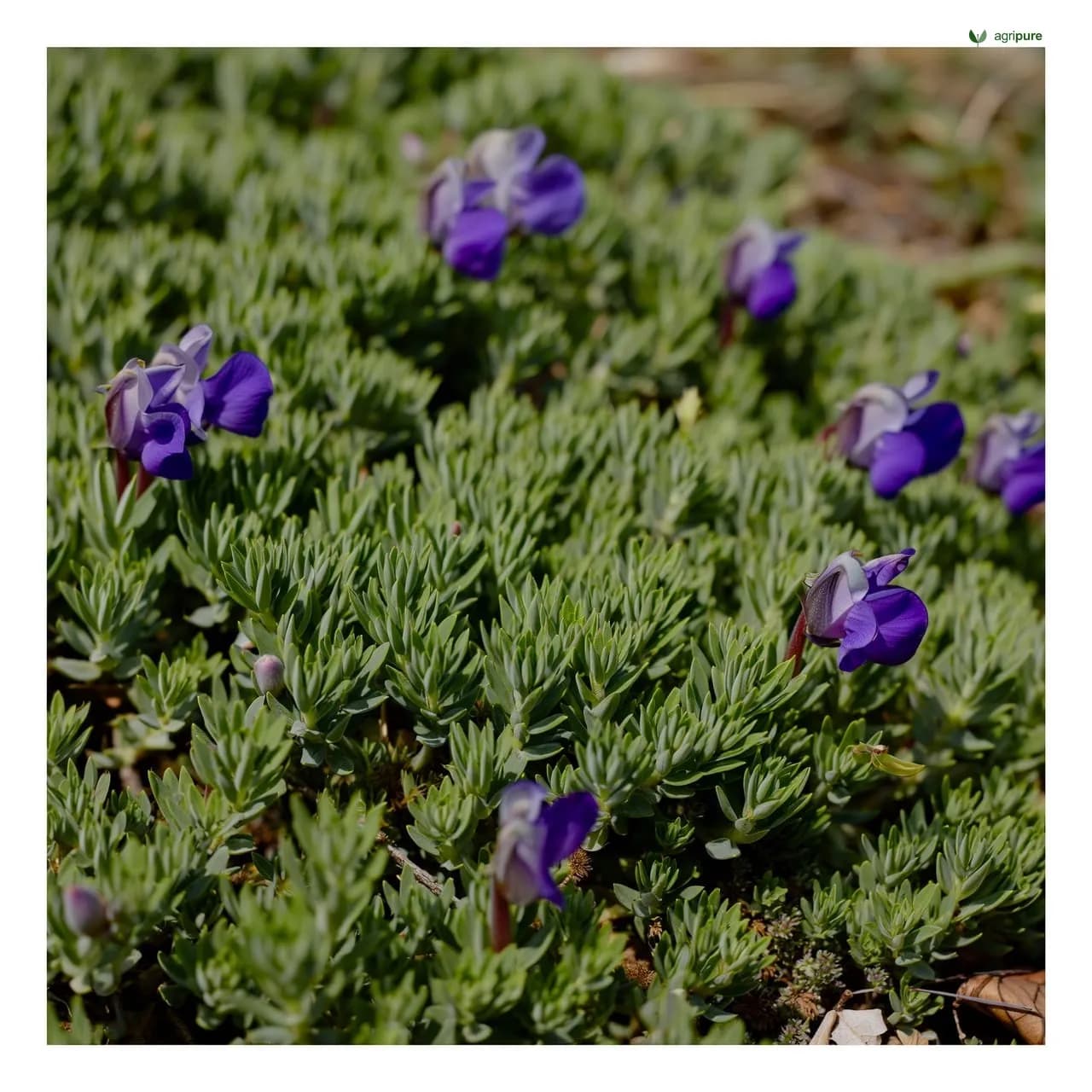
Wild indigo (Tephrosia purpurea), also called purple tephrosia or the fish-poison plant, is a small leguminous herb in the pea family (Fabaceae). It is usually an erect or spreading annual to short-lived perennial, sometimes growing bushy, with pink-to-purple pea-shaped flowers. Native to tropical Asia and found more broadly across tropical and subtropical regions of Africa, Asia, Australasia, and the Polynesian Islands, it has naturalized widely in warm climates. For a homesteader, its appeal is squarely below ground: it is a nitrogen-fixing legume that thrives on poor, disturbed soil, making it a useful green-manure and soil-building plant for tired or marginal ground rather than a harvest crop.
What it looks like
Wild indigo is a low, herbaceous plant, typically 40 to 80 cm tall, occasionally larger, with an erect or spreading habit and sometimes a bushy form. Its flowers are pink to purplish and pea-shaped, borne in leaf-opposed, raceme-like clusters. After flowering it forms linear-oblong pods that hold several dark-brown, ellipsoid seeds. You will most often encounter it in open woodland, grassland, along roadsides, and on disturbed soils — the kind of warm, sunny, broken ground where many crops struggle.
Growing wild indigo
Wild indigo is grown from seed, which is the documented propagation method for this species. A few practical points drawn from the sources:
- Sun: Give it bright, direct sun. It is a full-sun plant of open habitats.
- Soil: It does best in well-draining loamy soil and generally performs well in poor, disturbed soils; one source notes it actually thrives where the ground is not too rich.
- Water: It is drought-tolerant and prefers to dry out substantially between waterings, though occasional watering helps in cultivation. It is suited to dry conditions rather than wet ones.
Reliable, species-specific figures for plant spacing, time to maturity, and a harvest timeline were not found in the sources, so they are deliberately left out rather than stated with false precision. In practice, treat it like other warm-season, dryland legumes: sow into warm, free-draining ground in full sun, and keep it on the lean, dry side rather than coddling it with rich soil or heavy watering.
Harvest and uses
This is not a food plant, and the sources do not provide verifiable seed, biomass, or fodder yield figures, so none are asserted here. Its documented value is ecological. As a legume, wild indigo fixes nitrogen and is used in agriculture as a green manure — grown to be turned back into the soil to build fertility rather than to be eaten. That makes it well suited to the soil-rebuilding role on a homestead: a cover and green-manure plant for depleted, sandy, or disturbed plots.
The plant also has a long record of use in traditional medicine. References report traditional applications for conditions including leprosy, ulcers, asthma, liver and spleen disorders, diarrhea, rheumatism, urinary disorders, and dental pain, among others. These are traditional-use claims, not clinically proven treatments, and this profile makes no claim that the plant treats or cures any condition.
Safety and cautions
Wild indigo should be treated as a non-food, toxic plant. It is explicitly described as a fish poison: its leaves and seeds contain tephrosin, a compound that paralyzes fish, and the plant has historically been used to stun fish in water. A few grounded points:
- The fish-stunning toxicity is a clear warning against assuming the plant is edible or safe to ingest. The sources do not provide a species-specific human toxicity profile, but the presence of toxic, fish-paralyzing compounds means it should not be eaten or casually consumed.
- Because the literature presents traditional medicinal claims without confirmed safety data, internal use is not advisable without qualified professional guidance.
- The sources do not document drug interactions, contraindications, or pregnancy and lactation safety for this species, so no such guidance is given here; the absence of data is itself a reason for caution.
Grow it for what it does to the soil, not for the table: it is a nitrogen-fixing green-manure plant first and foremost, and a plant to handle with informed respect because of its toxic, fish-stunning chemistry.
Sources
- Tephrosia purpurea — PROSEA (Plant Resources of South-East Asia)
- [Tephrosia purpurea (Wild Indigo) — Easyscape](https://easyscape.com/species/Tephrosia-purpurea\(Wild-Indigo\))
- Tephrosia purpurea — eFlora of India
- Common Tephrosia — Flowers of India
- Tephrosia purpurea growing guide — EarthOne
- Tephrosia purpurea (Sharpunkha, Wild Indigo): A Review on Phytochemistry and Pharmacological Studies — Academia.edu