Fixing a failed compost pile: troubleshooting & accelerators
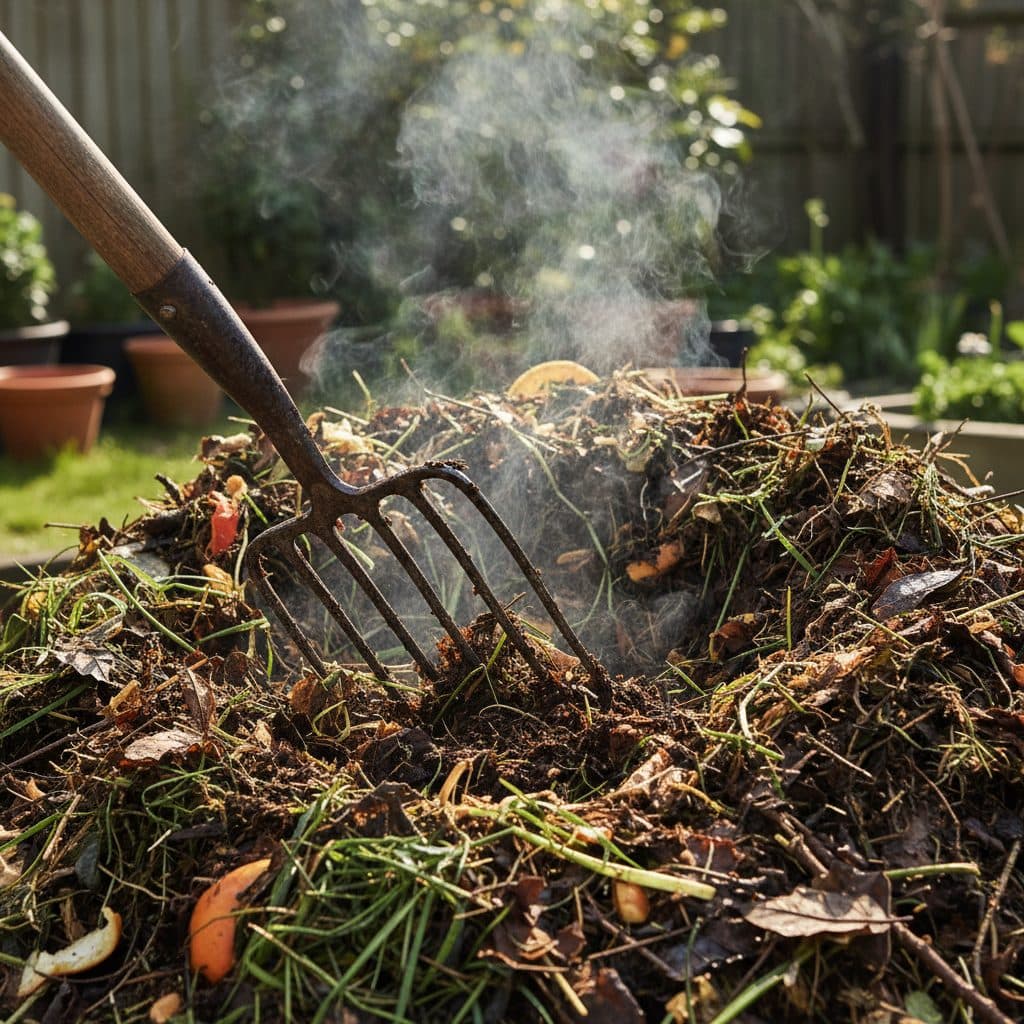
A close-up photograph of a gardener turning an active, steaming compost pile with a pitchfork in a backyard garden.
Key Takeaways
- Moisture range parameter: Keep compost pile moisture levels between 40% and 60% (damp sponge consistency) to prevent microbes from drying out or drowning.
- Minimum pile volume: Build compost piles to a minimum size of 3 feet wide, 3 feet deep, and 3 feet tall (27 cubic feet) to self-insulate core heat.
- Anaerobic odor trigger: Address foul, rotten egg odors immediately by turning the pile to restore oxygen, which reverses anaerobic decay.
- Organic accelerator additions: Use finished compost (containing millions of active microbes) or high-nitrogen meals to restart stalled piles.
- Pest exclusion guidelines: Eliminate meat, dairy, fats, and oils from the bin, and install 1/4-inch steel hardware cloth around the base.
- Carbon-nitrogen balance: Adjust carbon-to-nitrogen (C:N) ratios to 30:1 to ensure thermophilic bacteria have enough energy and protein.
Quick answer: To fix a failed compost pile, diagnose issues like incorrect moisture, C:N imbalance, or insufficient volume. Correct these by adjusting water, adding carbon or nitrogen, turning the pile, and using accelerators like finished compost.
The Environmental Protection Agency (EPA) estimates that the average American generated 328 pounds of food waste in 2016, with households accounting for 40% to 50% of the nation’s 26.5 million tons of annual food waste. While starting a compost bin is a simple way to divert this organic waste, many backyard piles eventually stall, develop foul odors, or attract pests. Fixing these failed compost systems — by diagnosing physical pile parameters, correcting C:N imbalances, and adding natural microbial accelerators — restores efficient aerobic decomposition.
By identifying the specific causes of compost failure, you can restart your stalled backyard bin within 48 hours. This guide outlines the step-by-step troubleshooting protocols.
Why compost piles stall: the biological checklist
These biological piles depend on living microbes to break down organic materials, and when these organisms lack ideal conditions, decomposition stops, leaving up to 90% of your materials undecayed. The three primary reasons a pile stalls are incorrect moisture levels, carbon-to-nitrogen imbalances, and insufficient pile volume.
A steaming compost pile showing heat escaping from the core during winter.
Testing moisture content (40% to 60% target)
This moisture balance must remain between 40% and 60% to support bacterial respiration. If the pile moisture drops below 35%, microbial activity declines, and decomposition stops. Conversely, if moisture levels exceed 65%, water fills the air spaces, cutting off oxygen and drowning the beneficial aerobic bacteria.
Pile mass requirements (minimum 27 cubic feet)
This microbial activity also requires a minimum volume to maintain core temperatures above 113°F. Piles measuring under 3 feet on each side (27 cubic feet) lose heat to the surrounding air faster than bacteria can generate it. Rebuilding the pile to a larger volume is necessary to insulate the core and kickstart thermophilic decomposition.
Resolving anaerobic odor problems within 48 hours
These foul, rotten odors occur when a compost pile lacks oxygen, forcing anaerobic microbes to take over the decomposition process, which can happen in as little as 48 hours. Anaerobic bacteria produce hydrogen sulfide (rotten egg gas) and volatile organic acids.
A pitchfork lifting dark compost to allow air circulation into the pile.
Eliminating wet matting with 100% aeration
This anaerobic shift is typically caused by waterlogging or matting of wet leaves and grass clippings. When these materials compress under their own weight, they seal off the center of the pile from airflow, reducing oxygen levels to under 5%. Turning the pile once a week breaks up these compacted layers and introduces oxygen.
Balancing with carbon additions (30:1 C:N)
To cure a smelly, wet pile, you must turn it and mix in dry, carbon-rich “browns” to absorb excess water and raise the C:N ratio back to 30:1:
- Spread a 3-inch layer of dry straw or shredded cardboard over the wet compost.
- Turn the pile using a fork to blend the dry carbon into the wet zones for 100% aeration.
- Ensure the pile smells earthy and damp within 3 days.
Diagnostic Sign | Core Cause | Correction Steps | Timeframe to Resolve |
|---|---|---|---|
Rotten Egg Smell | Anaerobic conditions (too wet/dense) | Turn pile and add dry carbon (straw, cardboard) | 24 to 48 hours |
No Heat / No Decay | Too dry or low nitrogen | Add water or nitrogen meal, and expand pile size | 3 to 5 days |
Ammonia Odor | Too much nitrogen (low C:N ratio) | Mix in carbon-rich sawdust or straw bedding | 24 to 72 hours |
Rodents / Pests | Exposed food or meat additions | Stop adding food, bury scraps, install wire screen | 7 to 14 days |
Physical pest exclusion and sanitation (1/4-inch barrier)
These compost bins can become feeding stations for rodents, raccoons, and flies if food wastes are not managed correctly. Meat, dairy, grease, and cooked food scraps release strong odors during decay that attract animals from up to 1/2 mile away.
Rodent-proofing the bin base (1/4-inch mesh)
A wire screen barrier is the most effective way to exclude tunneling rodents. Line the bottom and lower 18 inches of your compost bin with 1/4-inch steel hardware cloth. This metal mesh prevents mice and rats from chewing through the plastic or tunneling up from the soil.
Burying fresh food scraps 6 inches deep
These fresh food additions must always be insulated from pests. When adding kitchen waste to the pile, dig a 6-inch deep hole in the active center, dump the scraps, and cover them completely with 3 inches of carbon-rich mulch.
Using natural compost accelerators (50% faster decay)
These compost activators (or starters) provide concentrated doses of nitrogen or active microbes to jumpstart slow or cold piles by up to 50% faster. While commercial accelerators are sold, backyard composters can use free, highly effective kitchen and garden inputs.
A grid of photos showing finished compost, coffee grounds, and soybean meal.
- Active finished compost: Mix 2 shovels of finished compost into a new pile to seed it with billions of active aerobic bacteria and fungi.
- Nitrogen meal starters: Mix in high-nitrogen meals to speed up the decomposition of carbon-heavy wood chips. Sprinkling 1 cup of our Fermented Soybean Meal Organic Fertilizer (500 g) into the pile center boosts bacterial populations.
- Coffee grounds: Collect spent coffee grounds (C:N ratio of 20:1) from local cafes and mix them into stalled piles to add nitrogen.
Restoring balance in your garden beds (6.0 to 7.0 pH)
These finished, cured compost piles are ready for use once they crumble easily and register a stable pH between 6.5 and 7.2. Gardeners can check the soil health before and after applying compost to ensure the beds are optimal.
- Soil diagnostics: Check pH shifts in your vegetable beds using a 3-in-1 Soil pH, Moisture & Light Meter to keep soil between 6.0 and 7.0.
- Compost application: Apply a 1-inch layer of finished compost to garden beds before planting tomatoes (Tomato) and sweet basil (Basil) to improve soil structure.
- Turning failed piles: Turn compost piles and incorporate dry straw bedding using our sturdy Garden Hand-Tool Set — Trowel, Rake, Cultivator & Weeder, which features 4 essential tools.
Troubleshooting stalled compost piles
These biological systems require regular monitoring to ensure moisture and carbon ratios remain balanced, preventing up to 90% of composting problems.
Pile dry and unchanged after 6 months
- Cause: Moisture fell below 35%, halting bacterial reproduction.
- Solution: Water the pile with a garden hose until it reaches 50% moisture, and cover with a tarp to stop evaporation.
White, ash-like threads in dry compost
- Cause: Actinomycetes (beneficial filamentous bacteria) have colonized dry, high-carbon materials, indicating the pile moisture is under 30%.
- Solution: Wet the pile to 50% moisture, turn it, and mix in nitrogen-rich grass clippings.
Heavy ammonia smell when tilled
- Cause: C:N ratio is under 15:1, causing nitrogen to escape as gas.
- Solution: Mix in two parts dry straw or sawdust, and turn the pile to add air.
composting tip: Avoid using thick, undecayed wood chips larger than 2 inches in your compost pile. These large chunks have a low surface-area-to-volume ratio, slowing down decay rates by up to 3 years.
Frequently asked questions
Why is my compost pile not heating up?
Your compost pile is likely too small (under 27 cubic feet), too dry (under 40% moisture), or lacks nitrogen. Rebuilding the pile to at least 3 feet on all sides and watering it should solve the problem.
What causes my compost bin to smell like rotten eggs?
A rotten egg smell indicates that your pile has become anaerobic (lacking oxygen), usually due to waterlogging. Turn the pile to restore oxygen levels and mix in a 3-inch layer of dry carbon materials.
How can I keep rodents out of my compost pile?
First, stop composting meat, dairy, fats, and grease. Second, install 1/4-inch steel hardware cloth on the bottom and sides of your bin to physically block tunneling animals.
What is a natural compost accelerator?
Natural accelerators are high-nitrogen materials that speed up decay by up to 50%. Great options include finished compost, coffee grounds, or our 500 g fermented soybean meal fertilizer.
References
- University of Illinois Extension. (2021). Composting Troubleshooting Guide. Illinois Extension.
- University of Minnesota Extension. (2022). Compost Pile Sizing and Temperature. UMN Extension.
- UConn Cooperative Extension. (2023). Aeration and Odor Management. UConn Extension.
- University of Missouri Extension. (2022). Back Yard Composting Standards. Missouri Extension.
- LSU AgCenter. (2021). Compost Starters and Activators. LSU AgCenter.