pioneer
White Tephrosia
safed sarphonk
Tephrosia candida
Also known as Safed Sarphonk (Pakistan).
- kpk hills
- pothohar
International hardiness
- USDA 9-11
- RHS H1c
- AU: Tropical, Subtropical
Where it grows — regional guide
| Zones / rating | Regional notes |
|---|---|
USDA 9-11 | No region-specific data yet |
| Zones / rating | Regional notes |
|---|---|
H1c (5 to 10C) | No region-specific data yet |
| Zones / rating | Regional notes |
|---|---|
Tropical, Subtropical | No region-specific data yet |
| Zones / rating | Regional notes |
|---|---|
USDA 9-11 (USDA scale) Canada uses its own zone system; Canadian zones run roughly one lower than USDA. | No region-specific data yet |
| Zones / rating | Regional notes |
|---|---|
KPK hills, Pothohar | Pakistan:A fast nitrogen-fixing shrub used for erosion control and hedging in the KPK hills and Pothohar; do not use as food or fodder, as foliage contains rotenoids toxic to humans and livestock. India:Native nitrogen-fixing shrub cultivated as green manure and windbreak hedge in tea plantations; never ingest or feed to livestock, as all parts carry poisonous rotenoids. |
White tephrosia (Tephrosia candida), also called white hoarypea, is a fast-growing, nitrogen-fixing perennial shrub in the pea and bean family (Fabaceae), native to India and now planted across the seasonally dry tropics — Malesia, South America, Africa, Southeast Asia, and Australia — as a green manure, living hedge, and biomass plant. For a homesteader, its draw is not food but soil: it is one of the few woody legumes that will thrive on poor, acidic, eroded ground and pump nitrogen back into it, making it a workhorse pioneer for rehabilitating tired slopes and degraded corners of a frost-free property.
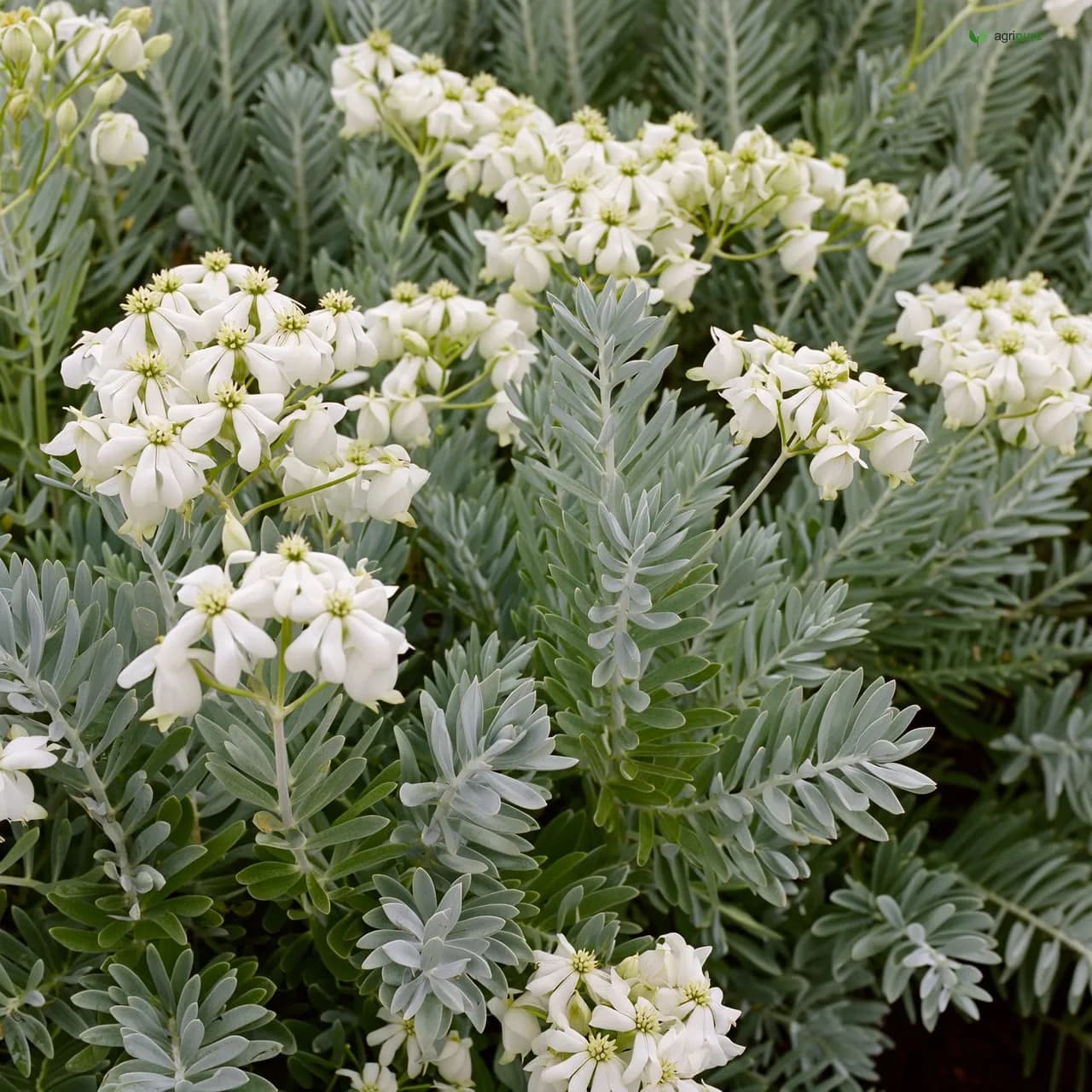
It is an erect, deciduous-to-evergreen shrub reaching about 2.5 to 3 m tall and roughly 3 m wide, with branches clothed in silky brown hairs. The leaves are pinnate (feather-like compound leaves), each carrying 13 to 27 narrow leaflets that are 2.5 to 7.5 cm long and 0.6 to 1.3 cm wide, smooth above and densely silky underneath. Its white, pea-type flowers are borne in elongated racemes up to 25 cm long, with individual blooms about 2 to 2.5 cm long above a grey-to-brown hairy calyx of 4 to 8 mm. Flowering is followed by linear seed pods 6 to 10 cm long and 8 to 9 mm wide, densely covered in brown or grey hairs and holding multiple seeds; references report roughly 300 to 500 seeds per kilogram. The white flowers and silky-haired pods help separate it from the purple-flowered Tephrosia vogelii and from the smaller herbaceous tephrosias.
Growing white tephrosia
This is a plant of the seasonally dry tropics, recorded growing up to about 1,650 m elevation. It performs best where mean daytime temperatures sit between 20 and 30 °C and tolerates a range of roughly 14 to 34 °C, but it does not tolerate frost. Horticultural and permaculture references translate this into about **USDA zones 10 to 12 (frost-free)** as its reliable outdoor range; in cooler climates it would need a greenhouse or be treated as an annual.
- Sun: Give it a sunny position; it will also tolerate light shade.
- Soil: One of its great virtues is that it grows where most crops fail — on sandy coastal soils and on very poor, eroded upland soils and mine spoils. It prefers a pH of 4.5 to 6.5 and tolerates 3.5 to 7.5, with more acidic soils reported as the more suitable.
- Water: It prefers moist but well-drained conditions and is intolerant of waterlogged soils. Field data place it in rainfall regimes from 700 to 2,700 mm a year, with a preferred band of about 1,400 to 1,800 mm.
- Propagation: Grow it from seed. The documented pre-treatment is to soak the seed in warm water for 4 to 5 hours before sowing, which softens the hard seed coat.
Detailed spacing, sowing dates, and time-to-maturity figures are not consistently established in the sources here, so they are left out rather than stated with false precision. In practice, treat it as a vigorous warm-climate legume for marginal, acid, free-draining ground.
Harvest and uses
White tephrosia is grown for what it does to the land, not for a crop you eat. Its primary value is as a nitrogen-fixing green manure, hedge, and biomass shrub: as a legume it draws atmospheric nitrogen into the soil, and its rapid growth on poor sites makes it a useful pioneer for soil improvement on degraded or low-fertility ground. In a homestead system the practical harvest is the leafy biomass itself — cut and dropped or dug in to build fertility before or alongside a crop — rather than any edible product.
A serious caution travels with that usefulness: the shrub is not a food plant and is not fodder. It contains toxic rotenoids and should be treated as poisonous and non-edible for both people and livestock. Plan plantings so the foliage is not within reach of grazing animals.
A note on its spread
Because it establishes so readily on disturbed ground, white tephrosia has escaped cultivation and is listed as an introduced or invasive species in several countries and islands, including Brazil, Palau, Samoa, the Cook Islands, Micronesia, the Democratic Republic of the Congo, Niue, and St Vincent and the Grenadines. Before planting, check whether it is considered invasive in your region and remove pods before they shed if containment is a concern.
Safety and cautions
This plant is grown as a soil-building and hedge species, not for consumption, and the sources are clear about the risks.
- It contains toxic rotenoids and is described as potentially poisonous and non-edible for humans and animals.
- It is not a food or fodder plant; do not feed the foliage to livestock and keep grazing animals away from plantings.
- Handle prunings and seed as toxic plant material, and keep them out of reach of children and animals.
Sources
- Tephrosia candida — Plants For A Future (PFAF)
- Tephrosia candida — Wikipedia
- White Hoary Pea (Tephrosia candida) — Flowers of India
- Tephrosia candida DC. — Plants of the World Online, Royal Botanic Gardens, Kew
- Tephrosia candida (White Tephrosia) — Permapeople