support
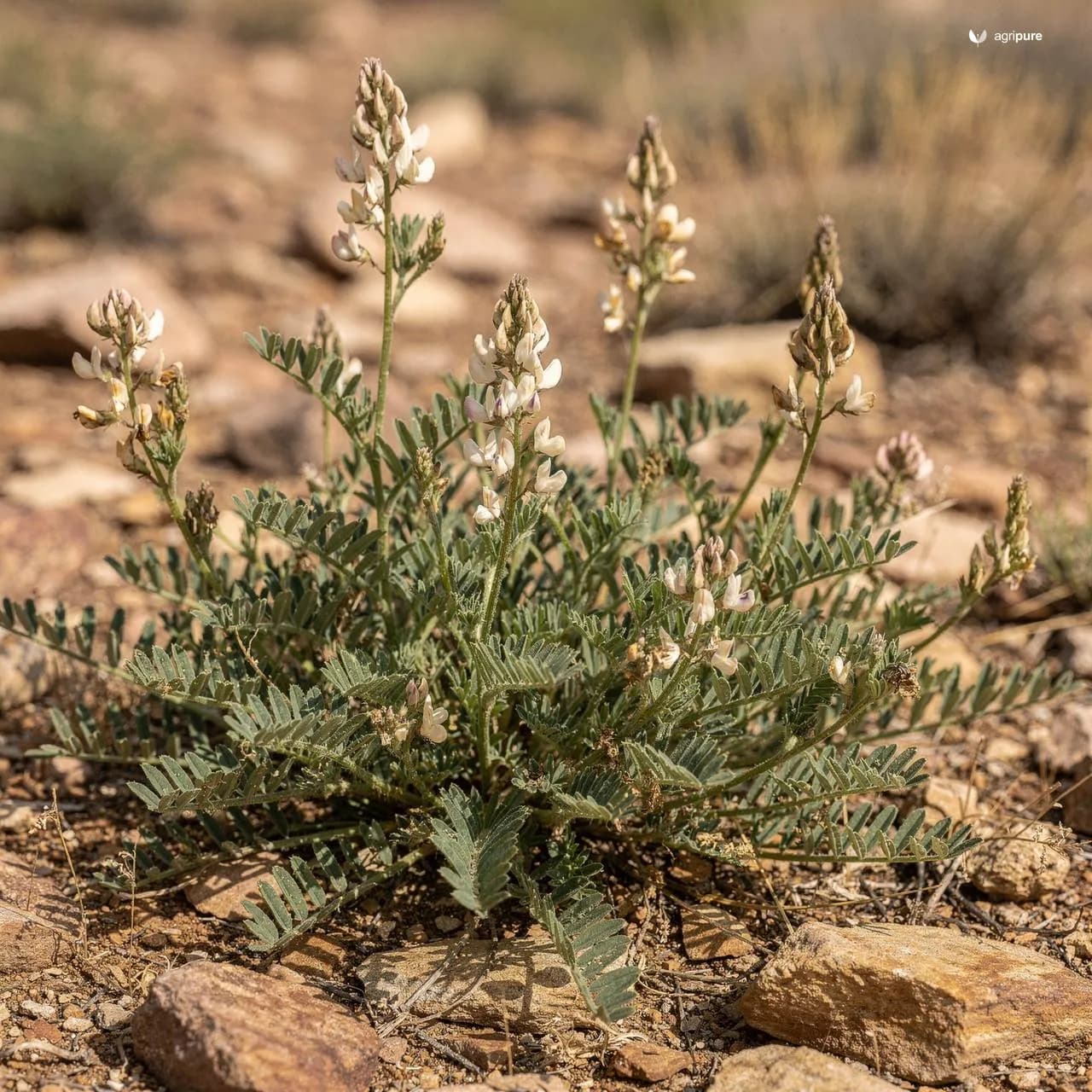
Graham’s Milk-Vetch (Himalayan Spiny Astragalus)
پہاڑی گون / اشتر خار
Astragalus grahamianus
- balochistan highlands
- kpk hills
International hardiness
- USDA 6-9
- RHS H4
- AU: Arid / semi-arid, Cool temperate
Where it grows — regional guide
| Zones / rating | Regional notes |
|---|---|
USDA 6-9 | No region-specific data yet |
| Zones / rating | Regional notes |
|---|---|
H4 (-10 to -5C) | No region-specific data yet |
| Zones / rating | Regional notes |
|---|---|
Arid / semi-arid, Cool temperate | No region-specific data yet |
| Zones / rating | Regional notes |
|---|---|
USDA 6-9 (USDA scale) Canada uses its own zone system; Canadian zones run roughly one lower than USDA. | No region-specific data yet |
| Zones / rating | Regional notes |
|---|---|
Balochistan highlands, KPK hills | Pakistan:Native to dry stony slopes of the northern hills and Balochistan; do not forage or feed to livestock as locoweed toxins occur in the genus. |
Astragalus grahamianus Royle ex Benth. is a low, densely branched spiny cushion subshrub of the Fabaceae family native to the western Himalayas, Hindu Kush, Hazara, Swat, Chitral, and Kashmir at elevations between 1,500 and 3,300 metres. Reaching 30 to 60 cm in height and forming resilient hemispherical mounds on dry, rocky mountain slopes, it acts as a nitrogen-fixing pioneer and slope stabilizer across degraded temperate and subalpine rangelands.
Botanical profile and mountain rangeland ecology
Adapted to skeletal limestone, shale, and granitic scree receiving winter snow and 300 to 700 mm of annual precipitation (USDA Zones 5–8, RHS H5), Astragalus grahamianus bears paripinnate leaves whose rachises harden into persistent, sharp spines (2 to 5 cm long) after the leaflets drop. This tragacanthoid cushion architecture traps wind-blown silt and snow, reduces soil surface evaporation, and shields establishing grasses and conifer seedlings from heavy goat and sheep grazing.
Pollination, nitrogen fixation, and restoration use
From April to July depending on altitude, axillary racemes of bright yellow papilionaceous flowers (15 to 20 mm long) emerge among the spines, providing high-altitude nectar and pollen for native bumblebees and solitary bees. Nodulated roots fix atmospheric nitrogen in nutrient-poor scree, enriching the rhizosphere for companion dry-temperate species such as Juniperus excelsa, Quercus baloot, Artemisia maritima, and native bunchgrasses.
- Site requirements: Full sun and sharply draining rocky, gravelly, or sandy-loam mountain soils; intolerant of warm lowland humidity or waterlogged winter soils.
- Propagation: Hard-coated seeds require mechanical scarification (nicking the seed coat or brief hot-water soak) followed by sowing in deep, gritty nursery tubes with minimal root disturbance at transplanting.
- Rangeland management: Value primarily as an erosion-control nurse cushion, nitrogen fixer, and mountain bee forage; heavy livestock browsing is naturally restricted by its woody spines.
Sources
- Ali, S.I. (1977). Flora of West Pakistan, No. 100: Papilionaceae (Astragalus grahamianus Royle ex Benth., pp. 176–178). University of Karachi.
- Royal Botanic Gardens, Kew. Plants of the World Online: Astragalus grahamianus Royle ex Benth.
Sourcing notes
Wild-collected seed from local KPK or highland Balochistan slopes is the realistic source, as this is not a commercial species; confirm the identification with Flora of Pakistan before sowing or feeding to stock.