pioneer
Toria
toria
Brassica campestris
Also known as Indian Rape (India).
- punjab plains
- pothohar
- kpk hills
International hardiness
- USDA 6-10
- RHS H5
- AU: Warm temperate, Cool temperate, Mediterranean
Where it grows — regional guide
| Zones / rating | Regional notes |
|---|---|
USDA 6-10 | No region-specific data yet |
| Zones / rating | Regional notes |
|---|---|
H5 (-15 to -10C) | No region-specific data yet |
| Zones / rating | Regional notes |
|---|---|
Warm temperate, Cool temperate, Mediterranean | No region-specific data yet |
| Zones / rating | Regional notes |
|---|---|
USDA 6-10 (USDA scale) Canada uses its own zone system; Canadian zones run roughly one lower than USDA. | No region-specific data yet |
| Zones / rating | Regional notes |
|---|---|
Punjab plains, Pothohar, KPK hills | Pakistan:An early-maturing cool-season rabi oilseed grown across the plains; limit feeding raw seed or oilcake to livestock due to glucosinolates. India:Cultivated widely across northern and eastern plains as an early rabi oilseed; meal must be rationed when fed to livestock. |
Toria (Brassica campestris var. toria) is an early-maturing oilseed form of field mustard, also written as Brassica rapa var. or subsp. toria in modern classifications and belonging to the mustard family, Brassicaceae.9 It is a short-season rapeseed/field-mustard type grown mainly in South Asia as an oil crop, with the parent species Brassica rapa native to Eurasia and now naturalised through much of the world, including large parts of North America. For a homesteader, toria’s appeal is its speed: it is a quick, cool-season brassica that yields oil-rich seed within a single mild winter, slotting neatly into a bed between heavier crops.
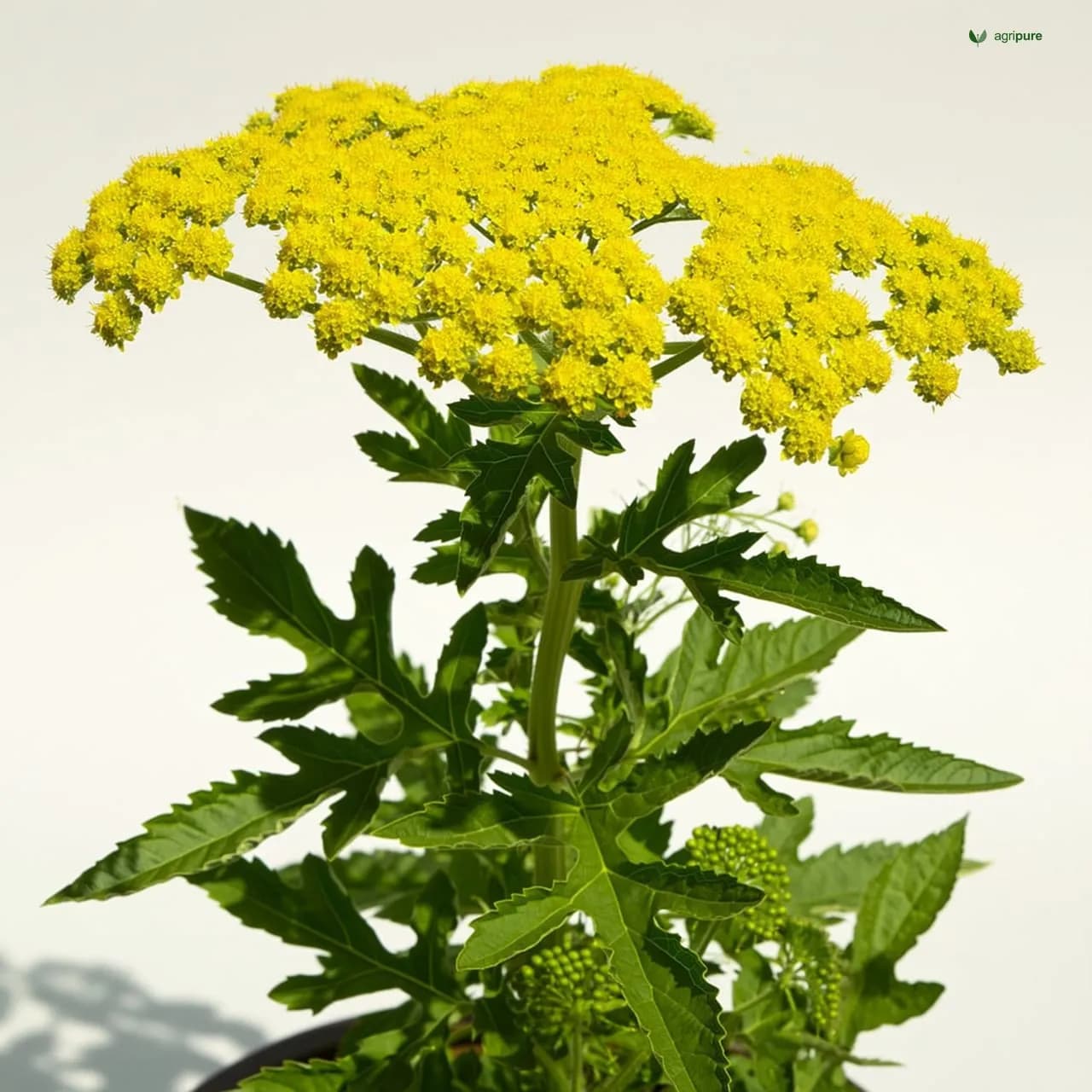
Toria is an upright mustard that runs through its cycle as a winter annual (or, in some accounts, a biennial), starting as a leafy rosette and then throwing up a branching, erect flowering stem. Its lower leaves are the largest and are lyrate-pinnatifid, deeply lobed, while the upper leaves are narrower, more lanceolate and far less divided, a pattern typical of Brassica rapa. The flowers are the unmistakable four-petalled, cross-shaped yellow blooms of the mustards, carried in terminal racemes. These give way to narrow seed pods (siliques) packed with many small, round, oil-rich seeds, which are the reason the crop is grown. Genetically it is recorded as a short-duration, self-pollinated, long-day crop with a chromosome number of 2n = 20.9
Growing Toria
Toria is grown from seed sown directly into the field, exactly as other rapeseed and field-mustard types are. Because it is self-pollinated, seed saved from a pure, isolated stand will largely come true, though some cross-pollination is still possible, so a homesteader keeping seed should keep different brassicas apart. The parent species is undemanding about ground: field mustard turns up readily in disturbed soils, cultivated fields, orchards and gardens, which points to a tolerance of ordinary, worked agricultural soil rather than any narrow requirement.
Fertility, and sulfur in particular, makes a real difference. A controlled growth study on toria found that raising the sulfur supply significantly increased plant height, the number of leaves and branches, and total dry matter, so sulfur nutrition is an important lever for vigorous growth and yield in this crop. As a cool-season mustard, toria is suited to a cool, relatively dry growing window, the winter “rabi” season in its main South Asian range, rather than to hot, humid weather. The wider field-mustard species is reported as hardy through about USDA zone 7 and is commonly grown as a winter annual in mild climates or a cool-season crop in temperate regions. Precise variety-level sowing dates, spacing, pH targets and time-to-harvest figures for toria are not consistently established in these sources, so they are left out here rather than stated with false precision; in practice, treat it as a fast cool-season brassica and sow into a workable, well-drained bed.
Harvest and uses
The harvest is the seed. Toria is grown above all for the edible oil pressed from its small, oil-rich seeds, which is its primary use as a crop. Being the earliest-maturing of the common rapeseed types, it is valued as a short-duration oilseed that fits a tight seasonal slot. Like other Brassica rapa oilseeds, the seed and its by-products contain glucosinolates, the natural sulfur compounds characteristic of the mustard family. The crop is most familiar in South Asian agriculture, where toria is a cultivated variety grown across India and neighbouring regions rather than a wild plant.
How to identify it
Toria reads in the field as a small-seeded, early rapeseed/field mustard, and the most reliable cues come from the species-level description of Brassica rapa:29
- Habit: An erect, branching annual mustard that begins as a low leafy rosette and later sends up a flowering stem.
- Leaves: Larger, deeply lobed (lyrate-pinnatifid) lower leaves; narrower, more lanceolate, less-lobed upper leaves.
- Flowers: Yellow, four-petalled, cross-shaped flowers in terminal racemes, the classic mustard bloom.
- Seed pods: Narrow siliques holding many small, round seeds.
Safety and cautions
Toria’s caution sits with livestock rather than people. Like other Brassica rapa oilseeds, it contains glucosinolates, and feeding the seed or its residues in large amounts can cause problems in livestock. If toria meal or surplus crop is used as animal feed, it should be limited and managed accordingly rather than fed freely. No medicinal claims are made for this plant; it is an oilseed and feed crop.
Sources
- Brassica rapa var. toria (BRSRT) — EPPO Global Database
- Field Mustard (Brassica rapa) Plant Guide — USDA NRCS PLANTS Database
- Brassica campestris (toria) datasheet — CABI Digital Library Compendium
- Brassica rapa var. toria — GBIF (Global Biodiversity Information Facility)
- Brassica rapa — eFlora of India
- Brassica rapa / oilseed Brassica research — PubMed, National Library of Medicine
- Effect of sulfur levels on growth of toria (Brassica) — research article (PDF)
- Line × Tester analysis for seed yield in Toria (Brassica campestris L. var. Toria)
- [Morphological Variations of Rapeseed (Brassica rapa var. Toria) Genotypes — Plant Archives](https://www.plantarchives.org/article/16-Morphological%20Variations%20at%20Different%20Growth%20Stages%20of%20Rapeseed%20\(Brassica%20rapa%20var.%20Toria\)%20Genotypes%20under%20Rainfed%20Condition%20of%20Assam%20India.pdf)