secondary
European Hackberry
batkar
Celtis australis
Also known as Batkar (Pakistan), Nettle Tree (Australia).
- kpk hills
- pothohar
International hardiness
- USDA 6-9
- RHS H5
- AU: Warm temperate, Mediterranean, Cool temperate
Where it grows — regional guide
| Zones / rating | Regional notes |
|---|---|
USDA 6-9 | Hardy in USDA zones 6 to 9 on dry urban or rural sites; check wild seedlings as it can self-seed, and verify fruit identity. |
| Zones / rating | Regional notes |
|---|---|
H5 (-15 to -10C) | Hardy under RHS H5; verify plant identity before foraging, and manage the bird-dispersed seeds which can spread as weeds. |
| Zones / rating | Regional notes |
|---|---|
Warm temperate, Mediterranean, Cool temperate | Suited as a drought-hardy shade tree; check wild fruit identity before eating, and note it can become an environmental weed. |
| Zones / rating | Regional notes |
|---|---|
USDA 6-9 (USDA scale) Canada uses its own zone system; Canadian zones run roughly one lower than USDA. | No region-specific data yet |
| Zones / rating | Regional notes |
|---|---|
KPK hills, Pothohar | Pakistan:Grown on rainfed land; verify species before foraging to avoid look-alikes, and note that bird-dispersed seeds can naturalize. India:Planted for sweet drupes; check identity before eating to avoid look-alikes, and manage bird-spread seeds that naturalize. |
Grows alongside
Species that appear with European Hackberry in 1 of our published guides — a starting list for a guild, not a planting plan.
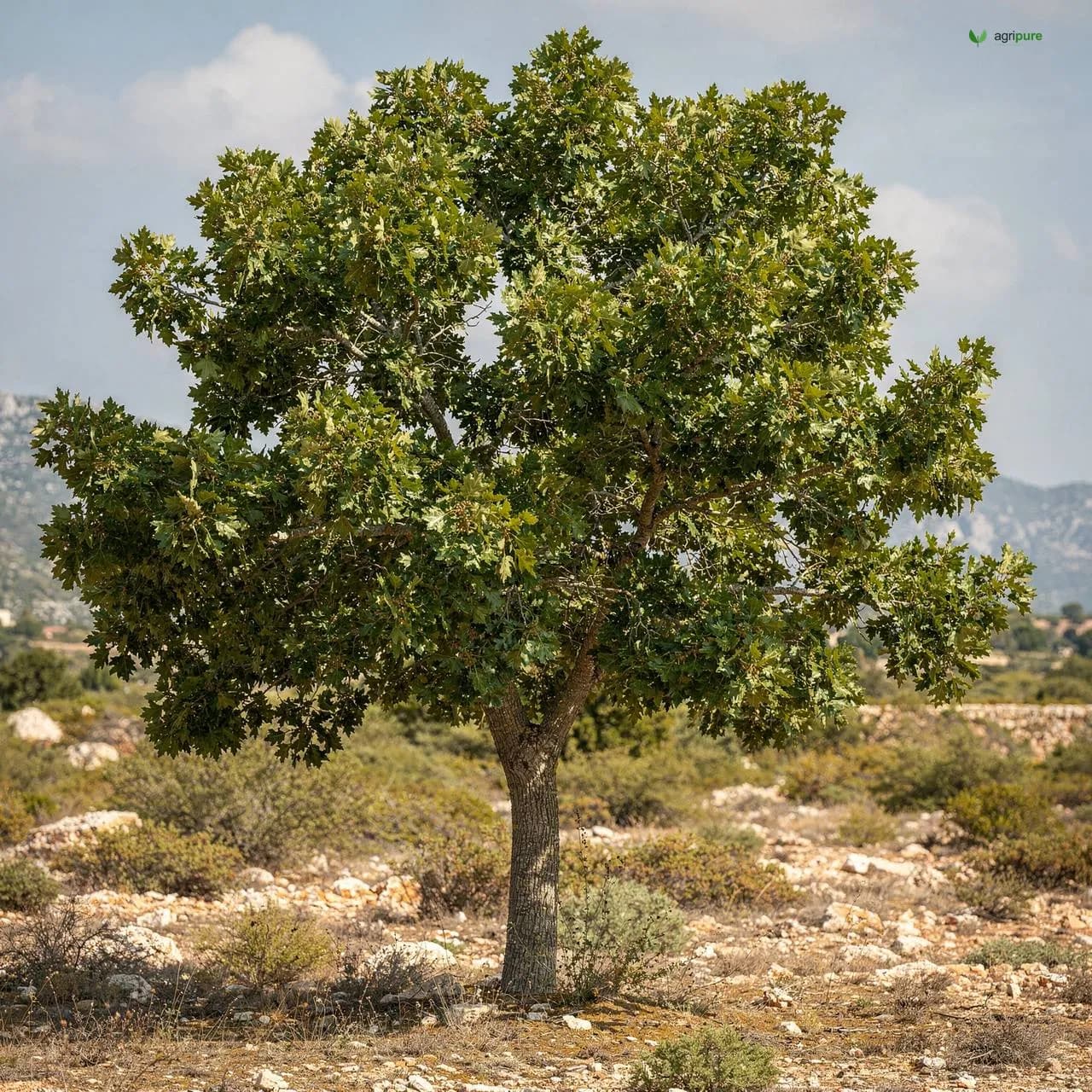
European hackberry (Celtis australis) is a medium to large, long-lived deciduous tree native to the Mediterranean region, including southern Europe, North Africa, and southwestern Asia (Asia Minor). It produces small, sweet, edible drupes that are eaten by people and relished by birds and other wildlife. For a homesteader, the appeal is that this is a tough, drought-hardy shade and fruit tree that shrugs off poor soils and urban-grade neglect, a low-maintenance canopy tree for a dry corner where thirstier trees would sulk.
Identifying European hackberry
This is a medium to large deciduous tree, commonly reaching around 12 to 21 m (40 to 70 ft) tall with a 12 to 15 m (40 to 50 ft) spread, forming an upright-arching, rounded crown; other descriptions put it at up to 20 m with a broadly rounded crown and dense foliage. Mature trunks typically have smooth gray bark, though field descriptions note it can be grey-brown and become somewhat ridged or plated with age. The leaves are simple, alternate, and deciduous, ovate to lanceolate, sharply toothed and rough-textured, dark green above and grey-pubescent (hairy) beneath, about 5 to 12 cm (2 to 5 in) long with a long tapering tip; fall color is yellowish but undistinguished. Small, greenish, petal-less flowers appear in spring (around April to May in its native range); they are inconspicuous rather than showy, and can be unisexual or bisexual.
Foragers should not confuse it with common hackberry (Celtis occidentalis), which has more warty bark and somewhat different leaf and gall characters. Confirm identity using several features together (smooth gray bark on mature trunks, leaf shape and pubescence, fruit size and color, and regional occurrence), ideally against a regional flora or with expert confirmation.
Growing European hackberry
Seed is the most common and best-documented way to propagate this tree. Sow fresh seed as soon as it is ripe in autumn in a cold frame. Stored seed germinates best after 2 to 3 months of cold stratification (moist chilling), then sown in late winter or early spring (February to March) in a greenhouse; germination is generally good but stored seed may take 12 months or more to come up. Usefully, the seed stays viable for up to 5 years in storage. Prick seedlings out into individual pots once large enough to handle and grow them on in a cold frame through their first winter before planting out.
In its native range the tree is characteristic of Mediterranean climates with warm to hot, dry summers and mild, wetter winters, occurring at low to mid elevations. It has a broad ecological amplitude and tolerates drought, poor soils, and urban conditions, which makes it a forgiving choice on marginal ground. For hardiness, sources put it at roughly **USDA zones 6 to 9**: the Missouri Botanical Garden lists Zone 6 to 9, while the UK reference PFAF rates it hardy to UK zone 6, consistent with USDA zone 6.13 It performs best in Mediterranean or warm-temperate climates. Firm plant spacing and time-to-fruiting figures are not given in these sources, so they are left out rather than guessed at; in practice, treat it like other large, drought-tolerant shade trees and allow room for a 12 to 15 m crown.
Harvest and uses
The fruit is the homestead harvest. European hackberry produces rounded, fleshy, berry-like drupes borne on short stalks at the base of the leaf stalks, about 6 to 12 mm (¼ to ½ in) across, ripening in late summer to fall to a dark purple. Each drupe holds a single round seed surrounded by a thin layer of sweet pulp, and the fruits are described as edible and widely eaten. The ripe drupes are also attractive to birds and other wildlife, so a mature tree doubles as a feeding station that draws birds into the system. Its tolerance of drought, poor soils, and urban conditions further makes it a dependable shade tree for tough sites. Medicinal uses exist in tradition but are not well studied, so internal medicinal use should be approached cautiously and is not detailed here.
Safety and cautions
European hackberry is not listed as poisonous in major poisonous-plant or edible-plant references, and its fruits and seeds are described as edible in multiple sources, so the sweet drupes are a genuine wild edible. The main caution is one of identification and restraint rather than toxicity:
- Confirm the species before foraging. Make sure you are not dealing with a look-alike such as common hackberry (Celtis occidentalis) by checking several features together, and confirm with a regional flora or an expert if unsure.
- Be cautious with medicinal use. Medicinal uses of the plant are traditional and not well studied, so any internal medicinal use should be approached carefully; this profile makes no medical claims and gives no dosages.
- Mind its vigour. The species is recorded as a weed in some regions, a reminder that a tough, bird-spread, drought-hardy tree can self-seed, so site and manage it thoughtfully where woody escapes are a concern.
Sources
- Celtis australis – Missouri Botanical Garden Plant Finder
- Celtis australis – EUFORGEN (European Forest Genetic Resources Programme)
- Celtis australis, European hackberry – Plants For A Future
- Nettle Tree (Southern), Celtis australis – Weeds of Australia
Sourcing notes
Raise from seed, preferably collected from higher-altitude trees, which propagates more reliably. Seedlings are commonly grown in KPK and Pothohar farm nurseries, and the tree establishes well on rainfed and degraded land.