pioneer
Lemongrass
khawi
Cymbopogon citratus
- punjab plains
- sindh coast
- pothohar
International hardiness
- USDA 10-11
- RHS H1c
- AU: Tropical, Subtropical, Warm temperate
Where it grows — regional guide
| Zones / rating | Regional notes |
|---|---|
USDA 10-11 | Perennial in frost-free southern areas; elsewhere grown as a summer annual or potted clump moved indoors before frost. |
| Zones / rating | Regional notes |
|---|---|
H1c (5 to 10C) | Frost-tender: grown in containers outdoors through the warm summer months and brought under glass before the first frost. |
| Zones / rating | Regional notes |
|---|---|
Tropical, Subtropical, Warm temperate | A vigorous clumping grass for tropical and subtropical gardens that can be cut for stalks through most of the year; in warm temperate districts it slows over winter and frost can kill the top growth. |
| Zones / rating | Regional notes |
|---|---|
USDA 10-11 (USDA scale) Canada uses its own zone system; Canadian zones run roughly one lower than USDA. | No region-specific data yet |
| Zones / rating | Regional notes |
|---|---|
Punjab plains, Sindh coast, Pothohar | Pakistan:A clump-forming aromatic grass in sunny plains gardens, flourishing under hot summers and regular irrigation. India:Widely grown in home and terrace gardens for its citrus-scented stalks and leaves used in tea; it grows strongly through the warm humid monsoon and slows in the cool season. |
Grows alongside
Species that appear with Lemongrass in 7 of our published guides — a starting list for a guild, not a planting plan.
Lemongrass (Cymbopogon citratus), often called West Indian lemongrass, is a clump-forming perennial grass in the grass family (Poaceae), grown in warm climates as a culinary, medicinal, and essential-oil crop. It is native to South Asia and Maritime Southeast Asia (Malesia), with one agronomic review placing its origin in Indochina, Indonesia, and Malaysia; it has since naturalized throughout tropical and subtropical regions worldwide. For a homesteader the appeal is straightforward: it is a tough, fast-growing tufted grass that yields aromatic kitchen and tea stalks from a single divided clump, asks little once established, and turns a sunny corner into a dependable, sweet-smelling harvest.
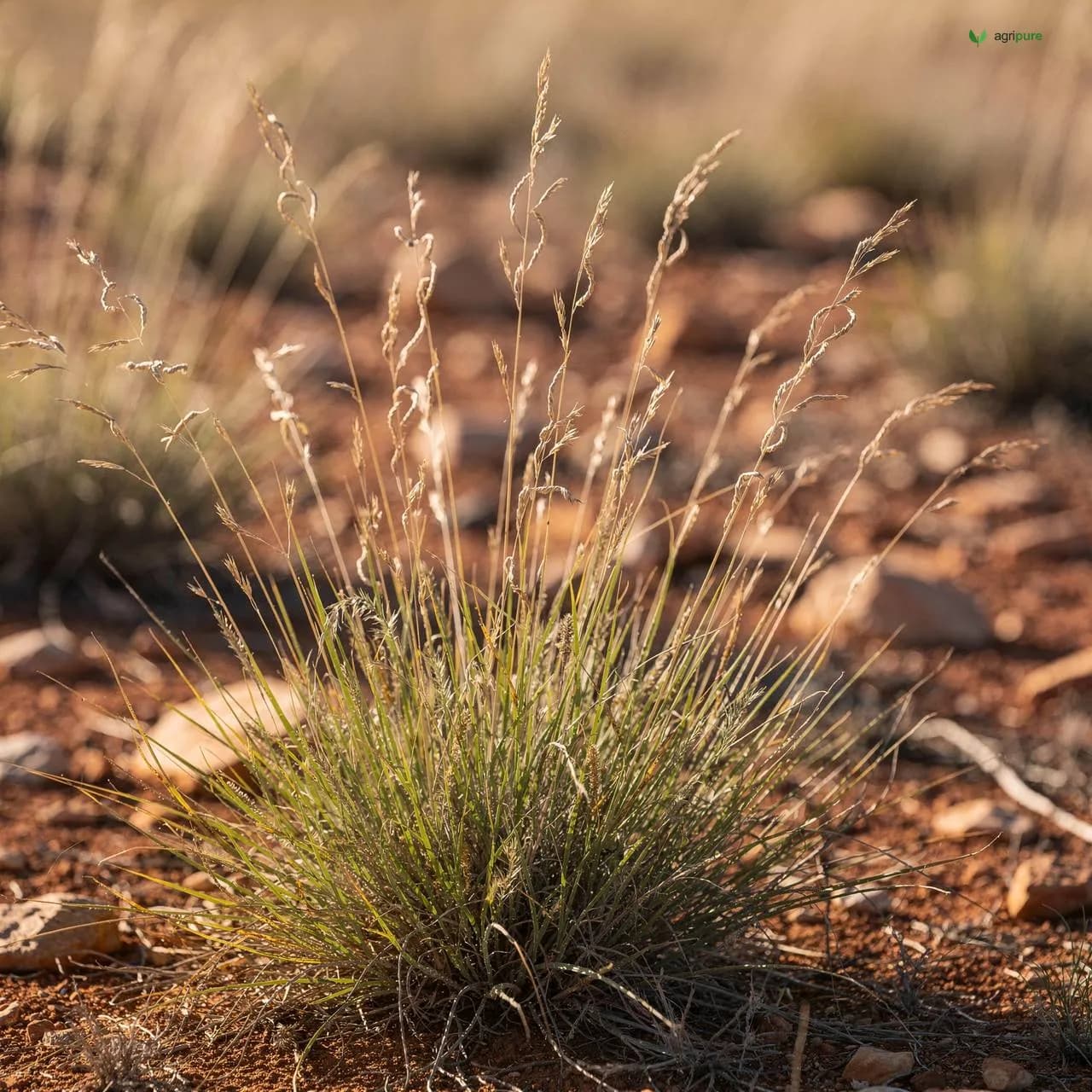
Lemongrass forms dense tufts of long, linear leaves that are glabrous and glaucous (bluish-green), taper toward the tip, and release a strong lemon scent when crushed. Technical descriptions put it at roughly 1 m tall with leaves 5 to 10 mm wide, while garden references commonly report mature plants of about 2 to 4 ft (60 to 120 cm) tall and 2 to 3 ft wide. The leaves arise in tight sheaths that clasp the stem at the base before separating higher up, and the thickened, bulbous lower stems are the main edible portion. The clump expands over time as it throws up many bulbous basal stems. One practical caution: the leaf edges are sharp and can cut skin, so handle the foliage with care.
Growing Lemongrass
Lemongrass is a tropical to warm-subtropical crop with optimal growing temperatures reported around 25 to 30 °C. It is not frost-hardy: freezing weather kills the top growth and often the whole plant, especially in colder areas. For garden performance, NC State Extension lists it as hardy in **USDA zones 8b to 11b**; horticultural guidance treats it as evergreen in zones 10 to 11 and root-hardy to about zone 8b, with growers in colder climates raising it as an annual or overwintering it indoors. While there are scattered anecdotal reports of survival in colder zones, authoritative extension and technical sources consistently treat the plant as tender and frost-sensitive, so plan for protection or replanting wherever hard freezes occur.
Propagation is the key thing to get right, because this species behaves differently from most grasses. C. citratus usually does not produce viable seed and is commonly described as not forming viable seeds at all, so in cultivation it is propagated vegetatively rather than from seed. The recommended method is division: split a healthy clump into rooted slips and plant them out into warm ground. Give it full warmth and sun in line with its tropical origins, and let the clump establish before harvesting hard. Detailed spacing and time-to-maturity figures are not consistently documented in these general botanical sources, so they are left out here rather than stated with false precision; in practice, treat lemongrass as a warm-season clumping grass that knits outward each year once it takes hold.
Harvest and uses
The harvest is the swollen, bulbous base of the stems, which is the part used in cooking; the upper leaves carry the same lemon aroma and are used for tea and flavouring. Lemongrass is grown across warm regions as a culinary, medicinal, and essential-oil crop, and is widely cultivated for its aromatic leaves and stems. In cooler regions it doubles as an annual or container plant, so even gardeners outside its hardiness range can grow a single-season crop of stalks. Because the clump keeps expanding from its bulbous basal stems, a grower can lift, divide, and replant to multiply stock for free while taking stalks for the kitchen.
How to identify it
Several “lemongrasses” are sold under similar names, and telling them apart matters if you want the culinary type that strikes readily from division. West Indian lemongrass (C. citratus) has thicker stems, no purple tinge, does not form viable seed, grows to about 90 cm to 1 m tall, and is less strictly tropical but still not frost-hardy. By contrast, East Indian lemongrass (C. flexuosus) has thinner, purple-tinged stems, does form viable seed, grows taller (around 1.5 m), and is more strictly tropical. Citronella grasses such as C. nardus are distinct species again and should not be confused with culinary lemongrass. In the clump, look for the tight basal sheaths, the bluish-green tapering leaves, and the unmistakable lemon scent when a leaf is crushed.
Safety and cautions
As a kitchen herb, lemongrass is regarded as non-toxic in normal culinary amounts. However, concentrated preparations — especially the essential oil and medicinal-strength doses — carry specific safety cautions, including concerns around pregnancy, liver disease, and drug interactions. The plant has a history of traditional medicinal use and its compounds have been studied, but that is not the same as a proven treatment, and this profile makes no claim that lemongrass treats or cures any condition. Anyone who is pregnant or breastfeeding, or taking prescription medication, should seek qualified medical advice before using concentrated lemongrass products. A more everyday hazard is purely physical: the sharp leaf margins can cut skin, so wear gloves when cutting or dividing a large clump.
Sources
- Cymbopogon citratus (Lemongrass) – NC State Extension Plant Toolbox
- How to Distinguish Lemongrass Species – Food Forest Plants
- Cymbopogon citratus – Wikipedia
- Cymbopogon citratus – ScienceDirect Topics
- Cymbopogon citratus – NatureServe Explorer
- Lemongrass – University of Wisconsin-Stevens Point Tropical Conservatory