
Key takeaways
- Implement proactive measures like proper site selection, cultivar choice, and robust soil health to build long-term heat resilience for fruit trees.
- During a heatwave, provide deep, consistent irrigation, applying 10-20 gallons per week for mature trees, focusing on the drip line.
- Protect tree trunks and fruit from sunscald using whitewash, shade cloth, or reflective mulches, especially for young trees or susceptible varieties like ‘Honeycrisp’ apples.
- Manage fruit load by thinning excess fruit early in the season to reduce stress on the tree during extreme heat events.
- After a heatwave, monitor trees for delayed stress symptoms, adjust irrigation, and replenish mulch to support recovery and future productivity.
- Prioritize soil health with organic matter and mulching to improve water retention and regulate soil temperature, which matters most in drought-prone regions.
Quick answer: To protect fruit trees during a heatwave, implement proactive measures like proper site selection and robust soil health, provide deep, consistent irrigation, and protect trunks and fruit from sunscald. After a heatwave, monitor trees for stress, adjust irrigation, and replenish mulch to support recovery.
In regions like California’s Central Valley, where summer temperatures can regularly exceed 100 degrees Fahrenheit, safeguarding fruit trees from heatwave damage is a critical annual task for growers. Extreme heat, especially when coupled with drought, can lead to significant crop loss, tree stress, and even tree death if not properly managed. From sunscald on vulnerable trunks to premature fruit drop, the challenges are substantial, but with informed strategies, your orchard can pull through and keep producing.
This article outlines practical, research-backed approaches to protect your fruit trees during periods of intense heat, focusing on immediate interventions like irrigation and shading, as well as long-term resilience strategies for climate-resilient growing in US gardens. We’ll cover everything from selecting the right species for your USDA zone to emergency watering techniques that can make the difference between a bountiful harvest and a barren season.
Understanding heat stress and its impact on fruit trees
When temperatures climb above 90 degrees Fahrenheit for extended periods, fruit trees experience significant physiological stress. This stress manifests in several ways, primarily through sunscald, premature fruit drop, and reduced photosynthetic efficiency. Sunscald, for instance, is a common issue in regions like Arizona and parts of Texas, where intense solar radiation can damage the bark on the southwest side of tree trunks, leading to cracking and susceptibility to pests and diseases [3]. Young trees with thin bark, such as newly planted peach or cherry trees, are particularly vulnerable.
Fruit drop is another direct consequence of heat stress, as trees prioritize survival over fruit development. During extreme heat, trees may shed fruit to conserve water and energy, a protective mechanism observed in many species, including apples and stone fruits. This can result in a 30% or greater reduction in harvestable fruit in severe heat events. Furthermore, research indicates that even shade-tolerant broad-leaved trees show increased sensitivity to thermal stress during moderate heatwaves, affecting their overall health and productivity [5].
recognizing the signs of heat stress
Early identification of heat stress symptoms allows for timely intervention. Wilting leaves, especially during midday, are a primary indicator that a tree is struggling to transpire enough water to cool itself. Other signs include leaf scorch—browning or yellowing of leaf margins—and fruit that appears dull, soft, or shriveled. Observing these symptoms in your orchard, whether it’s a small backyard planting in USDA zone 7 or a larger commercial operation in USDA zone 9, should prompt immediate action to mitigate further damage. Understanding the specific needs of your tree species and local climate conditions is paramount for effective management.
- Leaf wilting: Leaves droop or curl, especially during the hottest parts of the day.
- Leaf scorch: Browning or yellowing of leaf edges or tips.
- Premature fruit drop: Fruit falls from the tree before ripening.
- Sunscald on fruit: Discolored or leathery patches on fruit exposed to direct sun.
- Bark damage: Cracking or peeling on the trunk, typically on the south or southwest side.

Proactive strategies for long-term heat resilience
Building a resilient orchard starts long before a heatwave hits. Proper site selection is foundational; choosing a location with morning sun and afternoon shade, or planting on a slight slope for good air drainage, can significantly reduce heat stress. For instance, in hotter USDA zones like 8 and 9, selecting heat-tolerant fruit varieties such as ‘Anna’ apples or ‘Florida Prince’ peaches can provide a distinct advantage. Beyond cultivar choice, strong soil health is arguably the most impactful long-term strategy, as it directly influences water retention and nutrient availability.
Incorporating significant amounts of organic matter, like compost or well-rotted manure, can increase soil water-holding capacity by up to 20% for every 1% increase in organic matter. This matters most in drought-prone areas of the Great Plains, where sandy soils struggle to retain moisture. A healthy soil microbiome also supports stronger root systems. This lets trees access water more efficiently from deeper soil profiles. Consider exploring drought-tolerant trees and shrubs by USDA zone for species that naturally excel in drier conditions.
mulching and proper planting techniques
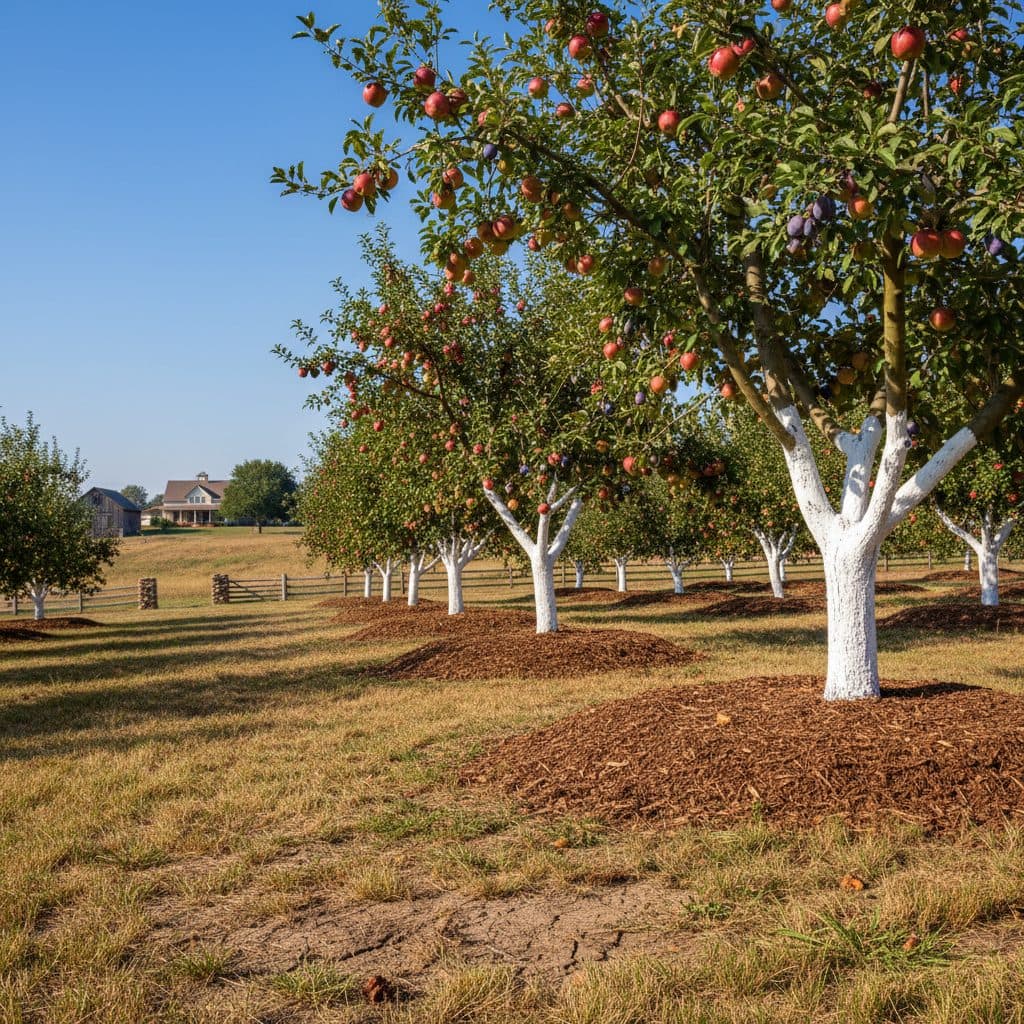
Mulching is a simple yet incredibly effective practice for heat resilience. A 4-6 inch layer of organic mulch, such as wood chips or straw, spread out to the drip line of the tree, can reduce soil temperature by 10-15 degrees Fahrenheit and decrease evaporation by up to 35%. This conserves precious water and fosters a stable root environment. When planting new trees, ensure the graft union is 2-4 inches above the soil line and the root flare is exposed, preventing future girdling roots and promoting overall tree vigor. Proper planting also includes protecting young trunks from mechanical damage, like that caused by weed trimmers, which can create entry points for disease and stress the tree, especially during heat [1].
- Select appropriate cultivars: Choose fruit tree varieties known for heat tolerance in your specific USDA zone.
- Improve soil organic matter: Incorporate compost to improve water retention and soil structure.
- Apply thick mulch: Maintain a 4-6 inch layer of organic mulch around the tree’s drip line.
- Ensure proper planting depth: Plant with the root flare exposed and graft union above soil.
- Protect young trunks: Use tree guards or whitewash to prevent sunscald and mechanical damage.
Immediate interventions during a heatwave
When a heatwave is imminent or already underway, swift action matters to minimize damage. The most critical intervention is strategic irrigation. Deep, infrequent watering is generally preferred over shallow, frequent watering, as it encourages deeper root growth. During extreme heat, a mature fruit tree in USDA zone 6, such as an apple or pear, may require 10-20 gallons of water per week, applied slowly over several hours to ensure deep penetration. For younger trees, 5-10 gallons might suffice, adjusted based on soil type and tree size. Water early in the morning or late in the evening to reduce evaporation and allow the tree to absorb moisture before the day’s heat.
Shading is another highly effective immediate measure. Temporary shade cloth, providing 30-50% shade, can be draped over young trees or individual branches to protect fruit and foliage from direct sun. This is particularly important for sun-sensitive varieties or during the peak heat of the day, typically between 11 AM and 4 PM. Whitewashing tree trunks with a 1:1 mixture of white latex paint and water can reflect sunlight, preventing sunscald on vulnerable bark, a technique documented for over a century [3]. This simple application can reduce bark surface temperatures by 15-20 degrees Fahrenheit.
managing fruit load and monitoring
During a heatwave, a tree’s resources are stretched thin. Thinning excess fruit early in the season, or even during a heat event if absolutely necessary, can significantly reduce the energetic and water demands on the tree. Aim for 6-8 inches between apples or peaches on a branch to ensure remaining fruit can develop adequately without overtaxing the tree. Regular monitoring of soil moisture levels, using a moisture meter or simply checking with your hand at a depth of 6-8 inches, will guide your irrigation schedule. Also, keep an eye on weather forecasts for upcoming heat spikes to pre-emptively water your trees. For more detailed guidance on tree care, consider resources like how to prune fruit trees, as proper pruning can also influence a tree’s resilience to stress.
- Deep water immediately: Apply 10-20 gallons per mature tree, slowly, early morning or late evening.
- Provide temporary shade: Use 30-50% shade cloth over young trees or sun-exposed fruit.
- Whitewash trunks: Paint exposed trunks with a 1:1 latex paint and water mixture to prevent sunscald.
- Thin fruit load: Reduce fruit density to 6-8 inches apart to lessen tree stress.
- Monitor soil moisture: Check soil at 6-8 inches deep to ensure adequate hydration.
Post-heatwave recovery and long-term planning
Once the immediate threat of a heatwave passes, the work isn’t over. Post-heatwave recovery matters for the long-term health and productivity of your fruit trees. Continue to monitor trees closely for delayed stress symptoms, which can sometimes appear several days or even weeks after the heat event. This might include continued leaf yellowing, branch dieback, or increased susceptibility to pests and diseases. For example, a severe heatwave in Washington State’s apple orchards might lead to increased codling moth pressure in subsequent weeks due to stressed trees.
Adjust your irrigation schedule back to a regular, deep watering routine, but remain vigilant for any signs of drought stress. Replenish mulch layers if they have thinned or compacted, ensuring that 4-6 inches of organic material remain around the tree’s drip line. This helps to stabilize soil temperatures and moisture content, which is vital for root recovery. Avoid heavy fertilization immediately after a heatwave, as this can put additional stress on an already weakened tree; instead, focus on gentle soil amendments like compost tea.
planning for future climate resilience
Looking ahead, consider long-term strategies for climate resilience. This includes evaluating your orchard’s species and varieties. For gardeners in USDA zones 4-6, exploring best cold-hardy fruit and nut trees can offer options that are also often more adaptable to fluctuating conditions. Planting additional shade trees, such as fast-growing varieties that don’t compete directly with fruit trees, can provide ambient cooling for your orchard over time. You can find guidance on fast growing shade trees that offer speed without compromising tree health. Furthermore, integrating practices like silvopasture, where trees are grown alongside livestock, can improve soil health and microclimates, offering a holistic approach to orchard management in changing climates.
- Monitor for delayed symptoms: Watch for leaf discoloration, branch dieback, or pest issues for weeks after the heatwave.
- Adjust irrigation: Return to a consistent, deep watering schedule, but be ready to increase if stress persists.
- Replenish mulch: Ensure a 4-6 inch layer of organic mulch is maintained around the tree.
- Avoid heavy fertilization: Opt for gentle soil amendments to support recovery without adding stress.
- Evaluate species selection: Consider more heat-tolerant or climate-resilient varieties for future plantings.
Heatwave Protection Strategies: A Quick Comparison
Strategy | Best For | Key Benefit | Cost/Effort (1-5) |
|---|---|---|---|
Deep Irrigation | All trees, all heatwaves | Prevents drought stress | 2 |
Shade Cloth | Young trees, high-value fruit | Reduces sunscald on foliage/fruit | 3 |
Whitewashing Trunks | Young trees, thin-barked species | Prevents bark sunscald | 1 |
Organic Mulch | All trees, long-term | Retains moisture, cools soil | 1 |
Fruit Thinning | Overloaded trees | Reduces tree stress, improves fruit quality | 3 |
Water Savings: A 4-6 inch layer of organic mulch can reduce soil evaporation by up to 35%, saving significant water during heatwaves.
Sunscald Prevention: Whitewashing tree trunks with a 1:1 paint-to-water mixture can lower bark surface temperatures by 15-20 degrees Fahrenheit, preventing sunscald.
Fruit Yield Impact: Severe heat can lead to over 30% reduction in harvestable fruit due to premature fruit drop in susceptible varieties.
Frequently asked questions
How much water do fruit trees need during a heatwave?
During a heatwave, mature fruit trees typically require 10-20 gallons of water per week, applied slowly and deeply. Younger trees may need 5-10 gallons, adjusted based on soil type and tree size to ensure adequate moisture saturation.
What is sunscald and how can I prevent it?
Sunscald is damage to tree bark or fruit caused by intense sun exposure, especially on the south or southwest side of the tree. Prevent it by whitewashing trunks with a 1:1 mixture of white latex paint and water, or by providing temporary shade with 30-50% shade cloth for vulnerable areas.
Why do fruit trees drop fruit during a heatwave?
Fruit trees drop fruit during a heatwave as a self-preservation mechanism. To conserve precious water and energy, the tree sheds excess fruit, which can lead to a reduction of over 30% in harvestable yield if stress is severe and prolonged.
Is it better to water fruit trees in the morning or evening during hot weather?
It is best to water fruit trees early in the morning or late in the evening during hot weather. This timing minimizes water loss due to evaporation and allows the tree sufficient time to absorb moisture before the peak heat of the day, maximizing hydration efficiency by up to 20%.
How does mulch help protect fruit trees from heat?
Mulch helps protect fruit trees from heat by insulating the soil, which can reduce soil temperatures by 10-15 degrees Fahrenheit. A 4-6 inch layer of organic mulch also significantly reduces water evaporation from the soil surface by up to 35%, conserving moisture for the tree’s roots.
References
- Protecting fruit trees from weed wacker damage (2012). Protecting fruit trees from weed wacker damage.
- Protecting Trees during Construction (2018). Protecting Trees during Construction.
- Protecting Vines or Fruit Trees (1908). Protecting Vines or Fruit Trees.
- IDENTIFICATION OF SPECIES OF FRUIT TREES BASED ON THE SPECTRAL REFLECTANCE OF CANOPIES OF FRUIT TREES DURING FLOWERING PERIOD (2009). IDENTIFICATION OF SPECIES OF FRUIT TREES BASED ON THE SPECTRAL REFLECTANCE OF CANOPIES OF FRUIT TREES DURING FLOWERING PERIOD.
- Shade-tolerant temperate broad-leaved trees are more sensitive to thermal stress than light-demanding species during a moderate heatwave (2022). Shade-tolerant temperate broad-leaved trees are more sensitive to thermal stress than light-demanding species during a moderate heatwave.
- Sunburn in Grapes: A Review (2021). Sunburn in Grapes: A Review.