pioneer
Bathua
bathua
Chenopodium album
Also known as Fat Hen (UK & Ireland, Australia).
- punjab plains
- pothohar
- kpk hills
International hardiness
- USDA 6-10
- RHS H5
- AU: Cool temperate, Warm temperate, Mediterranean, Subtropical, Arid / semi-arid
Where it grows — regional guide
| Zones / rating | Regional notes |
|---|---|
USDA 6-10 | Common garden volunteer across USDA zones 3 to 10; cook leaves to reduce oxalates, and pull before bloom to prevent weed spread. |
| Zones / rating | Regional notes |
|---|---|
H5 (-15 to -10C) | Hardy under RHS H5 as an edible wild green; boil young leaves to leach out oxalic acid, and cut before flowering to stop it seeding. |
| Zones / rating | Regional notes |
|---|---|
Cool temperate, Warm temperate, Mediterranean, Subtropical, Arid / semi-arid | Grown or foraged as an edible annual green; boil leaves to reduce oxalic acid, and remove plants before flowering to prevent weedy patches. |
| Zones / rating | Regional notes |
|---|---|
USDA 6-10 (USDA scale) Canada uses its own zone system; Canadian zones run roughly one lower than USDA. | Widespread volunteer in cold northern soils; harvest clean plants and cook leaves thoroughly to reduce oxalates, cutting before seed set. |
| Zones / rating | Regional notes |
|---|---|
Punjab plains, Pothohar, KPK hills | Pakistan:Common winter weed of plains crops gathered as a pot-herb; boil leaves and discard water to reduce oxalates, and cut before seeding. India:Valued as a cooked winter green in curries and flatbreads; boil foliage to lower oxalic acid, and harvest before flower heads drop seed. |
Grows alongside
Species that appear with Bathua in 6 of our published guides — a starting list for a guild, not a planting plan.
Lambsquarters, also known as white goosefoot, fat hen, and bathua (Chenopodium album), is an erect, fast-growing annual in the goosefoot family, Amaranthaceae. Reliable sources place it across temperate Eurasia, the Indian subcontinent, North Africa, Ethiopia, and much of the eastern and central United States, where it turns up reliably on disturbed ground. For a homesteader, that is exactly its appeal: it is one of the most widely available edible “weeds” on the planet, volunteering in freshly worked beds, field margins, and wastelots without anyone sowing it, and rewarding a quick harvest with a nutritious cooked green.
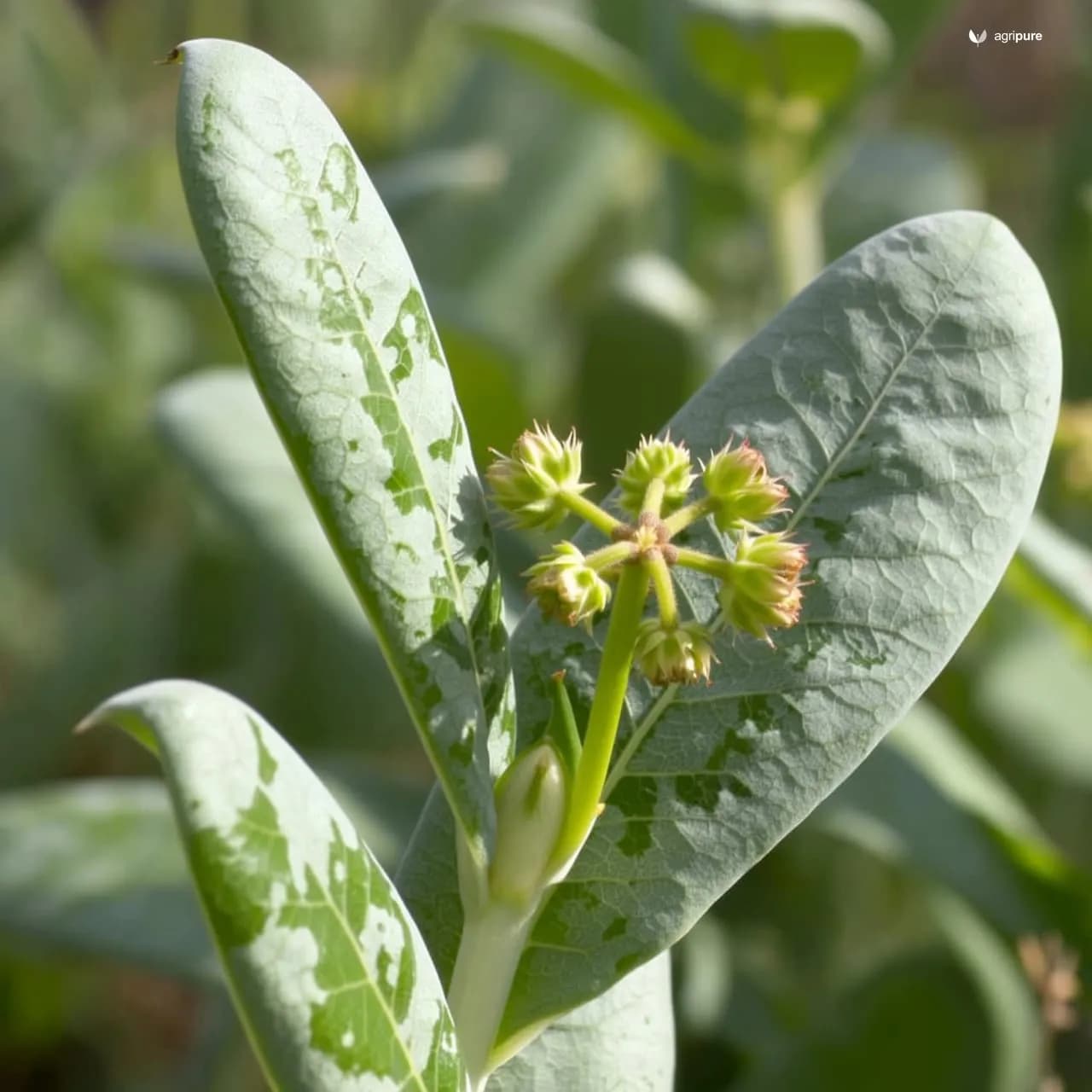
It is recognizable by its alternate, variable leaves, which range from rhombic to ovate, and by the mealy, almost powdery white coating that dusts the stems and young leaves. Plants commonly reach about 2 to 10 dm (roughly 20 cm to 1 m) tall, carrying small, greenish flowers in dense clusters at the tips of the stems. That powdery bloom on the new growth is the most useful field cue separating it at a glance from the other green-flowered weeds it grows alongside.
Growing lambsquarters
Honest sourcing matters here: the dependable references treat C. album first and foremost as a weedy annual of disturbed soils rather than a deliberately cultivated crop, so much of the usual “how to grow it” detail simply is not documented for this species. What can be said with confidence is that it colonizes disturbed ground readily, thriving in tilled fields, along roadsides, at forest edges, and in vacant lots. In at least one North American reference it flowers from summer into early autumn.
The provided research does not give reliable species-specific figures for propagation method, exact soil pH, sun exposure, plant spacing, irrigation, or days to maturity, so those numbers are deliberately left out rather than invented. In practice for the homesteader, this is a plant you manage rather than baby: leave a patch of recently disturbed, open soil and a stand will usually appear on its own from the seed bank, ready to cut young.
Harvest and uses
The harvest is the leafy part. Young shoots and leaves are eaten, and the flower buds and flowers can also be eaten once cooked. In India, bathua leaves and young shoots go into soups, curries, and stuffed flatbreads such as paratha, while the seeds appear in some regional dishes and fermented beverages. The plant is also documented as a famine food whose leaves are commonly boiled before eating.
On yield, the research is specific in one striking respect: a single plant can produce tens of thousands of small black seeds. Those seeds are edible but, as a horticultural source notes, “very tiny,” which makes seed harvest labor-intensive in practice. For most homesteaders the leaves and shoots are the worthwhile crop, with the seed an occasional bonus rather than a staple.
Role in the homestead and ecosystem
Ecologically, lambsquarters earns its place mainly as a disturbed-ground pioneer that covers bare soil quickly and as a host plant within agroecosystems. That host role has a downside worth flagging for anyone growing pulses: a study from Bangladesh reports C. album as an alternate host of Stemphylium botryosum in lentil fields, meaning a tolerated stand near a lentil crop can help carry that pathogen. The prolific seed set noted above also means a single plant left to mature seeds heavily into the soil bank, so cutting it for the kitchen before it flowers keeps it useful rather than weedy.
Safety and cautions
Lambsquarters is edible, but the sources are consistent that it should not be eaten raw or in large quantity without thought. The plant contains oxalic acid and saponins, and it can accumulate nitrates from contaminated soils. Practical, sourced precautions:
- Cook it, and consider discarding the water. As a famine-food reference notes, the leaves are often boiled and the cooking water discarded, a common cautionary preparation for wild greens that helps reduce oxalates.
- Mind where it grows. A garden source explicitly advises against harvesting from contaminated areas because of the plant’s tendency to take up nitrates. Avoid roadsides and ground that may carry fertilizer runoff or other contamination.
- No proven medicine. The plant is mentioned in Ayurveda, but the research is clear that there is no clinical evidence such uses are safe or effective; medicinal claims for it are not clinically established. This profile makes no claim that it treats or cures any condition, and gives no dosing.
The research does not identify a specific poisonous part or a documented lethal toxicity for C. album, so none is claimed here. Treat it as a wholesome cooked green from clean ground, eaten in normal amounts, and you are within what the sources support.
Sources
- Chenopodium album — Wikipedia
- Chenopodium album — Burke Herbarium, University of Washington
- Chenopodium album — Famine Foods, Purdue University
- Lamb’s Quarters (Chenopodium album) — Project Food Forest
- Bathua (Chenopodium album): first report as alternate host of Stemphylium botryosum — Bangladesh Phytopathological Society