Key takeaways
- Companion planting uses plant interactions to deter pests, attract beneficial insects, and improve soil health, reducing pest pressure by up to 30% in some systems.
- Trap crops act as ‘decoys,’ luring pests away from main crops, with examples like mustard for aphids or dill for tomato hornworms.
- Effective strategies often involve planting trap crops at specific distances, such as 10 to 20 feet from the main crop, to maximize their drawing power.
- Integrating diverse plant species, including flowering plants and cover crops, enhances overall farm resilience against pests and diseases.
- Regular monitoring and early intervention support natural pest management, regardless of the techniques employed.
- Specific plant pairings, like basil with tomatoes or marigolds with brassicas, offer measurable benefits in pest reduction and plant vigor across various US regions.
Quick answer: Thoughtful plant pairings reduce pests by utilizing companion planting and trap cropping strategies, which deter pests, attract beneficial insects, and improve soil health, leading to significant reductions in pest pressure.
For generations of growers across the United States, from the humid fields of Georgia to the arid landscapes of California, managing pests and diseases has been a constant challenge. Synthetic chemical interventions, while sometimes effective, can disrupt the delicate balance of a garden or farm ecosystem. Many growers look for integrated ways to protect harvests in balance with garden ecosystems. Companion planting and trap cropping provide practical pest control that reduces pest damage by significant margins, sometimes upwards of 30% in field trials [1].
Field research and regional trials in various USDA zones demonstrate that selecting adjacent crops and placing decoy plants creates a resilient growing environment without relying on synthetic sprays.
The science behind companion planting for pest management
Companion planting is the strategic placement of different plant species in close proximity for mutual benefit, a practice observed in agricultural systems for centuries. The method creates a diverse ecosystem that deters pests, attracts beneficial insects, and improves soil health. For instance, in a 2010 study conducted in California, intercropping broccoli with white clover reduced cabbage aphid infestations by 60% compared to monoculture plots [1]. The mechanisms are varied, including physical barriers, chemical deterrence through volatile compounds, and the provision of habitat and nectar for natural enemies [4].
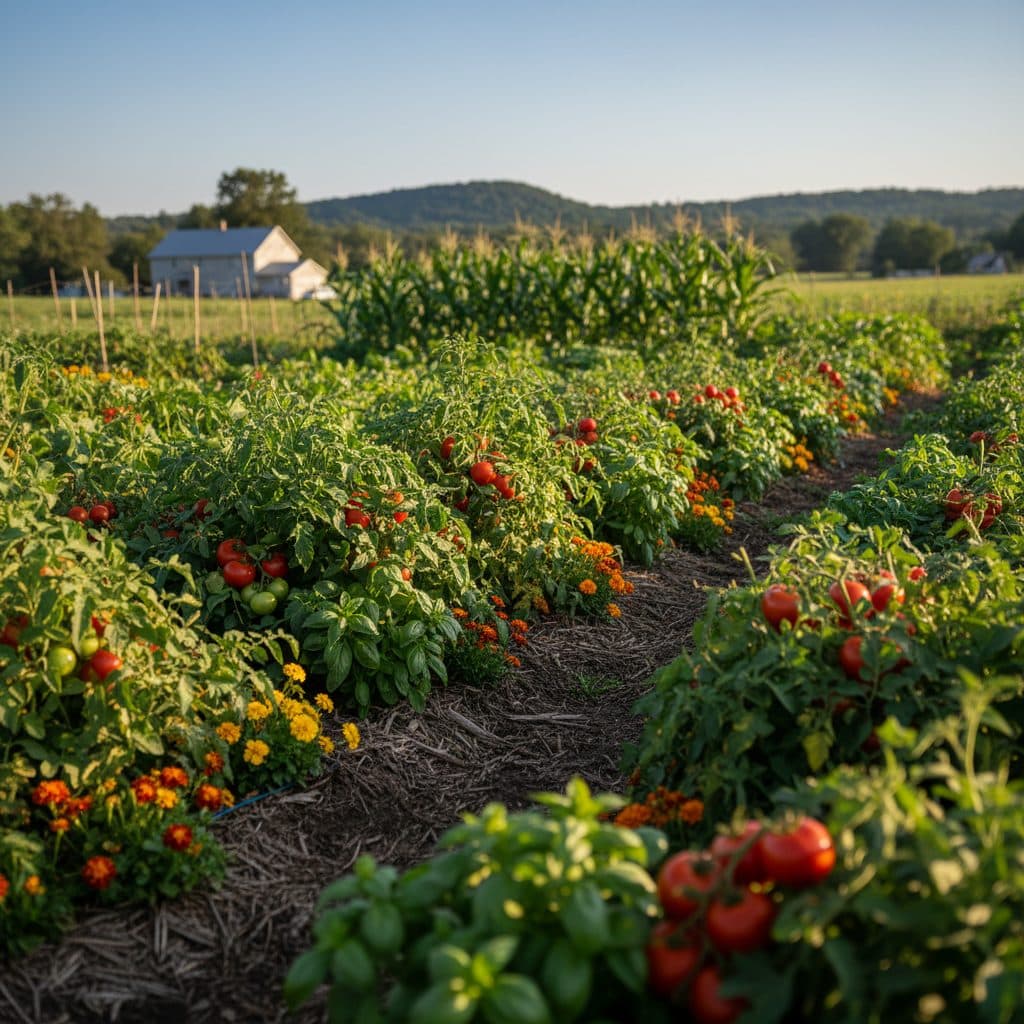
A well-planned companion planting scheme can significantly reduce the need for external pest control. For example, planting marigolds (Tagetes spp.) near susceptible crops in USDA zone 9, like tomatoes or peppers, can deter nematodes and whiteflies. Research from Florida has shown certain marigold varieties can suppress nematode populations by up to 70% in sandy soils [3]. Success relies on understanding specific plant interactions, such as the repellent effect of garlic on spider mites or the ability of dill to attract parasitic wasps that prey on tomato hornworms. Getting started involves identifying primary pest pressures and selecting plants known to address those issues.
- Physical barriers: Tall plants can shade out weeds or block pest access.
- Chemical deterrence: Certain plants emit compounds that repel pests.
- Attract beneficials: Flowering plants provide nectar and pollen for predators.
- Improved soil health: Legumes fix nitrogen, benefiting neighboring plants.
- Reduced disease spread: Diverse plantings can slow pathogen transmission.
Practical companion planting examples for US gardens
Across diverse US climates, specific companion plant pairings have proven their worth. For instance, in the humid summers of USDA zone 7, planting basil near tomatoes can improve tomato flavor and deter tomato hornworms and flies, a common issue for many growers. A 2013 study highlighted how aromatic plants like basil can mask the scent of host plants, making them harder for pests to locate [4]. Another classic combination for Midwestern gardens in USDA zone 5 is the ‘three sisters’ (corn, beans, and squash). The corn provides a trellis for the beans, the beans fix nitrogen for the corn and squash, and the squash leaves shade the soil, suppressing weeds and deterring squash vine borer beetles.
For those growing peppers in the Southwestern US, pepper companion plants like carrots, onions, and radishes can be beneficial, as they don’t compete for nutrients and can even improve soil structure. In the Pacific Northwest, where slugs and snails are prevalent, planting borage near strawberries or cucumbers can deter these mollusks. Borage also attracts pollinators, boosting fruit set. When planning your garden layout, consider the mature size of plants; a 6-inch spacing between basil and tomato plants is often sufficient to allow for air circulation and light penetration, while still providing the benefits of proximity. Remember, the goal is to create a mutually supportive community of plants.
- Tomatoes: Basil, carrots, borage, marigolds.
- Cucumbers: Radishes, dill, marigolds, nasturtiums.
- Peppers: Carrots, onions, basil, spinach.
- Brassicas (broccoli, cabbage): Dill, rosemary, thyme, marigolds.
- Corn: Beans, squash, pumpkins, potatoes.
Understanding trap crops: the decoy strategy
While companion planting works through subtle interactions, trap cropping is a more direct strategy: planting a specific crop to lure pests away from your main, more valuable crops. It’s a ‘sacrifice’ planting designed to be more attractive to a particular pest than the crop you intend to harvest. For example, in the Southeastern US, growers often use mustard greens as a trap crop for aphids. Aphids prefer mustard over many other vegetables, allowing you to concentrate pest management efforts on the trap crop, or simply remove and destroy it once infested [5]. This strategy can significantly reduce pest pressure on your primary harvest, often by 20% or more for specific pests.
The effectiveness of a trap crop hinges on several factors, including its attractiveness to the pest, its planting proximity to the main crop, and the timing of its planting. For instance, a study in California showed that planting collards 10 feet away from broccoli fields effectively drew diamondback moths away from the main crop [1]. The trap crop needs to be more appealing than the cash crop, and it needs to be established early enough to intercept the initial pest populations. Once the trap crop is heavily infested, it can be harvested, tilled under, or treated to remove the concentrated pest population, preventing them from moving to your desired plants. This method can be particularly effective for pests like squash bugs and cucumber beetles in USDA zone 6.
- Highly attractive: The trap crop must be more appealing than the cash crop.
- Strategic placement: Plant at a distance that draws pests away, but not too close.
- Timely planting: Establish before or concurrently with the main crop.
- Pest concentration: Allows for targeted removal or treatment of pests.
- Reduced pesticide use: Minimizes chemical applications on main crops.
Implementing trap crops effectively in your garden
Successful trap cropping requires careful planning and execution. First, identify the specific pests you’re targeting. For example, if you’re battling cucumber beetles in your USDA zone 5 garden, planting Hubbard squash or Blue Hubbard squash as a trap crop 15 feet away from your cucumbers can be highly effective [2]. These squash varieties are often preferred by cucumber beetles, drawing them away from your more delicate cucumber plants. Planting timing matters directly; the trap crop needs to be established and attractive before the main crop becomes vulnerable. This might mean planting the trap crop one to two weeks earlier than your primary crop, depending on the species and local climate.
Another example involves using dill as a trap crop for tomato hornworms in regions like the Mid-Atlantic. Hornworms are often drawn to dill, which can then be hand-picked or managed once the pests are concentrated. The density of your trap crop also matters; a border of one to two rows of a trap crop around your main crop can create an effective barrier. Regular monitoring of the trap crop is essential. Once it becomes heavily infested, you have several options: physically remove the pests, apply a targeted organic pesticide, or remove and destroy the infested trap plants to break the pest life cycle. This proactive management can reduce pest damage on your main crop by up to 40% in some cases [2].
- Know your pest: Match the trap crop to the specific insect.
- Optimal distance: Plant 10 to 20 feet from the main crop.
- Timely establishment: Plant 1-2 weeks before the main crop.
- Density matters: Use a border of one or two rows for effectiveness.
- Active management: Remove pests or destroy infested trap plants.
Integrating companion planting and trap crops into IPM
For robust pest management, the most effective approach is to integrate companion planting and trap crops into a broader Integrated Pest Management (IPM) strategy. IPM emphasizes a combination of cultural, biological, and physical methods to control pests with minimal environmental impact. In a typical Midwestern vegetable garden, this might mean planting marigolds (companion) around your tomatoes to deter nematodes, while simultaneously using borage (companion) to attract beneficial pollinators and parasitic wasps. Then, a few feet away, you might establish a row of mustard greens as a trap crop for aphids, monitoring it regularly for pest buildup.
This layered approach builds resilience. For instance, in a USDA zone 6 orchard, planting flowering cover crops like crimson clover or buckwheat between fruit trees not only improves soil health but also provides continuous habitat and food for beneficial insects throughout the growing season [2]. These cover crops act as both companions and general trap crops, diverting generalist pests and supporting predators. Regular scouting (inspecting plants for early signs of pest activity) remains essential. If a pest outbreak occurs, you can then respond with targeted, least-toxic interventions, such as hand-picking pests from a trap crop or applying a neem oil spray to a specific area.
- Layered defense: Combine multiple strategies for comprehensive protection.
- Beneficial insect habitat: Provide year-round food and shelter.
- Soil health improvement: Cover crops enhance fertility and structure.
- Regular scouting: Monitor for early pest detection and intervention.
- Targeted interventions: Use least-toxic methods when necessary.
Beyond pests: managing disease and weeds naturally
The benefits of diverse planting systems extend beyond insect pest control to include disease and weed management. Companion planting can indirectly reduce disease incidence by improving plant vigor, which makes plants more resistant to pathogens. For instance, healthy tomato plants with ample nutrients from enriched soil are less susceptible to early blight. Incorporating Fermented Soybean Meal Organic Fertilizer can boost soil microbial activity, contributing to overall plant health. Some companion plants, like garlic or chives, are thought to have antifungal properties that can protect nearby plants from certain diseases, though direct evidence for this can be variable depending on the specific pathogen and environment.
Weed management is another significant benefit. Dense companion plantings and the use of cover crops can physically suppress weeds by blocking sunlight and outcompeting them for resources. For example, planting a living mulch of white clover around taller crops like corn or kale in USDA zone 6 can reduce weed biomass by 50% or more [2]. This reduces the need for manual weeding or herbicides. Trap crops, while primarily for pests, can also contribute to weed suppression if they grow densely. The overall goal is to create a robust, diverse agroecosystem where natural processes keep potential problems in check, minimizing the need for external inputs. This approach builds long-term soil health and garden resilience for growers across the US.
- Disease suppression: Improved plant vigor and potential antifungal properties.
- Weed competition: Dense plantings and cover crops outcompete weeds.
- Reduced soil erosion: Cover crops protect soil from wind and water.
- Enhanced nutrient cycling: Legumes fix nitrogen, benefiting all plants.
- Increased biodiversity: Supports a wider range of beneficial organisms.
Building a resilient garden with natural methods
Cultivating a garden that thrives with minimal intervention is a rewarding endeavor for any US grower. Companion planting and trap cropping manage pests while developing a balanced garden ecosystem. This approach requires observation, patience, and a willingness to learn from your plants. In a typical backyard garden in USDA zone 8, you might observe a significant reduction in aphid populations on your roses when chives are planted nearby, or fewer squash bugs on your zucchini when nasturtiums are used as a trap crop. These methods operate as long-term strategies that build resilience over time.
Remember that success with these methods often comes from a combination of techniques. Consider the ‘push-pull’ strategy, where repellent plants ‘push’ pests away from the main crop, while attractive trap crops ‘pull’ them to a specific area. This dual action can be particularly effective for mobile pests. For example, in parts of the Southern US, planting Napier grass as a trap crop around corn, combined with desmodium (a repellent legume) within the corn rows, has shown to reduce stemborer damage by up to 80% [1]. Integrated plantings use ecological relationships in the garden to keep pest populations manageable.
- Observe and adapt: Monitor your garden and adjust strategies as needed.
- Combine techniques: Use companion planting and trap crops together for synergy.
- Consider ‘push-pull’: Repel pests from main crops, attract them to decoys.
- Long-term benefits: Build soil health and ecosystem resilience over time.
- Reduce chemical reliance: Cultivate a healthier environment for plants and people.
Companion planting vs. trap cropping: key differences
Feature | Companion Planting | Trap Cropping |
|---|---|---|
Primary Goal | Mutual benefit, pest deterrence, beneficial attraction | Lure pests away from main crop |
Mechanism | Repellence, masking, habitat provision | Attraction, concentration |
Placement | Intercropped, close proximity to main crop | Adjacent, often a border or separate patch |
Pest Management | Prevention, population reduction, biological control | Diversion, localized removal |
Example | Basil with tomatoes (deter hornworms) | Mustard with brassicas (lure aphids) |
Aphid Reduction: Intercropping broccoli with white clover reduced cabbage aphid infestations by 60% in California trials [1].
Nematode Control: Marigolds can suppress nematode populations by up to 70% in sandy soils, particularly in Florida [3].
Weed Suppression: Living mulches like white clover can reduce weed biomass by 50% or more in USDA zone 6 gardens [2].
Frequently asked questions
What is the primary difference between companion planting and trap cropping?
Companion planting involves growing different plants together for mutual benefits like pest deterrence or improved growth, often through subtle interactions. Trap cropping, conversely, uses a specific plant to actively lure pests away from a main crop, essentially acting as a decoy. For example, basil is a companion for tomatoes, while mustard is a trap crop for aphids.
How far away should I plant a trap crop from my main crop?
The ideal distance for a trap crop varies by pest and plant, but a common recommendation is to plant them 10 to 20 feet away from your main crop. This distance is usually sufficient to attract pests without them easily migrating to your desired plants, as demonstrated with collards for diamondback moths in California [1].
Can companion planting completely eliminate pests from my garden?
While companion planting can significantly reduce pest populations and damage, often by 30% or more, it rarely eliminates all pests. It’s best viewed as a foundational layer of an Integrated Pest Management (IPM) strategy, working in conjunction with other methods like attracting beneficial insects and regular monitoring to maintain a healthy balance.
Are there any plants I should avoid planting together?
Yes, just as some plants benefit each other, others can hinder growth or attract pests to their neighbors. For example, fennel can inhibit the growth of many plants, and brassicas (like cabbage) generally don’t do well near strawberries. Always research specific plant incompatibilities for your USDA zone before planting.
How do I know if my trap crop is working effectively?
Effective trap cropping is indicated by a noticeable concentration of the target pest on the trap crop, with significantly fewer pests on your main crop. Regular monitoring, at least two to three times a week, of both the trap crop and the main crop is essential to observe this pest diversion and take action when the trap crop becomes heavily infested.
What role do cover crops play in natural pest management?
Cover crops, like crimson clover or buckwheat, contribute to natural pest management by improving soil health, suppressing weeds, and providing habitat and food (nectar, pollen) for beneficial insects and pollinators throughout the growing season. This increased biodiversity can lead to a more resilient ecosystem, reducing overall pest pressure by supporting natural predators, sometimes by 15% or more [2].
References
- Trap Crops, Intercropping and Companion Planting (2010). Trap Crops, Intercropping and Companion Planting.
- Cover, Border and Trap Crops for Pest and Disease Management (2023). Cover, Border and Trap Crops for Pest and Disease Management.
- Companion Planting: A Method for Sustainable Pest Control (2010). Companion Planting: A Method for Sustainable Pest Control.
- Companion Planting and Insect Pest Control (2013). Companion Planting and Insect Pest Control.
- Trap Crops (2002). Trap Crops.
- Plant species diversity for sustainable management of crop pests and diseases in agroecosystems: a review (2011). Plant species diversity for sustainable management of crop pests and diseases in agroecosystems: a review.