Key takeaways
- Vertical gardening can increase vegetable yields by 20% to 50% in limited garden footprints.
- Trellises and stakes effectively support vining crops like tomatoes, cucumbers, and pole beans, saving valuable ground space.
- Stackable towers and wall planters are ideal for cultivating leafy greens, herbs, and compact fruiting plants in urban environments.
- Consistent and efficient irrigation, often through drip systems, is essential for the health of vertically grown plants.
- Careful consideration of sunlight exposure, wind protection, and structural support ensures successful vertical garden setups.
- Selecting compact, determinate, or bush varieties can significantly maximize the output of vertical gardening systems.
Quick answer: Vertical gardening significantly increases vegetable yields in limited spaces by utilizing vertical dimensions. Techniques like trellises, stackable towers, and wall planters allow plants to grow upwards, maximizing cubic footage and potentially boosting harvests by 30% or more.
In the bustling urban sprawl of cities like Portland, Oregon, where a typical backyard might measure just 500 square feet, gardeners are continually seeking ways to produce more food in less space. Traditional in-ground gardening can quickly consume available square footage, limiting the variety and quantity of vegetables a family can grow. However, by looking up instead of out, many growers are finding that vertical vegetable gardening offers a practical solution, potentially increasing their harvest by 30% or more within the same footprint.
This approach isn’t just for city dwellers; even those with larger plots in USDA zone 6 or 7 can benefit from the efficiency and accessibility that vertical systems provide. From simple trellises supporting a bounty of tomatoes to sophisticated wall-mounted planters brimming with leafy greens, these methods allow plants to grow upward, making the most of every cubic foot of garden space. We’ll explore the various systems available, discuss their benefits, and offer concrete advice for successful vertical cultivation.
The case for growing up: maximizing garden output
Traditional gardening, as documented in texts from 1919, primarily focused on broad, flat plots, assuming ample ground space for cultivation [2]. Today, with residential lot sizes shrinking across the US — a median new single-family lot measured 8,247 square feet in 2022, down from 10,000 square feet in 1999 — gardeners face new constraints. Vertical gardening directly addresses this challenge by utilizing the vertical dimension, turning a small patio or balcony into a productive growing area. For example, a 100 square foot balcony in Miami, Florida, can yield as much as a 200 square foot traditional bed by employing vertical techniques, effectively doubling the usable space for crops like peppers and eggplant [5].
understanding the benefits of vertical cultivation
Beyond simply saving space, vertical gardening offers several advantages for the home grower. It can significantly reduce the physical strain of gardening, as many tasks can be performed at a more comfortable standing height. This method also improves air circulation around plants, which can help mitigate fungal diseases, especially in humid climates like USDA zone 8b in Houston, Texas. Furthermore, lifting plants off the ground can deter common ground pests, such as slugs and snails, which are responsible for up to 15% crop damage in some regions. By concentrating plants, vertical systems can also make watering more efficient, potentially reducing water usage by 20% to 40% when paired with drip irrigation, a real benefit in drought-prone areas of California. For more on maximizing small spaces, consider reading about square-foot gardening: high yields in a small space.
- Space efficiency: Grow more vegetables per square foot of ground.
- Improved accessibility: Easier harvesting and maintenance at standing height.
- Better air circulation: Reduces disease risk for dense plantings.
- Pest deterrence: Keeps plants away from ground-dwelling pests.
- Water conservation: Targeted watering systems minimize waste.
Trellises and stakes: the backbone of vertical growth
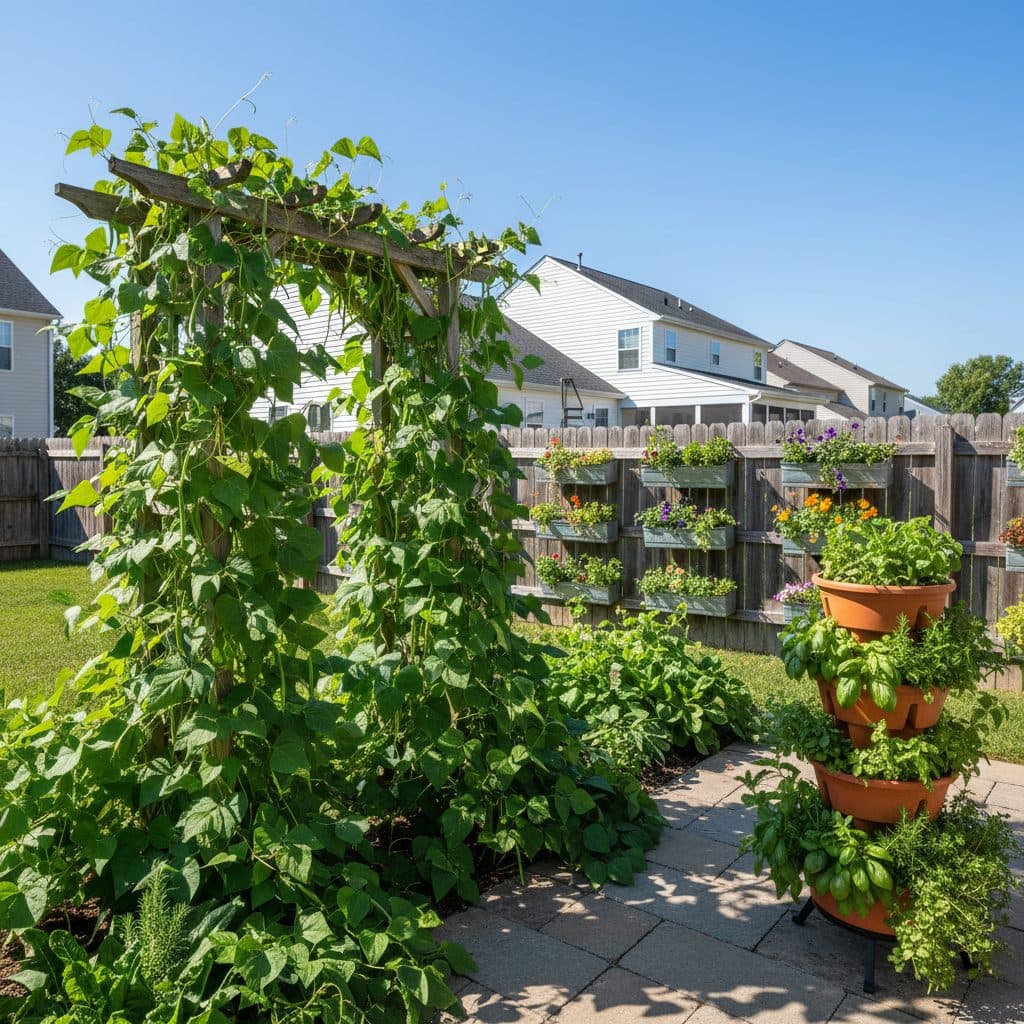
Trellises and stakes are the simplest and often most cost-effective ways to introduce vertical elements into a garden. These structures provide essential support for vining plants, preventing them from sprawling across the ground and taking up excessive space. For instance, a single indeterminate tomato plant, like ‘Brandywine’, can spread over 10 square feet if left unsupported, but with a sturdy 6 ft tall trellis, its footprint can be reduced to less than 2 square feet. This method has been a staple in gardening for centuries, with early 20th-century guides recommending staking for crops like beans and peas to improve yield and ease of harvest [4].
choosing the right support for your crops
When selecting trellises or stakes, consider the mature size and weight of your plants. Heavy fruiting plants, such as large squash varieties or melons, require robust supports like A-frame trellises made from 2×4 lumber or heavy-gauge wire mesh. Lighter climbers, including pole beans or cucumbers, can thrive on string trellises or bamboo stakes, which can reach 8 to 10 feet in height. In a typical USDA zone 7 garden, a 5 ft tall cage made from concrete reinforcing mesh can support three ‘Roma’ tomato plants, each yielding 15 to 20 pounds of fruit over a 90-day season. Remember to install supports early in the plant’s life, ideally when seedlings are 6 to 12 inches tall, to avoid disturbing established root systems. For planting and initial support setup, a lightweight garden hand trowel is an indispensable tool.
- Stakes: Best for single-stemmed plants like determinate tomatoes or peppers, typically 4 to 6 feet tall.
- Cages: Good for bushier plants, offering all-around support, often 3 to 5 feet in height.
- Trellises: Ideal for vining crops such as cucumbers, peas, and pole beans, ranging from 6 to 8 feet tall.
- Arbors/Pergolas: Can support very vigorous climbers like grapes (Small-Leaved Wild Grape) or certain squash varieties, providing shade and visual appeal.
- Netting: Lightweight and flexible, suitable for peas and other less aggressive climbers, often 5 to 7 feet high.
Stackable towers and container systems: compact and versatile
Stackable gardening towers and multi-tiered container systems represent a step up in vertical gardening complexity and plant density. These systems are particularly well-suited for urban environments, including balconies, patios, and rooftops in cities like New York City, where ground space is at a premium. A typical three-tier stackable planter, occupying just 2 square feet of floor space, can hold nine individual plants, which is equivalent to the yield of a 10 square foot traditional bed for crops like lettuce or strawberries. Some designs can accommodate 20 or more plants in a single tower, making them incredibly efficient for growing a variety of herbs and leafy greens, with some models holding up to 5 gallons of growing medium per tier.
optimizing plant selection for tower gardens
The success of tower gardens hinges on careful plant selection and consistent care. Plants with shallow root systems and compact growth habits perform best. Think about crops like various lettuce varieties, spinach, kale, Swiss chard, strawberries, and many herbs such as basil and mint. Some smaller pepper varieties, like ‘Sweet Bell’ or ‘Jalapeño’, can also thrive in larger pockets of a tower system, provided they receive adequate sunlight—at least eight hours daily. Watering is critical in these systems, as containers can dry out quickly, especially on windy rooftops. A soil moisture meter can be an invaluable tool to monitor water levels and prevent both over- and under-watering to ensure optimal growth for your 15 to 20 plants.
- Leafy Greens: Lettuce, spinach, kale, arugula, and Swiss chard thrive in shallow pockets.
- Herbs: Basil, mint, chives, parsley, and cilantro are excellent choices for continuous harvest.
- Strawberries: Produce abundant fruit in tiered systems, often yielding one to two pounds per plant.
- Bush Beans: Compact varieties can be grown in larger pockets, yielding 0.5 to one pound per plant.
- Compact Peppers: Small bell peppers or chili peppers can be productive in systems with deeper pockets.
Wall-mounted planters and green walls: aesthetic and productive
For gardeners with minimal floor space or those looking to add a living element to a blank wall, wall-mounted planters and green wall systems offer a visually appealing and productive solution. These systems typically consist of modular pockets, shelves, or panels that attach directly to a vertical surface, such as a fence, exterior wall, or even an interior wall with proper lighting. A 4 ft by 6 ft wall planter, for example, can hold 24 to 36 small plants, transforming an otherwise unused vertical plane into a vigorous vegetable patch. In arid regions like Arizona, these systems can also help cool adjacent structures by five to 10 degrees Fahrenheit through evapotranspiration, while simultaneously producing fresh food.
designing and maintaining your living wall
When planning a wall-mounted garden, consider the weight of the system once filled with soil and plants. A typical square foot of a saturated wall planter can weigh five to 10 pounds, so ensure your chosen wall can support the load. Sunlight exposure is paramount; aim for a wall that receives at least six hours of direct sun for most vegetables. For shadier spots, focus on leafy greens like spinach or certain herbs. Irrigation can be managed manually with a watering can for smaller systems, but larger installations often benefit from automated drip irrigation, potentially saving 30% of water compared to hand watering. Utilizing systems that collect and reuse water, such as those integrated with greywater systems, can further improve sustainability and reduce municipal water consumption by up to 50% for garden use, particularly in California homes.
- Modular Pockets: Flexible systems allowing individual plant management, often holding one to two quarts of soil per pocket.
- Stacked Planters: Similar to tower gardens but designed to hang, providing multiple tiers of growing space.
- Hydroponic Panels: Soilless systems that deliver nutrient-rich water directly to roots, often yielding 25% faster growth.
- Felt Pockets: Lightweight and breathable, suitable for herbs and small greens, typically holding 0.5 to one gallon of medium.
- Upcycled Containers: Repurposed plastic bottles or pallets can be creatively arranged for a budget-friendly wall garden.
Essential considerations for vertical success
While vertical gardening offers many advantages, successful implementation requires attention to several key factors. Sunlight is perhaps the most critical; most fruiting vegetables, such as tomatoes and peppers, need at least six to eight hours of direct sun daily to produce well. Leafy greens and herbs can tolerate four to six hours. In a northern facing balcony in Seattle, Washington, you might focus on shade-tolerant greens, while a south-facing wall in Phoenix, Arizona, would be ideal for sun-loving crops. Understanding your specific microclimate and its sun exposure throughout the day matters for plant placement, potentially influencing yields by 20% to 30%.
watering, nutrients, and pest management in vertical systems
Vertical gardens, especially those in containers, tend to dry out faster than in-ground beds due to increased air exposure and smaller soil volumes. This means more frequent watering, often once or twice daily during hot summer months in USDA zone 8. Drip irrigation or self-watering systems are highly recommended to provide consistent moisture and save time, delivering water directly to the root zone with up to 90% efficiency. Because nutrients leach out more quickly from container soil, a regular feeding schedule with a balanced liquid fertilizer, perhaps every two weeks, is essential for robust growth and optimal yields of one to two pounds per plant for many crops. For general gardening questions, including those on pest management, consulting resources like vegetable gardening for beginners: your questions answered can provide valuable insights. Inspect plants daily for pests, as infestations can spread quickly in dense plantings, and address issues promptly with organic solutions like neem oil or insecticidal soap, which can reduce pest populations by 70% to 80%.
- Sunlight: Ensure plants receive adequate direct sun, typically six to eight hours for fruiting vegetables.
- Watering: Containers dry out faster; plan for daily watering or automated drip systems.
- Nutrients: Container plants require regular feeding with liquid fertilizer every 10-14 days.
- Soil Mix: Use a high-quality, lightweight potting mix designed for containers, not heavy garden soil.
- Pest & Disease Control: Monitor closely and address issues promptly, as conditions can spread quickly.
Comparison of Vertical Gardening Systems
System Type | Best For | Space Efficiency | Cost (per sq ft) | Maintenance |
|---|---|---|---|---|
Trellises/Stakes | Vining crops (tomatoes, cucumbers, beans) | Moderate (reduces ground sprawl by 50-70%) | $5 – $15 | Low (manual training, occasional repairs) |
Stackable Towers | Leafy greens, herbs, strawberries, compact peppers | High (up to 3x traditional density) | $20 – $50 | Medium (daily watering, regular feeding) |
Wall-Mounted Planters | Herbs, greens, small flowers, compact edibles | High (uses unused wall space, 24-36 plants per 24 sq ft) | $15 – $40 | Medium (consistent watering, structural checks) |
Yield Boost: Vertical gardening can increase vegetable yields by 20% to 50% in small urban spaces, such as a 100 square foot balcony.
Water Savings: Automated drip irrigation in vertical systems can reduce water consumption by up to 40% compared to traditional in-ground gardening methods.
Space Efficiency: A single vertical tower can accommodate 15 to 20 plants, achieving a plant density three times higher than conventional row planting.
Shop Gardening Tools
Frequently asked questions
What vegetables are best for vertical gardening?
Vining crops like tomatoes, cucumbers, and pole beans thrive on trellises. Leafy greens such as lettuce, spinach, and kale, along with herbs like basil and mint, are excellent for stackable towers and wall planters. Many compact pepper varieties can also be very productive in vertical systems, often yielding 15 to 20 peppers per plant.
How much sunlight do vertical gardens need?
Most fruiting vegetables in vertical gardens require at least six to eight hours of direct sunlight daily to produce a good harvest. Leafy greens and many herbs can tolerate four to six hours of sun. Proper placement can increase yields by 20%.
Do vertical gardens require more watering?
Yes, plants in vertical containers often dry out faster than those in traditional in-ground beds due to increased air exposure and smaller soil volumes. Daily watering, sometimes twice a day during hot summer periods in USDA zone 8, is often necessary. Automated drip irrigation can reduce water waste by 30%.
Can I use regular garden soil in vertical planters?
It is generally not recommended to use heavy garden soil in vertical planters. A lightweight, well-draining potting mix is preferred to prevent compaction, ensure good aeration, and reduce the overall weight of the system. This can improve plant growth by up to 25%.
How do I fertilize plants in vertical systems?
Since nutrients leach out of container soil more quickly, regular fertilization matters. A balanced liquid fertilizer applied every one to two weeks, or as directed by the product, is typically effective. This consistent feeding supports vigorous growth and can increase yields by 15%.
What are the best vertical systems for a small balcony?
For a small balcony, stackable gardening towers or wall-mounted felt pocket planters are highly effective. These systems maximize plant density in a minimal footprint, allowing you to grow 15 to 20 plants in just two to three square feet of floor space. Consider lightweight options for balcony safety.
References
- VEGETABLE GARDENING IN MODERN AMANA (2023). VEGETABLE GARDENING IN MODERN AMANA.
- Vegetable gardening (1919). Vegetable gardening.
- Vegetable gardening (2023). Vegetable gardening.
- Vegetable gardening / (1912). Vegetable gardening /.
- Subtropical vegetable-gardening (1916). Subtropical vegetable-gardening.
- Youths as recipients and providers of agriculture information – the vertical vegetable gardening case in Busia County, Kenya (2023). Youths as recipients and providers of agriculture information – the vertical vegetable gardening case in Busia County, Kenya.