
Key takeaways
- Prioritize prevention through mulching, proper planting, and soil health to reduce weed pressure by up to 90%.
- Employ mechanical controls like hand-weeding and hoeing for targeted removal, especially effective for annual weeds.
- Utilize cultural practices in lawns, such as maintaining a 3-inch mowing height and proper watering, to promote dense turf.
- Apply organic pre-emergent options like corn gluten meal at 20 lbs per 1000 sq ft for annual weed suppression.
- Use horticultural vinegar for contact burn-down of small weeds, understanding it requires repeat applications for perennials.
- Focus on long-term soil building with compost and cover crops to naturally suppress weeds and improve plant vigor.
Quick answer: Organic weed management without glyphosate combines prevention through mulching and soil health, mechanical controls like hand-weeding, and targeted organic treatments such as corn gluten meal and horticultural vinegar.
In the humid summers of USDA zone 6, many home growers face persistent weed pressure. For decades, the convenience of synthetic herbicides like glyphosate offered a quick solution, but growing concerns about soil health and biodiversity have shifted focus towards organic, integrated pest management strategies. While eliminating glyphosate from your weed control regimen might seem daunting, especially for larger properties or perennial weeds, effective, science-backed alternatives exist.
This guide covers practical, organic weed management techniques for garden beds, pathways, and lawns: prevention, mechanical removal, and targeted organic treatments. A healthy, weed-reduced garden is achievable for the dedicated US grower, often with better long-term results for soil and plant health.
Prevention is the first line of defense in beds
The most effective organic weed management begins with prevention, particularly in garden beds where soil disturbance is common. A healthy soil ecosystem, rich in organic matter, naturally suppresses weeds by promoting vigorous crop growth that outcompetes unwanted plants. Incorporating 2-3 inches of finished compost into your beds annually, especially in regions like the Pacific Northwest or the humid Southeast, builds soil structure and microbial life. This practice is foundational for long-term weed reduction.
mulching for weed suppression
Mulching is arguably the single most impactful preventative measure. A 2-4 inch layer of organic mulch, such as straw, wood chips, or shredded leaves, can suppress up to 90% of annual weeds by blocking sunlight and inhibiting germination [1]. For perennial weeds, a thicker layer, sometimes 6-8 inches, or a combination of cardboard topped with mulch, can be necessary. In USDA zone 5 gardens, applying mulch in early spring, before weed seeds germinate, is crucial. For paths, consider living mulches or cover crops like clover, which can also fix nitrogen and improve soil structure. Understanding your soil’s organic carbon levels can also inform your mulching strategy; learn more at reading soil organic-carbon numbers without losing your nerve.
- Apply 2-4 inches of organic mulch in beds.
- Use cardboard beneath mulch for stubborn perennial weeds.
- Reapply mulch annually or as needed to maintain depth.
- Consider living mulches for pathways and orchard areas.
- Ensure mulch does not touch plant stems to prevent rot.

Mechanical and manual controls for paths and spot treatment
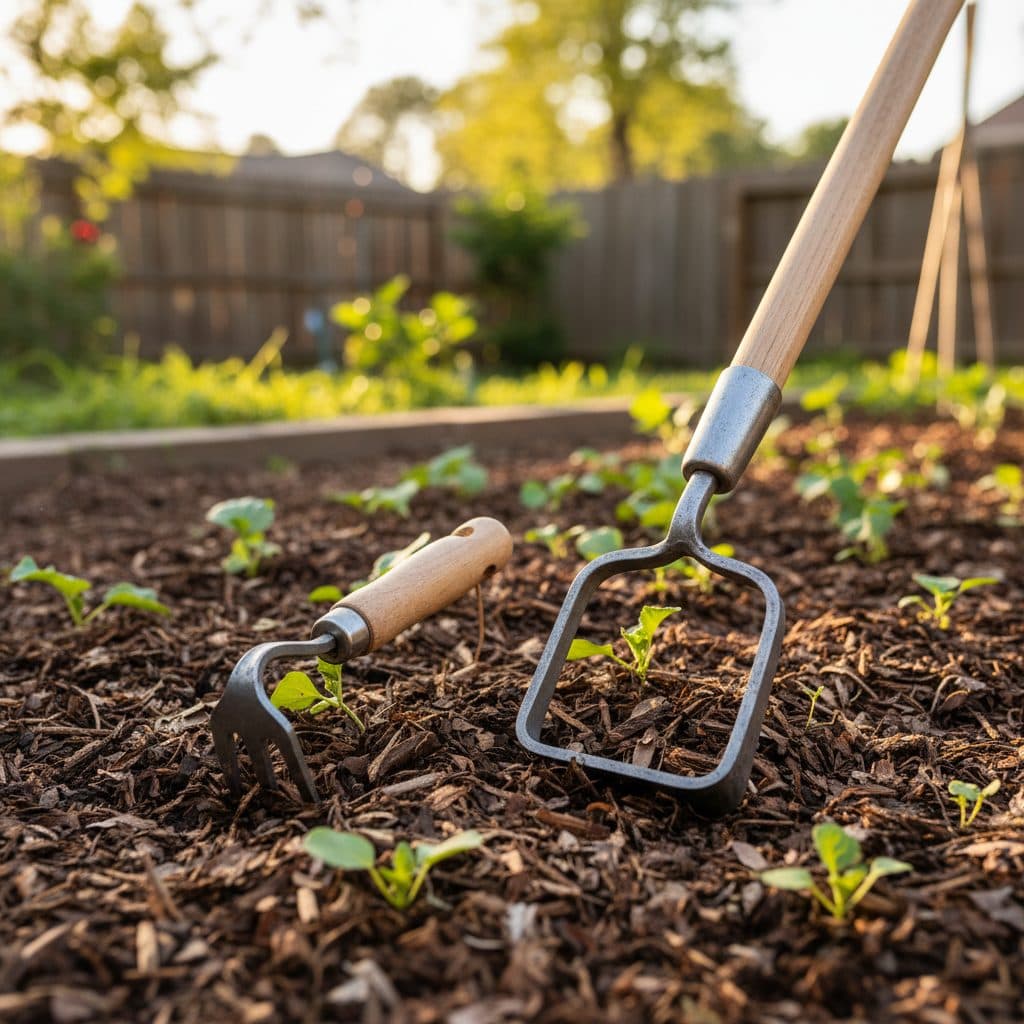
When prevention falls short, mechanical and manual controls become essential, especially for weeds emerging in pathways, between pavers, or as spot treatments in beds. Hand-weeding is highly effective for removing annual weeds entirely, roots and all, particularly when the soil is moist. For larger areas or established weeds, a stirrup hoe or collinear hoe can cover significant ground with less effort. In a 500 square foot garden, a dedicated hour of hoeing can clear most new weed growth.
flaming and boiling water for paths
For gravel paths or cracks in pavement, thermal methods offer a non-chemical solution. A flame weeder, used carefully, can scorch annual weeds, causing them to wilt and die within a day or two. This method is most effective on young, tender weeds and typically requires repeat applications for perennials with deep root systems. Boiling water, poured directly onto weeds in cracks or small areas, can also be effective, especially for weeds like crabgrass or dandelions in a 10-foot section of walkway. Always exercise caution with these methods to avoid fire hazards or accidental burns to desirable plants or yourself. For persistent weeds, consider combining these methods with a targeted organic herbicide, as described in natural weed killers that actually work (and the ones that wreck your soil).
- Hand-pull weeds when soil is moist for easier removal.
- Use a stirrup hoe for efficient weeding in larger bed areas.
- Employ a flame weeder on gravel paths for quick burn-down.
- Pour boiling water on weeds in pavement cracks.
- Repeat thermal treatments for perennial weed control.
Targeted organic treatments and soil solarization
Beyond physical removal, several organic treatments can assist in managing weeds without resorting to glyphosate. Horticultural vinegar, typically a 10-20% acetic acid solution, acts as a contact herbicide, burning down the foliage of young, broadleaf weeds within hours. It’s important to note that while effective for top growth, it rarely kills perennial roots, meaning repeat applications every 2-3 weeks may be necessary for weeds like Canada thistle or bindweed. Always apply on a calm, sunny day to maximize effectiveness and minimize drift.
organic pre-emergents and solarization
For annual weed seeds, corn gluten meal can act as a natural pre-emergent. Applied at a rate of 20 lbs per 1000 square feet, particularly in early spring before germination, it can provide 60-80% control of annual weeds like crabgrass and dandelions [3]. This method is suitable for lawns and established beds but should not be used where you plan to sow new seeds. For larger, sun-exposed areas with severe weed issues, soil solarization is a powerful technique. Covering moist soil with clear plastic sheeting for 4-6 weeks during the hottest part of summer (e.g., July in Arizona or August in Texas) can raise soil temperatures to 120-140°F, killing weed seeds, pathogens, and nematodes in the top 6-12 inches of soil.
- Use 10-20% horticultural vinegar for contact weed kill.
- Apply corn gluten meal at 20 lbs per 1000 sq ft as a pre-emergent.
- Solarize soil for 4-6 weeks during peak summer heat.
- Ensure soil is moist before solarization for best results.
- Repeat vinegar applications for perennial weed control.
Holistic lawn care for weed suppression
A dense, healthy lawn is the best defense against weeds. Many common lawn weeds, such as broadleaf plantain (how to identify broadleaf and narrowleaf plantain) and crabgrass, thrive in thin, stressed turf. Proper mowing height is critical; cool-season grasses like fescue and bluegrass in USDA zones 4-7 should be mowed at 3 inches or higher, while warm-season grasses like Bermuda and St. Augustine in USDA zones 8-10 often tolerate 2-3 inches [1, 2]. Taller grass shades the soil, keeping it cooler and preventing weed seed germination, while also promoting deeper root growth.
feeding the soil, not just the lawn
Beyond mowing, consistent, deep watering (about one inch per week, including rainfall) encourages strong turf roots. Overseeding thin areas annually with appropriate grass varieties for your region, especially in fall for cool-season grasses, helps fill in gaps where weeds might otherwise establish. Fertilizing with organic, slow-release options like fermented soybean meal (applied at 5-10 lbs per 1000 sq ft) builds soil health and provides nutrients steadily, avoiding the flush of growth that can stress grass and encourage weeds. Aeration every 1-3 years also improves water and nutrient penetration, reducing compaction that favors weeds like knotweed.
- Mow cool-season grasses at 3 inches or higher.
- Water deeply, providing one inch of water per week.
- Overseed thin lawn areas annually in the fall.
- Fertilize with slow-release organic amendments.
- Aerate compacted lawns every one to three years.
Organic Weed Management Methods Comparison
Method | Best Use Case | Effectiveness | Labor/Cost |
|---|---|---|---|
Mulching (2-4 in) | Garden beds, around trees | High (90% annual weed suppression) | Low labor, moderate cost |
Hand-weeding/Hoeing | Small beds, spot treatment | High (complete removal) | High labor, low cost |
Horticultural Vinegar (10-20%) | Pavement cracks, young weeds | Medium (contact burn-down) | Low labor, moderate cost |
Corn Gluten Meal | Lawns, established beds (pre-emergent) | Medium (60-80% annual weed control) | Low labor, moderate cost |
Flame Weeding | Gravel paths, driveways | Medium (surface burn-down) | Moderate labor, moderate cost |
Soil Solarization | Large, empty beds with severe weed issues | High (kills seeds, pathogens in top 6-12 in) | Moderate labor, low cost (plastic) |
Mulch Depth: A 2-4 inch layer of organic mulch can reduce annual weed germination by up to 90% in garden beds [1].
Lawn Mowing: Mowing cool-season grasses at a height of 3 inches or more significantly reduces weed establishment in lawns [3].
Corn Gluten Meal: Applied at 20 lbs per 1000 square feet, corn gluten meal can provide 60-80% control of some annual weeds in turf [3].
Frequently asked questions
What is the most effective organic weed control method for large garden beds?
For large garden beds, a combination of thick organic mulching (2-4 inches deep) and proper planting density is highly effective. Mulch suppresses up to 90% of annual weeds, while densely planted crops outcompete any weeds that do emerge. This approach significantly reduces the need for manual weeding.
Can I use horticultural vinegar on my lawn without harming the grass?
Horticultural vinegar (10-20% acetic acid) is a non-selective contact herbicide, meaning it will burn any plant tissue it touches, including grass. It is best used as a spot treatment for weeds in pavement cracks or paths, or very carefully in garden beds, to avoid damaging desirable lawn grasses. Always apply on a calm day to prevent drift.
How often should I apply corn gluten meal for weed prevention?
Corn gluten meal, used as an organic pre-emergent, is typically applied twice a year. The first application should be in early spring (e.g., March or April in USDA zone 6) before annual weed seeds germinate, and a second application in late summer or early fall can target fall-germinating weeds. Apply at a rate of 20 lbs per 1000 square feet for best results [3].
What are the benefits of soil solarization, and how long does it take?
Soil solarization is a powerful method that uses clear plastic sheeting to heat moist soil, killing weed seeds, pathogens, and nematodes. It can raise soil temperatures to 120-140°F in the top 6-12 inches. The process typically takes 4-6 weeks during the hottest, sunniest part of the summer, making it ideal for regions like California or Florida.
Does proper mowing height really make a difference for lawn weeds?
Yes, proper mowing height is a critical factor in organic lawn weed control. Mowing cool-season grasses at 3 inches or higher shades the soil, which prevents many weed seeds from germinating and encourages deeper, stronger grass roots. This dense, healthy turf naturally outcompetes weeds, reducing their presence by 50% or more over time.
References
- Weed Management in Home Lawns (1969). Weed Management in Home Lawns.
- Weed Management Guide for Florida Lawns (2020). Weed Management Guide for Florida Lawns.
- Weed Management in Home Lawns (2008). Weed Management in Home Lawns.
- Weed Control in Lawns (1962). Weed Control in Lawns.
- Rooted in Nature: The Rise, Challenges, and Potential of Organic Farming and Fertilizers in Agroecosystems (2024). Rooted in Nature: The Rise, Challenges, and Potential of Organic Farming and Fertilizers in Agroecosystems.
- Weed Identification and Control (1960). Weed Identification and Control.