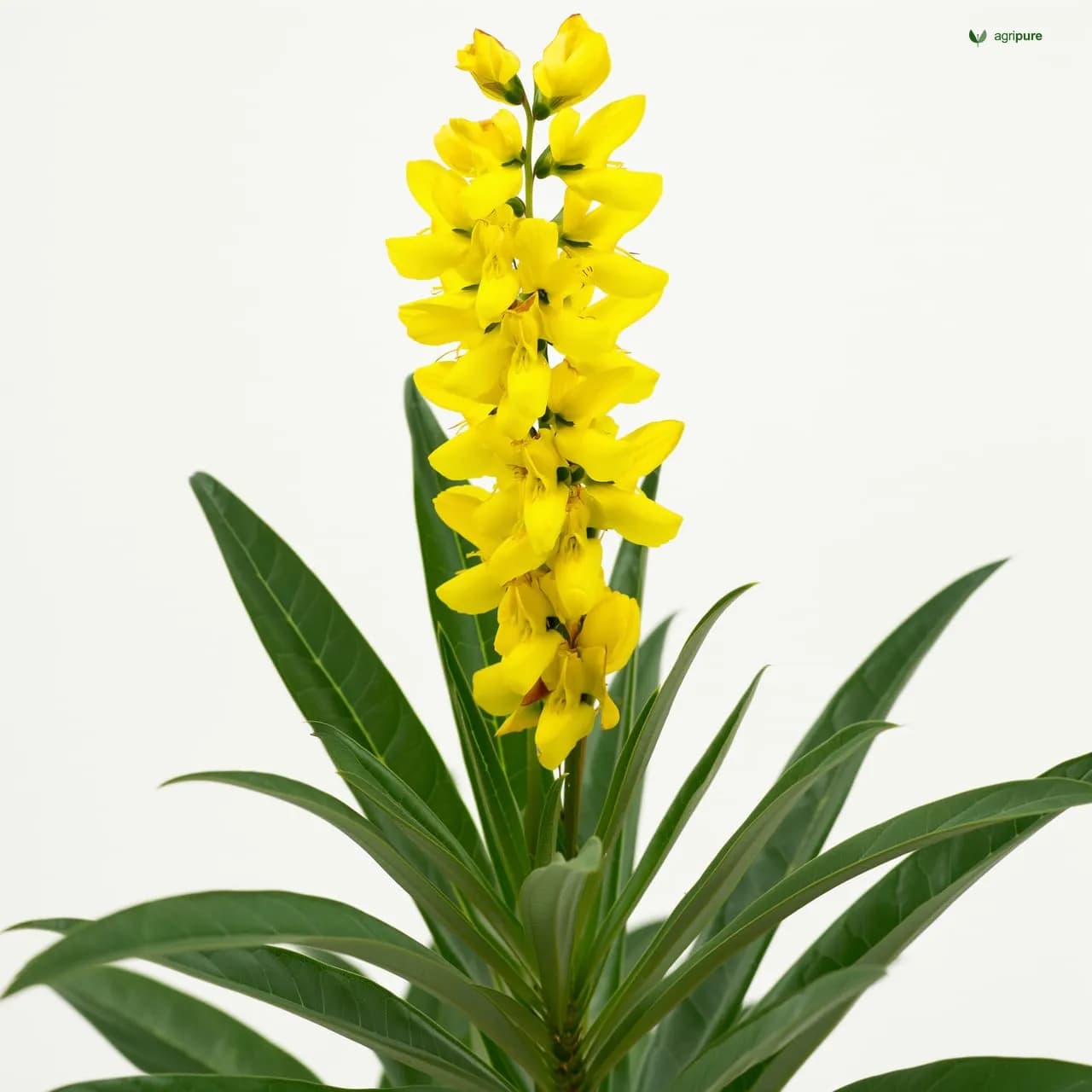
pioneer
Chickpea
chana
Cicer arietinum
Also known as Chana (Pakistan), Bengal Gram (India), Garbanzo Bean (United States).
- punjab plains
- sindh coast
- pothohar
International hardiness
- USDA 9-11
- RHS H2
- AU: Warm temperate, Mediterranean, Arid / semi-arid, Subtropical
Where it grows — regional guide
| Zones / rating | Regional notes |
|---|---|
USDA 9-11 | Grown as a cool-season annual pulse on well-drained ground; do not graze stock on the acid-secreting foliage, and cook harvested seeds thoroughly. |
| Zones / rating | Regional notes |
|---|---|
H2 (1 to 5C) | No region-specific data yet |
| Zones / rating | Regional notes |
|---|---|
Warm temperate, Mediterranean, Arid / semi-arid, Subtropical | Grown as a winter pulse in dryland farming rotations; keep livestock away from the acid-secreting plants, and cook seeds thoroughly before eating. |
| Zones / rating | Regional notes |
|---|---|
USDA 9-11 (USDA scale) Canada uses its own zone system; Canadian zones run roughly one lower than USDA. | No region-specific data yet |
| Zones / rating | Regional notes |
|---|---|
Punjab plains, Sindh coast, Pothohar | Pakistan:Grown as a cool-season pulse across the plains and Pothohar; do not graze livestock on it, as foliage acids irritate skin, and cook seeds well. India:Cultivated as a major cool-season rabi crop; keep livestock away, handle foliage with care as its acids irritate skin, and cook seeds thoroughly. |
Grows alongside
Species that appear with Chickpea in 3 of our published guides — a starting list for a guild, not a planting plan.
The chickpea (Cicer arietinum) is an annual, cool-season grain legume in the pea family (Fabaceae), grown around the world for its edible seeds and as a soil-improving rotation crop. Its center of origin is the Fertile Crescent of the Near East, around modern-day Turkey and Syria, where it has been domesticated for more than 7,500 years. For a homesteader, the appeal is twofold: it yields a high-protein staple from semi-arid ground, and as a legume it fixes its own nitrogen, leaving the bed richer for whatever follows. From those Near Eastern beginnings it now spreads through subtropical, tropical, and temperate regions, including the Mediterranean, the Canary Islands, northeastern tropical Africa, Madagascar, and western and central Asia.
Chickpea is a herbaceous annual, typically 30 to 70 cm tall, with branched stems and pinnate leaves. It carries a deep taproot whose lateral roots bear Rhizobium nodules — the structures where it partners with bacteria to fix atmospheric nitrogen. The flowers are typical pea-family (papilionoid) blooms, white with blue, violet, or pink veining, borne singly or in small clusters. Its seeds form in short pods, each holding two to three seeds. Many varieties exist within the single species, falling into two market types: the large, beige kabuli and the smaller, darker desi. It is a self-pollinated diploid, so seed comes true to type year to year.
Growing chickpea
Chickpea is grown as a cool-season, rainfed crop in semi-arid regions, or more broadly as a dry-climate crop. It performs best with daytime temperatures around 21 to 29 °C and nights of about 18 to 26 °C, and is suited to an annual rainfall of roughly 600 to 1,000 mm. Because it is a warm-but-cool-season annual that needs a frost-free run of weather and dislikes high heat and humidity at flowering, it is best treated as a single-season crop sown to mature within one growing window.
Practical points drawn from the botanical and agronomic sources:
- Propagation: Grow it from seed. There are no vegetative propagation methods in normal use — seed is the standard method in cultivation. Because the plant is highly self-pollinating, with an outcrossing rate under 1%, saved seed stays genetically stable and true to the parent.
- Sun: Give it full sun. Field chickpea is grown as an open-field, full-sun crop throughout its range.
- Soil: Its deep taproot and semi-arid adaptation suit it to well-drained ground. As a legume, it forms root nodules with Rhizobium and contributes its own nitrogen, so it does not need a heavily fertilized bed to establish.
- Water: It is adapted to rainfed, semi-arid systems and is typically grown on stored soil moisture and seasonal rain with limited supplemental irrigation, in line with that 600 to 1,000 mm rainfall band.
The biology sources used here describe chickpea as a short annual but give no citable figures for plant spacing or exact days to maturity, so those numbers are left out rather than stated with false precision. In practice, treat it like other dryland pulses: sow into a warm, well-drained, full-sun bed, lean on rainfall and stored soil moisture, and avoid waterlogged ground that would rot the roots and stall nodulation.
Harvest and uses
The harvest is the dry seed — the pulse itself. Each pod yields its two to three seeds, gathered once the plant has finished its annual cycle. Chickpea is grown chiefly as a food legume: its seeds are a staple pulse, eaten as the large beige kabuli type and the smaller darker desi type, both of the same species. Beyond the kitchen, its real value in a growing system is agronomic. As a nitrogen-fixing legume it is a rotation and soil-improving crop, partnering with Rhizobium in its root nodules to add nitrogen for the crops that follow. That makes it dual-purpose: a protein harvest for the table and a free soil amendment in the same season.
How to identify it
Chickpea is recognizable by this combination of features:124
- Habit: A branched herbaceous annual, roughly 30 to 70 cm tall.
- Roots: A deep taproot with lateral roots bearing nitrogen-fixing nodules.
- Leaves: Pinnate (feather-like, divided into leaflets).
- Flowers: Pea-like (papilionoid) blooms, white with blue, violet, or pink veins, borne singly or in small clusters.
- Pods and seeds: Short pods, each holding two or three seeds; seed size and color vary by variety, from large pale kabuli to smaller dark desi.
Safety and cautions
Chickpea is generally safe as a food, and the cooked seed is eaten worldwide as an everyday staple. The sources do, however, note a few sensible cautions. Raw or undercooked seeds, and the leaf exudates of the growing plant, contain bioactive compounds, so the crop should be used with awareness of possible digestive and medical sensitivities. Particular care is warranted for people with a legume allergy, those with G6PD deficiency, or anyone with certain medical conditions. This is a food crop rather than a medicinal one, and this profile makes no medical or therapeutic claims; anyone with a relevant allergy or health condition should seek qualified advice before adding a new pulse to the diet.
Sources
- Cicer arietinum L. — GBIF (Global Biodiversity Information Facility)
- Biology of Cicer arietinum (Chickpea) — Bangladesh Biosafety
- Chickpea biology and use — PMC (National Library of Medicine)
- Chickpea — Wikipedia
- The Biology of Chickpea (Cicer arietinum) — Office of the Gene Technology Regulator, Australia