
Key takeaways
- Deep, infrequent watering encourages strong root development, important for seedlings and transplants in hot climates like USDA zone 9.
- Monitoring soil moisture 4-6 inches deep is vital; use a soil moisture meter to prevent both over and underwatering.
- Amending soil with 2-4 inches of organic matter can increase water retention by 20-30% in sandy or clay soils.
- Mulch applied 3-4 inches thick can reduce soil temperature by 10-15 degrees Fahrenheit and conserve up to 50% more moisture.
- Planting in the cooler morning or evening hours and providing temporary shade can significantly reduce transplant shock in temperatures above 85 degrees Fahrenheit.
- Recognize signs of stress like wilting or yellowing leaves and adjust watering schedules promptly to prevent irreversible damage.
Quick answer: To water newly planted seedlings and transplants in extreme heat, focus on deep, infrequent watering, monitor soil moisture 4-6 inches deep, and amend soil with 2-4 inches of organic matter. Apply 3-4 inches of mulch and provide temporary shade to retain moisture, regulate temperature, and reduce transplant shock.
In regions across the United States, from the arid Southwest to the humid Southeast, gardeners are increasingly facing extreme heat events that challenge the survival of newly planted seedlings and transplants. When temperatures consistently climb above 90 degrees Fahrenheit for multiple days, the delicate balance of water uptake and transpiration in young plants is severely tested. For instance, a heatwave in Phoenix, Arizona, can see daily highs exceeding 110 degrees Fahrenheit for weeks, making careful watering a necessity for plant survival.
Establishing a resilient garden in these conditions means understanding how to properly hydrate your young plants without drowning them or leaving them parched. This isn’t just about pouring water on the soil; it’s about strategic application, soil health, and vigilant monitoring. My experience growing tomatoes in USDA zone 7b, where summer temperatures often hit 95 degrees Fahrenheit, has taught me that a thoughtful approach to watering can mean the difference between a thriving crop and a total loss.
Understanding seedling and transplant water needs
Newly planted seedlings and transplants are particularly vulnerable to extreme heat because their root systems are not yet fully developed. Unlike mature plants, which might have roots extending 18-24 inches deep, young plants often have roots only 2-6 inches long. This shallow root system means they have limited access to deeper soil moisture and are highly dependent on surface watering. Research on water tupelo seedlings, for example, showed their sensitivity to environmental changes, which points to the need for precise water management in early stages [1].
the critical first two weeks
The first two weeks after planting are the most critical for establishment. During this period, the plant is focusing energy on root growth, and any water stress can be detrimental. In USDA zone 8, where summer temperatures can reach 100 degrees Fahrenheit, I make sure to check the soil moisture daily for the first 14 days. Proper watering during this time helps the plant acclimate and develop a strong foundation, as woody plants adapt to environmental stresses like drought through various mechanisms [6].
- Monitor soil moisture 2-3 times daily in extreme heat.
- Water deeply to encourage root growth downwards.
- Avoid overwatering, which can lead to root rot.
- Consider temporary shade for plants during peak afternoon heat.
- Check the plant’s overall vigor and leaf turgor.

Strategic watering techniques for heat resilience
When temperatures soar above 90 degrees Fahrenheit, the goal is to provide consistent moisture without waterlogging the soil. Deep, infrequent watering is generally more effective than shallow, frequent watering. This encourages roots to grow deeper into the soil, where moisture is more stable and cooler. For a newly planted tomato in a raised bed in central Texas, I aim to deliver about 1.5 gallons of water per plant every 2-3 days, so the water penetrates at least 6-8 inches into the soil profile.
using soil moisture meters
Guessing soil moisture can lead to problems. A reliable soil moisture meter is an invaluable tool for accurately assessing soil conditions. By inserting the probe 4-6 inches deep, you can get a precise reading of moisture levels, preventing both underwatering and overwatering. Overwatering can be just as damaging as underwatering, as it deprives roots of oxygen, a critical factor for seedling survival, especially in compacted soils [2]. I’ve found that maintaining a moisture reading between 60-80% for most vegetables in sandy loam soil works well.
- Invest in a good soil moisture meter for accurate readings.
- Water early in the morning, before 8 AM, to minimize evaporation.
- Use drip irrigation or soaker hoses to deliver water directly to the root zone.
- Avoid overhead watering during the day, which can scorch leaves and waste water.
- Consider using a timer for consistent watering schedules, delivering 1-2 gallons per plant.
Soil preparation and amendments for water retention
The type of soil significantly impacts how well it retains water, which matters in dry conditions like those found in USDA zone 6 during a summer drought. Sandy soils drain quickly, while heavy clay soils can become compacted and hold too much water, leading to oxygen deprivation for roots [2]. Amending your soil before planting can drastically improve its water-holding capacity and overall health. For example, adding 2-4 inches of well-rotted compost to a sandy soil can increase its water retention by 20-30%.
the power of organic matter
Incorporating organic matter, such as compost, aged manure, or leaf mold, is one of the most effective ways to improve soil structure and water retention. Organic matter acts like a sponge, absorbing and holding moisture while also improving drainage in clay soils. In my garden in the Pacific Northwest, where we often have heavy clay, I incorporate 3-4 cubic feet of compost per 100 square feet of garden bed annually. This also provides a slow release of nutrients, which is beneficial for young plants, especially when using products like fermented soybean meal organic fertilizer.
- Add 2-4 inches of compost to sandy soils to improve water retention.
- Incorporate 1-2 inches of coarse sand into heavy clay soils to improve drainage.
- Use cover crops in off-seasons to build soil organic matter naturally.
- Conduct a soil test every 2-3 years to understand your soil’s composition.
- Ensure good soil oxygen levels, especially for newly planted seedlings [2].
Protecting plants from extreme heat stress
Beyond watering, protecting seedlings and transplants from the direct impacts of extreme heat is paramount. High temperatures, especially above 95 degrees Fahrenheit, can cause wilting, leaf scorch, and even death. In a typical summer in Oklahoma, where temperatures can reach 105 degrees Fahrenheit, I always provide some form of temporary shade for my young pepper plants during the hottest parts of the day. This reduces the plant’s transpiration rate and prevents excessive water loss.
mulching and shading strategies
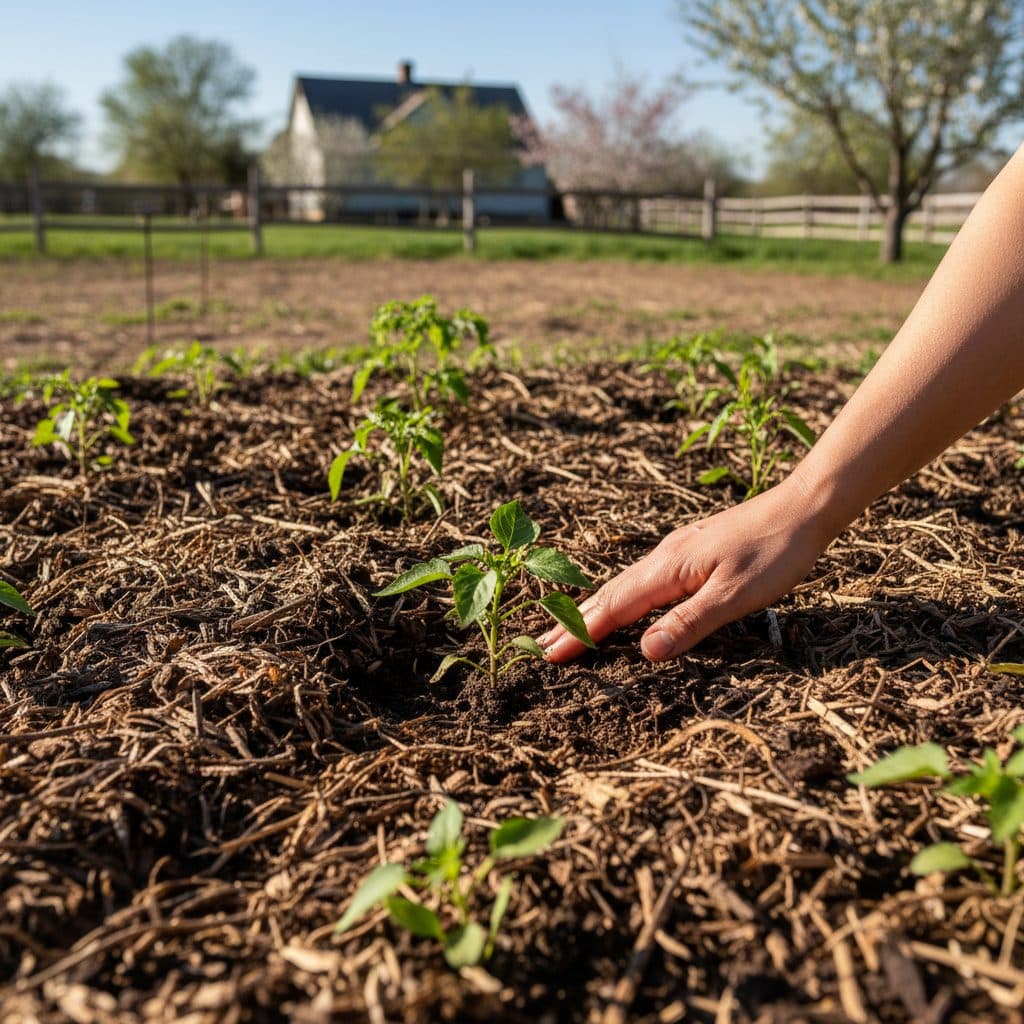
A 3-4 inch layer of organic mulch, such as straw, wood chips, or shredded leaves, can make a significant difference. Mulch helps to: 1) reduce soil temperature by 10-15 degrees Fahrenheit, 2) conserve soil moisture by up to 50%, and 3) suppress weeds that compete for water. For vulnerable transplants in USDA zone 9, I often use shade cloth that blocks 30-50% of direct sunlight during the peak hours of 11 AM to 4 PM. Even a simple cardboard box or an old umbrella can provide real temporary relief for a few days. While an indoor grow tent is for controlled environments, the principle of reflecting heat and providing shade is similar for outdoor applications.
- Apply 3-4 inches of organic mulch around the base of plants.
- Use 30-50% shade cloth during peak heat hours (11 AM – 4 PM).
- Plant in the late afternoon or early evening to allow overnight recovery before daytime heat.
- Ensure good air circulation around plants to prevent fungal issues.
- Consider planting heat-tolerant varieties suitable for your USDA zone.
Monitoring and adapting watering schedules
Even with the best initial plan, extreme heat conditions can change rapidly, requiring gardeners to adapt their watering schedules. A sudden spike of 10 degrees Fahrenheit in temperature or an unexpected dry wind can significantly increase a plant’s water needs. I always recommend checking the weather forecast daily and adjusting watering frequency accordingly. For instance, if a heat advisory is issued for my area in North Carolina, predicting 98 degrees Fahrenheit for three days, I’ll increase my watering frequency from every three days to every other day for young plants.
signs of plant stress
Learning to read your plants matters. Wilting leaves, especially in the morning, are a clear sign of underwatering. Yellowing leaves can indicate overwatering or nutrient deficiency. A 3-in-1 soil pH, moisture, and light meter can help diagnose issues beyond just moisture. For example, a pH reading outside the optimal 6.0-7.0 range can hinder nutrient uptake, making plants more susceptible to stress. Remember, the goal is to keep the soil consistently moist, not soggy, in the top 6 inches where most new roots are developing.
- Watch for wilting leaves, especially before noon, as a sign of underwatering.
- Observe yellowing or stunted growth, which can indicate overwatering or nutrient lock-out.
- Feel the soil with your finger 4-6 inches deep; if it’s dry, it’s time to water.
- Adjust watering frequency based on daily temperatures and humidity levels.
- Consider using a simple garden PE irrigation hose system for consistent, targeted delivery.
Seedlings vs. Transplants: Watering Considerations in Heat
Characteristic | Seedlings (direct-sown) | Transplants (started elsewhere) |
|---|---|---|
Root System | Developing from seed, very shallow (1-3 inches) | Established in a pot, but often root-bound; needs to spread (3-6 inches) |
Initial Water Need | Consistent surface moisture for germination and early growth | Deep watering immediately after planting to settle soil and reduce shock |
Heat Vulnerability | Extremely high; delicate stems and tiny leaves lose water rapidly | High; shock from new environment combined with heat stress |
Watering Frequency (90°F+) | Potentially 2-3 times daily, light but consistent | 1-2 times daily, deep and thorough |
Watering Method | Fine mist or bottom watering to avoid dislodging seeds | Slow, targeted watering at the base of the plant |
Mulch Benefits: A 3-inch layer of organic mulch can reduce soil temperature by 10-15 degrees Fahrenheit and conserve up to 50% more moisture.
Root Depth: Encourage roots to grow 6-8 inches deep by applying 1.5 gallons of water per plant every 2-3 days in dry conditions.
Soil Oxygen: Maintaining adequate soil oxygen is as critical as water; studies show poor oxygen levels can hinder seedling growth by 35% [2].
Frequently asked questions
How often should I water new seedlings in 90-degree Fahrenheit weather?
In temperatures consistently above 90 degrees Fahrenheit, newly planted seedlings and transplants may need watering 1-2 times daily. Always check the soil moisture 4-6 inches deep with your finger or a moisture meter before watering, aiming for consistent moisture without sogginess in the top 6 inches of soil.
Can I overwater my seedlings in extreme heat?
Yes, overwatering is possible even in extreme heat. While plants need more water, excessive watering can lead to root rot by depriving roots of essential oxygen, especially in heavy clay soils. Ensure good drainage and use a soil moisture meter to avoid keeping the soil saturated for too long, as oxygen levels are critical for seedling growth [2].
What’s the best time of day to water in hot weather?
The best time to water is early in the morning, ideally before 8 AM. This allows the water to penetrate the soil before the sun’s intensity increases evaporation. Watering in the evening is a second-best option, but leaves may remain wet overnight, potentially increasing fungal disease risk in humid climates like Florida.
How deep should the water penetrate for new plants?
For newly planted seedlings and transplants, water should penetrate at least 6-8 inches deep to encourage roots to grow downwards. This depth ensures that the primary root zone has access to moisture, making the plant more resilient to surface drying and extreme heat, which can be 95 degrees Fahrenheit or higher.
Should I fertilize new seedlings immediately after planting in hot weather?
It’s generally best to avoid heavy fertilization immediately after planting, especially in hot weather. Young plants are already under stress from transplant shock. Wait at least 2-3 weeks, or until the plant shows signs of new growth, before applying a balanced, slow-release fertilizer at about half the recommended strength to avoid burning delicate roots.
What kind of mulch is best for retaining moisture in hot climates?
Organic mulches like straw, wood chips, or shredded leaves are excellent for retaining moisture and regulating soil temperature in hot climates like USDA zone 9. Apply a 3-4 inch layer around plants, keeping it a few inches away from the stem to prevent rot. This can reduce soil evaporation by up to 50%.
References
- Growth of Newly Planted Water Tupelo Seedlings After Flooding and Siltation (1970). Growth of Newly Planted Water Tupelo Seedlings After Flooding and Siltation.
- The Effect of Tephra Deposition and Planting Treatment on Soil Oxygen Levels and Water Relations of Newly Planted Seedlings (1985). The Effect of Tephra Deposition and Planting Treatment on Soil Oxygen Levels and Water Relations of Newly Planted Seedlings.
- Seedlings or Transplants? (1935). Seedlings or Transplants?.
- Effect of watering regime and media components on the production of organic tomato transplants (2023). Effect of watering regime and media components on the production of organic tomato transplants.
- Factors affecting winter damage and recovery of newly planted Norway spruce seedlings in boreal forests (2022). Factors affecting winter damage and recovery of newly planted Norway spruce seedlings in boreal forests.
- Acclimation and Adaptive Responses of Woody Plants to Environmental Stresses (2002). [Acclimation and Adaptive Responses of Woody Plants to Environmental Stresses](https://doi.org/10.1663/0006-8101(2002)068[0270:aaarow]2.0.co;2).