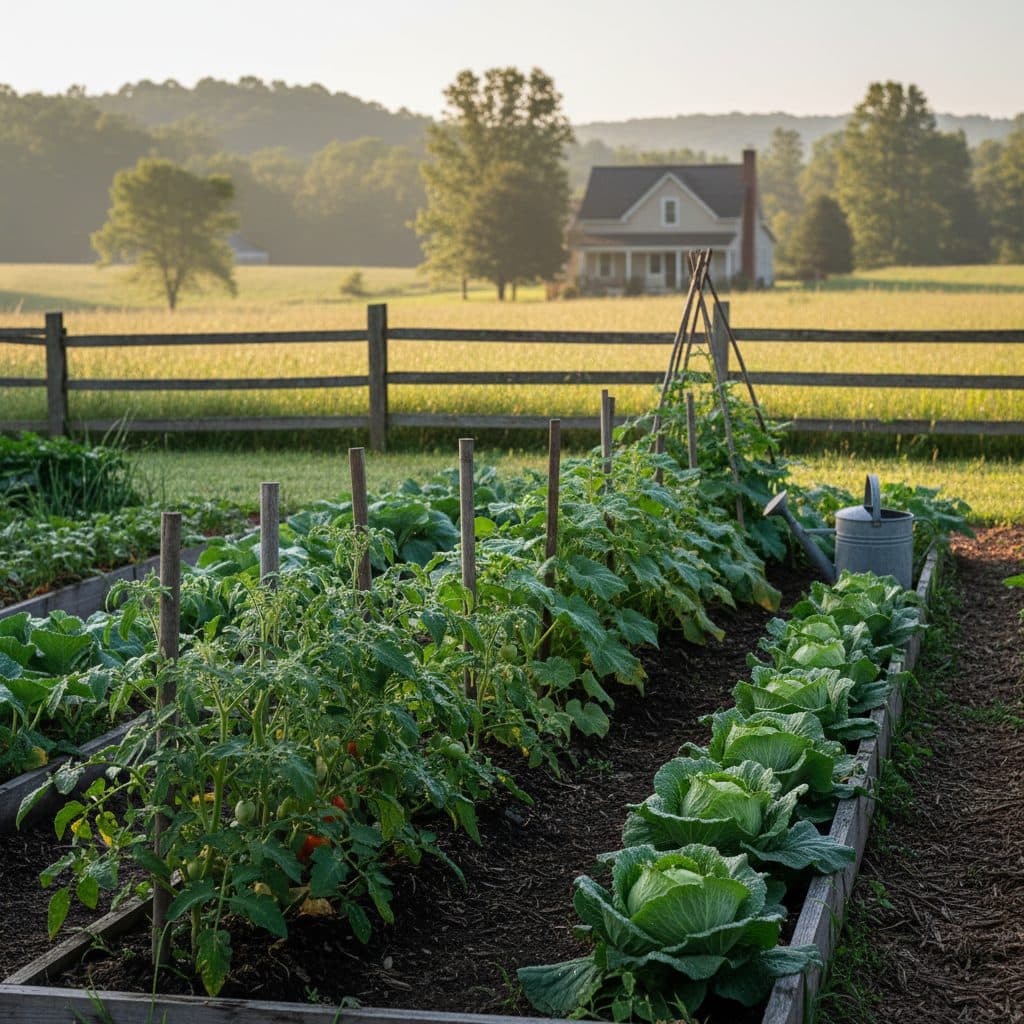
Key takeaways
- Recognizing the five primary growth stages (germination, vegetative, flowering, fruiting, and senescence) helps time plant care.
- Tomato plants require specific nutrient adjustments, like reduced nitrogen during flowering, to prevent excessive foliage and promote fruit set, potentially increasing yield by 20%.
- Cucurbits, including cucumbers and squash, benefit from consistent water (about one inch per week) and adequate pollination during their flowering and fruiting stages to ensure successful fruit development.
- Root vegetables like carrots need loose, well-drained soil at least 10 inches deep and consistent moisture during root development to prevent splitting and promote uniform growth.
- Cabbage plants demand steady moisture and nutrient supply, especially nitrogen, throughout their vegetative growth to form dense, healthy heads, with some varieties maturing in 60-90 days.
- Diagnosing problems by growth stage, such as blossom end rot in tomatoes during fruiting or poor fruit set in squash during flowering, allows for targeted and effective interventions.
Quick answer: Successful vegetable growth in USDA Zone 6 relies on understanding five key stages: germination, vegetative, flowering, fruiting, and senescence. Timely care and nutrient adjustments tailored to each stage can significantly improve plant health and yields.
In the diverse climates across the United States, from the humid summers of USDA Zone 7 in the Southeast to the arid stretches of Zone 9 in the Southwest, successful vegetable gardening often hinges on a deep understanding of plant development. It is not enough to simply plant seeds and hope for the best; recognizing the distinct growth stages of your crops allows for precise care, leading to healthier plants and more abundant harvests. For instance, a tomato plant in Ohio requires different attention during its initial vegetative phase compared to when it is setting fruit in mid-summer.
Understanding the growth stages common to most vegetables helps growers time interventions for specific crops like tomatoes, cucumbers, squash, carrots, and cabbage. Adjusting water and nutrients by stage helps prevent common physiological problems and can improve yields by 20% or more each season.
The five universal growth stages of vegetables
Every vegetable, whether a sprawling squash vine or a compact cabbage head, progresses through a series of predictable growth stages from seed to harvest. These stages are not merely arbitrary divisions but critical periods where the plant’s physiological needs and vulnerabilities shift dramatically [1]. Understanding these five universal phases allows us to tailor our care, ensuring the plant receives exactly what it needs, when it needs it. For example, a young seedling in Florida’s Zone 9 requires different nutrient ratios than a mature plant in the same region.
Germination stage
The initial germination stage begins when the seed absorbs water and the embryo awakens, typically within three to fourteen days depending on the species and soil temperature; a carrot seed might take ten days at 60°F. This is followed by the vegetative stage, characterized by rapid leaf and stem growth, where the plant focuses on building its photosynthetic machinery. During this period, which can last from three to eight weeks for many vegetables, strong root development is also paramount. Next comes the flowering stage, where the plant shifts its energy to producing blossoms, a process that can take two to four weeks. Successful pollination during this time is essential for fruit production. The fruiting stage then sees the development and ripening of the edible part, whether it is a tomato or a squash, often lasting several weeks. Finally, the senescence stage marks the end of the plant’s life cycle, with declining vigor after fruit production, though some plants, like indeterminate tomatoes, can continue producing for months in warm climates like California’s Central Valley.
- Germination: Seed sprouts, root emerges, cotyledons appear.
- Vegetative: Rapid leaf and stem growth, root system expands.
- Flowering: Buds form, flowers open, pollination occurs.
- Fruiting: Ovaries swell, fruit develops and ripens.
- Senescence: Plant declines after reproduction, preparing for dormancy or death.
Tomato care by growth stage: preventing common problems
Tomatoes (Solanum lycopersicum) are a garden staple across the US, but they can be particular about their care, especially as they move through their life cycle. During the vegetative stage, which typically lasts four to six weeks after transplanting, the focus is on developing a strong root system and robust foliage. The goal is steady growth without excessive speed that produces leggy plants. Adequate nitrogen is necessary here, but too much can hinder later fruit production, as shown by studies indicating excessive nitrogen can reduce yields [4]. A balanced fertilizer, perhaps one with a 10-10-10 NPK ratio, applied every three to four weeks, works well for young plants in regions like New England.
Flowering stage
As tomatoes transition to the flowering stage, usually around six to eight weeks after transplanting, their needs shift. Nitrogen requirements decrease, while phosphorus and potassium become more important for flower and fruit development. We might switch to a fertilizer with a 5-10-10 ratio. Poor fruit set can occur if temperatures are consistently above 90°F or below 55°F, common issues in places like Arizona or early spring in USDA Zone 5. During the fruiting stage, which can extend for two to three months for indeterminate varieties, consistent watering (about one to two inches per week) helps prevent problems like blossom end rot. This physiological disorder, often seen in the Southeast, is linked to calcium uptake issues, frequently caused by inconsistent soil moisture, not necessarily a lack of calcium in the soil itself. Monitoring soil moisture with a meter can help maintain optimal levels, preventing up to 30% of fruit loss.
- Vegetative: Focus on root and foliage growth, balanced 10-10-10 NPK.
- Flowering: Reduce nitrogen, increase phosphorus and potassium (e.g., 5-10-10 NPK).
- Fruiting: Consistent watering (1-2 inches/week) to prevent blossom end rot.
- Pest Management: Inspect plants regularly, especially undersides of leaves.
- Support: Stake or cage plants early to manage heavy fruit loads.
Cucurbit care: fruit set for cucumbers and squash
Cucumbers (Cucumis prophetarum) and squash are prolific growers, popular in gardens from the humid Midwest to the sunny Southwest. Their vegetative stage is marked by rapid vine growth, often extending 10 to 20 feet for some varieties. During this period, which lasts about four to six weeks, they are heavy feeders, requiring consistent moisture (about one inch of water per week) and a steady supply of nitrogen to fuel their foliage. Applying a compost tea or a granular fertilizer with a 5-1-2 NPK ratio every three weeks can support this vigorous growth.
The flowering stage is critical for cucurbits, typically beginning six to eight weeks after planting. Most varieties produce separate male and female flowers; male flowers appear first, often for one to two weeks, before female flowers (identifiable by the miniature fruit behind the blossom) emerge. Poor fruit set is a common issue, especially in areas with low pollinator activity, such as urban gardens in USDA Zone 6. We can encourage pollinators by planting flowering herbs nearby or, if necessary, hand-pollinate by transferring pollen from male to female flowers. Consistent watering during this stage is also paramount; drought stress can cause flowers to drop, reducing potential yields by up to 40% [2]. Once fruits begin to develop in the fruiting stage, often within a week of successful pollination, the plants continue to need ample water and nutrients, particularly potassium, to support fruit enlargement.
- Vegetative: Provide consistent water (1 inch/week) and nitrogen (e.g., 5-1-2 NPK).
- Flowering: Ensure adequate pollination by encouraging bees or hand-pollinating.
- Fruiting: Maintain consistent moisture to prevent fruit abortion.
- Pest Monitoring: Watch for squash bugs and cucumber beetles, especially on young plants.
- Harvest: Pick fruits regularly to encourage continuous production.
Carrot and cabbage care: optimizing root and head development
Carrots (Daucus carota) and cabbage (Brassica oleracea capitata) represent two distinct vegetable types (root and leafy), each with specific needs during their primary growth stages. For carrots, the germination stage is notoriously slow, often taking ten to twenty-one days, especially in cooler soils below 60°F in northern states like Minnesota. Once germinated, the vegetative stage is all about developing the taproot. This requires loose, well-drained soil, free of rocks, to a depth of at least 10 inches. Compacted soil or obstructions can lead to forked or stunted roots, a common issue in clay-heavy soils. Consistent moisture is also important; dry periods followed by heavy watering can cause roots to split, reducing harvestable yield by 25%.
Cabbage, on the other hand, is all about leaf production. Its vegetative stage is its most critical, lasting anywhere from 60 to 90 days for many varieties in regions like the Pacific Northwest. During this period, cabbage plants are heavy feeders, especially for nitrogen, which fuels the growth of their large, succulent leaves. A continuous supply of nitrogen, perhaps from a slow-release organic fertilizer like Fermented Soybean Meal Organic Fertilizer with a 7-2-1 NPK, applied every four to six weeks, is essential for forming dense, firm heads. Inconsistent watering or nutrient deficiencies can lead to loose, open heads or bolting (premature flowering), which makes the leaves bitter and unpalatable, particularly in warmer climates like Texas.
- Carrots: Ensure loose, rock-free soil 10+ inches deep for root development.
- Carrots: Maintain consistent moisture to prevent root splitting.
- Cabbage: Provide ample nitrogen during vegetative stage for head formation.
- Cabbage: Consistent watering is critical to prevent bolting and loose heads.
- Pest Watch: Monitor both for root maggots (carrots) and cabbage worms (cabbage).
Diagnosing and addressing growth stage specific problems
Effective problem-solving in the garden relies heavily on understanding which growth stage your plant is in. A yellowing leaf on a young tomato plant in its vegetative stage might indicate a nitrogen deficiency, which can be remedied with a balanced fertilizer application, potentially increasing growth by 15%. However, yellowing leaves on an older plant in its fruiting stage could be a natural part of senescence or a sign of disease, requiring a different approach. For example, early blight on tomatoes, common in humid areas like Florida, often appears during flowering or fruiting, presenting as dark spots on lower leaves.
Similarly, poor fruit set in cucurbits during the flowering stage points to issues with pollination or environmental stress, such as temperatures exceeding 90°F. This is a different problem than a cucumber fruit that develops a bitter taste during the fruiting stage, which is often due to inconsistent watering or extreme heat. For carrots, stunted growth or malformed roots during their vegetative stage suggests soil compaction or nutrient imbalance, while splitting roots are almost always a watering issue. Cabbage failing to form a firm head during its critical vegetative stage indicates insufficient nitrogen or water, or perhaps too much heat. By aligning our diagnostics with the plant’s current stage, we can apply targeted solutions, saving time and resources, and ensuring a more productive garden, potentially preventing up to 50% of common crop failures.
- Yellowing Leaves (Vegetative): Often nitrogen deficiency, apply balanced fertilizer.
- Poor Fruit Set (Flowering): Pollination issues or temperature stress (e.g., >90°F).
- Blossom End Rot (Fruiting): Inconsistent watering, not necessarily calcium deficiency.
- Stunted Roots (Carrot Vegetative): Soil compaction or nutrient imbalance.
- Loose Cabbage Heads (Vegetative): Insufficient nitrogen or water, or heat stress.
Key Care Considerations by Vegetable Type and Growth Stage
Vegetable | Critical Stage | Common Problem | Primary Solution | Impact on Yield |
|---|---|---|---|---|
Tomato | Fruiting | Blossom End Rot | Consistent watering (1-2 in/week) | Up to 30% fruit loss |
Cucumber | Flowering | Poor Fruit Set | Ensure pollination (bees, hand) | Up to 40% yield reduction |
Squash | Flowering | Flower Drop | Consistent moisture, avoid >90°F | Significant fruit loss |
Carrot | Vegetative | Forked/Split Roots | Loose soil (10+ in), consistent water | 25% unmarketable yield |
Cabbage | Vegetative | Loose Heads/Bolting | Adequate N (7-2-1 NPK), consistent water | Reduced head quality/loss |
Tomato Nitrogen: Excessive nitrogen during tomato flowering can reduce fruit set by 20% by promoting leaf growth over reproductive development [4].
Cucurbit Water: Drought stress during the flowering stage can cause up to 40% of cucurbit flowers to drop, severely impacting fruit yield [2].
Frequently asked questions
How do I know if my soil is ready for planting carrots in USDA Zone 5?
For carrots, soil temperature is key. It should be consistently above 50°F but ideally between 60-70°F for optimal germination, which can take ten to twenty-one days. Also, ensure the soil is loose and free of rocks to a depth of at least 10 inches to prevent malformed roots.
What causes tomato plants to have lots of leaves but few fruits in the Midwest?
This is often due to an imbalance of nutrients, specifically too much nitrogen during the flowering stage. Nitrogen promotes vegetative growth (leaves), while phosphorus and potassium are needed for flower and fruit development. Reduce nitrogen in your fertilizer to a 5-10-10 NPK ratio when flowers appear.
My cucumber flowers are falling off, and I’m not getting any fruit. What’s wrong?
This is a common issue, often related to poor pollination or environmental stress. Check for pollinator activity; bees are necessary. If none, consider hand-pollinating. Also, ensure consistent watering (about one inch per week) and protect plants from extreme temperatures, especially above 90°F, which can cause flowers to abort.
Why are my cabbage heads not forming tightly in my garden in the Southeast?
Loose cabbage heads are typically caused by insufficient nitrogen, inconsistent watering, or heat stress. Cabbage needs a steady supply of nitrogen throughout its 60-90 day vegetative growth period to form dense heads. Ensure the soil remains consistently moist and consider providing some afternoon shade if temperatures regularly exceed 85°F.
Can soil salinity affect my vegetable yields in arid regions like California?
Yes, soil salinity can significantly hinder vegetable growth and reduce yields, especially in arid regions or areas with poor drainage. High salt concentrations can impede water uptake, leading to stunted growth and reduced fruit production. Some crops can tolerate up to 4 dS/m, but yields often decrease by 10% or more at these levels [6].
How much water does a tomato plant need during its fruiting stage in a hot climate like Texas?
During the fruiting stage, especially in hot climates, tomato plants need substantial and consistent water (typically 1 to 2 inches per week, or even more during heatwaves). Inconsistent watering is a primary cause of blossom end rot, which can spoil up to 30% of your harvest. Deep, infrequent watering is generally better than shallow, frequent watering.
References
- A Comprehensive Dataset of 10 Exotic Vegetable Plants Across Three Growth Stages (2023). A Comprehensive Dataset of 10 Exotic Vegetable Plants Across Three Growth Stages.
- Okra growth and drought tolerance when exposed to water regimes at different growth stages (2018). Okra growth and drought tolerance when exposed to water regimes at different growth stages.
- Small Group Development (2019). Small Group Development.
- Effects of nitrogen supplied in various growth stages on the growth and yield of several vegetable crops (1968). Effects of nitrogen supplied in various growth stages on the growth and yield of several vegetable crops.
- Stages of Hypnotherapy (2018). Stages of Hypnotherapy.
- Soil Salinity: Effect on Vegetable Crop Growth. Management Practices to Prevent and Mitigate Soil Salinization (2017). Soil Salinity: Effect on Vegetable Crop Growth. Management Practices to Prevent and Mitigate Soil Salinization.