secondary
Pumpkin
kaddu
Cucurbita moschata
Also known as Kaddu (Pakistan), Butternut Squash (United States), Winter Squash (UK & Ireland).
- punjab plains
- sindh coast
- pothohar
International hardiness
- USDA 10-12
- RHS H1c
- AU: Subtropical, Tropical, Warm temperate
Where it grows — regional guide
| Zones / rating | Regional notes |
|---|---|
USDA 10-12 | Grown as a summer annual after frost; harvest when tan rinds harden for winter storage, and discard any fruit that tastes bitter. |
| Zones / rating | Regional notes |
|---|---|
H1c (5 to 10C) | Tender under RHS H1c: it needs full sun and warm summer soil to ripen fruit; harvest tan rinds, and discard any bitter-tasting squash. |
| Zones / rating | Regional notes |
|---|---|
Subtropical, Tropical, Warm temperate | Grown as a vigorous summer vine in warm regions; harvest fully mature hard-skinned squash, and discard any fruit that tastes bitter. |
| Zones / rating | Regional notes |
|---|---|
USDA 10-12 (USDA scale) Canada uses its own zone system; Canadian zones run roughly one lower than USDA. | No region-specific data yet |
| Zones / rating | Regional notes |
|---|---|
Punjab plains, Sindh coast, Pothohar | Pakistan:Vigorous warm-season vine grown across the plains; harvest when tan rinds harden, and discard any squash that tastes unusually bitter. India:Cultivated for sweet long-storing squash and edible flowers; harvest when the mature rind has hardened for winter storage, and discard any bitter-tasting fruits. |
Grows alongside
Species that appear with Pumpkin in 25 of our published guides — a starting list for a guild, not a planting plan.
Pumpkin (Cucurbita moschata) is a warm-season annual vine in the gourd family, Cucurbitaceae, grown across tropical and temperate regions for its hard-rinded winter squash. The species is native to Central and South America and carries a tangle of common names: the same plant is sold as pumpkin, winter squash, butternut squash, and, across much of Latin America, calabaza. For the homesteader, those names matter less than its nature: a vigorous, frost-tender annual that fills a long warm season with leafy growth, then sets dense, long-storing fruits that carry a kitchen well into winter.
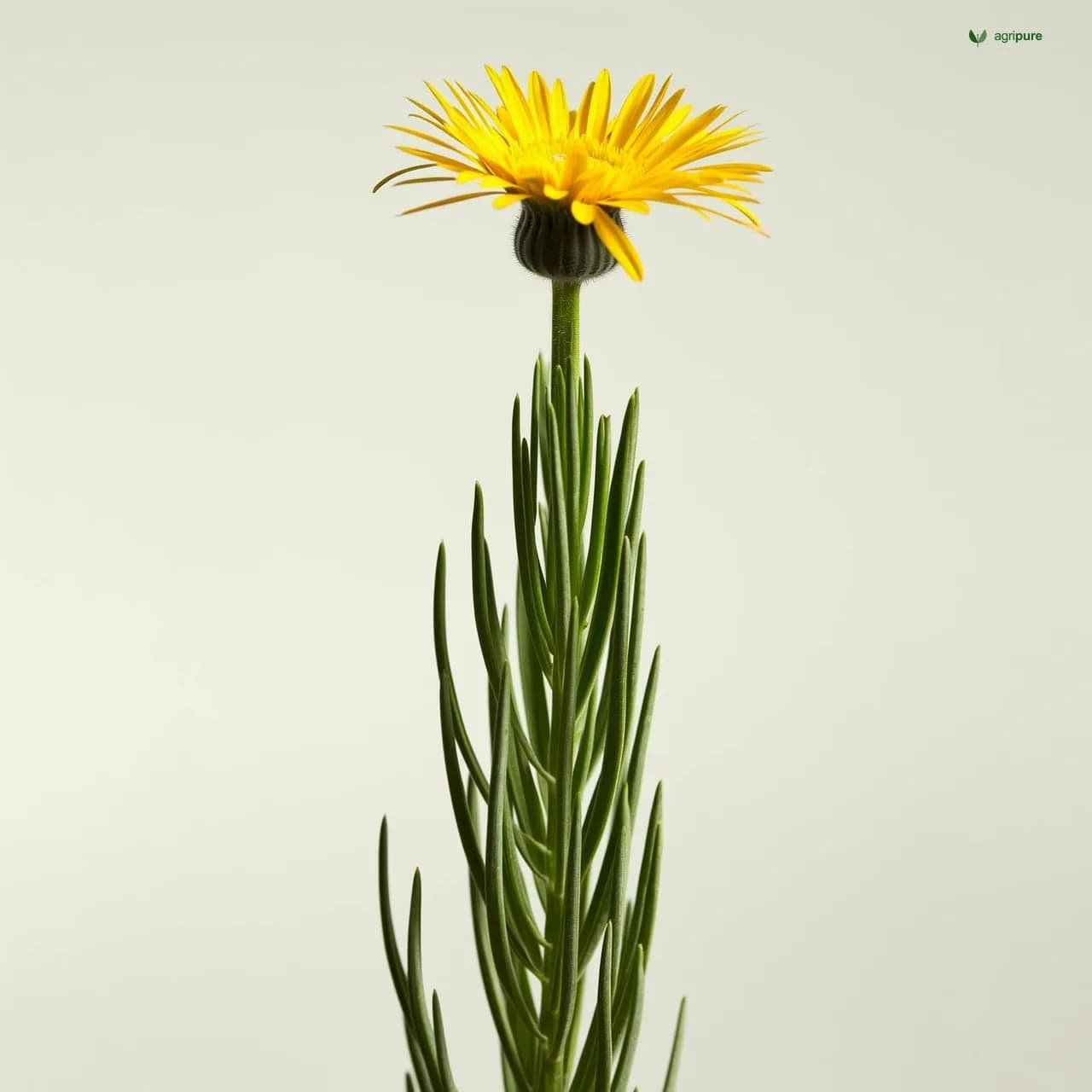
It grows as a long, trailing vine that sprawls along the ground or climbs supports by its tendrils, and the most vigorous types can occupy a large area on their own. The stems and leaf stalks are soft-hairy, and the leaves are large, broadly ovate to nearly circular, lightly lobed, and softly hairy. Through summer the vine carries large, yellow, bell-shaped, five-lobed flowers up to about 12 cm long; male and female flowers are borne separately on the same plant, and the female flowers are the fruit-bearing ones. A reliable field mark separates C. moschata from its squash cousins: at maturity the fruits are usually tan-skinned rather than bright orange, and the fruit stem (peduncle) is deeply ridged and conspicuously enlarged where it joins the fruit, flaring into a broad, rounded, roughly pentagonal base. Fruit shape varies by cultivar, with long, oblong forms such as butternut among the most familiar.
Growing Pumpkin
Pumpkin is grown from seed, which it germinates from easily once the soil is warm. As a warm-season annual it is frost-tender, so seed or transplants should go out only in late spring or early summer, after the last frost has passed. Grown this way as an annual, it can be raised across a wide span of climates; NC State Extension lists it as suitable for USDA zones 3a through 11b, a range that reflects where it can be cultivated in a frost-free season rather than any cold-hardiness of the plant itself. Give it full sun, as the species prefers full access to sunlight.
Soil should be kept moderately moist, the moisture level the species favours. The sources here do not give a species-specific pH target, so none is claimed; the general aim is fertile, well-drained ground, and because cucurbits rot in waterlogged soil, consistent moisture without sogginess is the practical goal. The research does not provide reliable species-specific spacing figures or a fixed days-to-maturity count, so rather than invent numbers, match planting distance to the growth habit of your cultivar: vigorous trailing types need far more room than compact selections, and a vine left to sprawl will quickly cover a large patch.
Harvest and uses
Pumpkin is classified agronomically as a winter squash, meaning the fruit is harvested at full maturity once the rind has hardened rather than picked young and soft. A hard, fully developed rind on a tan-skinned fruit is the basic readiness cue, and that hard shell is what makes the species such a good keeper for winter storage. The sources provided do not include a dependable, species-specific yield figure, so no tonnage is claimed here.
On the homestead the species is generous: the fruits, the large yellow flowers, the young shoots, and the seeds are all edible, so a single planting yields several different harvests. The dense, mild flesh of the mature fruit is the main crop, well suited to roasting, soups, stews, and baking, while the flowers and tender shoots can be cooked as greens and the seeds eaten as a snack.
How to identify it
Because “pumpkin” covers several squash species, identifying C. moschata specifically comes down to a handful of features taken together: soft-hairy stems and leaf stalks; large, broad, lightly lobed, softly hairy leaves; large yellow, bell-shaped, five-lobed flowers; and, most diagnostically at harvest, tan-skinned mature fruit on a deeply ridged peduncle that swells and flares where it meets the fruit. The species is distinct enough that germplasm collections curate it separately from the other cultivated squashes, which is why butternut, crookneck, and many tan pumpkin types all sit within this one species. For a grower, the takeaway is to check which Cucurbita species and growth habit a seed packet names, since that determines the vine size and fruit type to expect.
Safety and cautions
Standard references describe the fruits, flowers, young shoots, and seeds of C. moschata as edible, and none of the sources here identifies a toxic plant part or a specific medicinal-use hazard for the species. No medicinal claims are made for it on this evidence. As a general note for squash and other cucurbits rather than this species in particular, ordinary food-safety judgement still applies: eat properly identified, ripe or cooked edible parts, and discard any squash that tastes unusually bitter, since strong bitterness can signal naturally occurring compounds in the cucurbit family.
Sources
- NC State Extension. “Cucurbita moschata (Butternut Squash).” North Carolina Extension Gardener Plant Toolbox.
- Loy, J. B. et al. (2023). “Characterization of the USDA Cucurbita pepo, C. moschata, and C. maxima germplasm collections.” Frontiers in Plant Science.
- University of Illinois Extension. “Pumpkin (Cucurbita).” Hort Answers.
- Cucurbit Genetics Cooperative / USDA-ARS. “Cucurbita germplasm and species report.” ARS-GRIN.
- ScienceDirect. “Cucurbita moschata” (topic overview).
- CABI. “Cucurbita moschata (pumpkin).” CABI Compendium.