secondary
Guava — Allahabad Safeda
amrood (امرود)
Psidium guajava cv. Allahabad Safeda
Also known as Amrood (Pakistan).
- punjab plains
- sindh coast
International hardiness
- USDA 9-11
- RHS H1c
- AU: Tropical, Subtropical, Warm temperate
Where it grows — regional guide
| Zones / rating | Regional notes |
|---|---|
USDA 9-11 | Grown in frost-free USDA zones 9 to 11 in full sun; grafted trees produce sweet white-fleshed fruit rich in vitamin C. |
| Zones / rating | Regional notes |
|---|---|
H1c (5 to 10C) | No region-specific data yet |
| Zones / rating | Regional notes |
|---|---|
Tropical, Subtropical, Warm temperate | Grown in frost-free home gardens across tropical and subtropical zones; produces sweet white-fleshed fruit for fresh eating. |
| Zones / rating | Regional notes |
|---|---|
USDA 9-11 (USDA scale) Canada uses its own zone system; Canadian zones run roughly one lower than USDA. | No region-specific data yet |
| Zones / rating | Regional notes |
|---|---|
Punjab plains, Sindh coast | Pakistan:Popular white-fleshed guava grown across the plains; grafted trees bear mild, sweet fruit with soft seeds. India:Benchmark white-fleshed dessert guava of northern plains; produces sweet, low-acid fruit with soft edible seeds in full sun. |
Allahabad Safeda is a white-fleshed cultivar of the common guava (Psidium guajava), a fast-growing tropical and subtropical fruit tree. The species is native to tropical America and was domesticated in parts of Peru several thousand years ago; from there it was carried by the Spanish to Guam and on to the Philippines and the rest of Asia, and it is now widely grown across South and Southeast Asia. Allahabad Safeda itself is one of the most widely planted dessert guavas of the Indian subcontinent, valued for its sweet, creamy white pulp and its willingness to crop on almost any reasonable ground. For a homesteader in a frost-free or near-frost-free climate, the practical appeal is hard to beat: it is undemanding about soil, comes into bearing quickly, and gives heavy crops of vitamin-C-rich fruit you can eat fresh or turn into jam and pulp.
What Allahabad Safeda looks like
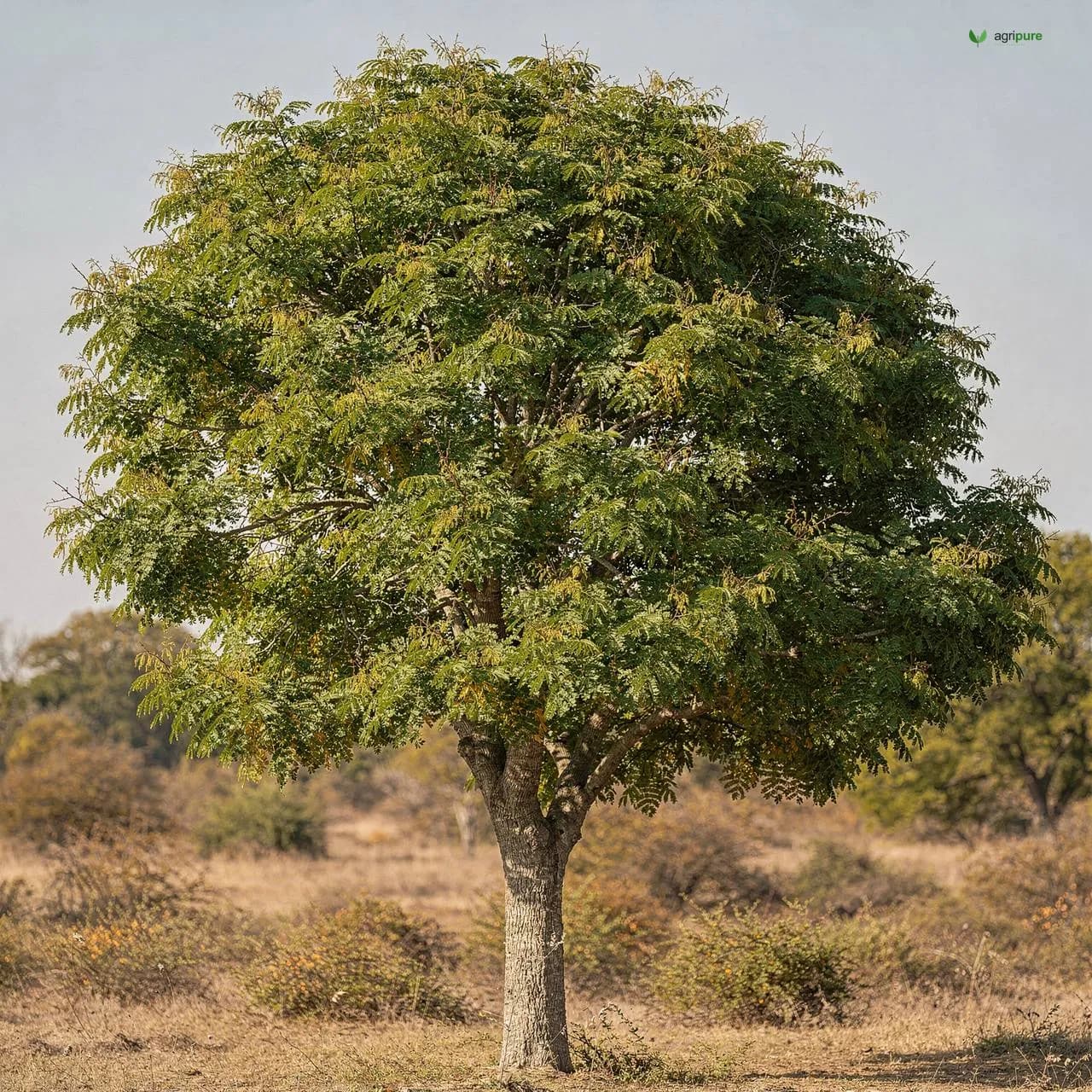
The tree is medium-sized with a spreading, dome-shaped, fairly compact canopy, and it carries one of the guava’s most recognisable field marks: a smooth, reddish-brown bark that flakes and peels away to reveal a paler grey layer beneath. The leaves are evergreen, bright green, oval and borne in opposite pairs along the twigs, a typical guava trait useful for identification. Through much of the warm season the tree carries white, fragrant blossoms, mostly from spring into early summer in many plantings.
The fruit of this cultivar is round and not especially large, with a thin, pale green to almost white rind. Cut one open and you find creamy white flesh, soft, smooth and sweet, with a mild, delicately aromatic, juicy flavour rather than anything sharp or musky. Seed content is low to medium and the seeds are soft enough to eat, which is a large part of why it is such a popular table guava. The Allahabad region of northern India, from which the cultivar takes its name, is a long-established centre of guava growing where this clean white-fleshed type is the benchmark dessert fruit, distinct from pink- and red-fleshed selections such as the related Allahabadi Surkha.
Growing Allahabad Safeda
Allahabad Safeda is propagated both ways: as grafted plants, which give uniform fruit quality and come into bearing sooner, and from seed, which is sold for home gardens, orchards and container growing. Grafted stock is the more reliable choice if you want fruit true to the named cultivar, since guava grown from seed is variable. Specific rootstocks, grafting heights and air-layering details are not given in the sources here, so they are left out rather than guessed at.
Site and conditions are forgiving:
- Sun: Give it full sun for the best growth and fruiting.
- Soil: It grows in a wide range of soil types, but does best in well-drained sandy loam, and also performs on lateritic (iron-rich, weathered) soils.
- Water: The tree is moderately drought-tolerant once established, but it benefits from regular watering during the fruiting season to size and fill the crop. Avoid waterlogging.
One of this cultivar’s strongest selling points for the impatient grower is speed to harvest: Allahabad Safeda can begin fruiting as early as one to two years after planting, especially from grafted trees. Exact plant spacing and irrigation volumes are not specified in the sources for this cultivar, so rather than print false precision, treat it like any vigorous guava — give each tree enough room for its spreading canopy and full sun, and water more attentively while fruit is on the tree.
Climate and hardiness
Guava is grown as a tropical-to-subtropical tree and is not frost-hardy. It can tolerate temperatures down to only about 20 °F (-6 °C), which puts reliable outdoor culture at roughly **USDA zones 9–11**.1 Hard or sustained frost will damage or kill it, so in cold-winter areas Allahabad Safeda belongs in a movable container or under protection rather than in the open ground. In practice it is a plant for frost-free and near-frost-free homesteads, and it is extensively grown across India, Bangladesh and parts of Southeast Asia for exactly that adaptability and yield.
Harvest and uses
The fruit is the harvest. Pick when the rind softens slightly and the characteristic guava fragrance develops; the soft, edible-seeded white flesh is at its best eaten fresh. Beyond fresh eating, guava is a classic processing fruit — it is widely used for jams and for pulping into juice, nectar and similar products, which is one reason it remains a commercial mainstay. Nutritionally, guava stands out as an excellent source of vitamin C, well above many common fruits, which adds real value to both fresh use and home preserving. Because the tree blooms over a long season and bears quickly, even a single dooryard Allahabad Safeda can supply a household with fruit for fresh eating and a steady surplus to put up.
Sources
- Guava Growing in the Florida Home Landscape (HS4/MG045) — University of Florida IFAS Extension
- Psidium guajava L.: An Incalculable but Underexplored Food Crop — Molecules (PMC)
- Allahabad Safeda Guava — cultivar description and growing notes (Organic India Seeds)