secondary
Nepal Ivy
barm, bandar
Hedera nepalensis
Also known as Bambal (Pakistan).
- kpk hills
International hardiness
- USDA 6-10
- RHS H4
- AU: Cool temperate, Warm temperate
Where it grows — regional guide
| Zones / rating | Regional notes |
|---|---|
USDA 6-10 | Grown as an evergreen climber for shade; leaves and berries are toxic and it can over-shade host trees. |
| Zones / rating | Regional notes |
|---|---|
H4 (-10 to -5C) | Evergreen climber for shaded walls; leaves and berries are poisonous and it can over-shade host trees. |
| Zones / rating | Regional notes |
|---|---|
Cool temperate, Warm temperate | Grown in cool-temperate shaded gardens as groundcover; leaves and berries are poisonous and it can heavily shade trees. |
| Zones / rating | Regional notes |
|---|---|
USDA 6-10 (USDA scale) Canada uses its own zone system; Canadian zones run roughly one lower than USDA. | No region-specific data yet |
| Zones / rating | Regional notes |
|---|---|
KPK hills | Pakistan:Native evergreen climber; berries and leaves are toxic if eaten and it can heavily shade host trees. India:Native to Himalayan slopes for shaded evergreen cover; leaves and berries are toxic if swallowed. |
Himalayan ivy (Hedera nepalensis) is an evergreen woody climber, or liana, in the ivy and ginseng family (Araliaceae). It is native to montane Asia, with a range that Kew’s Plants of the World Online gives as Afghanistan east to Thailand, spanning the Western and Eastern Himalaya, including Nepal, Pakistan, and India, through to southwest China and Myanmar, typically at elevations of about 1,800 to 3,000 m. For a homesteader, the practical appeal is that of a tough, self-clinging evergreen vine that will clothe a shaded wall, an old trunk, or a rock face and stay green through winter. It is grown chiefly as an ornamental and wildlife plant, and, like other ivies, its leaves and berries are toxic if eaten, so it is decidedly not a food crop.
How to identify Himalayan ivy
Himalayan ivy is a perennial, evergreen liana that climbs high into trees or scrambles over rocks and walls, reaching up to roughly 30 m where it has tall support. Its identification features, drawn from botanical and specialist sources, are:
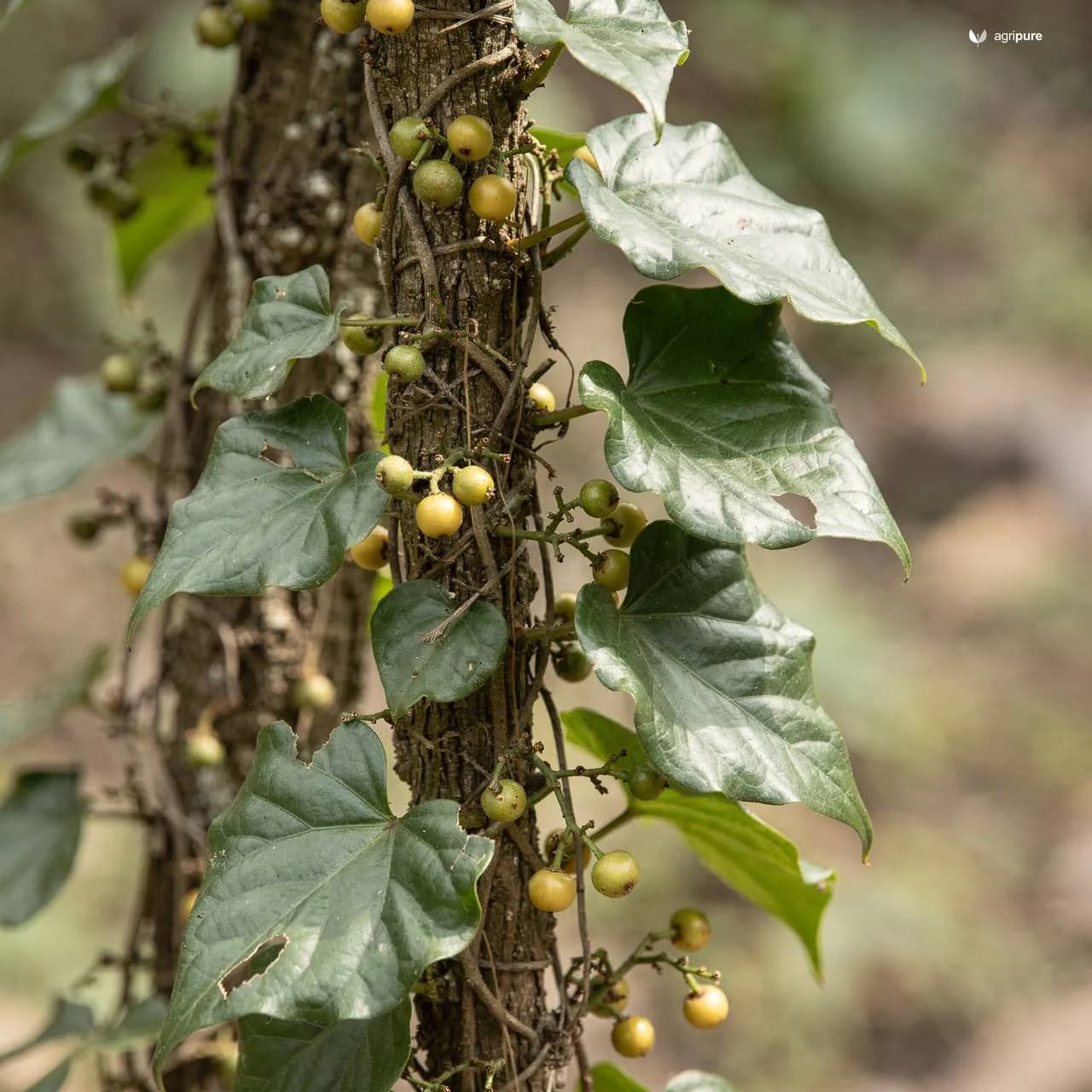
- Leaves: Simple (not divided into leaflets) and about 2 to 15 cm long. A plant-care reference describes them as large, glossy, heart-shaped, and green. An ivy specialist notes that young leaves can emerge purple-red and darken to deep green as they age, which makes the juvenile foliage attractive in ornamental plantings.
- Flowers: Small and yellow, carried in the umbel-like clusters typical of ivies.
- Fruits: Small, globe-shaped berries. They are often described as orange-yellow when ripe, though older literature and field records note other forms, and at least one observation from India describes smooth black berries — so expect colour to vary among plants and forms.
- Family: Araliaceae, the same family as English ivy and ginseng.
The plant is also known as Himalayan ivy and by the Chinese name chang chun teng.
Growing Himalayan ivy
Kew characterises Hedera nepalensis as a liana of the temperate biome within its Asian montane range, and its natural occurrence at 1,800 to 3,000 m in the Himalaya corresponds to cool- to cold-temperate conditions. The retrieved sources do not assign an explicit USDA hardiness zone for this species, so none is stated here rather than guessed; gardeners in cool-temperate climates should judge it against that high-montane origin.
As an ornamental, it is treated as an evergreen climbing plant valued for its large, glossy foliage and its colourful young growth. Authoritative, horticulture-grade cultivation data for this particular species is genuinely sparse: the taxonomic references (Kew, eFlora of India, iNaturalist) focus on botanical description and distribution rather than on cultural conditions. Because no high-quality, species-specific figures for soil type, pH, sun exposure, watering, plant spacing, or time to maturity appear in the sourced research, those details are intentionally left out here rather than invented. The sources likewise give no propagation instructions specific to H. nepalensis; while ivies in general are commonly raised from stem cuttings, that is not documented for this species in the research, so it is not asserted.
Harvest and uses
This is not a harvest plant in the agricultural sense. None of the sourced research treats Himalayan ivy as a crop or gives any yield figures, whether for leaf biomass, berries, or anything else. Its documented value is ornamental and ecological: it is grown mainly as an ornamental climber and as a wildlife plant, putting its evergreen cover and its small berries to use in the garden ecosystem rather than on the table. As a self-clinging evergreen liana it can green up a shaded structure, an old tree, or a rock face that little else will cover, holding leaf and colour through the cold months.
Safety and cautions
Like other members of the genus Hedera, Himalayan ivy is toxic if eaten and is not suitable as a food crop. The leaves and berries should not be treated as edible, and the plant is best kept away from where children might be tempted by the berries and away from grazing stock, since it is not a fodder plant. Handle it as an ornamental and wildlife climber only, and do not consume any part of it. As a vigorous self-clinging climber it can also load and heavily shade a host tree if left unchecked, so keep it off the crowns of trees you want in full light and let it run on walls, rock, and trunks you are content to see covered.
Sources
- Hedera nepalensis — eFlora of India
- Hedera nepalensis — Plants of the World Online, Royal Botanic Gardens, Kew
- Hedera nepalensis — Wikipedia
- Hedera nepalensis — iNaturalist
- Hedera nepalensis — Royal Horticultural Society Collections
- Hedera nepalensis plant care — PlantSnap
- Nepal ivy — Hedera-etc. (ivy specialist)
Sourcing notes
Readily propagated from semi-ripe cuttings, which root from the adventitious growth, or from layered stems off a wild plant. Establish it on a shaded, moist site with something to climb, since it needs forest conditions rather than open ground.