pioneer
Sunflower
suraj mukhi
Helianthus annuus
Also known as Surajmukhi (Pakistan).
- punjab plains
- sindh coast
- pothohar
International hardiness
- USDA 9-11
- RHS H3
- AU: Warm temperate, Cool temperate, Subtropical, Mediterranean, Arid / semi-arid, Tropical
Where it grows — regional guide
| Zones / rating | Regional notes |
|---|---|
USDA 9-11 | Widely grown summer annual for edible seeds and pollinator forage; seed handling can occasionally trigger allergic reactions. |
| Zones / rating | Regional notes |
|---|---|
H3 (-5 to 1C) | Hardy under RHS H4; direct-sown for ornament and edible seeds, though seed handling can cause rare allergies. |
| Zones / rating | Regional notes |
|---|---|
Warm temperate, Cool temperate, Subtropical, Mediterranean, Arid / semi-arid, Tropical | Grown across temperate and subtropical zones as a summer oilseed and seed crop; seed handling carries occasional allergy risks. |
| Zones / rating | Regional notes |
|---|---|
USDA 9-11 (USDA scale) Canada uses its own zone system; Canadian zones run roughly one lower than USDA. | Grown across the prairie provinces as a warm summer annual; edible seeds are harvested in autumn, with rare allergy risks. |
| Zones / rating | Regional notes |
|---|---|
Punjab plains, Sindh coast, Pothohar | Pakistan:Grown across the plains as a fast commercial oilseed crop; provides abundant nectar and edible seeds, with rare allergy risks. India:Cultivated widely as an edible oilseed crop for deep, sun-loving beds, though seed handling carries rare allergy risks. |
Grows alongside
Species that appear with Sunflower in 23 of our published guides — a starting list for a guild, not a planting plan.
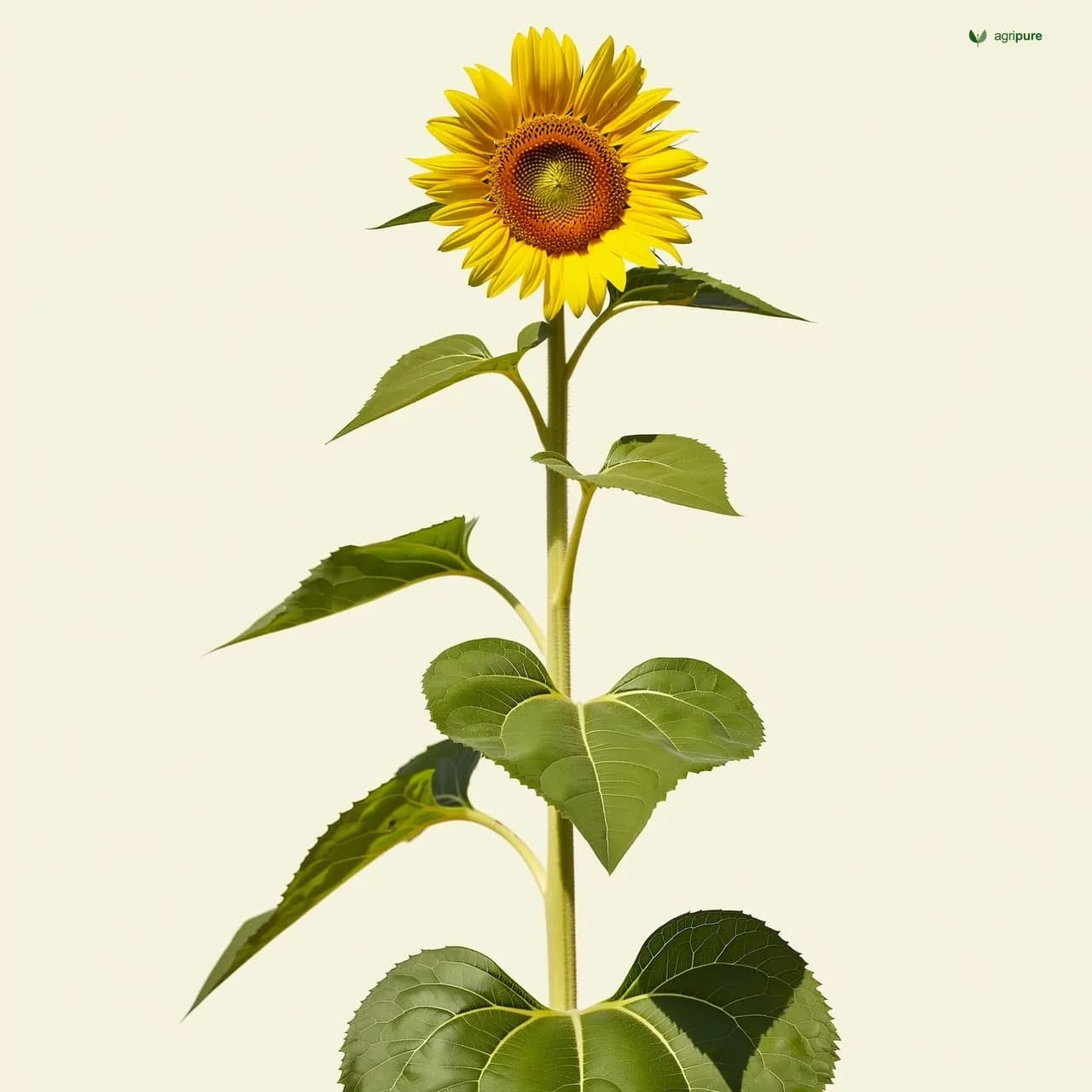
The common sunflower (Helianthus annuus) is a tall, coarse annual in the daisy family, Asteraceae, grown around the world for its edible seeds and oil as well as for ornament, fodder, and wildlife value. It is native to the dry plains, prairies, meadows, and foothills of the central and western United States, southern Canada, and northern Mexico, and has since spread across open sites, roadsides, fields, and disturbed ground throughout much of North America. For a grower, it is the annual to reach for when you want a single-season seed crop, a magnet for bees, and a striking flower head in one fast, upright plant. The seeds and sprouts are broadly edible and non-toxic, with only rare allergic reactions reported from eating the seed.
Growing Sunflowers
Sunflower is a warm-season annual grown entirely from seed, and every standard reference treats it as a one-season plant rather than a perennial. It belongs to relatively cool-temperate through warm-subtropical climates and can also be grown in drier tropical country, but it is unsuitable for very humid environments where heads and foliage stay wet. As a garden annual it is hardy across a wide span of USDA zones, roughly 2 through 11, and in its native range it grows across many habitats at elevations below about 1,900 metres. That breadth makes it a forgiving choice for hot, sunny plains and plateau country, provided the air is not chronically humid.
Give sunflower full sun; it needs unobstructed light for the strongest growth and flowering. It is easily grown in average, moist, well-drained soils, and it accepts a wide range of textures from sandy to clayey as long as the soil is deep and not strongly acidic. Avoid acidic ground, which the plant does not favour, and avoid waterlogged spots, since good drainage matters more than richness. Sow seed directly into a firm, sunny bed once the season has warmed, keeping the soil moist while the plants establish; once they are up and rooted they show moderate tolerance of dry spells, in keeping with a plant that naturally colonises open, exposed sites. The stems are stiff, erect, and rough-hairy, and depending on type the plants run from about 1 to 2 metres in general agronomic descriptions up to roughly 1.5 to 3 metres in vigorous horticultural forms, so the tallest cultivars want a sheltered position out of strong wind.
One detail matters for anyone hoping to save seed: the species is self-sterile and depends on insects, mainly bees, to set seed. A planting therefore needs pollinators moving between heads to fill out the centre, which is one more reason the crop pairs so well with a garden that is already feeding bees.
Harvest and uses
The flower head is a composite capitulum: a ring of yellow ray florets around a brown-to-purple centre of disc florets. Wild-type heads are typically about 7 to 15 centimetres across, while under cultivation a single head can reach 30 to 60 centimetres. As the disc florets are pollinated they develop into the fruit most people call the seed, which is technically an achene: cylindrical to slightly compressed, around 1 centimetre long and 0.6 centimetre wide, and coloured white, black, or grey-striped depending on the variety.
Those seeds are the principal harvest. Both the seeds and the young sprouts are edible and non-toxic, eaten directly or used for the oil the crop is famous for, with allergic reactions to the seed reported only rarely. Beyond human food, the plant earns its place as fodder and as a wildlife resource, the heavy seed heads feeding birds and other foragers late in the season. The bloom itself is a working part of the system: because the flowers must be insect-pollinated, a stand of sunflowers draws bees in numbers and helps service the surrounding vegetable beds at the same time.
Identifying the plant
Sunflower is easy to recognise in the field. Look for a tall, rough, hairy annual carrying one or a few large terminal heads, each with yellow rays surrounding a dark central disc, and large striped or black seeds. The leaves are mostly alternate, sometimes opposite low on the stem, broadly ovate, roughly 7 to 30 centimetres long, with serrated margins and a rough, hairy surface. The stems are green, erect, coarse, and rough-hairy throughout. Garden cultivars stretch the wild template considerably, ranging in colour through yellow, red, mahogany, bronze, white, and various bicolours, so flower colour alone is a poor guide to the species.
Choosing a spot in the garden
Because the wild plant naturally occupies dry plains, prairies, and disturbed open ground, it slots neatly into a sunny gap rather than a shaded or sheltered corner. Match it to a bed that gets full sun all day, has deep and freely draining soil that is not strongly acidic, and is open enough for bees to find the heads. Steer clear of persistently humid, enclosed sites, which the plant tolerates poorly, and of heavy, waterlogged soil. Given those conditions the crop is genuinely low-fuss: a deep, sun-loving annual that closes out the season with edible seed for the kitchen and for the birds.
Sources
- Missouri Botanical Garden. “Helianthus annuus.” Plant Finder. missouribotanicalgarden.org
- Cornell University Weed Science. “Common Sunflower.” Weed Profiles. cals.cornell.edu
- USDA NRCS. “Common Sunflower (Helianthus annuus) Plant Guide.” plants.sc.egov.usda.gov
- Wikipedia. “Common sunflower.” en.wikipedia.org
- Royal Botanic Gardens, Kew. “Sunflower (Helianthus annuus).” kew.org
- ScienceDirect. “Helianthus annuus.” Agricultural and Biological Sciences topics. sciencedirect.com