secondary
Chinaberry
bakain
Melia azedarach
Also known as Bakain (Pakistan, India).
- punjab plains
- pothohar
- sindh coast
International hardiness
- USDA 7-11
- RHS H4
- AU: Subtropical, Warm temperate, Tropical, Arid / semi-arid
Where it grows — regional guide
| Zones / rating | Regional notes |
|---|---|
USDA 7-11 | Fast-growing deciduous tree across warm southern states; foliage and berries are highly poisonous to humans and livestock, and trees can spread aggressively. |
| Zones / rating | Regional notes |
|---|---|
H4 (-10 to -5C) | No region-specific data yet |
| Zones / rating | Regional notes |
|---|---|
Subtropical, Warm temperate, Tropical, Arid / semi-arid | Planted in warm temperate and arid zones for shade and timber; berries and leaves are poisonous to grazing stock and humans, so avoid planting near pastures. |
| Zones / rating | Regional notes |
|---|---|
USDA 7-11 (USDA scale) Canada uses its own zone system; Canadian zones run roughly one lower than USDA. | No region-specific data yet |
| Zones / rating | Regional notes |
|---|---|
Punjab plains, Pothohar, Sindh coast | Pakistan:A boundary and shade tree across Punjab, Pothohar and Sindh; its leaves and fruit are poisonous to livestock and must be avoided. India:Commonly grown along field borders for fast timber and shade; berries and foliage contain toxic compounds poisonous to people and grazing farm animals. |
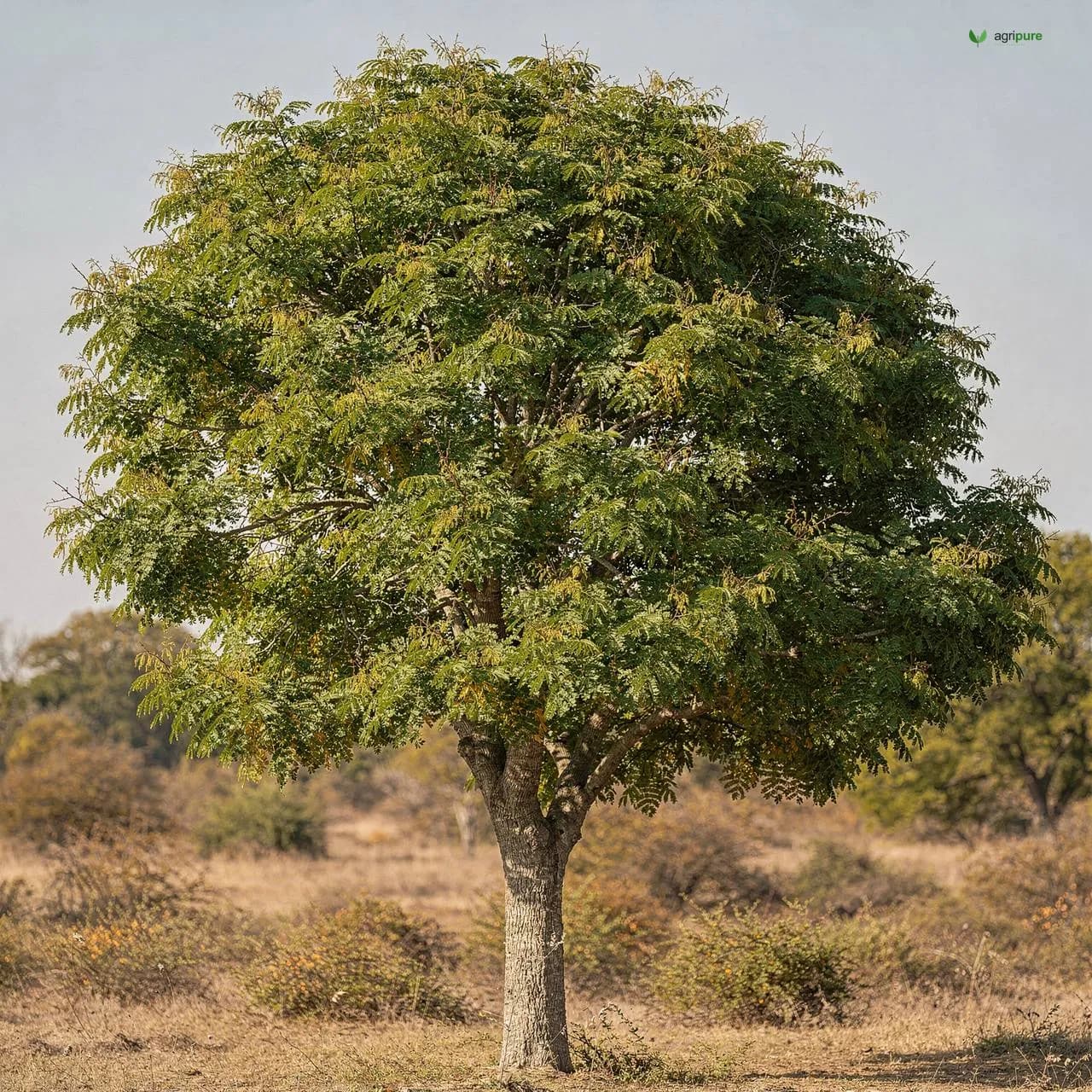
Chinaberry (Melia azedarach, bakain) is the fast-growing farm-boundary timber tree of the Punjab and Sindh plains and the Pothohar. It is a quick deciduous shade tree with durable, insect-resistant wood and leaves that work as a home-made pesticide, which makes it a classic secondary-stage species. On a syntropic plot it gives early shade, a usable log in good time, and a botanical that helps defend the rest of the system, three returns from one tree on the field edge.
Where it thrives
Bakain is native across South Asia, including Pakistan, and is most at home in the warm plains.1 It is a tough, adaptable, fast-growing tree of the lowland tropics and subtropics that suits the hot flats of the Punjab and Sindh and the drier Pothohar, and its speed and hardiness are why it turns up so often on field edges, canal banks, and roadsides.2 It copes with a range of soils and is widely planted for reforestation and erosion control on exactly these kinds of sites, where its quick canopy and root system go to work early.2
Role in the system
Bakain is a secondary-stage tree that grows fast and gives quick shade over a young plot, sheltering crops and softer plants while slower trees establish behind it. Its standout service is pest control: the toxic compounds in its leaves and fruit are tetranortriterpenoids, chemically related to azadirachtin, the active principle in neem.1 Leaf extracts have shown measurable activity against termites and other insects in trials, so a few trees on the boundary supply a renewable on-farm biopesticide alongside their shade and shelter.3 The same chemistry that makes it useful means the foliage and fruit are poisonous to eat, so keep them clear of livestock and people, and gather leaves deliberately for spray rather than leaving fallen fruit where stock graze.
Establishment
Bakain is easy and fast to raise, which is most of its appeal for boundary and reforestation planting and why it features in so many roadside and farm-edge plantings.2 Set it on field edges where you want quick shade and a future log without shading the whole plot, and where the leaves are easy to gather. Because it grows so readily it can self-seed and spread into ground you did not intend, so plant it where that vigour is welcome and pull volunteers where it is not. It coppices, so cutting is rarely the end of a tree.
What you get
The main product is timber: a medium-density, attractively coloured wood in the mahogany family, durable and resistant to wood-rotting fungi and insects, used for quality household furniture and general carpentry.2 Add to that quick shade and shelter, firewood from prunings, and the leaf-and-fruit biopesticide, and bakain pays back faster than most farm timber trees, which is why it has long been a default boundary species across the plains.3
Sources
- Wikipedia contributors. “Melia azedarach — toxic principle and uses.”
- CABI. “Melia azedarach (Chinaberry).” CABI Compendium.
- Manzoor, F., et al. (2024). “Efficacy of Melia azedarach leaf extract against Heterotermes indicola.” South African Journal of Botany.
Sourcing notes
Bakain is one of the easiest farm trees to raise from seed and is sold cheaply by nurseries across the Punjab and Sindh plains. It self-seeds freely, so seed is rarely a constraint; site it where its spread and its toxic foliage are not a problem.